Discussion keeps the world turning.
This is Round Table.
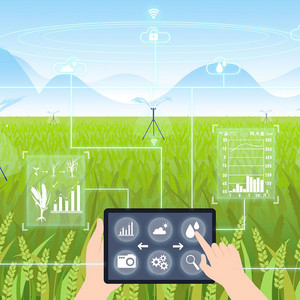
Farming has gone high tech and the feels of the future might not even be on earth.
China is rapidly pushing the boundaries of smart agriculture.
So will cows one day munch on AI -designed super grass?
Will our veggies have cosmic roots?
As technology transforms farming, what challenges lie ahead and how will these break -throughs reshape what we eat and how we grow it?
And they book yoga retreats but also hit the bars.
They spend on cycling gear, yet pull all -nighters gaming.
It appears that Gen Z is all about contradictions.
Health conscious, but not too serious.
Responsible, but still reckless.
How are they giving the age -old Yang Sheng concept a new twist?
Coming to you live from Beijing, this is Randall.
I'm He Yang. For today's program, I'm joined by Steve Hatherly and Yuxuan in the studio.
First on today's show, Tech and farming, two worlds that might seem miles apart, but they have come together in the most unexpected ways in China.
From boosting crop yields to making produce tastier and even tackling agriculture's bad rep for heavy pollution, tech innovation is shaking things up in the fields.
This time, we're zooming in on the wildest breakthroughs, pasture grass thriving all year round, instead of just one season, and seeds taking interstellar...
I'm talking about vacations possibly, before coming back as next level super crops.
China is pushing the limits, turning farms into high -tech playgrounds.
But with big innovation comes big challenges.
Let's dig into what's growing and what hurdles still need to be cleared.
Let's begin with Yuxuan, bring us up to speed on the hi -tech Pasture Factory in Xinjiang.
Actually, I was thinking, we really can't imagine how cool the combination of agriculture and technology is.
So we know that spring is a crucial period in Xinjiang Uyghur Autonomous Region for livestock migration, panning, and also lambing.
However, it is also the spring famine season for pastures when most natural grasslands have yet to turn green, and winter stored forage is low, but in Xinjiang's first smart pasture factory, grass can grow rapidly and independently of seasons, ensuring a very stable supply of fresh food for cattle and sheep.
So inside this smart pasture factory in Tumu Shuku, Xinjiang, there is no soil and no seasonal cycle yet, the grass flourishes lush and also vibrant.
Its leaves even appear particularly sturdy and healthy.
And you may wonder why the grass can grow without soil because they are actually growing in some kind of boxes.
And it is carefully designed for them to get nutrition and everything they need to grow up and very fastly.
It's incredible and also in the same region Xinjiang.
They've been sending...
This sounds like something from a film.
They've been sending pasture grass seeds into space.
And what that does is it leverages the unique environment beyond our planet...
And this is done to improve yield and cold resistance and then other traits as well It was on June 25th of last year that nearly 100 ,000 pasture grass seeds returned from the moon That's weird to say that sentence right and then they've begun these seed Cultivations in the region in Xinjiang and the project leader talked about it saying that sending the seeds to different locations in space, and also at varying distances from Earth can lead to a diverse genetic changes.
And through space breeding, what they're hoping is to enhance traits like salt resistance, cold resistance, drought tolerance, heat resistance.
And this could be a huge, huge agricultural breakthrough.
So it's not like growing potatoes on Mars.
Yeah, it's not a Matt Damon movie, is it?
And so it's putting these seeds into the space and then get them back.
And then bring in them back.
And then growing on earth.
And this isn't new for China.
This is from The Global Times from a couple of years ago.
It's been now about 38 years since China's first space seed breeding efforts in 1987.
And the country has sent the seeds of hundreds of plant species into space on dozens of retrievable satellites and Shenzhou spaceships.
nearly 1 ,000 new species have been created, of which 200 have displayed outstanding performances, according to different media reports.
Space seeding itself, it uses cosmic radiation to kind of mutate the genes of the seeds that are sent into space, and they do this to create new species for greater variety.
So the report said that space peppers, what a great name, space peppers and watermelons, you can find those in supermarkets here in China.
I've never seen them before, but those are successful varieties of space breeding.
Well, with this forage factory instead of a farm, then at least we know the cows, the horses, and did you mention sheep?
They're going to be well fed this season, which is definitely something good to know.
And how is technology currently being integrated into agricultural practices in China?
And can you provide examples of how technology has improved efficiency, productivity and sustainability in agriculture?
Yes, as I actually revealed a little bit before, you know, how tack savvy these kind of grass factory could be, you know, every aspect of grass growth in this smart pasture factory is powered by cutting edge technology.
For example, the lighting used here is no ordinary light, It is an intelligent light source that simulates the optimal spectrum for plant growth and fine -tuned to match the specific light formula required by pasture grass and the temperature inside the factory is also maintained between 18 degrees Celsius and 25 degrees Celsius, the ideal range for the most active cell division in pasture plants.
Also the air is incredibly fresh...
Oh it must smell so good in there.
Because you are having you know collective breath of 1 .5 million grass plants.
Exactly. Also they give these grass you know designed air for them.
A CO2 capture system absorbs carbon dioxide from the external environment to enhance plant growth.
They're more like and also Also that I mentioned that small growth cups that they're using, because they're now using soil with roots extending into these incubators' chambers below, when you open these incubators, you won't find any soil or even much water because the plants rely on a fine mist spray providing all the nutrients they need compared to, you know, traditional field cultivation this system saves up like 95 percent of water.
And ensuring that every drop is directly absorbed by the cellular level.
Every drop is absorbed at a cellular level.
Everything is completely efficient.
The temperatures are perfect, the air conditions are perfect, the humidity levels are perfect, it's all designed for optimal growing conditions.
And when we think about this and then think about traditional farming methods, This is just otherworldly, right?
The farmers have to be feeling ecstatic about this in the sense that nothing is wasted before, you know, when you grow crops, you're gonna lose some, you have to depend on nature, the amount of sun, the amount of rain, but now, you don't have to depend on that anymore.
Also, yeah, I was thinking, like, we've been discussing so many about how high -tech this could be but what is the difference between like growing them outside and in this factory so the production efficiency is also astonishing according to on -site measurements by CCTV journalists the smart pasture factory covers approximately six thousand square meters that's about nine mu by but it produces like three thousand tons of fresh grass annually and that's equivalent to the output of one thousand 1500 of high quality pasture land.
That is more than 100 fold increasing yield, right?
So with like one factory like this, you can get so much more efficient than you're growing the grass outside.
Yeah, and it's the amount of time that it takes as well.
So the species that they're growing there, it's called general chicory, and that takes, usually takes about two to three months per cycle if you're growing it in an open field, and that means that you can harvest that grass about four to six times a year.
But in this environment, this controlled environment, the full cycle grows in 20 days, compared to two to three months, and that allows to 18 harvests annually compared to four to six times a year when you're growing it outside.
they have completely broken free from seasonal limitations.
Yes indeed, and we're seeing that, yeah well, at least for the husbandry industry there and also we've seen in previous reports that sometimes, let's say maybe there isn't enough grass to be grazed, and also maybe there is not sufficient land for the farm animals to go around yeah and then you know with the results and produce that comes from these controlled environments of factories then it could really be a game -changer.
It 100 % is and I was watching a few different videos online about how they're actually doing this and one of the factories that I was watching, they were growing inside and—have you ever seen a vertical parking lot, right?
Where the cars will kind of—it's almost like a ferris wheel, the way the cars rotate.
This is how they were growing plants inside.
The plants were rotating—it looked like rotisserie chicken almost.
And the reason they were doing that is because the plants were receiving an equal amount of sunlight they were receiving an equal amount of water.
The growing conditions were the same for every single plant.
So that means that you're not going to lose anything.
Right. Again going back to the efficiency point.
It's just it's it's a totally different world.
Yeah. It's really interesting you brought that up because I remember like maybe a decade ago I watched this documentary.
It was it in either Tokyo or New York City.
So you know it's a very dense populated city area and getting fresh vegetables could be very expensive, and therefore you see these vertical farms of growing vegetables in these very expensive city areas.
And also these, the lettuce, for example, that comes from these factories, it goes to the dinner tables of human beings immediately, and then economically, that makes sense, but Here now we're seeing that, you know, out and about in the spacious lands of China, that agriculture, the industry of agriculture has expanded and evolved to this.
And I can't help but think maybe agriculture to some extent, or at least in certain areas for certain farms, it has become quite expensive to grow traditional ways.
or there might be some real predicaments for traditional agriculture to continue the way it used to.
Therefore it's... I understand these kind of farms could be, or factories can be experimental places, but for it to have scalability future in the future, or, you know, for this thing to be a worthwhile undertaking, I'm sure there are some future implications of that, then it might, in a side show in a way, shows us that there are some real challenges that the traditional agriculture industry is facing as well.
There are challenges, of course, there are challenges with everything, but when we're talking about smart agricultural machinery and intelligent field management systems being put in use for farmers, they can precisely monitor the growth of whatever it is they're growing wheat or what have you.
And when you can use AI tools like this, when you can use autonomous machines like they are as well, this allows for timely field management and it allows for improved operational efficiency.
I keep using that word efficiency.
But the agricultural authorities, they can use system generated data to provide farmers with scientific and practical field guidance as well, so they're there in support and this just enhances the whole management system of how this is being run and what is being produced and what can be produced.
Yes, and also with all of these technology people or even like more specifically consumers can actually trace back to the originality of all of these plants or vegetables.
For example, companies are utilizing IoT, Internet of Things and big data to achieve these kind of end -to -end digital management in pig farming, covering everything from feed, procurement, and breeding to product sales with an ID -tacked market and entry system.
And agricultural products come with these kind of traceable information.
maybe when you're scanning a QR code besides your pumping, you will see, oh this is from the space, actually the sea.
So that is why we're talking about all of these technologies because okay, they are high tech and a lot of experiments are going on, but at the end, it's still the consumers are buying all of these vegetables.
Yeah, so you're talking about consumer trust there, right?
Because when the consumer can trace it back to its origin, and know where it came from, that'll make the consumer feel a lot more comfortable too.
Yes, every year around the time of the two sessions when China's congressional representatives gather in Beijing, the number one central government document is released, marking the country's New Year focus on agriculture.
And why does China continue to place such strong emphasis on food security?
As it's around this time of the year we see a lot of these reports about agriculture as well.
And what makes grain production such a hot topic every year?
So, as you mentioned this number one central government document actually also highlights support for the development of smart agriculture this year.
And it is encouraging the expansion of application scenarios for artificial intelligence, big data and also low altitude technologies in the agricultural sector.
More specifically we are seeing a lot of farmlands are using drones to spray a lot of things on the farmlands.
These technologies are being used also to make farmland work more easier for the farmers.
Yeah, and when you're talking about things like grain or any other agricultural product production.
You mentioned food security.
Well, there are potential risks there because it's highly uncertain.
You've got greenhouse effects.
You have extreme weather patterns, unpredictable weather patterns, of course.
And then you have the uncertainty in the international market.
Things like trade protectionism or geopolitical conflicts can also affect international grain markets and that can increase the risk of the grain supply.
And this is really important because there's such a large demand for grain, especially here in China.
There's a population of over 1 .4 billion.
So China not only has a high demand for staple foods, but also also an increasing demand for livestock and poultry products.
I think in recent years, that's become more of an issue.
and that's led to an increased demand for feed grains we have to feed those animals as well right and then you've got the quality of the grains and the quantity of the grains used for industrial and planting purposes you have to take that into consideration as well speaking of you know uncertainty I once watched you know an agriculture reality show called Clarkson's farm if you know that although you know the show has a kind of humor of the guy from the car show yes yeah right he's also becoming a farmer okay all right so um yeah so as you know this is kind of a humorous and light -hearted show
it's still actually reflects how much you know farmers livelihoods and crop yields depend on the weather and environment and also everything and you know an unusual rainy season could easily lead to a year of complete crop failure for farmers and let alone you know this this guy is a quite fame famous host right he's rich he can drive a Lamborghini in the farmland but that is also something that he lost when they came across a huge like rain disaster or something like that you can't get that back once it's gone it's gone and this is from from Reuters from early March this year in that report they
talked about the fact that China's raised its annual grain production target to around 700 million metric tons this year.
They've expanded its agricultural stockpile budget.
The country is pushing for stronger measures to safeguard food supplies and improving farmland management and increasing the application of technology as well as the ability of people to use this technology, right?
We need that as well.
Well, this is the foundation and the support necessary to attain the goal.
That's from the National Development and Reform Commission report.
Because food security is, we can grow it, right?
We can try to grow it, but if we can reduce the risk of losing it by implementing this technology, everybody wins.
Mm -hmm. How do farmers and agricultural professionals view and adapt to new technologies in their daily operations?
It's not like this is their first rodeo.
So, let's say a lot of people like not only farmers, also professionals are having comments on these technologies.
So Jun Peijiang, head of an agricultural company in Hebei province, north of China said previously they could only rely on manual inspection of ceiling and soil moisture conditions in the fields, but now they can use smart screens to make timely management plans based on soil moisture conditions.
Also, Luen Xuecheng, a large -scale grain -grower in Shandong province in northern China said with drone spraying he can actually complete the spraying for his over 8 ,000 mu, that's about 5 .3 million square meters of land in about four to five days.
Yeah, imagine how long that would have taken without the help of those.
Yeah, that probably could go longer than weeks and months.
So agricultural experts will give them timely guidance and advice when they're using these technologies in the way that they're not only giving them, they're not only having these kinds of technologies and techniques, they can also get like quote -unquote like after -sell service and what are the challenges or limitations associated with adopting technological solutions in today's agricultural landscape well yeah you mentioned before there are there are challenges and there are a lot of challenges right it takes a high initial investment that would be one right you have to implement these very advanced
you called them cutting -edge technologies you You have to implement those for this precision style agriculture.
You've got the use of AI, you've got the use of robotics, and you need a lot of upfront capital for that.
That can be a barrier for a lot of farmers.
Then you've got the technology adoption and the skill gaps.
You know, farmers especially, perhaps in rural areas, they might lack some digital literacy or technical skills.
so the farmers need to be brought up to speed on how to operate drones and how to operate these AI systems effectively.
Then you've got data management and infrastructure, you've got land consolidation.
There are a lot of challenges but the gains outweigh the challenges for sure.
And what other areas should the industry be focusing on to drive the future of farming?
Talent development and also farmer empowerment is of course something that we need to focus on.
You know, Economic Daily has outlined some directions you know attract skilled professionals through these incentives and also training programs nurturing tech savvy business oriented agricultural talents.
Also we need to establish a tiered training system via vocational schools and also for agricultural institutes and teaching farmers these smart equipment operation, also e -commerce and modern farm management to boost engagement and expertise in smart agriculture because only planting on growing these vegetables and crops is one thing.
And another thing is that you have to know how to sell them, how to make people who are not familiar with your area to understand how good your products is.
And that is something also these, I think, farmers need to get trained.
Yeah, incorporating things like e -commerce into their sales, too, making it all inclusive, from the planting of the seeds to the selling to the customers, and everything in between.
Yes, indeed. And agriculture has always been about working with nature, but now science and technology are stepping in as game changers.
Technology is already delivering impressive results, as we've talked about on today's show.
Higher yields, stronger crops, and reduced resource waste.
But innovation rarely comes without surprises.
Could year -round pastures disrupt natural ecosystems?
Will space -bred super crops introduce unforeseen risks to biodiversity?
And as farming becomes more data -driven, how will this shift impact traditional agricultural knowledge passed down for generations?
The future of food is being rewritten in real time and while the benefits are clear, the full picture is still unfolding.