Discussion keeps the world turning.
This is Roundtable.
For generations of Chinese people, caring for a loved one in the hospital meant being there day and night.
China's new pilot program, Family -Free Hospital Care, promises change.
So how does this new system work?
And perhaps the biggest question of all, where does the money come from?
Coming to you live from Beijing, this is Roundtable.
I'm He Yang. For today's program, I'm joined by Steve Hatherly and Yushan in the studio, first on today's show.
Here's a scenario many of us in China know all too well.
A loved one gets hospitalized, and suddenly your whole routine is turned upside down.
You're juggling work and hospital runs, staying overnight for bedside duties, running on fumes, and maybe even paying for costly private help.
To tackle this, China launched a national pilot in June 2025 called Hospital Care Without Family Caregivers or Family -Free Hospital Care.
In Chinese, it's called Mian Pei Zhao Hu Fu.
The aim? To ease the pressure on families by shifting daily patient care to trained hospital staff.
It's a major shift, and are we ready for it?
Yuxuan, let's go to you first, since all of this research out there is in Chinese, what does the new pilot program entail?
Well, it is indeed a very brand new system that's just being launched in June 2025 in China, isn't it?
So this is a two year national pilot program to just to test a hospital care model officially called what you said that the hospital care without family caregivers.
And also the key policy document guiding this whole initiative is the hospital family free care service pilot work plan.
So that's issued by the National Health Commission, along with multiple ministries on May the 26th, 2025.
So these are all happening within just one or two months.
And the whole core idea is to shift the responsibility of bedside care from patients, families or family members to the hospital itself.
self. So that's a shift from family duty to institutional responsibility.
And the goal here is to relieve the burden that's traditionally placed on family members, especially younger working generations, like people like me, I would imagine, or me in 10 years, 20 years time, who will often have to struggle to balance jobs with caring for hospitalized relatives.
And it also addresses the problem of unqualified or costly private caregivers because we know just sometimes hiring such a role to take care of your relatives require a lot of trust and, of course, a lot of money.
So can we talk about this a little bit?
So in China, if your family member goes to the hospital and they have to stay there for a few days, let's say, so anything medically related, then the nurses and the medical staff there would take care of that.
Correct me if I'm not understanding this, but anything outside of that, the nurses or the medical staff don't take care of that.
Maybe we can talk about a couple of examples.
And that's why family, that burden falls, burden's a bad word to use there, but that responsibility falls on the family members to take care of all of that extra stuff.
And that's why you gave the option, or not the option, But the example of, you know, having to balance work, you're at the office all day long and then you have to rush to the hospital at night to do all these extra things.
What would be an example or two of these extra things that the family members might have to take care of?
Well, some of the tasks, just like chores that when you take care of anybody, it's like feeding, bathing the person or just helping them to wash, get cleaned, helping them turn in bed.
bed. Sometimes they're so injured in a way that they can't mobile on themselves.
And then there's also providing comfort, companionship, talk to them, keep them accompanied.
Sometimes you're required to keep them awake.
Also, that's all the chores, let's say, that's outside of professional medical treatment that's traditionally taken over by a nurses or doctors.
Yeah, I for one, I'm older than you, Yuchen, and this kind of situation has already fallen on my shoulders.
and I've uh stayed in the hospital overnight to care for my dad and my mom separately uh in the last few years and then a lot of the stuff it's so easy just to read it out from a piece of paper and say oh feeding so what you know it's just eating and then a lot of the times like you know when your loved ones who are hospitalized they don't they're not like cubed or anything so they They can eat on their own.
What fuss could that be, right?
Well, but in reality, actually, you need somebody to go fetch the food.
The food is not delivered.
The nurses don't bring the food on a tray and then put it on the bed.
No, they don't. Chinese nurses are too busy for that.
Their attention has been spread thin to other directly medical related issues.
So, therefore, you need help to do that.
And then let's say if, unfortunately, during the recovery period, your loved one is confined to the bed and cannot go to the bathroom, will the nurse come and help you to answer the call of nature several times a day?
No, they will not. So you need someone to help with all these things.
And trust me, and after that happens, if it's a loved one, and this is also why I think Chinese people prefer to if they have a family member who are dedicated who are willing to help out and that's considered a great thing because you know let's say when you're after answering the call of nature and then the rear end needs to be cleaned and wiped and hopefully done in a very smooth manner and then as a daughter I will do that with great care but if If it's somebody outside of the family, will that person be this caring and thoughtful?
And also, you know, when I'm doing this, I will say in a very kind manner and I'll make a joke.
I wouldn't want my loved one to feel anything lesser or feel slightly embarrassed or anything like that.
I would think about all these things and I will do it my best. But can a private caregiver or let's say the hospital trained caregiver, as we're what we're venturing into in today's discussion, do provide the similar level of care?
That is one question.
But what I think if a trained professional can come in helpful here is that that person, if trained properly, knows exactly what to do.
And that is not something that a family member immediately knows.
I had to go and have a crash course and learn from the patient's carer nearby to learn the tricks, because I don't know, I'm not a professional, but I learned quickly.
And that is sort of the intricacies of the family caregiver as opposed to hiring a private or a professional caregiver.
And can we also just go a little bit more into detail how come in China, as I sense from what Steve's comment has been, it might just be that the family caregiving has been a default maybe in China, but it's not a given in the US or Canada or some of the Western countries.
Just here in China, it comes down to a mix of our own culture, our policy gaps, and also the staffing shortages in hospitals nowadays.
Because culturally, China, as such a vast land, we have deeply rooted values around filial piety.
I'm not sure if everyone is familiar about that.
But I think all of our Chinese listeners might echo with it, which in Chinese is called Xiao, which is emphasizing on that the children should be taking care of their aging parents.
So looking after a sick family member isn't just, say, a practical thing for us to do.
It's more of a moral obligation that you naturally perform.
It's expected behavior.
Indeed, it is expected.
And, yeah, if you don't do it, you might be morally judged, even in some cases.
And structurally, most public hospitals, they have long been understaffed with no former roles for non -medical caregiving.
And the whole system is kind of still in the middle of hiring from third -party platforms or hiring directly from the hospital.
So as a result, families and often the patients themselves, they are left to figure it out on themselves.
On their own, yeah, which is what you just said, Hyoung.
You had to kind of have a crash course because you didn't know what you were supposed to do.
Right. Not necessarily.
So what does this pilot program look like in practice?
In practical terms nowadays, these programs, they introduce a new division of care responsibilities within hospitals.
So there are already local pilot programs and fee structures reported from various parts of China that include the southwest China's Sichuan province, in eastern China's Jiangsu and Zhejiang provinces, as well as southern China's Fujian and Guangdong provinces.
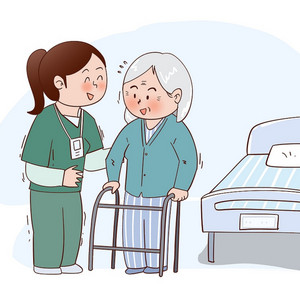
So what they call these caregivers, professional hospital hired caregivers, is under one name called patient care assistants.
So we're going to refer to them as PCAs, or in Chinese, 医疗护理员, as referred to in the Chinese policy that's just launched.
So they take over all of those daily non -medical care tasks that we just mentioned that's previously handled by the family members of the patients.
so that's what's going on that's how it's carried out that's who will be taking care of those responsibilities like feeding and bathing and washing, the things that you said before PCAs these are hospital hired and trained, right?
but they are not licensed medical professionals so they don't administer medication, they don't handle wound care, they don't make clinical decisions, I'm guessing I'm not sure if drawing blood or needles they wouldn't do any of that okay um so these are not registered nurses who can respond to emergency medical situations exactly yeah they are more like trained caregivers that's officially hired by the hospital they cannot perform medical treatment on the on the patients they're taking that's above their pay grade yeah and currently we have the hukong which is essentially doing what uh you shan just
mentioned but they're not hospital hired nor are they hospital trained and they're usually this uh every hospital has this pool of well it's not official but if you need to check into a hospital and then you know somebody will be murmuring and then you can find these people which is a private uh business and i'm guessing with the private businesses the the quality of the care might vary, the prices would probably be sometimes on the affordable side, but sometimes extremely expensive, I'm guessing as well.
Well, I wouldn't say extremely expensive, but you know, expensive or not, that's always subjective, right?
And relative. But usually, if you go to the hospital, they have maybe like two tiers.
And then it's kind of like and the an unspoken rule and then the all the private caregivers they know because nobody wants to go like too expensive or too cheap and then they'll mess up the market so to speak and then they have some kind of agreed maybe like two different uh pricings and um you're right because you the the quality is not guaranteed and you can tell a lot of them just they have received no no formal training.
They kind of learned on the job.
And then that's not always a great feeling.
But considering that, well, at the moment, I think we kind of just make do because, you know, this is not entirely a medical job.
And then if there's someone you can hire at a price that you can accept, and then it's a great help because you can go back to work.
And because not all of us are sitting on a gold mine to pay for this kind of stuff.
And you kind of need to work at at the same time to support your loved one in hospital or whatnot.
So, yeah, this is kind of a stressful situation for a lot of people in Canada.
You know, it's funny.
My mom used to do this kind of job, but not in a hospital.
My mom worked and she was a lab tech in a hospital many, many, many moons ago.
But in her retirement years, there's a service where people can hire someone to come in and do the things that we're talking about here.
or hang out, have conversation, feed, do the housework, stuff like that.
My mom did that in her retirement years, but that was at home.
That was at the person's home, not in the hospital.
I tried to find as much information as I could on Canadian hospitals, and from what I can understand, that responsibility of the bringing the food and the washing and all that stuff, that falls on the medical staff.
It's not required that family members take care of that.
Also from what I could find, if family members are there to assist, well, that's very much appreciated, but it's not expected that the family members, that that is their responsibility.
That is interesting, and that is a difference.
And also, if we could dig deeper into the pilot program, we've talked about what kind of work is expected.
Could we also look at where this is being implemented?
Well, since it's a pilot program, it's not everywhere yet.
And yeah, some of the details that you can give us.
So mainly this program prioritizes tertiary hospitals.
That's usually the best or the ones that's bigger and with more departments, those kind of hospitals in the region and also in cities that's facing the following difficulties, including the high levels of population aging, a large number of elderly inpatients, and there's a strong demand for family -free care.
and also, last but not least, a mature infrastructure for professional caregivings.
And I think this is also why it matters that at least we're considering such a policy, such a change in the hospital system now.
That's because within the hospitals nowadays, the program starts in wards with a high share of first -level nursing or first -level caregiving, which directly affects the patients who require the most medical attention.
And these people, they probably are staying in the wards, including neurology or cardiology, general surgery, and all the different departments that requires extra attention that sometimes even family members with the knowledge that they're trained to take care of that individual might not suffice.
So basically the departments that usually perform severe high -level surgery that requires much more care and longer recovery time kind of thing.
And what about the price of these services that are being piloted?
Yeah, so this is from 2024 from the National Healthcare Security Administration.
They introduced this new pricing category for the service.
So hospitals, they can now offer and charge for it directly.
Pricing is government -guided.
It's cheaper than private caregivers.
And there are different price platforms for what you might need.
So an example, in Sichuan, for example, it's 100 yuan a day.
That's about $14 for one too many care.
And one too many care, correct me if I'm wrong, but that implies one nurse taking care of multiple people, right?
one caregiver taking care of multiple patients.
Right. Thank you for the correction.
In Guangdong, so it's one -to -one.
If you want one -to -one, that's going to be more expensive.
That's $280 a day, almost $40.
One -to -two is $180 a day.
That's about $25. And then one -to -three is $140 per day.
That's number one is priced differently depending on your needs or your wants, and then depending on probably too how much families can afford and fit this into their budget too.
And at this point, I think families, they're still paying out of their own pockets, right, for all of the above price tags that Steve, you just mentioned.
But currently, the service that we mentioned is not covered by basic medical insurance as well.
But some cities such as Guangzhou and Shantou, which are both in South China's Guangdong province, they are exploring whether it can be included in commercial insurance products or huimenbao, which is a government -guided commercial health insurance.
So that's going to be very helpful once that's implemented, I think.
But that also means that you need to sign up for that extra health insurance.
Otherwise, you're not covered at all, and it's all out of your pocket.
Despite being a little bit cheaper than the private caregivers, And I'd like to ask you guys, what do you think is the purpose behind this big shift and this pilot program?
What problem is it trying to solve?
Well, on top of all the reasons I can think of, it's, of course, to just reduce some of those burdens.
burdens again burden is not always the correct word here but yeah just share a bit of the workload for families and especially young adults who have to be sandwiched within a family structure nowadays that well as a Chinese person I'm way too familiar about it we call it the four to two to one inverted pyramid kind of family structure that means there are four grandparents in the the family, two parents and one child.
My family is exactly following this pattern right now.
And are you the one child?
Yes. You're the tip of the pyramid where you get all the love.
Yeah. I am expecting to worry a bit more about this in a few years time.
All the love, yet all the responsibility that we just talked about, right?
Yeah. I had a very light experience of it just over the weekend because I was supposed to be be with my family throughout the weekend, because the caregiver and the professional medical staff, my mom, who is a nurse, is outside traveling.
Well, I was kind of requested by her to stay indoor and watch over my dad in case he has like a heart attack or something like he used to in previous times.
And so I thought that was my mission during the weekend.
And on top of that, my grandpa had like a dizziness and also some sort of condition throughout the weekend.
So So me and my dad had to go visit my grandparents and stay over there to take care of them.
It's all done in the family structure, but we can just tell how this whole inverted pyramid structure is affecting Chinese families nowadays.
Like one generation is paying attention to the one above it, and then the two on the lower side is together paying attention to the top.
So that's the struggle for many of us to balance, of course, balance work and hospital duties.
In my case, we didn't get to that, but still, it's something that we are facing right now.
And you might ask, how did we come to this point of having so many inverted pyramid family structures?
And that is largely due to the national policy, the national family policy of the only child policy.
And this is now what you got.
And I saw some estimates saying that in China, there could be as many as 200 million only children out there.
So just think about, you know, how this policy, this pilot program, if implemented well, could benefit so many people.
But we are still miles away from getting there.
Yeah, but I think it's a really, going back to the point about the responsibility of the younger people in the family, I want to emphasize that point.
Maybe I'm not the right person to be delivering this message, but having lived in this part of the world for a long time, I've seen that a lot.
And it's not just, oh, yeah, I have to take care of my parents.
No, no, no, no, no. It's deeper than that.
It's stronger than that.
And if you think about that inverted pyramid word, that responsibility falls on the child at the bottom who's maybe 35, 40 years old, who's at work from 9 a .m. to 6 p .m., 7 p .m., 8 p .m. every day and then have to go to the hospital and also take care.
Right. So we can understand how absolutely useful a program like this can be if it is successful.
Yes. And also just to add to that, our country or the nation has tried with different things to help out and one being 读生子女护理假, that is the nursing leave of only children in this country.
But it's not last time I checked, it wasn't it's not a national policy yet.
About 11 provincial regions in this country have sort of accepted it.
So it still boils down to your company or your employer, whether they're going to allow you to take this paid, in theory paid, nursing leave for that huge amount of only children out there.
And also sort of to paint, well, sort of to echo what you just said, Steve, the working adults who are juggling between hospital care and job could be the middle layer, the two parents out of the four to one inverted pyramid.
And then, you know, they also need to look after kids or one child or whatnot.
So it's really, really very much quite a headache.
And guys, I just like you guys to sort of look at the pros and cons.
I mean, on paper, this sounds efficient and helpful, but what are the actual benefits and possible drawbacks of hospital care without family caregivers?
Yeah, like we just mentioned, of course, it's going to help reduce some of the stress for the families.
And because, of course, the family members, they are no longer required to stay overnight, feed, wash, or turn the patient, et cetera.
and they can at least rest and still have the peace of mind to work, thinking it's another workday following.
And also, we can sort of expect that the caregivers, the PCAs, after being professionally trained by the hospital, they can provide 24 -hour continuous professional care to the patient that's probably there doing a better job than I would, I would say.
So that's some of the cons that I can think of.
Some of the advantages, you mean?
Yeah, advantages. The cost effectiveness too, right?
We went over some of the prices that the service is charging.
If you compare that to the cost of what these private assistants were charging before, it's cheaper.
The hourly rates for private caregivers in first -tier cities, the biggest cities here in China, they can range from 300 to 500 yuan per day.
And that's about 42 to $70.
And you might think, oh, well, that's not so bad, you know, 42 to $70 a day, 500.
Imagine that over the course of a few days, or, you know, up to a few weeks, that's going to get really expensive really, really quickly.
So this is an advantage to save some money.
Yeah, but also the other side of that coin could be, think about this, basic economic 101.
If the private sector is hiring people, let's say at 300 yuan, and now you're saying trained hospital staff of caregivers will perform the same duty at 200 yuan, which is quite a bit cheaper, then who's going to join the ranks of the hospital hired caregivers if they can easily make more money in the private sector and now what we're we're asking of essentially from this pilot program is that almost out of thin air this the hospitals are expected to hire and train a whole group of new caretakers.
Where are you gonna assemble all that workforce when they can easily make more in the private sector, unless they can provide your five basic insurance and housing prevident fund.
Stability. Yeah, and that's a really good safety net for all workers.
Or you you can have other perks and, like you said, stability that can be given to these people.
You got to hang that carrot because otherwise who's going to come in and want to do the job?
Yeah, but at the same time, will the demand for the private care worker still exist?
Because from the family's point of view, if they can get an equal or better quality of care, let's just say equal, if you can get an equal quality of care at a reduced price directly from the hospital where you have that 24 hour service, you have that peace of mind, and you're also not spending as much money.
I wonder if the demand for the private care will still be there the same as it was before.
If you're worried about understaffing with these PCAs because they're all going to go to the private sector, well, the private sector might not, the market might not head in that direction with the introduction of this program.
I mean. Yes. And well, on the demand side, I'll add up just one point that is in the majority of the third tier hospitals, that's the bigger ones in major cities, they have such an office called caregiving hiring office.
So each of these hospitals, they have one office that's dedicated to helping patients and patients' family to hire a caregiver if they need to.
And I think on top of of this design of the hospital, they still come up with this whole mechanism of having someone hired and trained within the hospital.
I think, yeah, it must mean that either the demand is way too high than the office can handle, or that the price is too high that the majority of the patient cannot accept.
So there's still a lag of, say, we're still kind of in the gray area of navigating how this is all going to turn out and in the meantime if we add all of these bunch of PCAs into the hospital as say hospital staff then what is what is it going to mean for the the already existing caregiving caregivers who are the nurses and the doctors do they have to be trained to supervise them or to manage them or to collaborate them with them in in the future that's all some Some big shifts that probably will take place in the future.
But right now we're just under trial and it's still too early to say whether it's all going to be, you know, all going out coerced and right in that way.
You bring up a really good point because there's also the liability issue.
Because if you're introducing a whole new group of people into the ward and they're not directly involved with the medical stuff, but they're still sort of serving a patient that needs medical care.
And then what if something went wrong?
And then how do you sort of slice up the legal aspect of things?
And that's going to be a big question that needs to be sorted out.
And this policy could also implicitly address demographic anxieties in this country as the heavy burden of elderly care can sometimes contribute to young people's reluctance to having children.
But all in all, the model shows promise, especially regions with aging populations and solid medical infrastructure.
This is where the pilot has been trialed out.
but its long -term success will depend on whether policy support is matched with investment, training, and equity -focused planning.