This BBC podcast is supported by the UK.
Want to know how to become the richest person in the world?
Start with the latest episode of our podcast, Good Bad Billionaire.
We're telling the story of how Elon Musk amassed half a trillion dollars from his troubled childhood in South Africa to buying Twitter and launching rockets into space, with all the boardroom dramas along the way.
Find out how he did it on Good Bad Billionaire.
Listen wherever you get your BBC podcasts.
Ukraine gets a loan from the EU, but is it enough?
It's not as good as we hoped for because it's only half of the funds, but this is something.
It's World Business Report from the BBC World Service.
This is Rahul Tandon.
And in this edition, one of Ukraine's top economists tells us the EU needs to provide more money.
We'll hear from the former chair of the ice cream maker Ben & Jerry's Independent Board, who says she's been forced out of her job.
And that's why has Sony collared the Snoopy franchise?
We're going to start WBR though, by talking about two countries that have got loans that could, and should, be crucial for their economies.
But at what cost?
We'll go to Sri Lanka shortly.
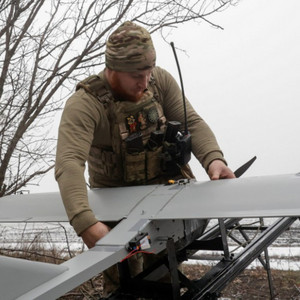
But firstly let's look at what's happening in Ukraine, because the European Union has agreed to give Ukraine a loan of just over 100 billion 105 billion to be accurate, which we like to be on this programme.
After that agreement, the Polish Prime Minister, Donald Tusk, had this to say.
We took finally the decision on 90 billion euro loan for Ukraine, which will be repaid by you only after you get the reparations from Russia.
Not surprisingly, the Ukrainian president, Vladimir Zelensky, welcomed the decision.
For us today, this is an important victory.
And these 90 billion euros were very difficult for us without them.
Very difficult.
These are important steps.
The fact that our team worked immediately with Europe on a positive solution for us.
This is strengthening.
This is a signal to the Russians that there is no point in them continuing to fight.
Because we are supported financially, which means we will not crumble at the front.
This money is crucial for Ukraine.
It will help its economy to keep going at a time when many people are facing a lack of electricity in the winter.
Katerina is a resident of Odessa, which is facing a blackout.
It's very difficult for us without electricity, especially when we have a small child.
And sometimes they turn off the water, which is impossible with a child.
We threw away everything in the refrigerator, all the food, but we're surviving.
We bought two power banks, which now cost as much as an airplane wing, and we also bought a lamp.
That's all we have, everything that helps with the child.
For more reaction.
I've been speaking to Timofey Milovanov, who is president of the Kiev School of Economics.
So there are two options.
In the spring, money would end.
But of course it's always endogenous in the sense that some other bilateral partnerships, you know, some other countries would have stepped in or the Central Bank of Ukraine would have depleted their reserves.
So the second option is the beginning of inflation or hyperinflation, macroeconomic instability, loss of credibility and overall weakening position.
And you don't know how, you know, will there be panic?
Will there be a financial crisis?
You know, what can happen?
So I don't think it's like the final shot, but it's close to that.
So I presume then people in Ukraine must have been watching this very closely and been extremely worried if the money hadn't come through.
Those who understand and follow macroeconomic or fiscal side of the economy.
Yes, I have been quite concerned.
People around me have raised a number of you know, really concerned.
And this is good news.
It's not as good as we hoped for, because it's only half of the funds and for a shorter period of time.
But this is something.
This is something that definitely means it strengthens our position in negotiations.
It strengthens the credibility and stability domestically.
And sort of it's a sigh of relief, frankly a sigh of relief, but I'm sure people like you must be disappointed that the EU decided not to use those frozen Russian assets.
We've been talking to you about this for a long period of time.
Do you think that's ever going to happen?
Well, I think it will.
I am an optimist and a political economist who is an optimist.
I meaning that I believe that political economy rules actually apply.
And it's really stupid to use taxpayers' money if there is a Russian frozen assets line.
And this is a big scandal that Europe cannot get together.
It's an act on this.
Either there is sabotage or there might be some influence from Russia, or lobbying or some other group.
Someone is benefiting from this in some form.
And in some sense, if there is a will, there will be a way.
But will there be?
Can I interrupt you there?
The Belgian prime minister said this.
He welcomed this decision.
Belgium is the country which has most of these frozen Russian assets.
He said it avoided chaos and division and the EU now remains united.
When you have people saying that, it's unlikely that position is going to change, is it?
Well, the prime minister can change, you know.
So, you know, that's what happens with politicians.
I mean, they have their own problems there.
And Belgium is quite divided.
And so I understand their domestic political issues.
But fundamentally, this is a scandal.
It's a horrendous injustice.
And it's disservice.
And someone has to say that.
There's a concern that it's going to be illegal.
Is Russian invasion to Ukraine legal, you know?
Are we concerned that other countries which will invade European or European neighbors or European countries will now not keep money in the EU?
I mean, do we want money from those countries?
Listen, if we face the reality, if we agree to face the reality, not domestic politics, the money should have been confiscated a long time ago.
Well, I know that is what you and I think many of Ukrainians would agree with that point of view, but clearly,
There are many or some within Europe who don't agree with that point of view.
Can we get to the loan that Ukraine now has, $105 billion?
I suppose the question for anybody when they get a loan is the terms to it.
Is there going to be interest on this loan?
So I hope not, but I think there will be one.
That's actually quite a problem with all this financial support to Ukraine.
Occasionally, it is not that as transparent as we would have liked it to be.
And I think, interest rates sometimes, you know, sometimes they're close to zero, which basically is nothing.
But often it's high single digits, you know, effective rates.
Maybe official rate, it might be nominal, small, but it was all the fees and all on top of that.
That's actually could be high single digits, like seven, six, five, eight.
That's too much.
Yeah, and that is always the key, isn't it?
Just finally, give us a sense.
You know we've talked to you a lot during this war about the state of the Ukrainian economy, the challenges it faces, particularly when it comes to power.
How are things at the moment as we are in winter now?
Well, so you know, there are people protesting in the Odessa region that the electricity is not restored after recent attacks, which have been days ago.
So, you know, it is serious, and we are very fortunate that this winter is very mild so far.
I experience blackouts daily, maybe even hourly, in multiple businesses today.
They didn't have electricity.
Not all, but 80 of businesses in Ukraine have generators now, but not all households have or can afford one.
Timothy Milovanov there.
Let's bring in Chris Lowe, familiar voice on the program from FHN Financial in New York.
And one of the problems for the Ukrainians is that the EU to give this money.
Well, that's one thing, but many European economies are struggling themselves, aren't they at the moment, Chris?
Absolutely.
And frankly, I think it's amazing and a wonderful thing that Europe was able to get this done, given that you know, just to pick on one, for example, Germany has had to turn to the bond market to fund its own economy because of its increase in defense spending.
They're borrowing twice as much this calendar year as they did last year.
And now the entire EU is is going to have to go back to the bond market again.
So I think it's great they managed to get the funding done, frankly.
Yes.
But let us see if they need funds again, what happens then, particularly as they don't seem to want to touch those frozen Russian assets at the moment.
Chris, stay with us because I want to get your reaction to another country which desperately needs cash after the recent cyclone.
And that, of course, is Sri Lanka.
And it has also received a loan on Friday.
It's time for $200 million from the IMF, the International Monetary Federation.
Sri Lanka's Ministry of Labour and Deputy Minister of Finance, Anil Jayanto Fernando, had this to say about the loan earlier this week.
500 billion, so that would be a rough estimate.
That is more than enough to carry out the basic things, execute the basic things the reconstruction of housing, the roads and infrastructure facilities and provide certain benefits for those who lost their livelihood, especially agriculture, the farming and all those things.
Well, let's hear from one of those farmers now.
Nimesh Pandukumara is one of them.
Cyclone Diswa destroyed everything.
Nothing could be saved.
It struck just a month after we planted paddy seeds.
We bought the seeds with a bank loan and by pawning our jewellery.
But what will this loan mean for the country's debt and what is the state of the economy at the moment?
I've been getting the thoughts of Dr Nishandel Mel, Executive Director of Erete Research in Colombo, also one of the country's leading economists.
I think the cyclone was a surprise for the extent of flooding that happened in Sri Lanka this time.
I think in this cyclone, the middle of the country, where the rivers flow to the sea, saw a lot more water and overflowing of water as it came to the seas.
And we are calculating, I think from Verita Research that we need about 1 of GDP to finance rebuilding.
The government's calculating maybe 1.5% to 2%.
Okay.
I mean, I was looking at some numbers, maybe $7 billion is the guesstimate for rebuilding.
Does that sound about right?
1% of GDP would be $1 billion, roughly.
And I think what's being estimated could be maybe even like $2 billion.
$7 billion would be sort of a more extreme figure, I think, which we don't have.
What we can say with certainty is that Sri Lanka needs a lot of money to rebuild some of its tea industry, to rebuild some of its farming industry.
And we're seeing some money coming in 200 million from the IMF, 120 million from the World Bank, 200 million from the Asian Development Bank.
Are we getting close to Sri Lanka having enough money to rebuild as quickly as is needed?
So the kind of money that Sri Lanka needs is grants, concessional funding, not necessarily extra high-cost debt, because Sri Lanka is not cash-strapped in terms of governance.
Yeah.
And that was made a lot worse, wasn't it, by the economic collapse in 2022.
So is that the area that worries you now?
Yeah.
That's right.
I think Sri Lanka had its first ever serious debt crisis in 2022 and resolved it by partly kicking the can down the road right.
Restructured about one third of the debt it resolved by restructuring.
Another third it agreed to pay, but another third was pushed beyond 2030 into the future.
So, in a way, Sri Lanka can take more debt, but we don't want to set up another debt crisis in the next five years.
No, but one of the problems will be and I've just come back from South Asia the impact of climate change is affecting many countries there.
So, whilst you don't want to increase that debt, there is a problem that there could be further eventualities like this.
In today's context, you must plan for exogenous shocks and not simply plan for a perfect pathway into the future.
And when you look at Sri Lanka's own history, we do suffer flooding conditions quite often, drought conditions sometimes, and they come in cycles of sometimes two to three years.
This particular cyclone was more severe than what we have experienced before.
But at the same time, you're perfectly right.
I don't think Sri Lanka should be complacent about having a plan that doesn't include recognizing the possibility of shocks like this.
Can I talk to you about finally the international assistance that has come?
We've seen the IMF pledge $200 million today.
Is that enough?
I think for Sri Lanka we are not liquidity constrained at the moment because we have a primary surplus of over 2.
Revenues have continued to increase with new taxation and the government has a spending constraint by law of the primary spending being, that is, spending before paying interest cost to 13 of GDP.
So there is money to spend.
And I think the constraint is not ability to spend but really what it will do for the future of fiscal debt sustainability.
So when the IMF pledges 200 billion, I think we don't need that money urgently.
So the IMF loan, I think, perhaps is not as urgent as people assume it is.
We don't need it right away.
And while it's a good responsive effort by the IMF, it's perhaps a little too expensive to be what Sri Lanka needs right now.
Nishan Demelden, Chris Lowe still with us from FHN Financial.
That is the crucial point, not just for Sri Lanka, but for Ukraine as well.
It's great to get this money, but at what terms?
What are the interest rates going to be?
What are the charges going to be?
That is something that we have to look at very closely as well.
Yeah, I know that.
And that's where the big expense is.
It's like a homeowner who buys a house.
If the interest rate is high and if the term is long, then very often the interest expense ends up being bigger than the principal expense of the loan.
And that is a challenge that not only Sri Lanka and Ukraine are facing, because many countries need to borrow money to sustain their economies to grow as well, don't they Chris?
I suppose it's the fact that some countries get money on better terms than others.
Well, look, the fact is everyone is paying more than they were just a couple of years ago.
And that's because I think you just hit on a really essential point, which is everyone is borrowing more.
China has increased its borrowing, Japan, the EU, the UK, the US.
So when all the big players are in the bond market looking for money, interest rates rise and interest rates are significantly higher for every economy than they were two, three years ago.
Yeah, even though they're coming down in some parts of the world, definitely higher than they were a few years ago.
Want to know how to become the richest person in the world?
Start with the latest episode of our podcast, Good Bad Billionaire.
We're telling the story of how Elon Musk amassed half a trillion dollars from his troubled childhood in South Africa to buying Twitter and launching rockets into space, with all the boardroom dramas along the way.
Find out how he did it on Good Bad Billionaire.
Listen wherever you get your BBC podcasts.
You're with World Business Report from the BBC World Service.
Let's turn to an important story now.
The former chair of the Ben & Jerry's Ice Cream Independent Board has told World Business Report that she was forced out by the company's owners, Magnum Ice Cream.
The shake-up follows years of tension over Ben & Jerry's outspoken social activism.
Anuradha Mittal left her role earlier this week and spoke exclusively to World Business Report's Andrew Peach.
Well, the latest is that there's an escalation by Unilever Mag, num who for many years have been threatening myself and my board colleagues because of our efforts to protect Ben Jerry's independence, social mission and the brand integrity.
For several years now, we have been resisting their overreach, including their efforts to muzzle us from speaking out for human rights, for peace, which are very much in the DNA of the company.
And this October Unilever Magnum executives threatened me with defamatory statements in their forthcoming prospectus if I did not resign.
When you say they threatened you, what does that mean?
You talk about them trying to muzzle you and threatening you.
What do you mean?
Well, they threatened me that they would add defamatory statements about me in the forthcoming prospectus if I did not resign.
And at the same time they offered me a prominent role in a multimillion dollar Unilever funded nonprofit if I gave in.
And I refused the inappropriate offer.
And since then, the public smear campaign started.
And the latest is them declaring that they have changed the bylaws and are removing the class I directors.
And how were you told that?
How was that news given to you?
On Monday, there was a letter sent to me that I had been removed by them, which I should mention that the merger agreement through which Unilever acquired Ben & Jerry's in 2000 clearly prohibits this kind of power for the parent company.
Only the class I directors, independent directors, can appoint or remove board members.
As the parent company, though, they must have some rights over the Ben & Jerry's brand, which they bought.
Well, the merger agreement is a public document.
It created an independent board to be able to maintain Ben & Jerry's as an authentic brand, which is loved by the fans for its brand integrity, for its social mission.
And that power was vested with an independent board to make sure that Ben & Jerry's does not become just another brand owned by Unilever.
OK, so Ben Ben Cohen says these are his words.
It's a blatant power grab designed to strip the board of legal authority and independence, which sounds pretty much in line with what you're saying to us.
Definitely.
This is an effort by Unilever and Magnum to not follow through on the commitments that they made in 2000 when they acquired Ben & Jerry's and the commitment for Ben & Jerry's to be an independent subsidiary or which would maintain its social mission and its brand integrity and its product quality.
What's your response then to all of this?
Apart from obviously that you don't like it, you're saying so publicly, what are you doing?
The message is very clear and I want to be clear with everyone that all these allegations that have been made against me, they are unfounded.
This is nothing else but an attempt by Unilever and Magnum to destroy the merger agreement that they committed to, which ensures what Ben & Jerry's was designed to be, a business with values, values that our fans love us for.
I understand that you're speaking out, but what do you plan to do?
Well, I'm placing the truth out there as it is because too many lies are flying around.
They're allegations made against me.
And there is ongoing litigation, which is documents for that which are publicly available.
Okay.
And where does this go next?
This dispute is underway right now.
There's legal action underway.
What then happens?
Well, the independent board was created through the merger agreement to ensure a social mission of the business.
Our brand integrity, our product quality is maintained, and that's what the independent board will continue to work for.
Okay.
And if Unilever, if Magnum think, well, we just don't want to own this brand anymore.
It's too much hassle.
What do they do then?
Well, they agreed to certain principles.
They agreed to the merger agreement.
Based on that, it is for them to decide if they're going to be honest about their commitment and allowing the independence of Ben & Jerry's, allow Ben & Jerry's to be a company that it was designed to be, which has always worked to promote peace and social justice in this world.
We contacted Magnum Ice Cream Company and they responded.
Let's tell you what they said.
Ben & Jerry's announced a series of important steps to strengthen its corporate government and to reaffirm the responsibilities of the board of Ben & Jerry.
These actions aim to preserve and enhance the brand's historical social mission and safeguard its essential integrity.
The opinion that the former chair of the board no longer met the criteria to serve as a member of Ben and Jerry's board is based on investigations commissioned by the company and conducted by external advisors.
Let's bring Chris Lowe back into this conversation, because Ben and Jerry's is a very different company to many others that we talk about on these programs, aren't they?
Oh, absolutely.
No, and from the very beginning too, when it was just a little ice cream shop in Montpelier Vermont, the social mission was at the forefront.
And it's been that way from the beginning.
So if that's what this disagreement really is about, Unilever ought to have known before they bought the company and committed to keep the mission going.
But by the same token...
That is what had me wondering, you know if, in fact, they do object to the founders continuing to be outspoken on political issues.
Well, that does seem a bit strange because they've never been shy in the past.
No, they certainly haven't and probably won't be in the future.
Right.
Let us end the program by talking about this.
If you are wondering what that is, that of course is the Peanuts theme song.
Why are we playing it?
It is because Sony has taken control of the Peanuts franchise for $457 million.
Sony will acquire an 80 stake, bringing Snoopy and Charlie Brown under its corporate umbrella, whilst the creator's family keeps a 20 percent share.
Let's bring in michelle annabate, who's an associate professor of english at the ohio state university, specializing in literature for children and young adults, and is the author of blockheads, beagles and sweet bubbles new perspective on charles m schultz's peanuts.
Michelle, thanks so much for joining us on the uh the program.
What do you make of this?
Were you, were you surprised about sony taking control and also the amount they paid?
Well, first off, thanks for having me.
It's great.
I'm always, you know, I always love talking about Peanuts and especially anything Snoopy related.
So I am a literary critic.
I look at comics.
I look at narratives for young readers.
I'm not a finance person.
I'm not a stock trader.
But that said, I was a little surprised about the family kind of selling off a large share of the licensing of the characters of the legacy of Schultz.
I mean, I think it is in some ways a savvy, smart business decision.
We've seen other well-known and beloved characters and stories from Star Wars to the Muppets sort of go into other hands and flourish and lots of great new things coming out of those new kind of corporate partnerships.
But I was surprised to see it, but I'm also excited to see what happens and everything else.
Well, let us see what happens.
I wonder now, you know, it's been around for a while, hasn't it?
The Peanuts franchise.
This is the 75th anniversary.
This year, 75 years.
So does it do well with the younger audience, or is it still that older audience who seems to be more interested in it?
I think Peanuts is able to kind of reinvent itself and appeal to each generation.
You know time and time again,
I mean, it debuts in 1950 for the boomers.
I'm a Gen Xer.
I grew up, you know, immersed and awash in the world of Snoopy in the 80s.
Obviously millennials, you know.
Still, you know, enjoy Snoopy Gen Z.
I think you know from the animated TV specials which are kind of timeless.
You, you know fixtures on American television for Thanksgiving and Christmas.
But I think too.
I think the way that you know the characters, I think the appeal of the characters and the way that they're able to kind of reimagine them or repackage them in a way for different generations.
I think it spans generations.
I think that's why, you know, I think that's why this deal happened and why it's such a large number, because it definitely appeals not just to older people, you know, but to younger people who buy more stuff traditionally.
Yeah.
You've convinced me.
Let's bring in Chris Lowe.
Stay with us, Michelle, if you can.
Are you a Peanuts fan, Chris?
Of course.
Oh, absolutely.
That's all right.
How could I not be?
Yeah.
Well, there we go.
I think you're both big Peanuts fans.
I was intrigued, Michelle, to know and find out how popular Snoopy is in Japan.
Hugely popular.
More popular than Hello Kitty.
Yeah.
And actually in some sort of you know some international settings, the you know, the characters are licensed under Snoopy, not under Peanuts.
Yes.
That licensing appears as Snoopy, which I think brings to the forefront not just the most popular character but really kind of showcases, you know, the focal, the focal figure of the strip and of the series.
And for those, we have some listeners.
I have to tell you Michelle, who may never have heard of Snoopy and Peanuts, what are they missing out on?
Oh, wow.
I mean it's hard to really summarize it.
You know from the newspaper comics which you can now find online as well as reprinted in physical books.
You know, year by year, of the 50 year run of the strip to the animated specials from TV which are really a cornerstone of American culture over here.
To even to the new movie version, there was a Peanuts movie that came out after Schultz's death.
That's really quite good.
I watched it skeptically, not sure if I would like it, how I felt about it.
And it was fantastic to all of the merchandising.
Really, there's something for everyone.
There's some character that appeals to everyone and even me that does.
There we go.
Michelle, they're summing it up.
If you haven't ever seen any of Peanuts Snoopy Charlie Brown, now that the programme's coming to an end, I would advise you to go and have a look.
Thank you to Chris Lowe as well.
That is it for this week here on World Business Report.
Want to know how to become the richest person in the world?
Start with the latest episode of our podcast, Good Bad Billionaire.
We're telling the story of how Elon Musk amassed half a trillion dollars from his troubled childhood in South Africa to buying Twitter and launching rockets into space, with all the boardroom dramas along the way.
Find out how he did it on Good Bad Billionaire.
Listen wherever you get your BBC podcasts.