This BBC podcast is supported by ads outside the UK.
World of Secrets is back with a new investigation into a global network exploiting families with sick children.
I really needed money for Khalil's treatment.
He said he will make a video.
He told me if the video clicked, he'd give us 100,000 pesos per month.
He gave me hope.
World of Secrets, the child cancer scam from the BBC World Service.
Listen now wherever you get your BBC podcasts.
This is the Global News Podcast from the BBC World Service.
I'm Andrew Peach and at 16 Hours GMT on Tuesday the 23rd of December, these are our main stories.
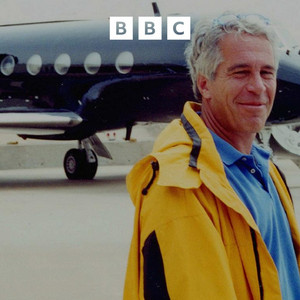
The US Justice Department publishes thousands of new files relating to the late sex offender Jeffrey Epstein.
Ukraine says it's suffering widespread power cuts after another night of Russian air attacks.
Regulators in the US approve a weight loss pill.
Also in this podcast, the latest on the bidding war for one of Hollywood's oldest studios.
Donald Trump's year through the eyes of one of his friends.
There's mass deportations underway, and a lot of people feel that that might be extreme.
You want to remove the people that are criminals and gang members, but you don't necessarily want to forcibly remove everybody.
And how do you stick to New Year's resolutions?
So a smart use of friction make it easy to follow through, make it difficult to fail is the way forward.
The US Justice Department has released its largest batch yet of files relating to Jeffrey Epstein.
He was the sex-trafficking US financier who befriended a huge number of rich and famous men over the years and who died in prison in 2019.
Our investigations correspondent, Andy Verity, is among the BBC team combing through this enormous data dump by the DOJ.
He's been telling my colleague Tim Franks about the latest revelations.
The thing that leapt out at me first was an email which indicates that Donald Trump travelled many more times on Jeffrey Epstein's private jet than was previously reported.
And it reports that he flew with Jeffrey Epstein and Ghislaine Maxwell during the time for which they expected to bring charges against her.
Now, of course, his presence on the flights doesn't indicate wrongdoing.
This email was sent on the 7th of January 2020 when he was still in his first term of office.
Donald Trump.
It's from an assistant US attorney on the team investigating Epstein who tells colleagues that flight records received the previous day reflect that the former president the current president travelled on Jeffrey Epstein's jet many more times than previously reported.
In particular, the email says the US president is listed as a passenger on at least eight flights between 1993 and 96, including at least four where Ghislaine Maxwell was present and another on which the only three passengers were Epstein Trump and a 20-year-old woman whose name's been redacted.
And on two other flights, two of the passengers were were women who would be possible witnesses in a Maxwell case, the email says, adding that the team didn't want any of this to be a surprise down the road.
Now, Donald Trump has consistently denied any wrongdoing in relation to Epstein.
We've approached him for comment.
Haven't got anything specifically on this, but the DOJ has said that 30000 documents have now been released.
And it says that some of the documents which pertain to a time just before the 2020 election contain inaccurate, sensationalist claims.
There's also some other stuff here, though, about someone closer to home.
There is this email from somebody who signs himself A.
Somebody sent himself a from Balmoral Tim.
Yeah, who in the email is asking Ghislaine Maxwell for inappropriate friends in quotation marks?
This is what they show.
So there's an email sent to Epstein's associate, Ghislaine Maxwell, from an email address titled The Invisible Man, sent on the 16th of August 2001, saying I'm up here at Balmoral summer camp for the royal family.
Balmoral being the Scottish castle where the royal family head to.
Yes, and spend their Christmases, mostly.
So A is, from this, the assumption that A is, is who?
Well, there's a suggestion that it could be Andrew Mountbatten-Windsor.
And part of the reason that's suggested is he says have you found me some new inappropriate friends?
The sign-off reads CAXXX.
Now, it comes from an email address.
This is the reason.
ABX17 at dial.pipex.com.
And now...
An email address sent on the same day, Ghislaine Maxwell writes, so sorry to disappoint you.
However, the truth must be told, I've only been able to find appropriate friends.
But a different email address aace, at dialpieboatscom, is listed in Epstein's phone book under a contact labelled Duke of York, which was an image shared in an earlier release.
Now, we've contacted Andrew Mountbatten-Whizzer for comment.
He's repeatedly denied all wrongdoing.
He didn't come back to us yet, but he says he didn't see, witness or suspect any behaviour of the sort that subsequently led to Jeffrey Epstein's arrest and conviction.
Andy Verity, talking to Tim Franks.
It's just above freezing in Ukraine today, but thousands of people may be unable to heat their homes or cook their food, as Russian airstrikes have again damaged the country's power grid.
Moscow has targeted Ukraine's energy infrastructure throughout the war, but it's been ramping up its attacks as winter has drawn in.
On Tuesday, Kiev announced emergency power cuts in several regions after hundreds of drone strikes overnight.
This woman lives in the city of Odessa.
Many parts of the city are still without proper electricity.
And that's quite a strange feeling, because you have a city full of lights, all the Christmas decorations, and suddenly you have a totally black city.
But with the latest attack, that's brought additional problems because Odessa is the old city.
So the whole downtown, if you don't have electricity, it means you don't have heating.
Then in many places it means that you don't have water because pumps are working from the electricity as well.
Russian drones have also hit residential areas and killed and injured civilians.
Our correspondent Samira Hussain has been to see the damage in Kiev.
I'm at the site where a drone has hit this apartment complex and five people were injured here.
There are crews that are taking pieces of plywood and they're covering it with plastic.
What they're going to do is they're going to go and install them into the windows that have just been completely blown out.
You can see shattered glass all over the ground and just so many windows were blown out.
And that's from the force of this blast.
It was so big that this entire...
Apartment complex one side of the roof is completely taken out.
One woman who has been living in this building for her whole life was describing what it was like to be in the apartment.
This thunderous blast and all this debris falling inside her apartment.
I was also speaking with two women who described what it was like when the blast happened, but also saying just how angry they are.
They are angry that they were targeted by Russia.
They are angry that this war continues.
And they are angry that this particular attack happened during Christmas.
Now, before Samira went to see that apartment complex in Kiev, I asked her about the latest Russian attacks and the damage to Ukraine's power grid.
Because of these Russian attacks on power stations.
You see that there are rolling blackouts, but also damage.
And some regions of Ukraine have been without power for several days.
Now there are more people that are without power.
And as you rightly pointed out, it's winter, it's cold, and it's freezing temperatures here.
And so the situation is quite difficult for many residents in Ukraine.
And if you listen to President Volodymyr Zelensky of Ukraine, he'll say that this is in Russia's nature to ramp up these attacks around the holiday time, around Christmas time, that this is what they do because it is cold and because it is the holiday season.
And so the insinuation there that we could see more attacks in the coming days.
And as well as stepping up attacks on the power grid, there's also real Russian focus on the port city of Odessa at the moment.
Just set that in context for us.
Yes, for the last several days we've seen some repeated attacks in Odessa, really targeting the port infrastructure.
So Odessa is a port city along the Black Sea, and what Ukraine says is that Russia is really trying to eliminate Ukraine's ability to be able to access the sea and to restrict movement not only of people but, of course, of goods as well.
And so this week and last week, we saw a lot more damage.
Seven people died in one of the attacks.
We've seen more attacks in Odessa overnight.
This time, no casualties.
But certainly, you're seeing a kind of shift in the war towards that area.
And we've got Poland scrambling fighter jets to defend its airspace.
So more and more fears in Europe about Russia testing the boundaries.
President Zelensky made it clear that there were more than 650 drones that were launched by Russia all over Ukraine.
And so Poland activated its defenses out of caution, but also remembered that Poland has accused Russia in the past of violating Polish airspace.
And so there is a bit of a reason why Poland would take this kind of action.
Our correspondent Samira Hussain, who's in Kiev.
And for a more in-depth look at what's happening in Ukraine.
You can go to YouTube, search for BBC News, click on the logo, then choose podcasts and the Global News podcast.
There's a new story available there every weekday.
As Christians prepare to celebrate the birth of Jesus Christ in Bethlehem.
Today, the West Bank city is considered to be under Israeli occupation by many
Women giving birth there now often turn to the Holy Family Hospital run by the Catholic Order of Malta.
Our reporter Fahima Abdul-Rahman has been following one mother's journey.
When you think about Bethlehem, you think about childbirth and looking after babies.
Because of the Bethlehem, the nativity scene, so babies are sacred here.
Dr George Zoghbi is the head of the new natal unit at the Holly Family Hospital, the busiest maternity facility in the West Bank.
We followed mothers and doctors here for a year to experience what it's like to bring babies into the world while living in the occupied West Bank.
Palestinians are frequently delayed at checkpoints and face potential raids on their homes by the Israel Defence Forces.
I was waiting for God to give me one baby, but he blessed me with two.
Amani Hamdan gave birth here to premature twins, a boy and a girl, at 27 weeks.
I asked if something was wrong.
I asked if the boy had died.
They said they were sorry for my loss.
The boy had died.
His heart had stopped.
In the end, I have to be strong.
God took one, but he left me with the other.
But baby Mateel has also suffered from complications of a premature birth.
Mateel developed a complication that a lot of extreme premature babies develop a grade 3 hemorrhage.
We grade them from 1 to 4.
It's unfortunately a very bad scenario, but...
Things could turn around with her.
Mateel is now six weeks old, and Dr. Zoghbi brings worrying news for Amani.
Doctor, yesterday when I held her, I felt that her head was a bit enlarged.
You're right.
We had to extract some of the fluid.
The problem is not only that her head is getting bigger, but also that the fluid is exerting pressure on her brain.
They'll have to wait a month and a half before they can decide if she'll need an operation.
Ideally, she would go to Jerusalem, but the political situation makes that very difficult.
Dr Zorbi is concerned that anxiety experienced by expectant mothers in West Bank could itself be a danger.
The psychological pressure on the mothers, above all, the fear.
When a pregnant woman is afraid, it can lead to a premature birth.
Twelve-week-old Mateel no longer needs an operation, but still depends on oxygen.
I just want her to come home with me.
Yeah, he's suckling.
He needs some milk.
Dr. Zorbi reflects on what it feels like to help these babies in the new NATO world.
The most rewarding moment is when you actually work with the baby for three or four months and then you finally get to see the light at the end of the tunnel and the baby is finally right there getting ready to go home.
Come on, let's get dressed.
After 85 days, Mateel is finally allowed to go home.
It's true my happiness is incomplete.
I wanted to take them both home.
Returning home with Mateel, Amani considers their future.
Above all, I hope we will have peace and safety, that we will live like a family all together, that Mattel will grow up in front of my eyes and that she will be the smartest girl at school.
That report from Fahima Abdul-Rahman.
Regulators in the United States have approved a pill version of the weight loss drug Wegovi.
It's the first time the US Food and Drug Administration has given the go-ahead for daily oral medication to treat obesity.
Here's Stephanie Tillotson.
Appetite-suppressing drugs with brand names such as Azempic, Wegovi and Monjaro have become popular in recent years because they help people to lose weight.
But some can be put off from taking them because they're not very convenient, having to be administered by injections, and they have to be stored below a certain temperature.
Professor Giles Yeo, an obesity expert, says taking a daily tablet would make the drugs more accessible, but at the moment there are drawbacks.
Injectable at the moment for regovi is 24 milligrams, so that's how much you take once weekly.
What the dose that they're reporting it to be effective and have been approved for is 25 milligrams, so 10 times that per day.
So you have to take 70 times more, shall we say, to get past the stomach.
As a result, it will be significantly more expensive.
Professor Jason Holford is a clinical psychologist who specialises in obesity.
He says taking a daily pill could revolutionise treatment.
We have been looking for effective anti-obesity management pills for 50 years and we've historically had lots of failure.
Now this is the first peptide pill to come out which would be easy to use, which is going to produce weight loss of between 15 to 17, according to the clinical trials.
Now, that's a significant degree of weight loss compared with what we've seen previously.
It's not quite at the levels of bariatric surgery, but it's getting there.
The decision by the Food and Drug Administration is a major boost for the Danish manufacturer, Novo Nordisk, which hopes to begin selling the medication in the US next month.
Other pharmaceutical companies are developing their own versions.
Still to come.
In this podcast, one of the world's best marathon runners weighs in on Kenya's problem with performance-enhancing drugs.
Men and women doesn't value the sport.
And that's what brings all these menace and the thinking about purely taking drugs.
World of Secrets is back with a new investigation into a global network exploiting families with sick children.
I really needed money for Khalil's treatment.
He said he would make a video.
He told me if the video clicked, he'd give us 100,000 pesos per month.
He gave me hope.
World of Secrets, the child cancer scam from the BBC World Service.
Listen now wherever you get your BBC podcasts.
The bidding war over one of Hollywood's biggest studios has become a bit more complicated.
Warner Brothers accepted an offer of more than 80 billion for its film and streaming businesses by Netflix.
But before that deal could be approved by regulators, another Hollywood institution Paramount, countered with its own offer to buy Warners outright for over 100 billion.
Paramount is owned by the media mogul, David Ellison, whose father just happens to be Larry Ellison, one of the richest men in the world.
And Larry Ellison has just announced that he will personally guarantee 40 billion of Paramount's bid.
So what does that all mean?
We asked the investment manager, Judith McKenzie.
The board of Warner Brothers had said that they were going to reject the Paramount bid, even though it was for the whole company and a 22 premium to the Netflix deal.
And they said that they were going to reject it on the basis that they didn't believe that the Paramount deal was properly funded.
So now Larry comes over the hill with his 40 billion and is underwriting the deal.
I think the Warner Brothers board are really going to have to take that seriously.
So that means that it could get into quite a hostile situation.
And well, maybe good for shareholders, because you'd like to think that if it's hostile, then there could be a better price.
Now, whatever the outcome, the sale of Warner Brothers and its properties, like HBO, will likely mean a single company.
Netflix or Paramount will own an even bigger chunk of the world's media production and streaming businesses.
Paul Fleming, head of the UK Entertainment Workers Union Equity, says that could have a big impact on people who make film and TV and those of us who watch it.
There is an anxiety about a sort of closing market for employment opportunities, what that might mean in terms of royalties and ongoing payments in particular, and also about the volume of content that's made in this country and around the world, which our members work on.
Fewer players means fewer opportunities to sell product on, and that's one of the principal mechanisms in which artists make royalties.
That's how they get their secondary payments and that's the main source of income for workers in that sector.
And we do worry too, for audiences and what it means in terms of subscription platforms, subscription payments and whether audiences can get best value for money in a sector that becomes less competitive.
An international review of hormone treatment for menopause symptoms has found no evidence that it either increases or decreases the risk of dementia.
The team of researchers from the UK Ireland Switzerland, Australia and China examined 10 studies involving more than a million women.
Professor Amy Spector from University College London spoke to Tim Franks about what they found.
The key factor is that dementia disproportionately affects women.
So even if you account for women living longer, there is a high incidence of dementia in all age groups in women.
The oestrogen hypothesis suggests that a loss of oestrogen which we see in menopause may have a clear link to dementia.
We often see brain fog in middle age and there's ideas that this may progress to dementia.
So one of the theories is that therefore, if we replace these missing hormones through HRT, this may reduce dementia later on.
There was also a competing hypothesis that HRT might increase the likelihood of dementia.
Yes, and I'm not sure what the rationale for the hypothesis is.
There was some research showing that it might increase the risk of dementia if you give people the hormones too late.
You called for more research.
What sort of research would be useful?
The problem at the moment is that most of the research is observational.
So you'll look at a bunch of women who've got dementia and a bunch of women who don't have dementia, and you'll look at how many of them took HRT.
And what we find often in observational studies is that people without dementia are more likely to have taken HRT.
But that doesn't mean that the HRT prevented the dementia.
They might be more educated or have more access to other health care.
So what we need is these randomized controlled trials where we randomly assign people to either receive HRT or not.
And then we can really compare the differences in a more robust way.
It is proven that HRT can be very helpful to women who are going through the menopause.
I totally understand that.
The idea of a randomized controlled trial is you don't know whether you're getting the drug or you're getting a placebo.
But it might mean that whilst the science is good, the outcomes for those women aren't necessarily good.
Yeah, it's a really, really good point.
And that's one of the big problems.
Once something's been around for a long time, it becomes harder to do trials, because we know more and more about both the benefits and also the potential risks.
So people may be more reluctant to sign up.
That's absolutely right.
And I suppose you might get a bias in the sense that the people who are signing up to these kind of trials are maybe the people who don't have such severe symptoms, who don't mind as much whether they get the treatment or the placebo.
Professor Amy Spector.
Elliot Kipchoge is considered one of the greatest long-distance runners of all time, an Olympic champion who reinforced Kenya's reputation for producing some of the best marathon runners in the world.
He retired this year after more than two decades of competition, but in a BBC interview he said he's deeply invested in the future of Kenyan athletics.
Peter Goffin was listening.
Eliud Kipchoge was just 19 years old when he ran his first Olympic race a bronze medal finish in the men's 5000 meters in Athens in 2004.
He went on to win gold in the marathon at the 2016 and 2020 Olympic Games, as well as a slew of medals and broken records in world championships and city marathons.
But for all that success, he has not forgotten what it's like to be a young runner in need of training and support from athletics federations.
All the veterans actually has never put 80 or even 100 of their mind on nurturing the talent, on managing the talent, giving them knowledge, taking care of them.
If they do all those things, people will be happy.
We'll have a great talent to actually skyrocket our sport in this country.
Turning a young runner into a champion is a process he likens to squeezing a diamond from a stone.
I think all the veterans actually doesn't know how to mold or how to craft a talent.
You know, they don't nurture the talent.
And that's why they don't respect the talent the fullest.
Kenya is renowned for its long-distance runners.
But several of its track and field athletes have been accused of using performance-enhancing drugs, or PEDs.
19 Kenyans were banned from competition by the Global Athletics Integrity Unit this year.
In October, the World Anti-Doping Agency put Kenya on its watch list for failing to comply with requirements.
Kipchoge says Kenyan authorities are not doing enough to stop PED use.
We need two more through education and through actually doing the right thing to tell them, to show them legally that they are wrong.
He says young runners must be taught to value their sport and its legacy, not just shoot for easy glory on the track.
We are in a state whereby sportsmen and women want to rush for riches.
We are in a state whereby...
Men and women doesn't value the sport.
We are in a state whereby men and women doesn't see beyond the sport.
And that's what brings all these men and women and the thinking of actually taking drugs.
Elliot Kipchoge.
Donald Trump came to power at the start of this year with a frenzy of energy and the support of many Americans who had high hopes for his second administration.
As the end of 2025 approaches, his approval ratings are low and his base is annoyed about a.
Chris Ruddy is a friend of Donald Trump who runs the conservative media group Newsmax.
He's been talking to Justin Webb and they started by talking about what some see as Mr Trump's greatest achievement this year closing the southern border.
President Trump thinks that issue was the number one issue and why he got elected.
He told me that personally.
And his number one goal has been to close down the border.
And, you know, he's really close down the border.
It is not the level of crossings... there was.
And now that they're doing active deporting, deportations, there's even less, right?
So that issue is under control.
The question now is the immigration issue here.
There's mass deportations underway and a lot of people feel that that might be extreme, because the idea would be you want to remove the people that are criminals and gang members, but you don't necessarily want to forcibly remove everybody.
The universities, I mean, he really went for them, didn't he?
And his line was that they were not free.
You weren't free to teach properly.
You weren't free to talk about sex and gender in an open way, some racial things as well.
He has had an impact, hasn't he?
I think the president had pretty strong grounds and he targeted universities like Harvard, Columbia and other schools.
And I think it's been a wake-up call.
I think there is an effort to put the brakes on woke ideology.
But it's very strong.
Look at Memdami, just won by a pretty good number in New York.
And that's a city that's known to elect people like Michael Bloomberg and Rudy Giuliani.
So, you know, there is concerns about this thing.
And that would be in part at least because of the economy, if we can turn to the economy.
And there is a suggestion from some commentators that what Trump is doing effectively is making the same mistake as Joe Biden made, which is to tell people that the economy is fine where they feel themselves that it's not.
And that doesn't work.
People feel it and they're going to vote how their economic situation is based.
And the numbers are not very good if you look at poll after poll.
The problem is that Biden increased inflation, inflated the economy by about 25%.
He dumped $7.5 trillion in stimulus on top of the normal budget numbers using COVID. as an excuse.
And that created a 25% increase plus in inflation.
Now, that's under control now, but the problem is you still wiped out 25 of the purchasing power and the wealth of the country.
And nobody's – we really haven't recovered from that.
Final thought about foreign affairs, obviously Ukraine, but also the Middle East and Venezuela.
Is he governing in a way, do you think, that would impress his core supporters?
I think he has his own foreign policy approach.
I'm not sure it's really in sync with the traditional Republican Party approach.
We saw his national security document.
He seemed to sort of demote Europe as an important ally.
He's raised Russia as a potential good ally.
Israel is barely even mentioned in the document.
China is seen as a real potential threat.
And there's real claims that Latin America is sort of America's backyard, which was a 19th century view.
So he definitely, I think, has made Maduro a target.
I think he will have some change of the regime there.
Ultimately, it's just a matter of time.
His number one priority he may not say this publicly, but I believe it's true is solving the Ukraine-Russian war.
I do think that he has had tremendous success And a number of peace agreements around the world Armenia, Azerbaijan and Pakistan, Israel and Gaza and fixing the hostage situation.
So I think we give them a shot.
Chris Ruddy, who runs the conservative media group Newsmax.
If you're already starting to think about next year's New Year's resolutions, help may be at hand in trying to keep them this time.
Britain's Behavioural Insights team has tips on getting our tech to help us stick to the most common ones.
Eating less, drinking less, spending less time on phones, saving some money.
Helen Brown is the Managing Director of the Behavioural Insights team.
Let's be honest, New Year's resolutions are really hard.
By the end of the year, only around 9% of us have stuck to those goals we set for ourselves.
This isn't surprising.
There is something much larger at play.
The environment around us, the systems that we operate in and even our own psychological biases are often stacked against us.
Let's take healthy eating and let's think of a supermarket to start with.
As soon as we walk in, we are bombarded by beautiful smells, fancy packaging, buy one, get one, free deals.
We're really surrounded by those nudges, behavioral cues that make us behave in a certain way.
Much of it is a around the smart use of friction and making it really easy for ourselves to follow through.
We want to create an environment in which we can enact our goals and close the intention behavior gap.
So we could take an example of reducing our phone use, which I should say is something I am always focused on.
We could reduce unnecessary notifications so we're not prompted to pick it up as often.
We could use time limits on our apps to track and limit our daily usage.
I actually put my social media apps into folders way off my home screen.
I find that even adding a small friction, so a small obstacle, an extra tap can interrupt that autopilot reach.
Helen Brown, who's already thinking about 2026.
I'm Andrew Peach.
Thank you for listening.
And until next time, goodbye.
World of Secrets is back with a new investigation into a global network exploiting families with sick children.
I really needed money for Khalil's treatment.
He said he will make a video.
He told me if the video clicked, he'd give us 100,000 pesos per month.
He gave me hope.
World of Secrets, the child cancer scam from the BBC World Service.
Listen now wherever you get your BBC podcasts.