Welcome to NVIDIA's AI podcast. AI has been a tool for all kinds of things.
So we apply it to self-driving cars, to recognizing cats on the internet, to voice recognition on our handsets.
Our guest on this segment, he and a wide-ranging team of physicists and other scientists applied AI to an experiment.
And what they did was to use it as a tool to create what is a very difficult product or condensate is the actual term, the Bose-Einstein condensate.
They wanted to produce this gas to do other experiments.
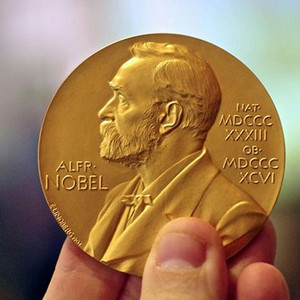
But in doing so, They had a question of, well, if we can use AI as a tool in these experiments, Can AI also be its own novel scientist and explore different parts of physics and different parts of science, and ultimately they came to the question of, can AI win a Nobel Prize?
To help us discuss that and explain it all, we have Paul Wigley, who is a researcher and a physicist at the Australian National University in Canberra.
Paul, welcome. Thank you. Thank you for having me too.
Yeah, you look amazingly awake for just getting off a 13-hour flight.
Yeah, it's a long flight across. So take us through this you guys are working on an experiment.
I want to know what you guys were focused on what you were looking at and And then how you thought that AI could help.
So... We are across in Australia, so I'm actually from Canberra, which is the capital of Australia as well, which is nice.
It's not Sydney, I always know. I'm kidding, I'm kidding.
I knew it was Canberra. So we, along with a lot of collaborators across Australia, had the idea that applying artificial intelligence and machine learning to experimental applications in physics could produce something interesting and a place that we thought we could step into this is with our experiments with Bose-Einstein condensates.
Now, look, I'm not a physicist. You could probably tell by the way I'm dressed.
What is a Bose-Einstein condensate and why did you need this gas?
Yeah, so... The condensate is an interesting thing really.
It was first theorized back in 1924. But it took until 1995 for it to finally be experimentally realized.
And that was through this concerted effort with many physicists across the world trying to cool a gas of atoms down to almost absolute zero.
Now, it was theorized by a pair of physicists, one of whom we all know, Einstein.
Yeah, that's right. Einstein and Bose, who lend their names to...
To the final product. And so the condensate is the coldest...
Duff on Earth? What is it? Actually in the universe.
So it's actually colder than the deepest reaches of space.
So I think deep space is about 2.2. So room temperature is about 273 Kelvin.
Deepest reaches of space is one or two Kelvin.
We reach temperatures down in the nano Kelvin, so a billionth of a degree above absolute zero.
Wow, a billionth of a degree above absolute zero.
A bit hard to imagine. Yeah. Well, so but you guys imagined it.
And then so 1924, it's theorized 1995. It's actually. you know, manufactured or produced.
Yeah, so it was actually three people, three different teams in America at leading universities that managed to produce it sort of simultaneously.
And these three teams actually won the Nobel Prize in 2001 for their work in producing Bose-Einstein condensates.
I just have to ask, is it like it's in an ice cube tray?
Does it live for a nanosecond or It's very short-lived, it is, but it is more than a nanosecond.
And not quite an eye stray, but something very, very strange.
It's a vacuum system, so this massive metal chamber which allows us to have it in this ultra-high vacuum.
And then we shine laser beams at it and cool it down.
Wow. It doesn't sound like it should work, but I guess it does.
So you needed this condensate. Why? And then how did you think that AI and machine learning could could help you in that task?
Yeah, so the condensate itself is interesting, but it also forms the starting point for other measurements and other experiments.
And so producing the biggest, the coldest, and the best condensate is useful.
And we had this idea that artificial intelligence might allow us to optimize those parameters much better.
So the kind of, I don't know, spade work, you guys aren't ditch diggers, but anyway, like the tough...
That's it. We are. So PhD students are. That is true.
Toil away in the lab for many hours. smart PhD students that you are, you're like, look, I'd rather go read a book or watch Netflix than be doing this tedious work so you do you did you train it a system on I don't know what, but on data or on experiments and how they had been done in the past?
Well, so actually... having the physical experiment makes it a little bit easier because you can actually train it on the thing itself.
And so we don't have this training and then learning split, like you would traditionally have in those.
And a deep learning system. Yeah. We actually learn it. each time we run the optimization.
So it's learning on the fly as it's going from the runs that it tries.
So essentially, you are creating a kind of machine learning PhD student.
That's it. That's actually. And they can stay up all night and not get tired and keep going.
And the beauty of that is it allows us to not necessarily watch Netflix, but to look into the more deeper physics that we're actually interested in.
No one really wants to sit behind a computer trying different numbers all night. but you do want to think about the future and what we can do.
So the AI in this machine learning system, it worked, right?
Like it did take that TDM out of, or that number crunching, like I say, or number changing process and you could hand that off.
And so it produces you produce the condensate and you did what you would do with it.
But that prompted a deeper question where you kind of start your mind goes to like, well, look, the people who did this won a Nobel Prize. can an AI system now take what it's learned and run with it?
Or what was your thinking about this? I think the beauty of the AI system is that it can look at many, many different parameters and see patterns in large sets of data that humans may not necessarily be able to see. and whilst we can model these systems very well we model them in in certain approximations and so we miss some we can miss some very key physics there.
And let me ask you this. Is that why AI seemed well-suited to it?
How did you get to this idea anyway? Because clearly...
It's a tricky experiment, it sounds like.
It may or may not work, and it's probably far harder than anyone can imagine.
Why AI to the rescue or to the job? Yeah, I guess optimization is very well done by computers.
What we have is an experiment which is very noisy and that's not so well done by computers, but the particular artificial intelligence algorithm that we created can sort of see through that noise, which is very important.
And so AI was this tool that we could use in a very noisy system.
Can you explain in simple terms what it actually did, like how it worked?
Yeah, so... One, so it actually only optimized one particular stage of a multi-stage experiment.
Um, and this is the evaporated evaporative cooling stage.
So you can think of this like your coffee cup sitting on a table.
The hot atoms, they escape from the cup and the rest of the atoms cool to a lower temperature.
Well, the rest of the coffee, sorry. I drink it before it's cool to a little bit.
Well, yeah, that's it. So in the same way, we hold our atoms in these cups, essentially.
These cups made of light, these traps. By lowering the walls of those cups, those traps, we can allow the hotter atoms to escape and what's left cools to a lower temperature.
And so we parameterize the way that those walls lower, and allow those parameters to be optimized by the machine learning algorithm.
Pardon the interruption. But we have a favor to ask.
Give us a review on iTunes, Google Play Music or whatever your favorite podcast platform of choice is.
It helps more people find us. As always, thanks for listening.
Now back to the good stuff. Physicists, and I don't take offense at this, are famous for doing linear algebra in their heads and kind of staring off into a corner and thinking about math.
How did you and your team, you know, it's not a discipline necessarily that physicists are well, you know.
It's not a discipline that physicists, it seems to me, are kind of deploying all the time.
Or that's not how they're trained. So how did you guys... even get hip to this, as it were.
I think you've made a very keen observation there.
And I don't actually think that many people in physics are truly taking advantage of it yet.
And they should be, because it's been revolutionary.
We've seen talks recently about AI beating conventional methods in translation, in vision, all of these things.
And I think the more we apply it to physics, the more we could see advances.
But in terms of how we first sort of thought about it, I guess we had this interest in AI beforehand. and a few people had been to sort of varying conferences, not necessarily physics-related, that had seen how powerful it could be.
The application to other disciplines, maybe, or other sciences.
And so brought this home and said, Look, maybe this is something we should be looking into as well.
And it worked. And again, let's get back to this question of, but then it prompts a different question.
And how did that occur to you? and then how do you then start to tease that out and think about it further?
So the AI itself, is able to adjust the powers in laser beams to adjust these traps that I was talking about.
And the results that it came up with weren't necessarily what we had expected.
Normally you would expect the laser powers to just decrease and never really increase.
But it was sort of modulating it up and down as well on the way.
And that was a little bit surprising. And so it begged the question, was there more physics that we didn't necessarily know about that it could find?
And could it make discoveries about science that, that we might not necessarily be able to.
So it was performing the experiment in a way that you guys wouldn't have done it had you been, you know, like you say, turning the dials or... turning the numbers on yourselves.
And that's interesting because we've seen examples of For example, in the famous Go tournament of the AI system making moves in that game that no human would have made.
And so it sounds to me like what you're saying is that this AI system kind of did this experiment and made it work in a way that you guys didn't necessarily wouldn't have necessarily thought of.
Yeah. It certainly still did it in a very conventional way.
And I think that that might be due to the fact that we were only able really to do very few parameters in our search.
And what we're actually trying to extend it currently to, so it used a Gaussian process before, which is not deep neural nets.
And we're actually trying to implement a deep neural net in the future so we can extend it to many more parameters and potentially more of the experiments.
And then it can sort of find its way to a solution.
Yeah, and potentially see things that we might not have been able to.
Well, let's talk about then that Physics is a very creative science, right?
You need to have an imagination and kind of a curiosity.
And so can these AI systems, do you think, be imbued or possess that same curiosity and creativity?
Yeah, well, I guess it depends what you mean by creativity because, I mean, can you quantify creativity?
Is that just looking where maybe you... Maybe you don't know.
And in which case you can make an AI do that.
There's a gap between recreating Nobel Prize winning work because it's already there and you kind of know how that works.
And and winning or doing new Nobel Prize worthy work.
So where is that gap today between an AI system and, you know, Nobel Prize winning physicists and the reality of what they can do?
The recreating work is somewhat easy in a way. giving it only access to a very particular stage of the experiment where it can't really go wrong.
It's at the very end of the experiment, so it's got already a lot to work with.
And the gap between that and actually discovering something new or actually innovating, that's quite large.
And it's probably, as I was saying, mentioning earlier due to the lack of actual freedom it was given due to the constraints of the computing power and and the algorithm itself.
So what's next then? Is it to take the chains off, as it were, and let this system do some physics and kind of wander around and look for things?
That would be ideal. We'd love to take the chains off.
So yeah, implementing deep neural nets. allowing us to optimize the entire experiment.
That would be interesting. We also have questions about whether changing other parameters at the same time. other aspects of the system at the same time as these laser powers, whether we can use that to reduce the number of atoms that we lose. aspect of it is that we actually throw away a lot of the atoms in this evaporative cooling stage by necessity.
But if we didn't have to do that, we'd end up with bigger resources, bigger Bose-Einstein condensates and that's helpful.
How is that helpful? I still don't understand exactly why you need this stuff.
Fair enough. So Bose-Einstein condensates in themselves are very interesting things. but ultimately they allow us to perform sort of further experiments, further measurements.
And so one thing that we do in our lab is measure gravity and Bose-Einstein condensates are ideal for this and actually allow us to have some of the most precise measurements of gravity in the world.
And so I think many people would maybe know that gravity is 10 meters per second squared.
That's the acceleration. an undergraduate physicist might know that it's actually 9.8 in our lab. we have that number to eight decimal places.
Oh, so precision is what matters. And that number actually changes across the surface of the Earth as you move over. ore deposits, iron ore or precious minerals, aquifers.
And so having a better resource, having a better Bose-Einstein condensate, allows you to make better measurements and so it becomes a more precise sensor and you can do better mineral exploration or climate analysis.
So the way you view AI and deep learning now is as a tool to help you get there, to help you do better climate analysis and ultimately have a more precise view of gravity in this case.
Going forward, how do you think that that relationships with You know, with physicists and physics and these systems, how does that change?
Or how would you hope it changes? Yeah, look, I'd also add to that that... not only are measurements very important, and that's probably what most people care about, but the more fundamental science where you don't necessarily know what it will lead to.
I mean, the invention of the laser, we never knew that that would lead to fiber optics and the invention of the internet. but it did.
And so a lot of the discoveries that science makes are these blue sky things.
You don't necessarily know where it leads before trying it.
And I think AI can sort of enhance that and allow us to discover technologies and physics and science that we might not have. been able to before.
It all sounds, you know, like important work and, and Precise measurements, we all know that.
So gravity to the next decimal point. But what drives you?
You're a physicist, you're a scientist. And AI as a tool, what does that help you do more of or get towards?
I think the thing that excites scientists most is the unknown.
And we're always trying to sort of expand that frontier, our little portion of that frontier. because the frontier is huge.
I mean, science spreads across all fields and we have this little tiny little section in our field that we're pushing and Discovering something new, something exciting, something that's potentially revolutionary and life changing for a lot of people.
That's what we're looking for. And not necessarily specific. measurements or specific results, but just something broad, something that we can really use.
And something new too, right? Something that nobody's ever thought of or seen or felt.
That's it, being the first as well. I mean, there's always a drive for that. in all humans, I think, being the first at something.
And so being the first to see that something new, I think that's really what drives us all.
Well, Paul Wigley, thank you so much. And I'm going to go and check out some Bose-Einstein condensates myself one of these days.
Good. I'll get on a plane to see it. You're always welcome.
Thanks for joining the podcast. Thank you.