
[Understanding Animal-Themed Idioms in the English Language]-[English Idioms: Animals]
📋 Summary
Decoding Animal Idioms in English
Language is deeply connected to the natural world, and English is no exception. As highlighted in the Spotlight podcast, animals are ubiquitous in our environment, and this presence is reflected in the frequent use of animal-related idioms. While these phrases often baffle non-native speakers because their literal meanings are disconnected from their actual usage, mastering them is a significant step toward sounding like a native speaker. Here is an exploration of seven common animal idioms and their true meanings.
1. The Elephant in the Room
This idiom describes a situation where there is an "avoided subject" that is significant and obvious, yet no one wants to address it. Much like a "large grey animal sitting in the corner of the room," the issue is impossible to ignore, yet people remain silent due to discomfort or the complexity of the topic. An example would be ignoring marital difficulties during a social event.
2. To Kill Two Birds with One Stone
Contrary to the literal interpretation, this phrase has nothing to do with harming animals. It refers to the ability to "achieve many things in one attempt." It is a linguistic shortcut for efficiency, such as combining a birthday visit with a financial transaction to handle two responsibilities in a single trip.
3. A Wolf in Sheep's Clothing
Originating from the Christian Bible, this idiom describes a person who "appears gentle but is not." It serves as a metaphor for deception, where someone hides their true, predatory nature behind a facade of innocence, much like a wolf attempting to blend in with a flock of sheep to avoid detection.
4. The Lion's Share
This phrase refers to receiving the "largest part of something." Rooted in an Aesop fable from 1600 BCE, the term illustrates power dynamics. In the story, a lion claims the entire kill from a hunting party, demonstrating that those in positions of authority often secure the majority of resources or profits, leaving little for their partners.
5. All Dressed Up Like a Dog's Dinner
Primarily used in the UK, this idiom is a double-edged sword. While it indicates that a person is wearing "very nice clothing," it also carries an insulting undertone. By comparing the individual to a "dog’s dinner"—something not very clean or orderly—the speaker implies that the person may look foolish or has perhaps tried too hard to present themselves.
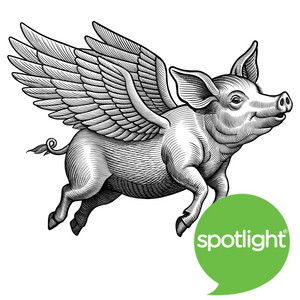
6. When Pigs Fly
This is a classic expression of impossibility. Since pigs lack the biological ability to fly, using this phrase signals that the speaker believes an event or action "will never happen." It is a way to express strong skepticism regarding someone’s future plans or promises.
7. A Fish Out of Water
This idiom describes a person who finds themselves in a "new, often unpleasant situation" where they lack experience or comfort. This metaphor is so pervasive in English that it has become a genre of storytelling, often used to place characters in humorous or challenging circumstances where they do not belong.
Conclusion
While these idioms do not teach us about biology or animal behavior, they are essential tools for cultural fluency. By understanding that these phrases are figurative rather than literal, learners can bridge the gap between textbook English and the natural, vibrant speech used by native speakers. Integrating these idioms into daily conversation is a practical way to improve communication and nuance in the English language.
Deep Learning with ListenLeap


