
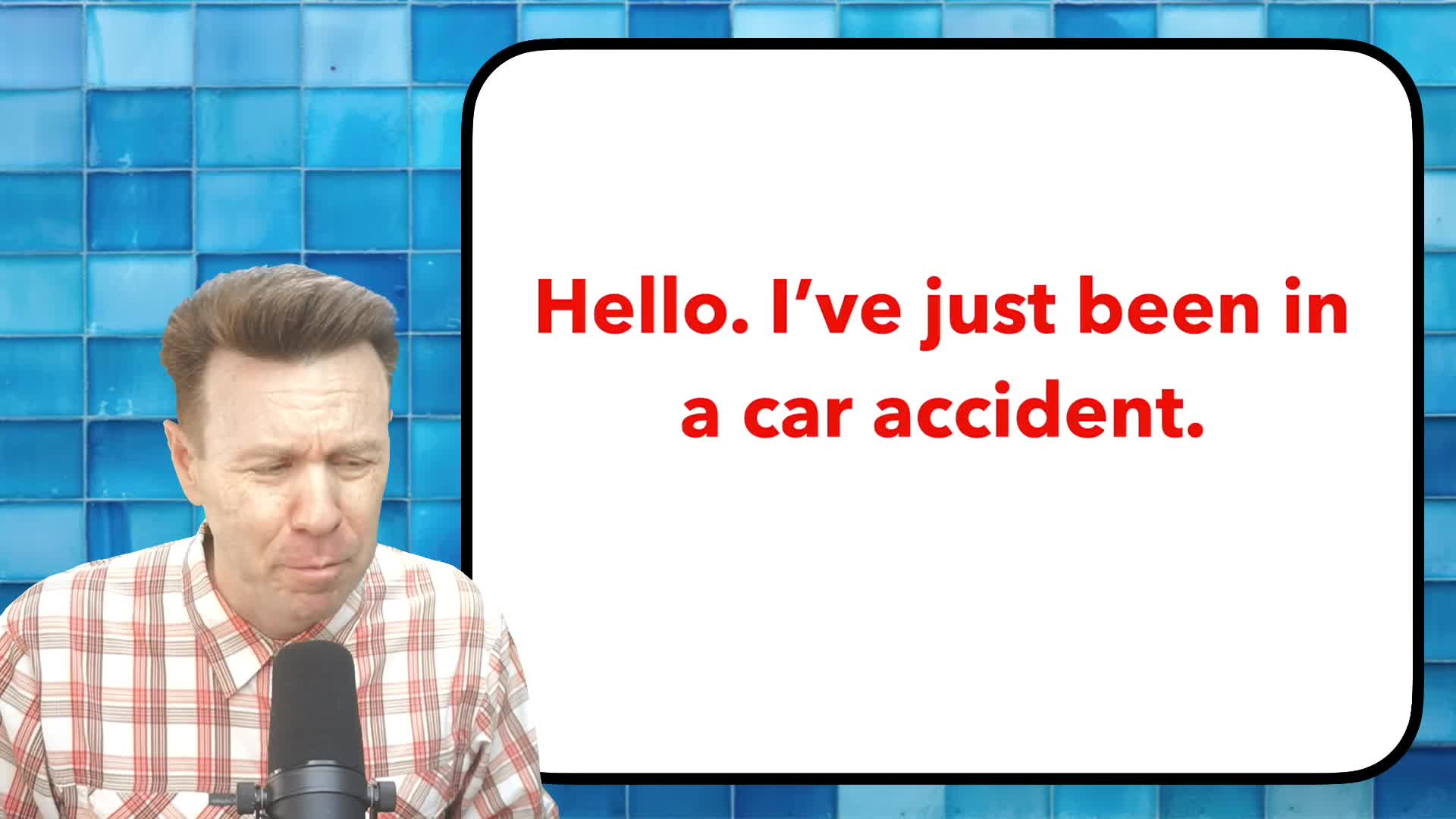
[Mastering English Communication: A Practical Guide to Emergency Scenario Roleplay]-[English Conversation Practice w⧸ Role-Play Training🌟]
📋 Summary
Enhancing Fluency Through Contextual Roleplay
This podcast episode provides a structured approach to improving English speaking skills by focusing on a high-stakes, real-world scenario: reporting a car accident. By breaking down the dialogue into repetitive practice and role-playing exercises, the hosts demonstrate how learners can build confidence and improve their pronunciation, intonation, and vocabulary in a controlled environment.
The Importance of Natural Intonation
One of the primary goals of this lesson is to move beyond robotic speech. The host emphasizes that when speaking English, one must convey the appropriate emotion. For instance, when the student says, "Hello, I've just been in a car accident," the host corrects the delivery, noting that it should sound urgent and serious rather than casual. The host highlights the importance of linking words, explaining how "to hear that" naturally blends together in fast-paced speech, becoming "to hear that, to hear that." This focus on phonetics ensures that learners sound more like native speakers.
Vocabulary and Idiomatic Expressions
Throughout the conversation, the podcast introduces essential vocabulary and idiomatic phrases necessary for emergency situations. Key terms include:
- "Injured at all?": A standard inquiry for assessing physical safety.
- "Main Street, right across from the gas station": Providing precise location details.
- "Emergency services": Referring to police, fire, or medical assistance.
- "Stay on the line": A critical idiomatic expression that the host explicitly clarifies. They explain that "stay on the line" does not mean standing on a physical line; rather, it is a directive to "stay on the phone" and "don't hang up," ensuring that the communication channel remains live.
The Roleplay Methodology
To solidify these concepts, the episode utilizes a dual-role exercise. By alternating between the roles of the distressed driver and the emergency responder, learners are forced to engage with different perspectives and vocabulary sets:
- The Driver's Perspective: Focuses on reporting facts, such as "my car is really damaged" and asking procedural questions like "Should I call my insurance company now?"
- The Responder's Perspective: Focuses on providing reassurance and instructions, such as "please stay calm and avoid moving the vehicles" and "we'll help you through it step by step."
Conclusion: The Path to Fluency
Ultimately, the podcast frames English learning as a physical workout for the brain—or "working them English speaking muscles out." By repeating phrases and engaging in active dialogue, learners move from passive listening to active production. The host concludes by encouraging listeners to "keep moving forward one little step at a time," emphasizing that consistent practice is the only way to achieve true proficiency in the language.
Deep Learning with ListenLeap


