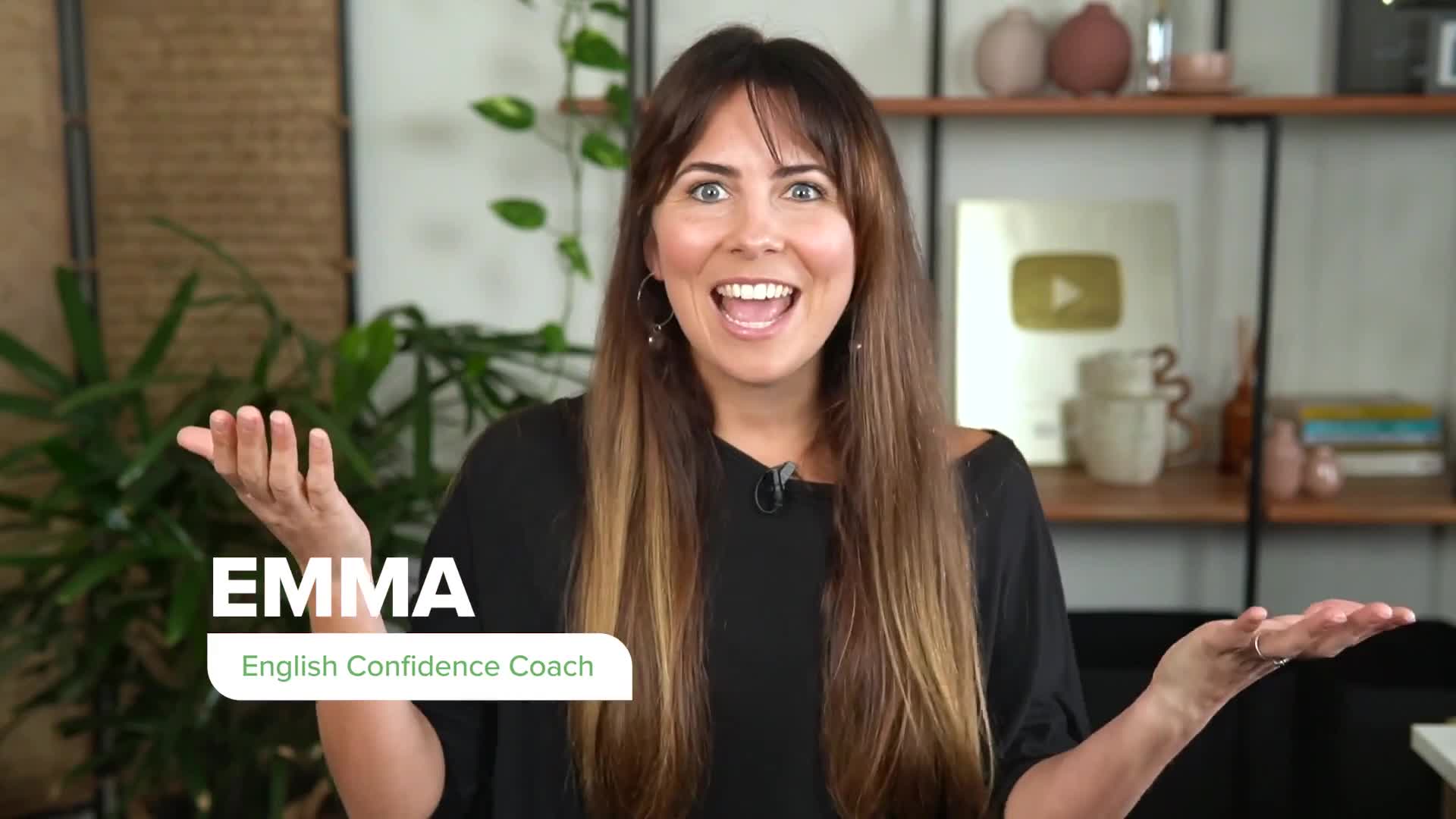
Well hey there!
Do you like to travel?
Today I'm sharing a real, natural English conversation about travelling, and there are so many reasons to keep watching.
First, it's going to be fantastic listening practice.
You'll get to listen to a natural English conversation between native English speakers as I chat with my friend Kat about her travels.
Secondly, you'll also learn lots of interesting travel phrases and vocabulary, and you'll hear them as they're used naturally, in a casual conversation.
And thirdly, we have made you a fantastic workbook that is free for you to download.
It includes explanations, examples and some activities that will help you to practise using these words as you speak about travel yourself.
And you can get that free pdf workbook just down in the description below.
You need to sign up with your email address and we'll send it through straight away.
So if you're ready to practise listening to a casual conversation about travel, let's dive right in!
I've invited my friend, my colleague, Kat Along, to join me for a natural, relaxed conversation about a topic that friends often discuss together.
Travel.
Travel.
And travel is something that Kat is a bit of an expert on.
A bit of an expert of an expert.
I would say that if pat looks a little familiar, that's because she is one of our incredible coaches from inside the hey lady community, an online, safe and supportive community to help women develop confidence and freedom with their spoken english.
Community is global.
There are women from over a hundred and twenty different countries.
Kat has met the most of them because she has been traveling around the world for the last seven years.
Seven years, seven years.
I left Australia seven years ago.
Yeah, the world has changed since so much, and right now we are in Turkey, in istanbul, in fact.
That's why we're together.
Usually we're online teachers and we've got the opportunity to spend some time together here in istanbul for the hey lady meetup.
We just went to cappadocia.
We had almost 40 of us together in one hotel.
It was like a school camp holiday.
We were going on buses, field trips together, seeing amazing things.
It was fabulous.
I'm sorry to interrupt the conversation, but I could not let this opportunity pass, since Kat and I are talking about Hey Lady.
Did you know that you can access a Hey Lady conversation pack free for ten days and even join a conversation with one of our English coaches?
You'll have access to lessons, workbooks and group conversations for ten days and it's free!
To get instant access to your free Hey Lady conversation package, click the link down in the description below.
Let's start by talking about how many countries you have actually visited now.
It's so hard to say, but I did count them the other day, and it was up to 37.
Yeah, 37 countries.
37 countries.
I wonder actually if any of you have been traveling as much as Kat has.
Maybe you've been to 37.
Maybe you've been to more.
Maybe you could let us know down in the comments.
Yeah, how many?
How many have you been to?
Which one has been your favourite?
For me, it turns out the places that steal my heart are the places I've spent the most time in, which says something about my personality that I really like to get to know places as I travel.
So I spent the most time in Mexico, near Mexico City, and it's a fabulous place.
I highly recommend going there.
So I can see why this type of travel is so appealing.
Being able to live and immerse yourself in different places and different experiences with different people.
When I look back to seven years ago, I remember the moment where we were saying let's leave Melbourne, where we lived.
And I was saying, I really want to travel and work.
Like, I really want to do that.
Let's make it happen.
And we were looking at the map, where do we want to go?
And it kind of turned into, let's go all the way around.
And one of the biggest unique things about this is we're doing it slowly, as in slow travel, which means no flights.
I fly, sometimes secret, but garth, my partner, he is doing the whole world without flying and circumnavigating.
Circumnavigating it yeah, without catching a flight, yeah.
So what are the means of travel?
Yeah, so it takes ages.
So we started by taking a camper van to perth perth, and then we, he took a boat to singapore, and then You know slow travel buses trains, everything is actually quite accessible with this public transport.
The biggest, you know, the biggest part is the oceans.
And I've done one ocean.
I did a cruise from New York to Southampton.
But Garth has gone across the Pacific on a freighter ship which is like it's a transport ship company, like a cargo ship, a cargo ship and you have to pay for it.
You can't like just work comfortable.
Uh yeah, it looked really comfortable.
He got his own room, he got meals every day it's like your hotel, your room and your board and your travel, all of it inclusive.
And he did it.
He got from vietnam all the way to california and it took 21 days Amazing.
Slow travel.
Slow travel.
That's like going back in time to the way that our grandparents used to.
You know, from Australia catch the ship back to England and to visit family and stay for long periods of time.
It's pretty impressive and kind of unique because...
The rest of us, we travel in an instant.
We try and get there fast so that we can spend as much time as possible there while we've got our time off work.
You know we have such limited time that I guess it's a luxury to be able to move at that pace and and working online and having the flexibility in your work also helps to make that happen.
We have spent a year in some places, like a year in Vietnam teaching, two years in Mexico teaching.
So you have long spells.
But as soon as we had the opportunity to switch completely online as teachers, all of a sudden that door was opened and we saw this possibility of let's do it, let's actually be that digital nomad and let's go from place to place to place.
We have a routine within our crazy world.
Tuesday is travel day, so on Tuesday you pack your bags and you take a train or a bus and you go to the next place.
And it's funny because in that routine you have a normalcy And you get used to it.
It sounds so abnormal to me.
Like the idea of packing up so many questions for Kat.
Because the idea of packing up your bag every week and moving to a new place.
Catching a bus, catching a train, catching a ferry.
Yeah, lots of ferries.
To the next destination.
Setting up.
Finding where to get ingredients to cook, being able to locate yourself and work out where to go, what to do, learn new languages.
I think it takes a certain type of person to be able to function in this way and also to be able to really enjoy it and embrace it.
What do you think are the characteristics of someone who travels like you do, lives this nomadic lifestyle, moving from place to place and taking your things with you.
Yeah, so I have learned a lot in seven years and you see your skills develop.
You see your ability to be patient increase.
You have to be open-minded.
You have to be flexible and a little bit resilient because plans change like at the drop of a hat.
We've had so many moments where we plan to go to this country and then, because of pandemic, because of anything that happens internationally, there's always something that you can't plan for.
And you have to be okay to say, oh, that won't work.
Let's do this.
Let's change it.
So that's sort of resiliency, patience, flexibility, and curiosity.
Because why do this to yourself if you're not curious?
And the benefits are that you're trying new food.
You're learning about the world.
You're seeing beautiful places, picking up history, going to museums all the things that we normally do as tourists.
You're doing this every week, and a curious mind is essential, I think, for this, because that is the true benefit compared to all the inconvenient aspects of this lifestyle.
I feel like in these situations, you know where things don't go right or you've got to change your plans.
I feel like I would become quite frazzled and anxious.
And I think that that's something that you have to build resilience in to be able to deal with those different situations.
And it is helpful if you have a partner with you, like someone who you can rely on, who can help you in those moments.
For example, I just flew to Turkey to be here at this meetup and my partner is not doing that because he doesn't fly.
And I was frazzled because it's the first, it's a solo trip.
And solo travel is different to traveling with your travel buddy.
But you rely on each other to help each other out of tight spots.
But you learn how to just take a breath, problem solve, look around say okay, what can I do to fix this situation?
And you do get better at it.
And you say, yeah, of course, you'll have bad days, good days.
Just like any day, any normal life is full of ups and downs too.
So Kat, what do you miss most about a location-stable lifestyle?
Just staying in the same place.
Yeah.
Everyone asks me, oh, where do you live?
That's a good question.
And so someone once asked me, okay, where do you get your mail delivered to?
And so I would say in my hometown in California where my parents live.
That's where all my bank statements go, all of that.
That's where I send all my souvenirs that I buy.
Every six months I'll send a package to California.
It's like, can you keep this for me?
So I miss nesting.
Oh, I wish I could buy that.
Oh, I want that for my house.
What house?
So we have chosen in terms of a lifestyle, we have chosen travel over stability.
Stability is a home.
It's friendships.
It's predictability.
And that's something that we talk about a lot that one day when we have a home, we will do this.
The grass is always greener on the other side.
Everyone says you're so lucky.
And then I say, but you have a lovely home full of things.
You have dinner parties with your friends.
Yeah, dinner parties.
So I miss obviously my friends and community and just having a place to put things.
I imagine that traveling around sending things home because you, you know you can't carry things constantly with you what are the things that you carry with you?
You know what are the essentials, something that you would, you just could not live without.
It's funny because i i think about this a lot as i'm carrying my suitcase and i can give some general tips that i can stand by.
So, first of all, the essentials.
Uh, practical shoes.
I usually only have one pair of shoes, maybe two, and it's seasonal, so In the winter, in the spring and autumn, I might have my really good boots.
And I will wear them out until they are full of holes.
And then I get sandals.
Lovely walking sandals that you can have in the summer.
I only have enough clothes so that I can do laundry one time per week.
One load of washing per week.
And that's enough.
So a few dresses, socks...
The bare minimum.
So I would say you have to be a little bit low maintenance about what you wear.
And I guess as well, you're traveling and going through different seasons, different climates, different requirements.
How do you manage that?
Are you continually adding to your pile of stuff?
Acquiring and purging.
So I'm, as we say in the United States, a thrifter.
I don't know what you got up shopper up shopper yeah so someone who goes to second-hand stores I love it so it's a hobby of mine so I will buy a dress get rid of a dress buy some jeans get rid of this so it's like a circle of my wardrobe and it's affordable so you don't have to invest a lot in a high quality pricey item.
So right now it's, well, we've just come out of summer.
It's really still very hot here in Istanbul.
As you start getting towards November, December, you'll probably Purge, I like that word.
Purge a bunch of stuff and find some... A good jacket.
A good jacket, some warmer things.
But apart from the essentials, I also have luxury items.
So what I mean by that is, for example, I carry a little satchel of small perfume bottles.
So I have five different, what would you call them, aromas?
Fragrances.
Fragrances, yeah.
I have five different fragrances to choose from.
They're so small, they pack well.
I carry earrings.
Garth carries a pocket square.
What's that?
Oh, like a handkerchief?
Yeah, that you can fold up and put in your pocket so you look fancy.
So these are just the small luxury items that pack well and make you feel fancy.
So if you have the opportunity to go to the opera or do something like that, you've got a few of these little fancy items, luxuries.
It does make you feel like you're not just backpacking, you know, you need to feel normal.
Would you say that, like, would you describe the way that you travel now as backpacking?
No.
Backpacking is traveling light, being mobile.
We are mobile.
I do travel lightly.
But you would be so surprised if you opened my suitcase, because what you will find are some creature comforts that nobody in their right mind would travel with.
What's in there?
Yeah.
So if you were to open the suitcase, you would find a small cooking pot and a plastic box full of spices.
Oh, that's interesting, because home cooking is quite challenging when you are traveling so frequently, moving from place to place, getting ingredients yeah, getting the things that you're familiar with, or just yeah, because when you buy spices they're expensive, and if you go from place to place, you're always buying the same thing again and again.
So is that the essential item that you would not travel without, or is there something else that, for me, as my current lifestyle, I think it is.
So we're in Turkey now.
Where are you off to next?
In about a week, I will take an overnight train from Istanbul to Bulgaria.
I'll reunite with Garth there and then from there up to Poland, and towards the beginning of next year January, we're gonna start heading to towards Asia East, to connect the dots, so to speak.
So I'm almost anxious about completing the end of the journey, because then I have to decide you know where's home.
I don't know.
Everywhere's great.
Where am I going to settle down?
Yeah.
And that's the big question of the year, I think of advice do you have for anyone who is thinking about this nomadic lifestyle, if anyone's been watching and they're like wow, how do I do this?
I'm so excited about this, what do I need to to do to prepare or to start thinking?
Yeah, absolutely so, If you want this nomadic lifestyle and you're working.
Of course there's the practical things, like always have data on your phone so that you have an internet connection wherever you are.
I recommend going to Airbnbs because you have real homes you can be in.
If you like to share a space, it's always really nice to actually live in a room with a local host.
It's a nice warm home feeling.
For me, going from place to place on a weekly basis.
For me, my favorite stay is two weeks at a time.
I think that's enough to relax, enjoy where you are, explore.
Of course, do your research beforehand, because There's always visas, border checks pandemics, all these things that can get in the way and you have to be prepared for.
I can't quite tell if I'm like half of me is a little bit envious and half of me is a little bit overwhelmed by the pace of traveling and moving.
I wonder what you guys all think about Kat's lifestyle and whether or not it's something you'd be interested in doing if you could make it happen.
Like you say, it's something that you have to create space for in your life, in work life, in family life but lots of people do it, and people who do travel a lot talk about how incredible that experience is in meeting different people, different perspectives, understanding different cultures in different parts of the world.
It's been wonderful.
Yeah.
Kat, thank you so much for joining me and for having this interesting discussion with me.
Always curious to hear about different lifestyles and different perspectives.
And it's certainly been interesting chatting with you today.
I hope you all enjoyed it.
What we have done is prepared a little workbook for you that includes a lot of the different expressions, the words and things that have come up in our conversation.
Helped you to put a little bit of context around the way that we use these expressions and words.
So we've included all this information on the worksheet, which you can grab down in the description below this video.
Hope it's useful.
Hope we get to see you again very soon.
Bye for now.
Thanks.
Cool.
High five.