Discussion keeps the world turning.
This is Roundtable.
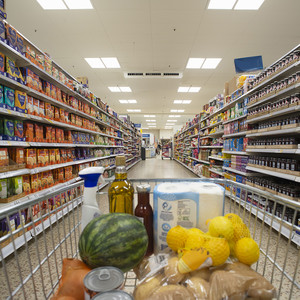
Warehouse -style membership supermarkets are like Disneyland for bulk shoppers.
Imagine cruising through massive aisles filled with snacks, clothes, and even a frozen whole lamb.
This quintessential American experience is catching on in major Chinese cities.
What is driving this trend?
And from awesome ries to unforgettable experiences, we're sharing the happiness that lit up our week, essentially what's made us happy in Roundtable's happy place.
This is Roundtable.
I'm Hei -Yang. For today's program, I'm joined by Yu Shun and Steve Hatherly, first on today's show.
In China, the convenience of e -commerce has made even grocery deliveries a daily norm, leading many to view shopping at traditional supermarkets as seen a little bit old -fashioned.
However, the rise of warehouse -style membership supermarkets is shaking things up.
According to the 2023 China supermarket Top 100 list by the China Chain Store and Franchise Association, these stores are experiencing a surge in sales and popularity in major cities such as Beijing and Shanghai.
So let's take a look at, well, what you described to us.
Warehouse membership supermarkets, what are they?
Of course, so a warehouse membership supermarket, as the name suggests, involves two key aspects.
One, warehouse -style and membership -based.
So the warehouse -style refers to the way that they display products which combines inventory and sales, and primarily use bulk packaging and shelf displays, resembling a warehouse layout in these supermarkets.
And the membership -based means their business mode, where consumers need to have a membership to get into this supermarket, to enjoy a special shopping experience or exclusive discounts.
Often times that's a paid membership and you'll get a little membership card if it's old -school.
If it's new school, then you get everything digitalized on your phone, right?
Depending on where you go.
If you've never been to one of these warehouse -style supermarkets before, first of all, they are massive.
They are absolutely huge.
And as Yushin said in the description, it's exactly like a warehouse.
So it kind of feels like you're walking into a factory kind of thing.
The layout is very wide and you have everything from electronics, flat -screen TVs, to new laptop computers, to clothing, to sporting equipment, to home appliances, to pet goods, to you name it, it's there.
They're usually very bright, very well lit, and there's usually a lot of people there as well.
Well, back in the 1990s when I first visited the U .S., I remember, well back then, China didn't have anything like that.
And I remember it feeling, this is the true celebration of consumerism and capitalism.
Oh yeah. And everybody's so happy in their shopping.
That was just the strangest thing even for an elementary kid.
Yeah, well Costco falls under one of the warehouse membership supermarkets that we're talking about today.
It started in the United States in 1983.
I'm not sure if that's the one you went to.
Costco. Yeah, yeah, it's hugely popular, right, in the United States.
But yeah, another aspect of these stores, you know when you go to your local supermarket and you get your shopping cart, it's a decent size, right?
When you go to these warehouse style stores, it's bigger.
It's like a truck that you can put your groceries in, and it's just another aspect of big, big, big, which is one of the themes of these places.
That's why you need to do the bulk purchase.
And a lot of people would like that kind of feeling of getting into this supermarkets because they will always get a sense of, okay, maybe, can we call the accomplishment because you would just get a lot of groceries.
It depends on your perspective, but yeah, that's one way to put it I guess.
Yeah, but anyway, in China, not only Costco, there are also some other brands is actually thriving.
Some one we know, Sam's Club, owned by Walmart and Metro, which has opened branches in a lot of cities in China in recent years.
And also some domestic brands are also gradually emerging and growing, such as Hema and Sun Art Retail, which is the parent company of Artymart.
Both of them are seeking ways to get into the area of these membership warehouse style market supermarkets.
Getting into the market.
I mentioned some of the things that you can buy at one of these warehouse style markets, but you can get some really unique stuff there too.
Yeah, absolutely. When we say unique, it's just something, of course, we can get them in other places.
But when you're thinking about it in a supermarket, for example, luxury goods, like very expensive bags.
And maybe I can see something Burberry trench coats, something I wouldn't be interested in.
We had a pretty thorough discussion about trench coats.
Well, that's sort of like the signature item for Burberry.
And I actually have some questions about this with the setup and layout of these supposedly luxury branded designer items in a supermarket.
Because I saw for those trench coats, they're actually folded up and placed in a pile.
And who would pay? Is it 15 ,000 yuan for a trench coat that you kind of associate with well -lit stores, luxury, you know, shopping experience.
But now in the supermarket is kind of, I'm sorry to say, a discounted setup.
Well, if I can't interest you in a 15 ,000 yuan trench coat, perhaps I could interest you in a 999 ,999 yuan diamond ring, which you can also purchase at one of these warehouse style supermarkets.
Yes. And I wonder who's going to be the target consumer to that.
But certainly it's attracting interest.
And this is really interesting in the way how these stores are positioning themselves, especially, you know, with some of these international warehouse membership style supermarkets, they're coming into a brand new market in China.
And it's a great opportunity to rebrand yourself or try something new.
And it's just interesting that initially they only opened up storefront in cities in the southern parts of China.
So not Beijing. I mean Costco.
Oh, yes. And oh, yeah, Sam's Club is in Beijing.
Yeah, it's here. Yeah.
And they have they're opening up new franchise stores as such.
So let's get into the overview of this warehouse style membership supermarket marketplace, I suppose.
It's looking pretty rosy these days, isn't it?
Yeah, of course. As we can see, even though when we are looking at our surroundings, more and more such kind of supermarkets are building up, I would say the market size of China's warehouse membership supermarket industry is continuing to grow.
And that's according to data from iMedia Research, an industry research platform.
In 2022, the market reached thirty thirty three point five billion.
That's about four point seven billion US dollars, which is a 10 percent year on year increase.
And it is projected that by 2024, the market size will expand to 38 billion.
That's about five point four billion US dollars and more.
I would say supermarkets like this are opening up.
Let's take an example of Sam's Club right now as the public information that they gave from Walmart.
They have they have forty eight Sam's Club supermarkets right now.
But in December of twenty twenty three, they also announced that they're expecting to open six to seven new Sam's Club stores annually in the coming years.
Exciting for me. I like shopping at these places and Hyung and I were having a bit of a battle in the last couple of days about whether we should be shopping there or not.
And I explained it like this, where I'm from in Nova Scotia and it's quite common in many parts of Canada.
These really large warehouse style shopping markets are kind of the norm.
And there's a bunch of different brands in Canada competing against each other.
But just that warehouse style, it's common all across the country.
And for me, it's a little bit nostalgic.
My mom, when I was a kid, we had a twenty four hour warehouse style place about 20 minutes from our house.
So my mom would sometimes wake me up at 3 a .m.
And I was like 14 years old.
She said, hey, I'm going to go grocery shopping now.
Do you want to come with me?
So my mom and I and she would only ask me, she wouldn't ask my sisters.
It was kind of like a mom son thing to do.
And she liked to go there in the middle of the night because it's completely empty.
Right. There's no competition for anything.
So there's a bit of nostalgia there.
But wouldn't there be no good deals then at that time of night?
I don't know. You have to ask mom.
She was she was paying the bills back then.
But my point is, is that for me personally, I'm used to it.
I'm used to shopping like this and I guess it just makes it feel a little bit like home.
But that's from an expats point of view.
One thing really interesting about this kind of business model is that, you know, you guys mentioned warehouse.
So essentially you're saying that for these kind of stores to exist, they need space.
And that's why it's almost impossible to have many of these stores like let's say in the downtown areas of Beijing or whatnot.
And now when you're setting up shop, then it has to be sort of in the outskirts a little bit or at least maybe outside of the fifth ring road, which is is a suburban Beijing.
Not really, but get in there.
So you need the space.
And then you what are the things that these shops are doing really well in attracting Chinese consumers?
First of all, I think what you said, like a lot of these supermarkets are in suburban area that's making people they need to basically, most of them, of course, have a car to get to that area, which make them feel that, OK, I am going to do the grocery shopping, maybe not that very frequently, maybe
once a week. It's like an event.
Yes. And that gave you a sense of ceremonial.
Yes, exactly. Yeah, that's also that is making a lot of young people join this kind of activity saying, OK, we're going to do grocery shopping and it is going to be a family thing or a boyfriend girlfriend thing.
And then going to that huge supermarket, rolling the cards and going through all of these aisles and seeing enjoy the whole day, maybe have a dinner over there.
That is kind of I was even entertainment activity right now, which is why I and I'm not basing this on anything other than my personal opinion.
I think that's why you can find diamond rings that are ultra expensive in there because people are buying them every day.
No, it's just fun to walk around and look at those types of things.
Ultra expensive to TVs that are way out of everyone's price range.
But it's just kind of it almost feels like a theme park.
Yeah. Kind of thing.
It's showing you that you can buy everything here.
Yeah, that's kind of a lot of people question the business model itself.
Right. The membership model.
Why do I have to pay to go to?
Can I say something about this, please?
Yes, go on. And this is the key argument against this kind of business model for everyday people like myself who wash my wallet very closely.
That is, you're saying that I need to pay for a ticket.
That's about 300 yuan or or so.
Or more. Yeah. Or more, actually.
To get just to get through the door.
And that money does not translate into store credit.
Why do I want to pay to get into a store before I buy anything?
Yeah, you're right.
And that's something that I should have mentioned before when I was trying to give an idea of what these stores were like for any of our listeners who are trying to sell the membership card who have never visited before.
No, you can't go in the store.
You cannot enter unless you have a paid membership.
Now, why why? Why would they make a business model like this?
Wait a minute. Aren't the customers going in there to buy stuff?
You're going to make them pay to go into buy stuff.
Doesn't seem like a very smart business model, does it?
Well, it turns out that it is.
And the reason why they do this is number one, it creates loyalty for their customer base.
So if I have a Costco membership or a Sam's Club membership or a Metro membership, then the next time I go grocery shopping and I think, oh, yeah, right.
Well, I mean, I already have the membership to this place.
I'm going to go back.
Right. I can get a similar experience somewhere else, but I'm a loyal member there.
That's one of the reasons.
Another reason is reduced shrinkage, meaning that their customer base is not going to disappear over a period of time.
And then, of course, it's just another revenue stream for the for the business as well.
Yes. But still, I want I don't think Steve, you've answered my.
My deep rooted suspicion about this.
I did answer it like a lawyer.
So that is how do you get me to pay up front to that?
Yeah, if I've already paid for it.
Yeah, there's the sunk cost argument.
Sure, I'll go back.
But for a fresh consumer, why do I want to pay up front?
Am I going to get sorry?
Am I going to get the great deals that make up for these 300 yuan that I've paid up or, you know, how what am I getting back from this this ticket?
Even though I am not a big fan of such kind of supermarkets, but I can maybe explain a little bit on this.
Another thing that we didn't say about what you can get from these supermarkets is the exclusive novelty products that you can get from these supermarkets.
Some of them are selected by these supermarkets.
Some of them are just made by these supermarkets.
Yeah, right. And these are the things a lot of these consumers will like to buy because from the stats, we can see the data from iMedia research showing that selected products take accounts for 72 percent of all of these reasons are the top reason consumers are attracted to these warehouse membership
supermarkets and also favorable product prices and unique or novel products are taking the second and third place, which means they agree to the kind of way that they make the price and also the products that they can get only from these supermarkets.
Right. These store brands are exceptionally popular.
Yeah. And they're reasonably priced.
You know, Costco, I remember my friend, they have their own brand.
And my friend used to enjoy buying wine from there because the bottles were bigger and it was cheaper than buying it at another store.
And that not only applies to wine, that's just one example.
But they have many of their own produced products that you can get for cheaper.
Right. And here I'm going to challenge you guys again.
It's it's like a couple of things kind of defy your common knowledge about Chinese consumers.
One thing is when it comes to groceries, I'm not talking about loo paper, just groceries, stuff we used to cook for, let's say, tonight's meal.
Traditionally, we like it to be fresh.
So that's why for a lot of families, we still visit the local fresh produce market.
And with this kind of business model of the warehouse membership supermarkets, you need to drive there or take a taxi there and you're buying stuff for the whole week.
So isn't that a little bit contrary to what Chinese people prefer, at least for fresh produce?
That's one thing. Another thing is we've talked about so many times on the show, and I think it's almost like signifying our this age that we live in.
Is about solo living or, you know, these tiny households, a person living by your own or maybe with your boyfriend or a girlfriend or whatnot.
And then we're or maybe a three person household.
These folks do not need to bulk buy massive amounts of food.
So I wonder, you know, despite the popularity, but how did these sort of like Chinese consumer preferences work with this very interesting business model?
I think that's why these businesses haven't put the mom and pop shops or the smaller types of markets out of business completely.
It's because you're absolutely right.
You make a great point there.
When you go to stores like this, they often sell in bulk.
I once bought a one plus one mayonnaise and one of the mayonnaise was 18 liters, which means I bought 36 liters of mayonnaise.
Is that like a bucket?
It's two buckets, actually.
And I was making like mayonnaise toast and just everything.
It was industrial size.
Not my best day of purchases.
Anyway, you're right.
Bigger things, bigger bags of potatoes, if you will.
Bigger meat sections, bigger steaks that cost more.
It's not for everyone, but there is a market for these places and that is backed up by the numbers.
Now, to your point that you made earlier about these stores often being in the suburbs where you have to drive to.
I'm going to go away from supermarkets for just a second, talk about IKEA, the Swedish furniture giant.
Really interesting stat about them.
They generate almost 97%, 96 .6 % of their retail from international stores.
Why? Given Sweden's steep corporate tax rates, they knew we need to do business outside of Sweden.
That's one little fun fact.
Here's the strategy, though.
What they're doing now is they're making more compact stores in urban centers unlike their traditional suburban warehouses.
And that strategy is aiming to drive revenue from higher traffic volume in places like shopping malls and things like that, where you don't need to bring your car and park in a big parking lot.
Yes, I actually saw one in downtown area in Beijing, the little compact IKEA store.
So I think, of course, there are some Chinese consumers are hesitant to pay for this membership because there's one sitting at the table.
When we're concerning about these convenience of shopping near their daily routines or workplaces and also the transportation concerns.
But there is something that we know that social media now are always being a huge part influencing people's activities.
So when people are taking photos around the area of huge warehouse style supermarkets, they can always see that big billboards with maybe huge signs.
And then you can feel like it is a kind of Western environment.
And then, well, people look out is not that common to see in a Chinese city, then they would like to go there.
So more all in all, it is more kind of an experience thing and activity thing or social activity thing that people would not for me, not so much a social activity.
I'll tell you how I do it.
So when I get my daily stuff, carrots, potatoes, what have you, I'll go to the local market to buy that stuff.
When I'm looking for something fun and exciting and maybe some unique grocery items, stuff that you can't get in a market here, I'll go to one of those warehouse styles and we will stay there for a good two, two and a half hours just walking around and looking at stuff.
I think that that's a big part of their business model as well as designing these places.
So it's a fun place to be.
Can I also offer the way I do things or my family does things for fresh produce?
I think we do something similar to what you do.
Just go to the local store, that kind of thing.
But for other stuff, I've been given the task by my parents to order them online.
And then, you know, when it's where I'm talking about maybe like 56 toilet rolls or and we buy like soy sauce, buy buckets and then those things get delivered straight to the doorstep.
So yeah, for my family, it's like we still kind of question if there is a space for this kind of retail.
But what you made a point earlier on, you should, is absolutely phenomenal.
What the business has managed to do is to capture the young consumers, imagination and attention.
And I think that's that's what all businesses try to do.
But these couple of brands that you guys mentioned, they've done a great job in making it viral, you know, taking a picture in your supermarket or in the parking lot of your supermarket can go viral.
That's just mind blowing.
It's kind of wild, isn't it, to think about that.
Yes. And we've seen that, OK, the traditional brick and mortar stores have definitely seen better days, but they've been really sort of clinging on by their fingernails ever since e -commerce took off in China.
And I'd like you guys to offer a little bit of an assessment or maybe even a forecast in seeing like, you know, so we've got these warehouse supermarkets, we've got the traditional supermarkets in neighborhoods, and we've got e -commerce and all these things, all these avenues for people to shop for anything
they can think of. What do you think the near future is going to be for this retail landscape?
Are these warehouse wholesale membership supermarkets going to keep ongoing, capture more market share or maybe not?
The competition is fierce.
I think so, you know, as consumers consumption habit is actually changing gradually, there are more and more these warehouse style supermarkets are coming up, but the traditional supermarkets are surrounded around our local communities will also be there because that is also satisfying the I mean, necessary
needs of all of these residents.
Yeah, I think there's enough enough space for everyone.
And my answer to your question, I don't know, but do you guys want to buy some mayonnaise?
No, thank you. I can take it from you.
36 liters. I'm going to set up a little shop outside the radio station.
OK, I know where to get my mayonnaise then.
Yes, coming up during the second half of the show.
Hold up, did you hear?
We had fast forward on aging at 44 and 60.
How do we feel about this aging plot twist?
And of course, you can always reach us via email roundtable podcast at QQ dot com.
And you might have noticed we've recently switched to a new email address and that's where you can find us always.
We'll be back.