Discussion keeps the world turning.
This is Roundtable. You're listening to Roundtable with myself, who young?
I'm joined by Yushun in the studio and Josh Cotterell on the line coming up.
Get ready to nerd out with us.
Have you ever wondered why mobile apps thrive and their web counterparts are on the demise?
We explore the fascinating dynamics between mobile apps and their web cousins.
And here's a peculiar trend on Chinese social media these days.
It seems like everywhere you turn, there's a mo-mo lurking in the comment sections.
But what exactly does this ubiquitous presence signify?
Is it a harmless pseudonym or does it hint at something deeper within our internet culture?
Our podcast listeners can fight us at Roundtable China on Apple Podcast.
Now a Roundtable as we continue today's discussion.
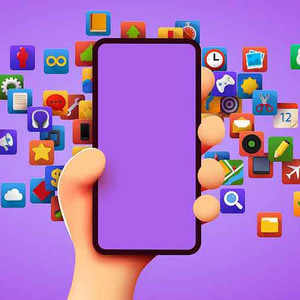
Have you ever been browsing Damping or Yelp in a browser on your smartphone and then seen a pop-up encouraging you to download the native mobile app and wonder what the difference was?
Maybe you're curious because you thought you were using the mobile app.
You weren't. By the way, you were using their web app.
The apps look like mobile apps, but they are, in fact, websites of the app.
In recent years, mobile apps have taken our smartphones by storm, leaving their web cousins to either weather away or desperately cling to life support.
I gotta be honest with you, I used to think apps will always need websites.
If for nothing else other than a source of data, as a mothership to phone home to and to place to host the application downloads for various devices, but here we are.
So you shun, shall we pour one out for these web apps?
Which web apps need an obituary?
We can see that in recent years, the web versions of many software and apps are slowly fading away from people's vision.
So for instance, the past few years, a large number of platforms such as the second-hand market platform, Xie Niu, and Tencent QQ, the instant messaging app, have shut down their web versions, even for those companies that haven't taken such measures.
They no longer focus on optimizing and updating their websites using their websites, excuse your experience, but instead go to great lengths to induce users to use their mobile apps.
Josh, is this a phenomenon that you're familiar with?
And certainly here in China, we feel like everybody's looking at their smartphone and their first stop in doing anything on the internet is when we grab our smartphone.
But do you see a similar phenomenon in your home country, the UK, and the English-speaking world?
Yeah, absolutely. I think that this migration to apps and the push from many companies to users to download said apps is pretty large in the UK.
One of the things, although I would say that the UK population and the UK in general, Europe in general, is less dependent on their phones for everyday life than those in China.
For example, people will still use catch a lot of the time in big cities.
However I go back to the UK, having been in China, I'm always surprised when I see people using catch, for example, or paying bills with checks and things like this.
It still happens amazingly in the United Kingdom.
And there is a slight difference there, but definitely with banking apps, with social media apps, with entertainment apps and things like this, less and less people are using the web-based apps.
And so the quality of the web-based applications or the web players or the online banking, the web banking, is decreasing for sure.
And I think one of the main reasons for this, and I'm sure we're going to discuss some of the reasons why this is happening, but I think one of the main reasons is its offline functionality, right?
Of course, to be on the web browser, as well as not being formatted very well, it's also not very good if you lose a connection or something like this.
And many places in the UK don't have fantastic connections.
So this is one of the key reasons I would suggest.
It's interesting you brought that up because I suppose for today's citizens, regardless of where you're living, it feels like, correct me if I'm wrong, internet connection should become part of the utility bundle, just like electricity, water, it feels, because it's so fundamental to what we do every day and are survival to some extent, but interestingly, in a lot of government agendas, so to speak, it's not necessarily seen that way yet, but just imagine if you have super fast connectivity and internet all over your country, and that's just great for so many things, which I will not well upon.
Yeah, and also I think that is the reason why nowadays another way or version of web apps is becoming so popular, which is mini programs or mini apps that actually you use on WeChat platforms.
And they are actually developed based on the idea of websites, to be honest, for example, the language of Java script, CSS styles and HTML, well, that sounds nerdy, but yeah, I just want to say that they probably based on the same structure.
And just because of that, just like people are using websites, you getting to that website, you need to download everything as long as you open it, just like you are using the mini program.
So with the fast internet, we can afford this kind of action.
And as Josh just said, one of the advantage of these mobile apps is they can offer offline service.
And with the fast internet, we can use these websites or mini programs to download and to load everything instantly whenever you open it.
Right. And also there are just way too many apps.
That's something that regardless where you're living, you probably will not along to my statement there.
And with the mini programs embedded in a super app, well, it saves the trouble of having to download another app, you know, and that's a really annoying thing for people as a very shrewd and, you know, savvy user you are these days.
So I like to take a step back and look at what was it like in the heyday of web apps?
And it wasn't really all that long time ago.
Let's compare the past and present.
Hmm. I think as long as I can remember and also I am using web apps nowadays, it is just so convenient and some of the companies like Microsoft and Apple, they are still updating and developing web versions of their apps, especially for these kind of, you know, I cloud or cloud services that you need to use on different and various platforms.
For example, Microsoft 365, you can use it on your phone, you can use it on web pages, you can use it on other platforms, of course.
So these things can make you just have one web browser and you can access to their service.
So I think that is how convenient and fast it could be, but it is also as we talked about.
It's based on fast internet.
You need to have this foundation to actually access to the service that you want quickly.
So can I also maybe make speculative assumption here, that is because the companies that you just mentioned, you shun, they are international companies.
They have customers all over the world and they have customers who would attempt to have access to their services via let's say desktop computer or a laptop.
Whereas here in China, maybe the default option for a lot of folks is pull out your smartphone.
So if you're a domestic company and you're trying to just garner more users in your home country, let's say in China, then it wouldn't make that much sense to try to preserve and maintain your web presence so much.
If you only have limited resources, then why not just maximize the resources and use it on what you think is most effective and that's possibly the mobile app version.
Is that what's going on?
Josh, what do you think?
Yeah, I think that that's a good point.
I think that the mobile app version definitely offers more stability to users.
I think that there's definitely a marketing aspect to this and there's definitely a financial aspect to this.
Of course, if you have the app, then it's probably going to increase engagement and customer loyalty as well through things like push notifications and in-app messaging and stuff like that.
Usually you can turn this off, but I'm sure a lot of people don't.
There's a lot of monetization opportunities as well from apps as well.
I know that in China, a lot of my banking apps, they're also monetized.
They'll have advertisements and things like this from third parties that will just pop up through the app.
I do think that it offers a lot more stability than the web app.
Again, with this offline functionality, especially when it comes to apps like streaming apps, this is a huge benefit.
Things like music apps, usually if you pay for the premium version, you can just download a playlist.
It doesn't matter if you're traveling, which often in China, people travel for very long distances and you'll lose connection.
Having that option is really valuable.
Not to even get started on gaming apps, which is booming right now.
Something that I'm not particularly familiar with, but if you compare the web games that I don't know if you remember those, I remember when the internet first came about, we'd play these games on websites.
If you look at those compared to the apps, it's just incomparable really.
The quality, the apps are obviously so much higher quality and you can also play them offline.
I think that's also an aspect to consider.
Also, remember, now we have a smartphone with one terabyte of storage, even two terabytes.
But back then, we can probably only have eight gigabytes of storage for a smartphone.
Back then, these apps, or more likely the web apps, they just present to people with a form of just websites.
You chat with people, not with all of these special effects.
You chat with people with just words.
The whole page will all cover with words, but not pictures.
At that time, because of the limitation of this internet speed, in storage, we can only afford that kind of thing.
I think that is also the reason why the change is coming up.
We have bigger storage of our smartphones.
We have better special effects on these applications and we can have better experience and times different.
I think that is how these internet products evolve.
Indeed. And with these individual, or shall I say singular or standalone, native mobile phone apps, they make great sense for the developers, for the companies behind them.
Also, don't forget the amount of data that they get to mine, while collect and mine, from users.
Also, they can sell it to other entities.
And that's just a bonanza these days in the digital age.
And like you both mentioned that with a separate app, its own app, then we're probably spending more time locked in.
Well, we have a chance to get out if you have the awareness.
But certainly, you probably spend more time on it and that's all good for their business.
But from the perspective of a developer, a stakeholder, of a business or platform, and the average user, like myself, who don't really understand the technology that well, why should I care about this?
First of all, we think it from the perspective of a user, right?
The users are just trying to use the service of these platforms or these companies and whatever they offer to the users, we need to use it.
So probably in one era, they are offering the service through these web pages.
So okay, users are using web pages.
And now, it is the era of these business operators are trying to get more information or maximize their profit through letting you use these kind of applications.
So I think users are using these applications.
And what we know is that the difference is that compared to web versions apps have higher permissions, they can ask for all sorts of maybe unreasonable permissions such as using your camera, activating the microphone, accessing to your photo gallery, reading your contacts and messages and more.
And these, my pretend to ask for your consent, but if you refuse, they just simply don't let you to use their apps.
So yeah, this is how these business operators trying to maximize their profit.
Well, I think that the pros definitely outweigh the cons here.
I think that although you did make the argument earlier, who are young, which I think is fair, is that there's just too many applications and they take up memory, they take up space on your phone and they can really take up your attention as well.
If they're sending you so many notifications, it's almost like they're a bit too involved.
But I think with sort of mindful clearing up of apps on your phone, we could all probably delete a lot of the ones that we have on our phone already.
And I'm sure we don't need all of the applications that we have.
Maybe some of you do listening fair play to you.
I know that I need to delete some of mine, but I think that if we are mindful, if you turn off a lot of the notifications, I think that there really is improved performance.
I think that apps are much faster.
They have much faster loading times and they're much smoother once they're once you're logged in, right?
I think that's just the essence of it compared to web-based applications.
So we're moving away from this web-based thing.
I don't know if you should care so much.
I don't know if I really care that much, but certainly I think it's making life easier.
But again, with everything, when it comes to technology, with things getting easier, there's also the risk of us becoming too reliant or maybe even addicted to some of these applications, depending on their content and their purpose, right?
Yes, that's a great point.
And also, I just think that understanding the implications of a shift like this one that we're talking about today can empower users to make informed decisions about our digital experiences and privacy these days.
And I think being in the know is always really important.
But before we move on to our next topic, there's one thing that I've been struggling to wrap my head around and I want to ask you guys to help me out.
So I see some people say that, you know, amidst this proliferation of mobile apps that we can pretty much agree on, can sometimes be a headache.
Folks are saying that having so many apps instead of web versions can entrench our user freedom.
And that could you help to decipher?
So when you are using these mobile apps, of course, and these companies can get more information if you, as I just elaborated.
And these are actually big data that these companies really want because they includes your personal information, your activity level and your personal preferences and spending habits and so many more your personal data.
This is the information that they actually want.
And the next step is to use these preferences to maybe recommend more information that you will like.
And that's what we call big data nowadays.
That's also a form of targeted advertising.
But with websites, they also collect our data.
They do collect our data, but not as much as your that kind of singular app that can do, right?
Because they are based on the permission of a your, I think, web browser.
So basically you can choose.
And of course, there are many policies on limiting these kind of permissions.
Right. So you're given consent if you click yes, then, you know, what happens next.
But I think that I guess there is a limit to freedom in the sense that apps need to be downloaded and installed, which can limit their reach compared to web pages, which, you know, when you're on the web, you're on the web and you sort of instantly have access to it and being able to download certain apps, even having to pay for certain functions or premium versions of apps, I guess that is quite limiting to some degree.
But again, for me, just personally, as someone who tries to stay off the internet as much as possible, unless I have to do it for work, which is, which is every day.
I don't find it to be limiting at all.
I find it to be quite the opposite.
I think that apps are much more functional and effective.
Coming up next, picture yourself scrolling through any Chinese social media platform and noticing a multitude of Mo Mo accounts, all sporting the same pink female cartoon dinosaur profile pic.
What lies beneath this trend?
Stay tuned. Looking for passion?
How about fiery debate?
Wanna hear about current events in China from different perspectives?
Then tune in to Roundtable, where East meets West and understand it is the goal.
It's the hour of Roundtable with myself, Ha Young.
I'm joined by Yushun in the studio and Josh Cotterrell on the line.
Let's take a look at the curious case of Mo Mo, a seemingly innocuous cartoon dinosaur with a significant online presence in China.
What started as a quirky avatar option on WeChat has now evolved into a symbol of anonymity and collective identity across various social media platforms in this country.
But what drives thousands or lots of people to adopt this persona and what implications does it hold for online discourse?
So what's Mo Mo, who's Mo Mo, and where does it come from?
Yeah, so recently there is an interesting phenomenon on some social media platforms, especially the lifestyle sharing platform called Xia Hongshu or Red.
So in the commentary you often see identical names and avatars which are all under the same name Mo Mo, which is this little cute pink female cartoon dinosaur.
And originally it is one of the characters of WeChat's collection of cartoon images and memes and they have names like Mo Mo, Kiki Popo and even background stories.
So basically they appear everywhere as the rising numbers.
So they mostly appear on this platform's commentary and their avatars and names are all the same and you might think you keep encountering the same person but in fact everyone's identity is just the same.
I think I understand, I don't think it's just about anonymity, it's almost like a unifying movement of sorts.
Mo Mo? I guess if you've got, yeah, I mean if you've got the same name and same profile picture as somebody else then it basically, I think that it, to me it symbolizes almost like a generational movement of type.
I make me think of that V for fun vendetta film, you know, where everybody's wearing the mask, you know, it's quite creepy.
It is creepy. Yeah, but Mo Mo, I get it.
Okay, and Mo Mo has a really conventionally cute face, you know, like it's round, it's like adorable I suppose.
Yeah, but a lot of the times in the comment section when you see 10 people, different individuals, but they're all adorning Mo Mo as their profile pic and as their profile name as such.
And what do you think they're trying to do here?
Yeah, I think it is their way to strengthen their anonymity I think because some people would like to showcase, of course, their individuality and uniqueness, but meanwhile not letting their real life friends and colleagues to know, even if you haven't linked your contacts to this, your account can still be recommended to people, quote unquote, you may know.
So in this case, in such situations, creating an identity that won't be easily recognized by your colleagues or friends, even if they got recommended for no reason, they cannot recognize you.
Right. Or even if they're stalking you.
Josh, isn't the internet meant to be a space where we can showcase our individuality and uniqueness and even some of the, you know, weird preferences, but you find your people.
Why then do a significant number of internet users opt for the anonymous persona of Mo Mo online in this sense?
And I like it for you to share your observation here in China and also at home, you know, do you see something similar if no?
Well, to answer your first question, I think that now online personas have almost become more personal and more intimate than everyday real life personas for a lot of people.
I think that for many people, they end up spending more time online and being themselves than they do in real life.
So I guess that now it's become full circle and people have started to want to have this anonymity online.
I don't think the internet is necessarily a place where we want to share our individuality and our true selves at all.
I think sadly, social media has forced us to adhere to impossible standards of perfection and beauty.
And I think that this has become quite frustrating for a lot of people and they don't want to be themselves, they want to just exist online and have an online presence without the concern or anxieties of looking or being and even being anybody else, right?
They can just be even part of a big pack of something else, you know, not even having any individuality.
So I can understand that.
I guess that sort of feels safe and maybe it feels comfortable in some way.
In the UK, compared to China or in China, there are some differences.
I think that there's a lot of nuance to this topic we're talking about today specifically, but definitely when it comes to animated profile pictures and cartoon profile pictures, this is definitely much more common in China than it is in my own country and the United Kingdom.
I mean, on WeChat, it's really normal, right, for people to have profile pictures that aren't their own face.
Whereas in my own country, that would be considered slightly strange, actually.
Most of the time you would use your own face so that people know who you are.
I know even in China people have names that aren't even their own name.
I'm forever confused about who I'm talking to, probably because my Chinese also isn't very fluent.
So I and people will have nicknames and I'll forget, you know, I won't have that that root in the language.
So I'll forget who I'm speaking to.
And then I don't have a profile picture also to help me.
So I'll forget all the time.
There's been several awkward instances where I have to ask people, who are you?
And it's sometimes turned out that they're like somebody quite senior at the company I've been working for or something like that.
But whose fault is that?
You know, it's not, it's not really, is it my fault?
You know, I could change the name right when I add them.
I know I can do that, right?
Yeah. Yeah, but I think that has something to do with the different essence of social media platforms in the East and in the West, right?
What do you mean by that?
Like, okay, for WeChat, for example, in China, it's people you know who are on this social network.
And for Weibo, for example, it's kind of like a Twitter or X equivalent here in China.
And well, if you're a popular KOL, then it's important to establish who you are.
And then maybe you'll use your name, your real name, maybe not.
But for a lot of folks, you know, you just make up something of the name and profile picture.
So yes, for different purposes, people use different profile pictures and names.
Would you use Momo for your WeChat profile identity?
No, I don't think so. Probably not, right?
But people would use that in the comments section of regardless what social media platform you're on.
So maybe that shows that people want some kind of shield or in this case anonymity from what comes next on social media because sometimes it could be just a tide of negativity or being doxed or scary stuff in the internet world that happens way too often.
And the next question to be raised here should be how can we make our online discourse of an environment better that can be a little bit more inviting than it might be now.
And that's the question I want to leave to you to answer.
You can always reach us via email at eZFMaroundtableatfoxmail.com.
Thank you so much, Josh Cotterell and you shouldn't for joining the discussion.
I'm Hayoung. I'll see you next time.