Discussion keeps the world turning.
This is Roundtable.
Hello everybody, welcome to Roundtable.
Coming to you from Beijing, I'm He Yang.
Good to have you join us on today's show.
Flying cars have long been the stuff of science fiction.
Could recent advancements turn fantasy into reality?
From regulatory approvals to technological breakthroughs, we'll explore what it will take to bring flying cars out of the lab and into the mainstream.
And the landscape of birdkeeping is taking a new turn, as more young people are joining the ranks of avian enthusiasts.
We take a look at how this emerging pet trend transcends the boundaries of age and tradition.
For today's program, I'm joined by Li Yi in the studio and Josh Cotterill on the line first on today's show.
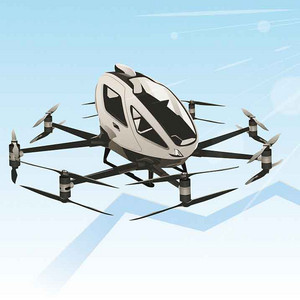
On April 7, the Civil Aviation Administration of China has issued a production license for an unmanned passenger -carrying aerial vehicle system developed by Ehang in Guangzhou.
The firm has therefore obtained all three necessary certifications, which are prerequisite for large -scale commercialization of the aerial vehicle.
What it will take to make the flying car dream take flight?
Well, let's take a look at flying cars have long captured the public imagination.
So what's up this time?
Yeah, actually, the certification you mentioned is the first production certificate issued here in China for an autonomous passenger drone and also the first one in the global electric vertical takeoff and landing or EVTO industry.
And previously, the model of Yihang, the company, had really obtained the type certificate and standard airworthiness certificate from the Civil Aviation Administration of China, also CAAC.
And according to the founder, chairman, and CEO of Yihang, Hu Huaju, this production certificate is really a milestone for the company.
because it means that it really entered the mass production stage and also very crucial step for the company to advance their commercial operations.
And I think for those listeners who are not really familiar with the whole process here in China, I might just provide a little bit background information because here in China, you really need to go through a strict and long process for a like e -vital or a flying car to you know being mass produced or to go through this commercial production process.
First here in China for those flying vehicles which belong to low altitude aircraft you really need to apply for exclusive operating airspace and then after obtaining airspace approval the company really really needs to apply for an operational permit from the civil aviation department and also undergo the airworthiness certification.
And then you need to obtain the type certification.
So basically with these three certifications, you can really go for commercialization.
So this time, the company really obtained these three certifications, which is considered as a signal for the industry to go further and to have further development.
Well, that all sounds very exciting.
But at the same time, it's also very good news to know that there is a huge and long approval process because we're talking about some pretty serious business here.
Josh, I know you're someone who reads science fiction, and you are somebody I would go to when we talk about these rather futuristic topics.
topics. So what was your gut reaction, you know, hearing this and also flying cars?
Do you feel that we're really quite a bit closer to this idea becoming reality than a couple of years ago when we first talked about this with you on the show?
Well, I'm not so sure because we've actually had this technology for a long time, a lot longer than it seems. And maybe the technology has has improved in terms of the weight of the vehicle and with drone technology improving so much over the last 10 years or so we also have mechanisms and propeller mechanisms and flight mechanisms that are much quicker and more practical drones for example they can come off the ground vertically right they don't need to take off necessarily and this is really practical because it means that you don't need a runway you save infinitely more space but at the same
time we've had this kind of technology for a while.
So what really is the obstacle here?
Is it a technological issue in terms of the actual vehicle, or is it something else?
I think that it is something else.
And I think that the same issue comes with autonomous cars.
So there's all sorts of technology that we have, yet we still yet to see it widespread.
We've had autonomous vehicles for a very long time, yet we still don't see them in cities.
Why is that? It's the same reason, in my opinion, that these flying cars might take a while to become commonplace.
And it's because of regulatory compliance.
There's all sorts of standards that are yet to be agreed upon on a national level all over the world that will make these vehicles safe.
And it's the safety features on these vehicles are really complicated when it comes to things like fail safes, right?
Or advanced sensors and stuff like this that are going to prevent people from having accidents.
incidence what I mean this is hard enough when it comes to autonomous vehicles on the ground never mind in the air and I know that these vehicles aren't necessarily going to be autonomous but at the same time there's so many questions to be asked.
Yeah I hear you Josh but actually I would beg to disagree that you know maybe the technology isn't fully there just yet I mean maybe in theory it is but to be put into well to come up with first of all prototypes that most most people can agree with, could be a question here.
And also, you mentioned, yes, you know, this vertical takeoff and landing thing is definitely an advantage, supposedly with the flying cars or electric vertical takeoff and landing aircrafts.
But it also means that it will need very powerful engines.
And to power these things to get off from ground is is no easy feat, although we're seeing that there are progress made.
But let's get into them a bit more.
And Li, could you help us define the flying cars and also conceptual wise?
Do the advantages outweigh the disadvantages?
Or maybe there are some fundamental flaws with it?
Yeah, sure. So when talking about flying car, we can just simply understand it as a car with wings or an airplane with wheels.
So basically it's a hybrid vehicle that is capable of flying like aircraft as well as running on the ground.
And which means that the driver actually has the option of taking the vehicle to the air when needed.
I think as Josh has mentioned, the idea of like accelerating or enabling urban air mobility has actually been around for like more more than a century.
So especially in recent years, we're talking about like flying cars, but actually the more precise version would be electric vertical takeoff and landing vehicle.
It's just simply like a takeoff and landing vehicle, not really necessarily a flying car, but just to make people understand it and also acknowledge and accept it like more widely.
So that's why we still keep it like flying cars or flying taxi.
Because right now the technology, you know so the industry standards are basically targeting this takeoff and landing vehicle so as the name suggests these like e -vetos or electric vertical takeoff and landing vehicles they are electric and they can really take off and land vertically just like a helicopter but you know helicopters can be quite noisy and those companies are really thinking about like applying these EV tolls in big cities.
So that's why we need to avoid that.
So that's why we're using electricity to power these vehicles.
But then it can also be like a disadvantage because that means the vehicles can operate fewer missions than traditional helicopters.
Right. So you're taking the industry sort of perspective on looking at what we're talking about here.
So it's not really what flying cars depict, according to those two little words.
And I think that's for good reason, because I saw all these comments online, which I find to be quite amusing.
Okay, so some people say that there are so many reasons that this thing does not work.
I mean, in a more proverbial way of saying flying cars, because flying cars are both bad automobiles and bad aircraft. So I think it explains it a lot.
And then the technology isn't necessarily there to make, you know, an automobile combine an aircraft, fly and be driven smoothly at the moment, it seems it's just like, so yeah, then, you know, why not we look at what in a more practical sense of what the industry is developing now is the electric vertical takeoff and landing aircraft. So yes, Josh, in light of all those, the information that we've just given, and also maybe different opinions shared here.
So what do you think about that comment that I just cited?
Flying cars are both bad automobiles and bad at aircraft. Where do you go from there?
Well, I guess there's some truth to it, but why are they bad?
It's more because, in my opinion, they're quite impractical.
I guess they're pretty cool, and it's exciting.
And certainly air travel offers us, as humans, the opportunity to travel much faster.
and it allows us also to distance um vehicles from pedestrians right that's a that's a massive plus but at the same time there's just massive hurdles to this even even aircraft even standard -sized aircraft have have issues and there's not that many of them flying around it's rare that you could even see one in the sky unless you live near an airport um yet still things like noise pollution and air pollution are issues here with these cars i think the main issue the reason that it's bad is because it doesn't assimilate well with modern urban infrastructure right our cities if you look around you they
are built around roads and most of the buildings are built around roads some of the roads are built around buildings but really we're in in most modern cities they're criss -crossed into grids for cars and they've been built and they've been there for such a long time that it's really difficult now to have something like this.
Because in order to have these aircraft, right, you would need to have things like landing pads, right?
And also if they're rising vertically, you need to have, I think they're called vertiports, right?
So you'd have to have some sort of, I don't know if it would be a tube or I'm sure there's loads of different designs, but it has to rise up through something, right?
It has to, they can't just all sit on top of roofs, right?
They need to have areas to take off and land on.
It's really impractical.
And in essence, it means that we'd have to completely change the layout of our city.
Which is not going to happen.
And also just think about this.
Something massive falling from low altitude airspace.
And what about all the people and living beings and infrastructure, construction and everything underneath?
It just sounds so dangerous.
So dangerous. dangerous and yes i suppose there are some of these social barriers that are there which might be hard to win or woo proponents for this kind of thing but it's always interesting and exciting to look at how technology develops in that sense um lee what do you see as the well if you really had to look it up maybe bright opportunities potentially that could present itself well Well, of course, for the industry itself, for companies that are either working in like researching this EV toll.
So basically they're working as supply chain.
Of course, it would be a good opportunity because, of course, like the traditional aviation industry, it actually is an industry with really high economic added value.
And I believe if this flying car will become a sustainable industry in the future, of course, it will also bring huge economic profits for the whole industry.
Like for traditional aircraft, companies can really make money, make profits from fuel consumption, maintenance, ground services, and airport construction.
These can really all generate significant economic values.
and so think about it like china can produce and sell 30 million cars per year and if those cars are adapted into flying cars and or if flying cars can reach only one percent of this volume producing selling 300 ,000 units per year they can really generate a considerable comprehensive output value so that's why people in the industry and also relevant experts they're pretty being Being optimistic for the economic value that is brought by the EV tolls or flying cars, whatever we call.
And also, I think if technology would be reliable in the future, maybe for average people, it can also bring like conveniences for our daily life.
Of course, we have to solve the safety issue.
So that's why people are saying that we need to solve those practical concerns for EV tolls to really operate in big cities.
Like maybe when and where can those flying cars really take off and also where they land their vehicles.
I mean, there are discussions about saying we need to build special, say, verti ports for those flying cars because Dubai has already unveiled plans to build four verti ports, each with two launching pads.
And there are also moves to build them in various European cities.
So there are some very, very early attempts to make these things happen.
But of course, it's not really easy to find actual space, I believe, in densely packed urban environments.
So I believe there are like a lot of things to be solved.
What about just, maybe just on the top of skyscrapers?
Yeah. Or buildings, maybe you can choose from.
Not sure. Yeah, that could be possible.
But safety is always the first concern here.
Yeah, definitely. Definitely.
Yeah, Josh, what do you see as the possible opportunities and challenges regarding these flying vehicles, you know, becoming more accepted for people?
Well, I think that public acceptance is really important when it comes to any of these, anything new, this, like, in society that's going to affect all of us.
because this isn't a personal thing.
When you're traveling out in public, you will be influenced and affected by these things.
And I'm not really sure.
I think that overcoming this, the kind of skepticism with anything new will just take time.
But I think one of the major challenges is just persuading people and making it safe.
There's just too many issues right now for me.
I don't think i could accept it to be honest um one thing that we haven't even mentioned is things like light pollution right having vehicles flying around the sky and you know the shadows and stuff like this and the noise as well presumably they won't be very loud but if you've ever heard a drone it's not quiet right are we really going to have this buzzing around it's terrible for your health actually to have this kind of noise pollution um anyway uh i think the public acceptance as you said is is massive and i guess that um the only way for the public to accept it is to have this sort of period
of growing pains right where it is going to feel a bit awkward at first like when we first got ai generative text machines right everyone was terrified and i still like feel like we are a bit terrified but we soon come to sort of live with it to some degree this new technology and i guess it's going to be the same with these flying cars um but yeah too many regulatory hurdles right now i think and they need to be overcome for the public to accept it well sure but also you know we're talking about human lives easily lost of the safety issue here you know and also like with traditional cars yeah
like if unfortunately a car accident happens or whatnot i mean at least it's still on the ground you know that okay you can just push this thing aside and it will not be blocking traffic but with flying cars if something goes goes wrong, well, that thing will just fall down.
And you know, just the thought of that is just super scary and very dangerous.
And of course, you know, there are a lot of things to think about before letting it take off.
Also, Josh, you mentioned drones.
And I think drones these days are a far more developed technology for the general public to accept, although there are still, you know, many administrative hurdles to go through.
And I think a lot of the approvals are rightfully there for safety reasons as such. Could you tell us maybe some of the key differences between drones versus the electric vertical takeoff and landing aircrafts?
Sure, sure. Well, yeah, aside from all the regulatory stuff, which is quite complex and very important, but we've already mentioned, I think that one of the main differences is that, of course these things have to integrate with infrastructure right whether that be urban infrastructure or just buildings so um like you guys mentioned vertiports and landing pads things like this they require these things because they're bigger right um and also because they're bigger one of the major differences is their capacity so of course they need to carry passengers that's the whole point of them otherwise they
would just be a big drone um and And this can range from one to several individuals and as opposed to a normal drone, which would just carry cargo, right?
Or maybe it's for surveillance or something.
So of course, carrying an individual brings with it a lot more complications.
It's not just that the individual is heavier, right?
It's also that there needs to be more safety features.
And there also actually, there needs to be a degree of autonomy with these flying vehicles vehicles because as much as we might want to trust, which I'm sure most people would have an issue with, trust the person flying the vehicle, right?
To avoid infrastructure and avoid buildings and whatever.
I'm pretty sure that like most modern cars, they're going to have to be, they're going to have to have some sort of autonomous thing on board that's going to be able to help them navigate urban environments without human intervention.
So I think this kind of technology is really important, and will take quite a long time to develop.
Because these kind of sensors and stuff, they're really advanced.
And it's not only sensors, but these vehicles have to have real time information with things like weather reports.
And, you know, movements of people's stuff like this as well, the time of day, it's all pretty advanced.
Hmm. Well, when we look at the latest model of electric vertical takeoff and landing aircrafts, the one which is spearheaded by Ehang, this model EH216X has a maximum design speed of 130 kilometer per hour, a maximum range of 30 kilometers and a maximum flight time of 25 minutes.
if the technology is there.
I'm sorry to say this is not extremely impressive.
So well, I guess, please give us an update on you know, what's the latest of the flying car endeavors carried out by all these Chinese companies?
Because apparently it seems Chinese companies have really been leapfrogging in this area and investing a lot into R &D.
Sure, actually, we can tell the progress made by Chinese companies simply by general figures because according to a new report by market research firm CCID Consulting, the revenue from electric vertical takeoff in landing aircraft rose over 77 % year -on -year to 980 million yuan last year.
And also the sector is expected to see wider commercial application in fields like area sightseeing and tourism in the coming years.
And also, the report estimates that the industry will maintain rapid growth in the next few years, with the market scale hitting 9 .5 billion yuan in 2026, especially fueled by the speedy certification brought by the aviation authorities.
And when we look at companies who are engaged in the industry, of course, Ehang is a forerunner for Chinese companies researching and also developing and trying to making commercial mass production step in this sector.
And also Geely is also a major player in the industry because it really acquired the U .S. company called Terrafugia in 2017.
And that company actually designed and invented the world's first operable and practical flying car in 2009.
And then Geely first installed the steering wheel on the flying car and then spent a lot of money attracting talents from the traditional aviation company industry.
However, because the very strict policy control and also itself, I believe, technological obstacle, Geely has not really sold a lot of models and hasn't really made profit from its models.
And also Xiaopeng is also a major player in the industry.
The company started to enter the industry officially in 2020 and got a financing of 500 million US dollars the next year.
However, I believe the company is still at a very early stage of researching its models.
And when you look at the global development, I believe the major aviation operators and manufacturers like like Airbus, Boeing, and also for China, CEO, MACs are also making huge efforts in terms of either buying, acquiring major companies, researching EV tools, and also, of course, major car operators are also coming into the industry.
And even tech companies like Google, Uber, and Intel have also exploring their way, like trying to make profits in this industry.
tree. It's very interesting, and this could be an important part, potentially, of the low altitude economy, which has been mentioned in this year's government work report for the very first time.
Low altitude refers to the vertical distance from the ground and 1 ,000 meters above, and based on regional characteristics and practical needs may extend to 4 ,000 meters.
Just to offer you a nerdy piece of information on top of that, commercial airliners typically fly at altitudes between 6 ,000 and 12 ,000 meters.