This is Hidden Brain.
I'm Shankar Vedantam.
When Saru Najarian was about ten, his pastime was collecting baseball and basketball cards.
These were hard to come by in Cyprus, where he grew up.
So when Saru's cousin pestered him to share his cards with her, he always said, no, but she didn't give up.
As she pestered and begged and pleaded, It came to a boiling point where I got so angry that everything blacked out and I slapped her really hard.
Saru's arm seemed to act of its own volition.
A second later, I came back into the reality, and I saw her crying and had no idea what I had done.
Paula Reed experienced something similar at the same age.
She was a budding environmentalist with a peace ecology flag hanging on her bedroom wall.
One afternoon, she heard the cracking of trees and a low rumble.
She realized that her neighbor was knocking down trees to build himself a shorter driveway.
He was using a bulldozer.
This neighbor came up the road in the bulldozer and was pushing over trees, and something in my head just snapped.
Paula's dad had bought a machete in his travels.
Without thinking, Paula seized the weapon.
Its blade was about as long as her arm.
In shorts and bare feet, she climbed up on the bulldozer and swung the blade.
Metal struck metal.
As the bulldozer stopped and retreated, Paula chased after it, cutting ribbons in the air with a machete.
I have no idea where that came from, but I was in a complete wild red rage.
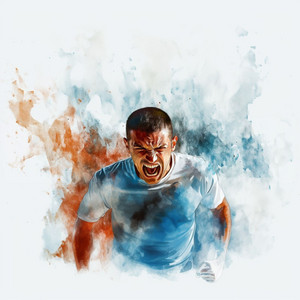
This week on the show, Wild Red Rage.
We continue our Emotions 2 .0 series with a favorite episode about the moments when we suddenly snap.
Such rage can harm others.
It can harm us. But it turns out we would be worse off without it.
The deep logic of irrational rage, this week on Hidden Brain.
This is the story of a woman who snapped.
I would say that I'm a gentle person, and that's me putting it optimistically.
Jess Cavender always thought of herself as a timid person, timid to the point of pushover.
My brother wasn't shy about telling me that I was a doormat for most of my life, and I didn't want to see myself as a doormat, but I also didn't have evidence to the contrary.
In elementary school, for example, Jess saved up years of pocket money and birthday cash, storing her savings in a music box.
Her dream? A much coveted trampoline.
Finally, one day she had enough money.
She and her dad drove to Sam's Club.
I bought this trampoline, and I was so excited.
Until her trampoline was taken over by intruders.
My two siblings, my older brother and young sister, would bounce on the trampoline as well, and sometimes I couldn't get it to myself the way I'd like it.
Jess's siblings didn't just hog the trampoline.
They treated her as if she were an unwelcome guest.
Jess tried to get her dad to step in.
Instead of helping, he offered her some advice.
My dad suggested to me that I, you know, charge them to use the trampoline, since it was my trampoline, and I had done all the work to save for it, that I should charge them a fee to use it.
He might as well have suggested she punch someone in the face.
Her siblings didn't even bother arguing with her.
They just ignored her.
I don't know how I would have ever enforced charging 25 cents for my siblings to use it.
They certainly would just be like, no, walk past me and get on the trampoline.
Jess did not experience the slights with fury.
She accepted them with resignation.
Over the years, there were other moments like this, moments that would have sparked anger in some people, but Jess usually kept her cool, until one night, years later, when she didn't.
She was in graduate school, living with two roommates in off -campus housing.
It has all of the trimmings of being sort of college, living where you're paying for a lot, and not getting very much, and people are packed in.
Late one night, Jess was jolted awake by a sound.
I hear heavy footfalls going down the stairs.
Jess immediately thought she knew what had happened, her roommate Kim had torn her Achilles tendon and was wearing a boot.
Jess figured that Kim had fallen on the stairs.
She leaped out of bed, threw on her robe, and opened her bedroom door.
Her other roommate, Shelby, opened her door at the same time.
She'd also heard the noise.
She's looking at me and I'm looking at her and Kim's not at the bottom of the stairs, so we both just run down the stairs to see what had happened.
Well, the both of us arrive at the bottom of the stairs and a very large man with my kitchen rag held over his face comes wheeling out of the kitchen with a gun pointed at us.
The first thing Jess took in about the man was his size.
He was at least six foot five.
He was about a head taller than she was.
All I could see was his eyes.
This glare of his eyes were yellow.
And aside from that, really I was staring at the barrel of the gun.
The man yelled, where's the money?
Get the money, go upstairs.
Standing there in her robe with a gun pointed at her head, Jess did not snap.
Instead, her mind became cool and analytical.
What could she do to get out of the situation?
Out of the corner of her eye, she noticed a movement.
Another man had emerged from a side room.
And I know that they want something valuable and I have nothing.
I'm aware that I have no cash.
I have no TV screens.
The man with a gun motioned for the two women to go up the stairs, presumably to fetch their wallets.
Shelby, normally a ball of energy, had gone still.
I discover that she's frozen.
She isn't blinking, she's not looking at me.
She's not moving. So I put my hand on her back and I say, everything's gonna be okay.
We're going upstairs, just give them what they want.
As Jess and Shelby climbed the stairs, the robbers came up behind them.
One of the guys puts his hand on my butt to like push me.
And that's when it occurred to me that something sexually violent might happen.
Still, Jess felt no rage.
The second robber took Shelby into her room.
The first man, the one with a gun, followed Jess into her bedroom.
And he's yelling, get on the bed.
And that's when the sort of thought, there's no way in hell that I will get on this bed, not for anything.
It's a second story building.
I probably would have jumped out of the window before I actually got on the bed.
Jess kept thinking, what could she give the man to make him leave?
And I'm looking around my room and I'm looking for something of value.
I have stacks of books, I have dance clothes, I have all sorts of things that could not possibly, in my mind, register giving to him.
I'm just looking around for something valuable to give to him so that he will leave.
And I look down and I see my camera.
The camera she used for work.
Now my camera is the main way that I provide for myself and that's how I was making enough money to really to feed myself.
And so that represented to me my livelihood, my survival.
I had a split second emotional response to it, thinking, no, he doesn't get that.
And that's when everything changed.
Jess did not snap when two men invaded her home.
She didn't snap when one of them touched her.
She didn't snap when she was forced at gunpoint into her bedroom and told to get on the bed.
But when she realized the robber might take her camera.
That's when I realized this person has no right to come in here and to demand my things or to even be in my space.
That was really the first time that I had a strong response to this person violating me.
I looked at the gun, just squarely faced him in a way that I don't think I've ever done to anyone and said, get out, get out of my house.
You do not belong here.
Jess could hear the man's accomplice in the other room shouting, shoot her, shoot her.
Jess spotted her cell phone.
She grabbed it. The robber saw what she was doing.
And as I got my hand on it, he jumped on top of me and we're rolling on the floor fighting each other.
He's using one hand to try and pry the cell phone out.
And I'm using the same hand that's on the cell phone to dig my fingernails into his cell phone.
Skin and then the other hand to try and pry the gun out of his hand.
Something primal stirred inside Jess.
She was suddenly consumed by blinding rage.
His chest is on my back.
His arms are around my arms.
He's completely sort of crouched over and around me as we're falling on our sides and I'm kicking and scratching.
The one thought flooding her mind?
Not survival. Don't let him win.
Somehow that mattered.
I was using every ounce of my physical strength and not caring that I was inflicting pain and actually being like, that's fine, that's the point of to get this phone back out of his hand.
I don't know why. I was more focused on the phone than the gun, but I was.
The second robber barged into the bedroom.
There were now two of them in the room.
But she had no thought for risk or danger.
Something new had taken over.
I just started screaming.
A full on high pitch blood curling screech of a scream.
And apparently my scream was so loud that I woke up one neighbor who was wearing headphones and then the other neighbor who was asleep on the other side.
The men were so startled by the screams that they took off.
One grabbed Jess's laptop on his way out.
Jess's scream woke up her other roommate.
Unbelievably, Kim had slept through the whole thing.
And she opened the door and says, you know, what's wrong?
I was like, call the police.
In that moment, Jess Cavender, who had lived her life as a timid person, had no sense that she had acted out of character.
All that unfolded was in no way, shape or form unnatural or surprising to me in the moment.
It was what needed to happen.
I wasn't surprised at myself until, but later when I was like, I cannot for the life of me believe that I looked at a guy who was holding a gun at my head and decided that I was going to yell at him.
Or fight. Yeah, or fight.
Jess's story reveals a strange truth about our capacity for fury.
It often arrives without warning.
It seems to have a mind of its own.
We can ignore serious provocations for years and then, boom, we snap.
Only later do we look back at our actions in wonder.
When we come back, understanding the triggers that can push even the most mild -mannered among us to see red.
You're listening to Hidden Brain.
I'm Shankar Vedanta.
This is Hidden Brain.
I'm Shankar Vedanta.
A defining quality of wild, red rage is that it often comes out of nowhere.
It takes over our minds and deprives us of reason and logic.
When Jess Cavender lost it and literally fought a robber who had a gun pointed at her head, she took a very serious risk.
She and her roommates could have ended up dead.
In retrospect, you could say it was foolhardy and irrational.
All this presents a mystery.
It's taken millions of years of evolution to produce the human brain.
It has an exquisite capacity for reason and logic.
Why would natural selection install a circuit breaker to undermine our capacity for logical thinking?
Doug Fields has long puzzled over this question.
His interest in rage grows out of his fascination with the brain, but it's also based on an unforgettable personal experience.
The story he told me has the ring of a Hollywood thriller, but with a catch.
Doug, our leading man, is not a muscle -bound hero.
He's a neuroscientist, and not just any neuroscientist, but a walking stereotype of a neuroscientist.
Here's his daughter, Kelly Fields.
We'd be watching a movie together and there's some sort of car accident or some big scene going on, and he'll just sort of chime in and be like, wow, you know, you can't see the shadow behind that plant in the corner anymore.
Did you notice that they change the lighting for no reason, even though it's the same scene?
And I would be like, no, actually, I was watching the car accident.
So yeah, just a very sort of typical nerd.
Doug is five foot seven and weighs maybe 135 pounds.
Glasses, thin hair.
Don't think of Sean Connery or, you know, Matt Damon, you gotta think of Woody Allen here.
In 2007, Doug was scheduled to go to Barcelona to present some research at a neuroscience conference.
He decided to turn a work trip into a father -daughter vacation and took Kelly with him.
She was 17, he was 57.
Their first stop was Paris.
Waiting in line at the Eiffel Tower, Kelly got a new glimpse into how her dad's mind worked.
A couple came up to us and was speaking perfect English with American accents, and they were very nice.
And I just noticed they were standing too close to us.
I kept glancing behind us, sort of like, why are you standing so close?
And I noticed this woman's hand near his pants.
And then I look again and I notice his pocket is unzipped.
And I just sort of whispered to my dad, I think they're trying to rob you.
Doug was completely unfazed.
My dad informed me that that was a decoy wallet.
Your dad had a decoy wallet?
You are just as surprised as I was.
I was like, what? He had this special wallet that he would keep in his front pocket.
It was special because of the way it was cut to fit into his front pocket.
And that was his wallet.
Sorry, I'm blowing all your covers, dad.
And then he had a fake wallet in his back pocket with not a lot of money in it and a few fake credit cards.
Doug came up with a strategy many vacations ago.
You know, when you travel, it's a wise idea not to have all your money and credit cards in one place.
You know, you can get robbed or mugged.
And so the idea is, you know, if it's a pick pocket and they get a wallet that's useless, that doesn't matter.
But if you're mugged, you can hand them the wallet or throw it on the ground and run.
So that's why I do that.
For anyone keeping score, that's neuroscientist one, pick pockets zero.
After visiting the Eiffel Tower, father and daughter went back to their hotel and packed their bags.
The next day, they took the Metro to the airport.
This is when Doug broke one of his cardinal rules.
I violated my rule of having money in multiple places because TSA makes that difficult when you have to go through inspections.
So I figured we're just gonna take the ride to the airport.
So I had everything in my wallet.
Everything in one wallet.
We got on the Metro, lots of people.
Then we came to a stop and everybody on the Metro train left, except one lady who looked very sympathetic at us.
And I felt that my wallet was gone.
They had lost their money and credit cards.
That's neuroscientist one, pick pockets one.
Doug and Kelly still had their passports, so they were able to get on their flight to Barcelona where Doug's conference was being held.
If you have your wallet stolen in Europe, how do you check into a hotel?
What are you gonna do?
What ultimately happened is I managed to reach my brother in the United States and he arranged to wire us cash.
My brother had picked this place for us to get money kind of at random on the internet.
Doug and Kelly got in a cab and gave the driver the address of the bank where they were to pick up the money, except it wasn't a bank.
So we got in a cab, took us way out of the Barcelona tourist area to the most seedy neighborhood you've ever seen.
As vacant shops and trash strewn streets replaced sprawling parks and cafes, father and daughter got more and more anxious.
Our adrenaline is like coming out our ears already because we've just been pick pocketed and had all this stress and we end up in a seedy part of town at an internet cafe.
And it was just a small dingy building full of really big men, basically.
The burly man was staring at a TV.
When Doug and Kelly entered, the men silently turned to watch.
Doug went up to the cashier.
Gave him this receipt.
He reaches in his pocket, pulls out this wad of money and starts peeling off $1 ,000 or something.
And we were just standing there sort of looking at them like, are you contacting your friends to come and rob us?
Kelly and I just know we're gonna get robbed again.
It was terrible. They didn't get robbed.
The cab stayed there, we got in the cab and then we went back.
The next morning, they resolved to put the unpleasantness of the previous days behind them.
Doug had to give a talk at the conference that afternoon.
In the morning, he and Kelly decided to visit a famous Barcelona cathedral.
Now, it would seem like too much bad luck to get robbed again, but...
We're coming up the steps of the metro station and suddenly I felt this tug at my pant leg and I slapped the zipper pocket above my knee and my wallet was gone.
This wasn't a decoy wallet, it was the real thing with all the cash that Doug's brother had wired him from the United States.
Something snapped inside the 57 year old neuroscientist.
He was done being used as a portable ATM by European thieves.
I shot my arm back.
The robber hadn't gotten far, he was right behind Doug.
He'd started to turn and I snagged him in the crook of my arm.
He had the robber around the neck.
Now what? Doug didn't have to ask himself the question.
His arm seemed to know what to do.
I flipped him over my hip to the ground on the pavement and jumped on his back and put him in a chokehold and then this thought bubbles up to my cerebral cortex.
What are you doing?
If you're robbed, you should give him the money.
But I was sort of just like a spectator in this whole thing.
Kelly, who was a couple of pieces in front of Doug, turned around to see something she never expected to see in all her life.
Wild red rage from her father.
And I see my dad choking this random person.
He has this young guy in a headlock and I was just looking at him like what is going on?
Then I hear my dad yell my wallet and when he says my wallet, I knew instantly what had happened.
Somebody had pickpocketed him again.
So I'm on the ground with this guy, he's in his 20s.
I'm just thinking back to watching my kids wrestle and I'm trying to do what they do.
I'm thinking hip control, I gotta keep this down, keep him pinned and I yell, call the police, call the police, I've got him.
And there's no reply.
And then, from my perspective on the ground, all I saw were men's feet circling around me.
And I then realized they were all part of the gang.
The thief somehow managed to fling Doug's wallet toward an accomplice.
It was now Kelly's turn to do something crazy.
The next thing I see is a woman's hand flying through the air and I recognize it as Kelly.
Kelly was captain of the ultimate frisbee team at that time and she's doing a full -on layout on a solid concrete to deflect the disc, you know, and taps the wallet into my outstretched right hand.
And I sort of jump up to my feet and I'm looking around like, okay, now what?
And I see these big guys and I watch, I follow the gaze of one of these guys.
I follow his eyes as he looks down at the ground and I see that he sees my dad's blackberry.
And as I'm locking eyes with him, I jumped on my dad's blackberry.
Just like a football player would grab a football or something which is a funny image to me because it was just a blackberry.
So I'm like on the ground hugging this little blackberry and I'm like, dad, I got your phone.
And I'm yelling because there's now a circle of men around me and I can see through their feet, there's a circle of men around my father as well.
And he has his wallet and he knew the next move and that was to let the guy go.
That's neuroscientist two, pickpockets one.
When I let the band go that I had in the chokehold, he scooted away on his back, kind of like on his butt, sort of like a crab.
And he pointed at me going, crazy man, crazy man.
And now I'm staring eye to eye with like the ringleader and all these other guys, you know, so what am I gonna do now?
I had so much adrenaline going, which I've never felt before.
I was ready to throw him into his accomplices and knock him down the steps into the Metro station.
And there was no question whether I could do that or not.
And then yeah, really pretty well dressed elderly man with a cane just sort of walks up really casually and said, yeah, he's no crazy, go.
And they all fled, you know, like a bunch of birds leaving a telephone wire or something.
They were just like, poof.
And I'm just sort of like trying to process it all, like what just happened?
Oh, my dad must be a spy.
This is, of course.
And he just like did some spy things when that guy stole his wallet.
He's not really a scientist at all.
Doug and Kelly stumbled away from the scene.
Their hearts were racing.
My dad says, you know, we have to get a knife.
And I was like, what?
Okay, now I'm concerned.
That's like a horrible idea on multiple levels.
That's a really bad idea, you know?
And I couldn't believe that my father who I had only ever seen use knives for like cutting vegetables or firewood was now suggesting like we need to go get a weapon.
And I was sort of like, oh, okay, I need to step in in the decision -making process.
That's insane. We're not getting a knife.
Doug was sure that they were being tracked by members of the street gang.
And it turns out he was not being paranoid.
He and Kelly really were being followed.
Nama turned into a scene out of like a spy movie.
We're running down back alleys.
We're running through restaurants, going into shops, going in one door, out the back door.
And so we go into a different shop and I bought this like skirt so we could try and change clothing, which is really bizarre.
And it's funny that we thought that would help.
And we get out of the store.
And I remember seeing another person walking towards us on one side of the street and then a group of men walking towards us on the other side.
And my dad just goes, we need to cross the street.
Ready, go. Like no conversation.
And we just started booking it across this crowded road.
And we run across the street.
We realize these people are following us for sure.
We see them now crossing the crosswalk to come to our side of the street again.
And we're like, what do we do?
And he goes, let's get a taxi.
And we run into the street and he like hits the hood of a taxi driving by, you know.
And he's like, we need to get in.
When they got out of the taxi, they still hadn't shaken the robbers.
They jumped in another cab and asked the driver to get them the hell out of Barcelona.
Then went to the next city.
A 170 year old cab fare I still remember.
It was here, far outside of Barcelona, that Doug's heart rate started to slow.
And as his normal, logical brain came back online, he couldn't believe what he had just done.
He's like, I should have given them my wallet.
That's crazy. Why did I do that?
Why was I doing that?
Like, never do that.
If this ever happens to you again, you know, give me your wallet.
Doug's behavior disturbed him as a father, but it also disturbed him as a neuroscientist who thought he had a good handle on how the brain worked, on how his own brain worked.
From a neuroscience perspective, how does this happen?
That you can instantly do this aggression without even being aware and it's all unconscious.
If something in my environment could cause me to suddenly risk life and limb with no conscious thought, I wanted to understand how that worked at a neuroscience level, what's going on in the brain.
The question again was why evolution, which has sculpted our brains and bodies to be skilled survival machines would preserve systems in the brain that cause us to act with unthinking haste and violence.
Haste and violence that can place our own lives at great risk.
Doug wrote a book as he pondered this question.
It's called Why We Snap, understanding the rage circuit in your brain.
He realized that the answer lay in the question itself.
It was all about speed.
The conscious brain is too slow and it doesn't have the capacity.
So when you're faced with a sudden threat, like a fist thrown to your hand, you have to respond faster than the conscious brain can handle it.
There are lots of things that can be done slowly, but surviving an immediate threat is not one of them.
When you're dealing with a predator or some other imminent danger, you have to act fast.
So nature has developed high speed pathways to the amygdala.
All our senses go there before they go to the cortex, which is where we have consciousness.
And that's so you can have this rapid response to a real threat.
Now, we've all experienced this.
You're on a basketball court and a wayward basketball comes toward you and you duck and turn and you bat it away.
And then you go, what was that?
Your unconscious mind detected because the visual input went first to your amygdala that something was in your visual space that shouldn't be there, sort of like a motion detector.
But not only that, then put you on a very definitive course with a complex behavior.
You think about the behavior where you turn and you intersect this thing and you bat it away.
Rational thought isn't just unhelpful when that basketball is hurtling toward you.
It's actually counterproductive.
Being deliberate can end up getting you smashed in the face.
But short circuiting logic creates dangers, especially when you're in the grip of an emotion like rage.
You can literally stop thinking about your arm as your arm.
It becomes a weapon that can be wielded, deployed, sacrificed.
The brain's threat detection mechanism, which is highly controlled to engage in a violent, aggressive interaction, risks life and limb.
Most of the time, we are well served by being logical and deliberate, but on rare occasions, it's helpful to act with unthinking haste.
The operative word here is rare.
What Doug has found is that wild, red rage erupts in very specific situations, often when you're defending your most vital interests.
The brain controls this response so that it's only tripped by very specific triggers.
Doug says most of these triggers are related to our basic needs.
For example, you can easily imagine an animal or a human reacting with protective rage when its own life is in danger.
Life or limb. If you're attacked, you will fight back.
There's nothing to lose.
All animals will do that.
Another thing most animals will do?
Protect their young.
You know the rule, never get between a mama bear and her cub.
And while you're at it, don't try to steal her dinner.
Resources. That was the other thing that was tripped when my wallet got snagged.
Even a family puppy will snap at your hand if you get too close to the dish.
The list goes on. Don't try to take my mate.
Don't encroach on my territory.
Don't corner me. If an animal is trapped, it will use aggression to break free.
I mean, an animal on a trap will chew its leg off.
But so will a human.
These triggers remind us of a truth we cannot avoid.
Humans, at the end of the day, are animals.
But we're also more complicated than this He was 67 years old and lived in Silver Spring, Maryland where Doug lived too.
Ray was waiting his turn at a post office one day when he saw what he thought was another customer cut the line.
The next thing that happened was unbelievable.
He pulled out a knife and started knifing the guy viciously.
I went to many of his trials and, you know, he had no record of violence, no arrest record, is completely out of character.
Ray snapped because he was defending something that is of vital importance to humans.
Order in society. This guy broke the rules.
He cut in line. We all depend on a functioning social order.
A stable, rule -following society is as essential to our survival as food and shelter.
We're willing to fight to maintain such order.
In social animals, in order to maintain order following the rules, aggression is what is used.
That's still what we use.
We use violence. Now, it's not as if every threat produces mindless rage.
Plenty of people see the social order breached or get insulted and don't turn into Rambo.
The threshold for snapping and the drivers of violence can vary between people.
So sometimes the right thing to do is to be the Marine and charge after the threat, and sometimes that's going to get you killed.
But as a species, the group as a whole will survive because somebody's going to do one thing and somebody's going to do something else.
Doug says stress is often a factor in sending us over the edge.
He sees stress at play and just Cavender's response to the armed robber.
She didn't scream and dig her hands into the attacker when she first saw him.
She tried to appease him.
She had been enduring this for a while and stress was building and it tripped that trigger.
The resource trigger.
She said that it was the most valuable thing in her life that she depended on for food and everything was her camera and they weren't going to get it.
Now, there is a wrong lesson you can draw from this account of rage.
You could say, look, Jess lost it and because she became enraged, she managed to save her camera.
Doug was furious at being robbed and his rage allowed him to take his wallet back from the Barcelona thieves.
These examples suggest rage always results in good outcomes that you would end up better off when you violently lose your temper.
What this misses is that literally no one in their right mind will tell you to attack a man with a gun or to take on a street gang in a foreign country.
Risking your life to save some money or to protect a camera is a very definition of foolishness.
When we come back, why you can't understand the deep logic of blinding rage by looking only at situations where things turn out well for you.
You're listening to Hidden Brain.
I'm Shankar Vedanta.
This is Hidden Brain.
I'm Shankar Vedanta.
Mohammed Boazizi was sick of the police and their demands for bribes.
He was a produce seller in the city of Sidi Bouzid in Tunisia in North Africa.
The harassment felt endless.
On a Friday morning in December 2010, Mohammed had an encounter with the police.
Years later, there are still varying accounts of what happened.
According to some, a cop confiscated the scales that Mohammed used to sell his produce.
Others said an officer wouldn't let him set up his stand.
Some accounts said Mohammed was slapped or perhaps kicked.
The street vendor did what citizens are supposed to do.
He went to the authorities to protest his mistreatment.
But when he got to the government building to lodge a complaint, he was barred from entry.
Mohammed was gripped by an intense feeling of injustice.
And then he snapped.
He doused himself with gasoline.
Standing in front of the government building that had shut the door on him, he struck a match and set himself ablaze.
One of the last things onlookers heard from him were these words, how do you expect me to make a living?
By the time the fire was doused and Mohammed was rushed to a hospital, burns covered 90 % of his body.
He died a few weeks later.
His story shows the self -destructive power of wild, red rage.
But it also reveals the hidden logic of fury.
Thousands of Mohammed's fellow Tunisians showed up at his funeral.
On social media, he was dubbed a martyr.
Members of the crowd shouted, farewell Mohammed, we will avenge you.
We weep for you today.
We will make those who caused your death weak.
Ten days after Mohammed's death, with escalating protests around the country, the president of Tunisia ended a 23 -year autocratic reign and fled the country.
Within weeks, protests in Tunisia spread to other Arab countries in what came to be known as the Arab Spring.
It is the end of an era in Tunisia.
President Hosni Mubarak has stepped down.
Neuroscientist Doug Fields has found that we are capable of fury when we want to defend our lives or protect family or guard resources.
Rage can be triggered when we want to maintain the social order.
It also serves another useful purpose.
Rage acts as a signaling device.
If you look at the long history of social protests, it's just clear that powerful emotions like anger and rage have a huge and have had a huge role to play in galvanizing people, motivating them, bringing them together in movements towards increased justice.
This is Amiya Srinivasan, a philosopher at the University of Oxford.
Amiya recognizes that rage does have costs, but she wants us to remember that it can be useful to communities, causes, and individuals.
Anger can play this clarifying role for myself, so it can help me understand what's going on, right?
It can make me come to certain kinds of moral and political realizations I didn't have before I come to realize there's actually an injustice at work.
The benefits of anger don't stop with the clarity it brings to us as individuals.
Getting angry can act as a certain kind of warning signal to other people, and in fact, there's a lot of social psychological evidence that suggests that getting angry can be an effective means of changing other people's behavior, right?
Counter to the kind of standard liberal understanding where calm group deliberation is the only way to get people to change, actually getting angry sometimes is an effective social signal to motivate other people.
In fact, Amiya argues, it's important when we talk about fury to distinguish between what might be counterproductive or even harmful to individuals in the short run and the usefulness of that fury to movements, groups, and causes.
Individual anger can often spread and become communal anger and collective anger, and collective anger has extraordinary forms.
She asked me to think of an example in an interpersonal setting.
Imagine the scenario.
You're in a romantic relationship and your partner cheats on you.
I mean, it might be that getting angry at your cheating lover just encourages that cheating lover to cheat more.
And if your lover were to say to you, well, you shouldn't get angry at me because it just makes me cheat more.
I mean, that's an infuriating response, and it's infuriating because it treats your anger as just an instrument, an instrument for encouraging or discouraging his or her behavior, whereas in fact, anger, like other moral emotions, is something that makes a claim about the world.
An angry spouse does more than show her displeasure at infidelity.
She's also sending a signal about the kind of behavior we think is appropriate in a society in interpersonal relationships.
Her anger sends a message to other spouses.
Obviously, this is not happening at a moment, and makes you incur personal costs.
By short -circuiting reason, it makes you ignore those costs.
Your actions might be personally harmful, but it can help the group to which you belong.
This is why natural selection might conserve such behavior.
We have these circuits because we need them.
We have violence because, unfortunately, we need them.
We don't call it snapping when the outcome is good.
Then we call it heroism or quick thinking.
Rage, in fact, might be one way that nature gets us to prioritize the interests of our groups over our narrow self -interest.
By disabling logic and impairing reason, we can be prompted to do things that we would never do if we were only looking out for ourselves.
So somebody violates a social norm, and we become angry.
Again, anger is prepared you to fight, and as we know, sometimes these turn out tragically.
People get into a fight on the road and pull out a gun.
Acting in the interest of a group is not always the right or virtuous thing.
Terrorist organizations have long used rage as a recruiting tool for new followers.
The anger of partisan politics can cause us to think more about the well -being of narrow groups, like our political parties, rather than the well -being of larger groups, like our nation.
Fury can drive massacres, wars, and genocide.
All this leaves us in a bind.
If we were to eliminate rage or to logically determine when to get angry, we lose the speed and potency of sudden anger.
But when we allow our furies to flare unchecked, we can cause senseless damage to ourselves and others.
Many centuries ago, the philosopher Aristotle said, anyone can become angry.
That is easy. But to be angry with the right person, to the right degree, at the right time, for the right purpose, and in the right way, that is not easy.
Hidden Brain is produced by Hidden Brain Media.
Our audio production team includes Annie Murphy -Paul, Christian Wong, Laura Correll, Ryan Katz, Autumn Barnes, Andrew Chadwick, and Nick Woodbury.
Audio mix on today's episode by Rob Byers, John -Evens Evans, and Michael Reifel of Final Final V2.
Tara Boyle is our executive producer.
I'm Hidden Brain's executive editor.
Today's show is the final episode in our Emotions 2 .0 series.
Over the past few weeks, we've talked about how group dynamics shape the way we feel about our lives and the world around us.
We've looked at the importance of ambivalence and the complex emotion of pride.
If you missed any of the episodes in the series, be sure to go back and check them out on our podcast or on our website, hiddenbrain .org.
If you want even more Hidden Brain after you're done with that, please subscribe to our newsletter.
In each issue, we bring you interesting ideas and research on human behavior, along with a brain teaser and a moment of joy.
You can subscribe at news .hiddenbrain .org.
That's N -E -W -S dot hiddenbrain dot org.
I'm Shankar Vedantam.
See you soon.