
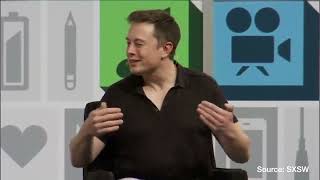
[The Future of Education: Moving Beyond the Assembly Line Model]-[Elon Musk learning method]
📋 Summary
Rethinking Education: From Assembly Lines to Gamified Learning
In an era where information is ubiquitous and accessible, the traditional university system faces increasing scrutiny. This discussion challenges the long-held belief that a college degree is the definitive pathway to success, proposing instead a shift toward personalized, problem-centric, and engaging educational models.
The Myth of College as a Learning Hub
The speakers argue that "everything is available basically for free," suggesting that the primary value of college is not the acquisition of knowledge itself. Instead, universities function largely as a mechanism to "prove you can do your chores." By forcing students to "soldier through" annoying homework assignments, colleges provide employers with "evidence of exceptional ability"—not necessarily in terms of intelligence, but in terms of perseverance and conformity. The speakers point to successful figures like Bill Gates, Steve Jobs, and Larry Ellison as evidence that "obviously not needed" for those with exceptional drive and talent.
The Flaw of the "Assembly Line" Education
A central critique of modern schooling is its rigid structure. The speakers liken current grade-level systems to an "assembly line," where students are treated like "objects" moving in lockstep through subjects like English, math, and science. This industrial-age approach ignores individual aptitudes, forcing students to progress at a uniform pace regardless of their genuine interests or varying capabilities. This lack of flexibility makes the learning process feel like a "chore," leading to disengagement and a lack of enthusiasm among students.
Ad Astra: A Paradigm Shift in Pedagogy
To address these systemic failures, the speakers advocate for a model exemplified by "Ad Astra" (Latin for "to the stars"), a school that fundamentally rejects the traditional grade-level system. Instead of grouping children by age, the curriculum is tailored to "match their aptitudes and abilities."
Key principles of this approach include:
- Problem-Solving over Tool-Memorization: Rather than teaching tools in isolation (like having a specific course for screwdrivers and wrenches), the school presents a problem—such as taking apart an engine—and introduces tools only when they become relevant. This ensures students understand the "relevance of the tools" in a practical context.
- Gamification: Education should be "as close to a video game as possible." Just as children engage with video games on "autopilot" because they are interactive and compelling, education should be designed to spark that same intrinsic motivation.
- Human Connection: The current model is criticized as being "vaudeville," where teachers deliver stale lectures they have repeated for years. This "lack of enthusiasm is conveyed to the students," who are left questioning the purpose of their studies. By contrast, an engaging environment makes learning so compelling that students might even find "vacations are too long."
Redefining Education as Data Download
Ultimately, the speakers frame education as the process of "downloading data and algorithms into your brain." When viewed this way, traditional methods are described as "amazingly bad." The goal for the future of education is to remove the unnecessary barriers and drudgery, focusing on efficiency, curiosity, and the practical application of knowledge. By shifting the focus from completing a degree to actual mastery and problem-solving, we can create an educational landscape that fosters genuine growth rather than mere credentialism.
Deep Learning with ListenLeap


