Discussion keeps the world turning.
This is Roundtable.
You're listening to Roundtable with my stuff He Yang.
I'm joined by Steve Hatherly and Yu Shun in the studio.
Coming up, imagine carrying groceries up five flights of stairs every day or watching elderly neighbors struggle to leave their homes.
Now after years of debate, some older buildings in China are finally getting elevators.
But behind each installation is a story of negotiation, deliberation and community effort.
What challenges still stand in the way?
And how can cities make these upgrades smoother for all?
And apparently, a snack shaped like a Pokemon is worth more than your car.
Forget stocks, just hunt for rare cheese puffs.
Well, it's not so simple.
What's going on there?
our podcast listeners can find us at Roundtable podcast. I mean, Roundtable China on Apple podcast and got a question that's keeping you curious from social issues to tech and everything in between.
Let us take a stab at it.
Email us at roundtablepodcastatqq .com.
Emails are fine, but we really love voice memos because we get to hear your voice as we try to answer your questions.
Now on Roundtable, let's switch gears.
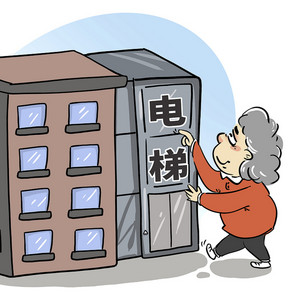
Living in an older building without an elevator turns every trip home into an unplanned workout.
Now imagine what that feels like for an elderly resident in a wheelchair.
This is where elevator retrofitting becomes essential.
But getting it done is anything but easy.
From navigating neighborhood debates to the complexities of installation, the process has long been an uphill battle.
So, how are cities and communities in China finding creative ways to elevate residents' quality of life by bringing much -needed elevators to aging buildings?
So let's take a look at this.
Really, how strong is the drive that we need these elevators in old buildings that didn't come with one?
Yeah, this is actually something that with huge potential demand, you know, People's Daily reports that the potential demand for elevator installations in China exceeds two million units.
That's affecting the daily lives of hundreds of millions of people.
And it is a very crucial public welfare initiative.
Also, it is solving a lot of mobility challenges because installing elevators significantly improves the mobility of elderly residents living on upper floors and they're having a name called like suspended elderly because it is so you know inconvenient for them to go through all of these floors if there are no elevators in the building as well as people with disabilities you know pregnant women and others with limited mobility and this enhances their quality of life if these old buildings got added an elevator.
Steve, you're not originally from China.
When you see a story like this, do you understand why it becomes something that people are talking about in the country?
It does make sense to me because I'm assuming that when a lot of the buildings were built - I'll just use Beijing as an example, although I'm sure other cities qualify here in the A lot of the buildings that were built, apartment buildings that are maybe six or seven stories, five, six, seven stories tall.
A lot of those buildings would have been built a long time ago, I guess.
And at the time of building, perhaps not have an elevator, no elevator installed.
Now though, where the population is aging, then more and more and more and more people who live in those buildings would have the need, the serious need, not just a luxury convenience, but a serious need for an elevator in their building, either for any of the reasons that Yuxun just mentioned.
Right. With these kind of stories, it kind of invites a quick review of how the property market or the living conditions has developed for the Chinese people.
For those of my generation.
Well, younger Millennials, those born in the 1980s and early 1990s, you might have remembered that it used to be commonplace that people lived in bungalows.
That was in the 1980s and 90s and before.
And then during our childhood, that we experienced that major moment of, oh, the And then at the time in Beijing, let's say in the nineties, if you were living in a building that's like seven, five, six, seven stories tall, that was major improvement.
People would celebrate as you go into, you know, move into your new home.
But now we're in twenty twenty five and actually almost like 10 years ago, we started seeing all these debates and discussions about, well, actually these residential buildings do not have parking space for, it just didn't come with a design, a parking space for maybe each household, and nor did it have the elevator.
And now we're seeing that for years this debate has gone on and people say that there are some challenges, but these challenges can be overcome.
But let's review what has made it so difficult to retrofit and elevator into these older buildings to start with.
One of the first ones is the diverging resident opinions.
I think that makes sense.
You know, residents on higher floors have a more urgent need for elevators.
Yeah, if you live on the first floor, you don't care.
Yeah, that and also they bought like this floor for a reason, maybe.
and then if there is a new elevator that's installed that could be kind of troublesome for these kind of first floor residents.
They may worry about potential negative impacts such as noise, reduced natural light, also these concerns often make it difficult to reach a consensus.
I was gonna say expensive, too.
Yes. The total cost of installing an elevator can reach several hundred thousand yuan with additional expenses for maintenance and upkeep also maybe after the installation you may need to pay for the usage of the you know elevator maybe monthly maybe yearly or also maintenance fees.
These may be covered by some of your like monthly property management fees maybe Maybe not.
So this could be a concern of a lot of these residents.
Yes, and you mentioned the couldn't get the neighbors on board together, all that, that has been a major obstacle.
Even I think the later steps of, you know, figuring out where the money comes from, etc. that is a major headache already.
but for a lot of these building property owner property owners they can't even sort of overcome the first hurdle that and in the years before it used to be that you have to give you have to get an okay agreement from every household in this build no not just a majority every every so it was impossible to do like a Isn't it?
Exactly. You can't have 11 out of 12, you need 12 out of 12.
You need to get everybody to give the green light and therefore it was impossible, but now there are changes to these policy regulations and let's look at, you know, what are these new measures and experiences?
Yeah, one, the Chinese government released a special action plan to boost consumption, yes, and that clearly states the support for local pilot programs and the overall promotion of installing elevators in multi -storey buildings, as well as developing elderly meal assistance services.
And this is part of a bigger effort to encourage local governments to introduce related policies that benefit the public.
And when we talk about multi -storey buildings, the size of the buildings that we're talking about here have to be there has to be a threshold right it has to be above a certain a certain number of floors so that's that's one of the things that the government is introducing policy measures to try to support this as complicated though as it may be.
Also, starting from May the 1st 2025, a significant new standard will be implemented nationwide on newly constructed residential buildings with four or more floors must be equipped with an elevator.
So that's the threshold.
Yeah that's kind of the threshold.
Although it's for the new constructed buildings but it's still kind of a reminder for people that okay if your building is you know taller than four -floor and maybe you should get an elevator right.
Also it is required that public mobile communication signals cover public spaces and elevator cabins, I think it is also for the safety issues when you're inside a elevator cabin.
Your phones can have no signals when you're in that.
And with these elevators, while the construction of them, or more like the retrofitting of elevators one major change I've noticed is that instead of getting everybody in the property or in the building instead of give getting every property owner to fine yes now you only need two -thirds the owners to give the approval the majority yes so that oh that's gonna invite a lot of fights isn't it because No because immediately I thought well for the people who voted no they're gonna say I'm not paying for that.
I didn't vote for this.
This is going to invite a laundry list of problems from within the community I would I would guess anyway.
But see like at least now well see it's got you know the upsides and downsides but at least the upside is now at least you know for most people if they really want this to happen then it can happen!
Yeah, so you, Shun, you've done some research on this.
Tell us how are they, where the neighborhoods are dealing with this issue of people not agreeing and also where does the money come from?
Yeah about the you know opinions like divergent resident opinions, some like residential area and complexes are issuing these kind of policies that you can just start the application process to begin as long as only one household in a unit requests an elevator.
Actually, it is only a starting step.
You can start this process and then you need to get all of the votes and everything that we said before but at least this is kind of a policy that encouraging people if you're in need you can ask for it and also about the funding issue.
One example is that in Shengzhou, Zhejiang, eastern China, they implemented a housing fund aid model encouraging residents to use their family members housing provident funds to help finance elevator installations, expending funding resources.
Sorry to interrupt for those who don't know that housing provident fund correct me if I'm wrong please it's a mandatory savings program in China that helps employees of companies save for housing related expenses.
So both employees and the companies contribute a percentage of the employees salaries to this fund every month and that percentage if you're curious it's about between five and twelve percent of the monthly income of the employee, and you can use that for various things.
You can use it for buying a home, or even paying rent in some cases, or withdrawing after retirement.
That's the provident fund you're talking about.
So that can be - Also, sorry it's public organizations as well, so it's any employee, employer.
It's not just companies.
So that money from that fund can be used to help support the cost of installing an elevator in a building.
Yes. Um, because this fund is owned by the staff and managed under special accounts.
Um, previously there are like limited ways that you can use this fund and now you can also implement this, you know, this fund to maybe install an elevator so that you can basically use this part of money.
Because as we say, you need to like get a percentage of your salary in this fund and the company need to pay as same as the amount that you paid.
Yeah but I mean if we go back to that two -thirds majority, right?
I was just thinking if you have a 12 -story apartment building just for example for example well let's just keep it like 6 okay that's more typical.
Okay 6. So if you live you know on the third fourth fifth or sixth floor, then you're going to be voting for this apartment elevator and the people who live on the first and second floor are going to say, no, I don't want to pay for this.
And you can say, oh, that's okay.
You can just use money from your housing provident fund.
But that's still my money.
Exactly. And that's the point that I wanted to make.
Hold on. Oh, sorry.
No, no, no. I'm saying from the employee's point of view, you'd be saying, hold on, I've been contributing to this fund for years.
Now you want me to use my money for something that I don't want so that you can have a more comfortable ride to your house?
I don't think so. I can see that reaction being a common reaction.
That's why some of these communities introduced the shared elevator model where residents can apply for free installation but pay for usage.
Of course, maybe monthly or yearly for maybe the usage of the elevator and also the maintenance fees.
Not like a pay per use market.
So this kind of a taxi ride, ride sharing, right?
You'd have to contact a friend to take the elevator together.
I was thinking, you know, in some way, this breaks the traditional barrier of self -financing and using your own money to install an elevator kind of thing and also, maybe it could solve the problem of, like you said, the residents on the first or second floor.
Maybe they don't need to pay for this usage of this elevator, and then only the upper floors need to pay for it.
It's more flexible, I would say.
Yeah, but then when the first and second floor residents are seen using the elevator, then the people on the upper floors are going to say, Hey, why are you using this?
You didn't pay for it, right?
That's such a stickler.
But it could happen.
But it could happen.
And also can I please shed some light on an old point of contention, that is the Housing Maintenance Fund or zhufangwei xiujijian, specifically states when purchasing a property buyers require to contribute two to three percent of the purchase price or maybe this This was the initial price set by the property developers, and you're paying, you're contributing that percentage into a fund called the Housing Maintenance Fund.
And your elevator maintenance, as well as, or what we're talking about retrofitting, so installing an elevator, including the elevator shaft, which didn't used to exist, into this building, in theory can come from this fund.
But for years it was it has been almost impossible to release this money that every home buyer has already contributed to the to the fund.
So you've paid for this because you need to get everybody to agree on this project to in order to release this fund.
So this goes back to its kind of on par with your housing provident fund issue.
That is this one actually, you know, the money is for this specific use, but not everybody agrees to use it.
And then, you know, who's going to pay for it?
I was wondering if there were similar situations happening in the states or in North America.
So I went to a legal Web site and I found a customer, I guess, asked this very question.
If the condominium corporation, this is the question, if the condominium corporation needs to purchase a new elevator for my condo do i have to pay a share of the cost. And that that's the question and here's the answer from the legal firm.
If the condo corporation has an adequate reserve fund the payment of a major repair or replacement cost of a new elevator may already be covered.
That's kind of what you were talking about, that savings fund, right?
The reserve fund is the unit owner's savings for major repairs and replacement costs in the common elements of the condo, which occurs as the building gets older.
The contribution made to the reserve fund come from a portion of the monthly common expenses paid by the unit owners pursuant to a reserve fund study.
So every month a portion goes into this kind of building maintenance fund.
If the reserve fund is inadequate, meaning there's not enough money in there for the new elevator or for the repairs.
The board is required to develop and implement a plan to increase it.
Ultimately, if there is not enough money in the reserve fund to pay for the elevator a special assessment may need to be levied against all unit owners meaning the unit owners may have to pay more." Well that's quite the pickle.
And no easy answer.
And actually here in China, this time what's changed?
It seems like the government.
Oh, thank you so much has stepped in and subsidies have been given for devoted to this specific cause.
Yeah, various local governments have introduced subsidy policies.
Like Shanghai subsidizes like 40 % of the elevator installation cost with a maximum subsidy of 280 ,000 yuan.
That's about 38 thousand US dollars per unit, which means one elevator they can subsidize for that amount of money and also in 2024 Nanning Guangxi launched a special long -term government bond initiative to support the renovation of aging residential elevators offering a subsidy of 150 ,000 yuan per new elevator and also 50 ,000 yuan for upgraded one, which means these like existed elevators can also get like renovated or replaced.
How would you feel about this?
You know, we're talking, we're talking about this, you know, from an outside point of view, because none of us are actually in this situation.
But if you were living in one of these complexes, let's say, you know, you can answer from the upper floor point of view or from the lower floor point of view.
How would you feel, Yushi?
Well, sorry. I would say, yes, maybe.
You know, this is for the whole neighborhood.
If your neighbors are being happy, I think it can create a healthier neighborhood.
Wow, I didn't know you're so community minded.
It's extremely generous.
Oh yes. And actually, maybe my building does not to have a new elevator retrofitted, but we've already encountered the issue of we need to replace one of the two elevators because apparently in this country, 15 years is the golden threshold when your elevator is deemed old.
But we have had trouble to collect the signatures of, do we have maybe 60, maybe households?
Apartments in our complex?
And there are two of our neighbors.
Only two, 58 out of 60 say yes.
And those two would just not cave in.
And so when you've got this issue, then we can't do anything about the old elevator.
That, you know, it's the safety that - that affects everybody, and it's the convenience that can affects everybody.
But you know, in the subject that we've talked about today, at least when the government steps up, it really helps those people in need.
In upgrading or retrofitting elevators is a collaborative effort that requires shared responsibility and self -governance.
from navigating applications to accessing maintenance funds to securing financing the coordinated efforts of communities homeowners and Property management companies are all crucial and that brings us to the end of today's show Thank you so much Steve Hatherly and you should for joining the discussion.
I'm ha young. We will see you next time