
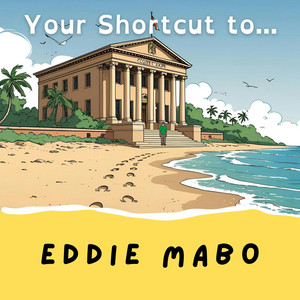
[The Legacy of Eddie Koiki Mabo: Challenging Terra Nullius and Securing Native Title]-[Eddie Mabo and Native Title... Your Shortcut]
📋 Summary
The Fight for Justice: Eddie Koiki Mabo and the Landmark Mabo Decision
Introduction
In Australia, Reconciliation Week concludes annually on June 3, marking the anniversary of the historic "Mabo decision." This podcast episode from Squiz Kids explores the life of Eddie Koiki Mabo, the man who challenged the foundational myth of Australian colonization and forever changed the legal landscape regarding land ownership for Aboriginal and Torres Strait Islander peoples.
Who Was Eddie Koiki Mabo?
Eddie Koiki Mabo was born in 1936 on Mer Island (also known as Murray Island), located in the Torres Strait. Raised according to islander tradition by his uncle and aunt, Mabo was deeply connected to his heritage. From a young age, his grandfather taught him about "traditional law and stories," emphasizing that land ownership was a personal right passed down through generations—a concept that, at the time, remained unrecognized by Australian law.
After moving to mainland Australia and settling in Townsville, Mabo worked as a gardener at James Cook University. His life took a pivotal turn during a lunch conversation with academics, where he discovered that, under Australian law, he did not legally own the land his family had occupied for generations. This revelation sparked a quest for "fairness, truth," and a confrontation with the country’s history.
Challenging the Myth of Terra Nullius
To understand the significance of Mabo's fight, one must understand the doctrine of terra nullius. This "ancient Latin term" translates to "land belonging to no one." When Captain Cook arrived in 1770, he claimed the east coast of Australia for Britain by asserting that the land was unoccupied. The podcast notes that this was a convenient fiction used to justify colonization, despite the British being fully aware of the existence of Indigenous peoples.
In 1982, Mabo and four other Merriam people launched a case in the High Court of Australia, aiming to prove that the Merriam people had owned and passed down their land long before the arrival of Europeans. Mabo argued that the premise of terra nullius was fundamentally "wrong."
The Mabo Decision and Its Legacy
Although the legal battle lasted for a decade and Mabo tragically passed away in January 1992, just months before the verdict, his efforts culminated in a historic victory. On June 3, 1992, the High Court ruled in favor of Mabo and the Merriam people. The court explicitly declared that terra nullius was "wrong" and recognized that Aboriginal and Torres Strait Islander peoples held rights to their land that predated, existed during, and continued after colonization. One judge famously condemned terra nullius as "the darkest aspect of our nation's history."
This ruling led to the Native Title Act of 1993, a legislative framework that allows traditional owners to have their land rights officially recognized. While the decision initially caused concern among mining companies and farmers, it opened the door for ongoing discussions regarding land sharing, fishing rights, and the protection of culturally significant spaces.
Conclusion
Today, the legacy of Eddie Koiki Mabo lives on through his family and the ongoing commitment to reconciliation. Mabo Day serves as a reminder of an individual who "stood up, spoke out and changed Australia for the better." His story remains a cornerstone of the Australian narrative, highlighting the importance of truth-telling in the pursuit of justice.
Deep Learning with ListenLeap


