Hello! Welcome to Roundtable, where we serve up piping hot debates on the issues that sizzle in China and beyond.
I'm Neil Hong -Lien.
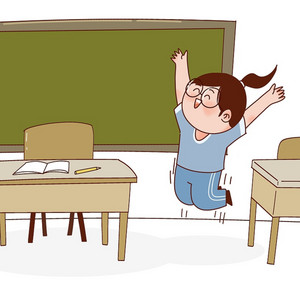
Time to sharpen your pencils, or maybe just charge your tablets?
Because in this special episode, we're going back to school.
As part of our series marking the 75 years of China's transformation, today we're focusing on education.
From dusty textbooks and wooden desks to online learning and AI tutors, the way China learns has come a long way.
So whether you're a star student or prefer the back row, get ready for an education in how China's classrooms have kept pace with the country's rapid growth.
For today's show, I'm joined by Yu -Yushen and Steve Hatherly.
Now grab your virtual compass and follow us to the heart of the discussion.
After continuous effort, China has built the world's largest high -quality education system.
There have been nearly 500 ,000 schools of old levels and types teaching 291 million students in China as of 2023.
The reason we're doing this kind of effect check thing is because when it comes to education, we've come a long way.
And all three of us have received education in different times, in different ways, and it's fun to take a look - In different countries.
In different countries as well.
Yeah, definitely. And it's fun to take a look at what education has been in almost ancient times, especially here in China and what has it been like or what it is like now.
And we've been doing several episodes of this series and it has been really fun not only because we dig out a lot of fond memories and talked about many anecdotes in different themes, also because I feel like with this special show we find a way to kind of streamline or put in place some of the facts
that we felt worth sharing to not only audience in China but also over these audiences.
For example, I've never thought about thinking about education in the sense that education does not really exist at that period of time.
For example, we talk about childhood, but childhood is relatively a modern term.
It's something that only happens when we realize children under the age of 18, actually not always 18, but mostly 18 in today's concept, needs special attention and special care.
And that period of time is crucial for their future development.
Same goes to education.
If you think about thousands of years ago, education didn't exist.
You only survive your new parents.
Well that is also education.
Education is not simply in a classroom inside of a building with a teacher and other classmates.
Education almost begins from the moment you exit the womb learning how to breathe oxygen and how to figure out where your toes and your fingers are.
Education of course today we'll be talking about being in a classroom with students, but you never stop learning until you're not here anymore.
That is definitely a very important concept as well.
But when we think about the very beginning of education, yes, like Steve said, it's more about standing up, walking, learn to hunt, learn to harvest in the sense of collect certain fruits.
That's how you grow up in Canada.
You learn how to walk, you learn how to talk, then you learn how to hunt, then you learn how to harvest.
That's the chronological life of a Canadian.
And then you learn how to skate, how to play ice hockey.
That's so cool. But yeah, that was the almost primitive society kind of education.
We're not talking about that.
We're talking about the kind of education that is actually gathering a certain number of students in a place, maybe in a classroom, maybe under the shade of twee, a very big tree, and start telling them the things that you know about and trying to pass on the knowledge that you have.
And I think by saying education, what we're mentioning is actually the fact that we're receiving training on certain skills and cultivating certain, say, standard for you to phase everything you're about to face when entering the society.
And when we come to history recorded times, I would say that the earliest form of education, or rather school, in China appeared in the Xia dynasty, which is like 2070 to 1600 BC.
Long time ago. Yeah.
I mean, thousands and thousands of years ago, there stand such a place that was referred to as school by ancient Chinese.
And that's when education started to, you know, separate from production labor as in the primitive time.
And back then, there were only official schools targeting children of officials, governmental officials and the nobles.
And later on, there were, say, private schools, as we can probably imagine, that's open to the public and start to give education to a bigger population back in that ancient time.
But at that time in China, so, so, so, so, so long ago, education was only for the nobility, for the elite.
It wasn't for the general population.
At the very beginning, I believe, yeah.
And then later on the imperial examinations of Qujiu, which is something that the ancient Chinese society used to recruit bureaucracies and also recruit talents for the government, existed and start to change how people view education throughout history.
And the system of Qujiu first emerged, I think it was back in the Han dynasty from 2006 BC to 220 AD.
And it was about a hundred years ago during the Qing dynasty, but Qujiu, the system itself was like an essential part of forming what the modern Chinese society call education system nowadays.
It was actually a very important part.
Nowadays, we say the Qujiu is so bad because it's feudal.
Yeah, because you use one type of standard to select all different types of students and you try to find the kind of talent and try to mow them like a certain part in the machine and it was considered something bad.
But actually in the beginning of it, it was something really, really great.
It's really innovative and it has given people a social ladder to come up with.
And in the very beginning, I believe in China, it was the kind of system that requires a kind of recommendation system if you want to get into the so -called governance group of people, so the officials.
And without knowing proper people, there's no chance, even if you're very talented or even if you can, you have the ability to do so.
So could you actually give ordinary citizens a chance to enter the governing stage, to enter the imperial court?
And that was a very important part.
So it was initially a good thing.
But as time passed, we see the development of society that is considered something old and out of date and it's no longer up to the development requirements of the society anymore.
Yet we enter the very nice stage, the stage that we're quite familiar with, with preschools, with compulsory education, with high school and with vocational education, with universities, with all these kind of words that we're quite familiar with.
I mean, according to some National Bureau of Statistics data from earlier this year, I believe in February, there were 40 .93 million preschool children in kindergarten in 2023.
That's worth celebrating because we see that a lot of the very young kids, they're attending kindergarten to receive the very early form of education under modern day scenarios.
And yeah, I mean, it is definitely something quite impressive because I feel like before preschools, we also had daycare and before daycare, there was this idea of if you give birth to a kid, you need to spend at least the first three years of that kid at home taking care of the kid, meaning that women
were not able to choose work over taking care of the family before the invention of preschool.
So now we see all of this preschool and daycare and we, I think on the wrong table, we talked a little bit about different types of daycare when it comes to, for example, public ones and private ones, and different forms of providing care for the kids before the age of three, before they can actually
go to kindergarten.
And that is something definitely a bliss to the kids, but also something quite significant to the mothers in the family.
Can you remember your daycare days or your kindergarten days?
Oh yes, I do. For me.
Yeah, I do because for me, I remember back then for my age or for my time, I'm not really sure if it's the case for everybody, but most of the kindergarten are kind of associated with the company or the place that your parents work.
So it's kind of like the employer of your parents would have this kind of facility.
Right, right. So the parents could bring you there and it's not very far away, maybe in the same building sometimes.
Yes, kind of like associated with the place so that it's easier for the parents to pick you up.
And you can remember those times.
I remember transferring from one preschool to another.
Did you get kicked out?
I was a nice kid. It's just because my parents are changing jobs.
And that's why I remembered it.
You would remember the significant changes in your childhood years.
I can remember my kindergarten as well, not very clearly, but just little memories here and there, no sequencing or anything like that.
But I remember sitting and making my first friend in kindergarten and being nervous.
And I think I was four years old at the time and she was a girl and I didn't know who she was, but she just happened to be sitting next to me.
So I just kind of said, like, what are you doing?
I don't know what I said, but nothing important.
But anyway, yeah, I have little snippets of memories of that time.
That sounds so sweet.
I remember my first day in kindergarten was such a disaster.
I still remember that day so vividly that I was crying and yelling to run out.
Just get out of my way.
I need to see my mom right now.
I was like overreacting a little bit as a kid that's, you know, first separated with her family members for the first time, I suppose.
And yeah, that was like so traumatic back then.
I was a teacher in that situation.
Yep. I was a teacher, a kindergarten teacher for a year and my very first class was four year olds, well, Korean four year olds.
So that would be three years old Western.
The kids had never been away from their mothers before.
And also the mothers had never been away from their children before.
So I was dealing with two groups of crying people, one three years old and then the other, the ones who gave birth to those three year olds, everybody was crying.
That was my first day.
That's separation anxiety for the babies and for the moms too.
I'll never forget that day.
Now we see after kindergarten or after preschool, you enter kindergarten and after kindergarten, there's the primary school here in China.
Primary school is still part of the compulsory education, meaning that you have to be there.
And when we say you have to be there, literally you have to be there.
It's not okay to not sending your kids to primary schools.
And we know that the net enrollment of primary school, aged girls and boys were both 99 .9 % in 2022.
And that is something significant because if we talk about 40, 70 years ago, actually, there was the belief in especially underdeveloped areas in China that girls are not supposed to be go to schools because they didn't have, well, they will not turn into someone major.
They will not turn into someone significant to the society or to the family.
So there's no point investing in them.
And that concept has gradually and greatly changed, being changed among families here in China.
And with the compulsory education system, we make sure the gender equality when it comes to education.
That compulsory education system in China from primary school to secondary school, that's relatively new, is it not?
Yeah, it was, well, relatively indeed.
It was introduced in 1986.
I wasn't expecting such a recent time as well, but apparently it was, it existed back then and it was made free for the public since 2008.
And like, apparently it's attended by almost 159 million students and 10 .65 million full -time teachers by the year 2023.
So I understand that the compulsory education system consists nine years, including six years of primary school and three years of, we call it junior high school or secondary school.
And I understand that for some Western countries, children or students at this age period are allowed to study at home, to do homeschooling or community schooling.
And also have like American friends who stay in Beijing and they educate their own three sons just in their home not attending the public schools in Beijing as well.
Yeah. A friend of mine did that.
He's Chinese Canadian, as a matter of fact, and he and his wife decided to give their son the choice of whether he wanted to go to public school or be homeschooled and he chose homeschooling.
And they allowed him to do that for a couple of years.
And then mom and dad talked about it and they thought that worked out very, very well.
He was creative on his own.
He learned and studied what he wanted to and went at his own pace.
But then they wanted him to have the social aspects of childhood as well.
So they decided to send him to elementary school for the last year, I believe, of elementary school, which was not awkward or anything, because all of his friends were in public school.
He just hung out with them in the community after school.
Oh, that's a good way.
But then he joined them in the classroom because his parents wanted him to have that experience as well.
Really, really forward thinking parents.
And I think when it comes to compulsory education, the idea is always to make sure that the kids who might not lose the privilege or actually lose the right to education having access.
But for those who have a really good, very well -rounded background, who want to make their own choices, they can always find a way to get around the so -called rules.
You can go to other countries, you can find different ways.
The core concept is to make sure the less developed areas or the less developed families get the right to do so.
And after the compulsory education, we also would have high school here in China.
And the high school period is also three years.
And after that, actually not even after that, actually after compulsory education, you can already choose a vocational high school already.
And the funny thing is that for compulsory education period, we see more and more people, actually now we already know 99 .9 % of the people entering compulsory education.
However, when it comes to high school and higher education, we see some people starting to choose a vocational high school and vocational universities, for example, because they realize there's really no higher or lower social status when it comes to securing a job, finding a way to support your family.
And there's no higher or lower, which means if you're interested in creating or manufacturing a car or playing, it's considered something quite high tech.
And it is in the category of vocational education.
Yet it's something that you can actively choose instead of falling into because you do not have a higher mark in the college entrance examination.
I see. In Canada, when I graduated from high school, we didn't have, we don't have a college entrance examination.
So high school in Canada is three years as well.
And then it's a total of all your scores from all your classes and they're averaged out and then you use that plus some other recommendations to apply to university.
But in terms, no, we don't have a Gaokao in Canada.
Thankfully, high school in China.
How would you describe it?
Is it ultra, ultra difficult?
Oh, yeah. It's one, it's the three years of my not very long life that I've lived that I don't want to recall very often.
That tough. I'm different.
I didn't learn hard enough for my high school.
I think I should have done a better job, but I didn't.
I was very much distracted and I was the naughty kid in the classroom.
I would bring in, for example, the Rubik Cube we talked about.
I would bring different board games and poker games into.
You're running an illegal gambling ring.
I would do that in the classroom and yeah, I was not, I should have studied harder.
I really should have.
But the point is there are different types of high schools as well.
Like the one that focus really, really focus on academic work or the ones that are a bit like my high school, they would still introduce different types of activities, different competitions, different, almost like little clubs of different hobbies that you can actually join in.
Of course, for the very last year, you're supposed to be focusing on your academic work, but for at least the first two years in high school, I had a pretty lighthearted time, which I regret.
Anyways, the point is nowadays we see more and more high schools like that for today's kids.
I mean, just for our young listeners out there, it's not a crime to bring poker cards into the classroom.
It's not encouraged.
Yeah. If it's your choice, it's your choice is fine, but let's just see the comparison and data.
So the number of high school graduates reached 1 ,400 ,000 in 1980.
And nowadays in 2022, that number is surpassed 10 million.
So nowadays we have a lot of young people that succeeding their high school years and managing to graduate.
So yeah, again, it's worth celebrating even though you're bringing cards into the classroom.
Not recommended. And we did a really fast overview about the education system here in China.
We mainly talked about the ones that we're familiar with, the ones that is currently in place.
So that for those of you who are listening and have a better understanding of how school systems work here in China, but I think the fun memories mostly are from the early days of our personal education experience.
For example, if you get to pick something that you think is vital in your education life, it's like an education tool or a certain thing that you can recall that acquires a very important place in your memory about, for example, your primary school or your middle school.
What would that scene or that tool be?
The thing that stands out for me from my high school days was I was kind of a naughty kid too, but not naughty in a bad way.
Just I would tease the teachers and I would talk too much, things like that.
But the teachers in my high school, my grades were very good.
So they recognized that, I guess, and didn't stop me from behaving the way that I was behaving.
They never yelled at me.
They never really kicked me out of the class.
I never got the attention and out in school had to stay late.
And when I think back to those times, I thought, wow, those teachers are really good because they recognized, okay, his grades are good.
So he's not a problem child.
So we're just going to allow him to be the way that he is because he has a big personality and we'll just accept that they're really nice.
I had a great relationship with all of them, almost like a friendship to a point.
And I didn't realize it at the time and I didn't appreciate it at the time, but I certainly appreciate it now.
And I think that's the role of a teacher.
Education means that too, allowing the student to be who they are while inspiring them to learn some things along the way, too.
I think, well, for me, one particular object that left the deepest mark when I was in primary school has to be my little cassette player or like little recorder, I'll say.
Back then, there were no computer.
Well, there were computer, but not every family was capable of affording one.
And the most tool that I used to, you know, listen to music or listen to whatever I want to listen to the back in the day kind of MP3 was a cassette player that was even before the time of MP3.
And I remember having dozens of dozens of tapes.
And you brought them to school with you?
Yeah. Occasionally, if I want to share the stories with my, with my classmates, like I have a whole bunch of cassettes or tapes.
That's, you know, recorded by professional recorders from radial stations and telling, you know, the stories of Donkey Ho Day and the old man in the sea and all the famous literatures and recorded as cassettes and, you know, sold as a whole series of classical literatures.
I remember listening to them and doing everything like playing around reading books or just listening to them while I was doing homework.
That's like the best piece of childhood memory.
It's outside of school, but still it's something that, you know, give you this sense that you're learning about how people from outside of your world lives and interact with each other, how different times and different civilizations can, you know, treat very similar things in such different ways.
Like how they fall in love, how people in another country live and how they could possibly live like that.
Back then, I never understood why Donkey Ho Day had to be out there and ranging via such a night that he wants to be.
So, yeah, I think it was a very enlightening part for me to learn about what the world was like back then.
And also, if you think about it, like Yushin has just said, it's crazy to think that millions and more than billions of people have shared the similar kind of experience when it comes to sitting in the classroom watching a teacher writing on a chalkboard at that time.
Now there's no chalk.
I think for young kids this generation, they would not know what a chalk is, unless the family would intentionally get them one in homes that they can play with.
Are chalkboards gone from schools now?
I think a lot of schools do not have chalkboards.
They have the kind of whiteboard with the markers.
So that will be history one day.
One day we'll welcome a world with no chalkboard at all.
Yeah, right. And teachers will love that, I'm sure, instead of having the stained fingers at the end of the day.
Students will love it too.
I remember when I was in elementary school, at the end of the day, it was two students.
The teacher chose two students, and you had to take the chalk brushes to the bathroom to clean them and bring them back to the classroom.
I hated it when she chose me or he chose me to do that.
So dusty everywhere.
So there was that part of the memory.
There was that shared tools and scenes that we have for our school years.
And let's take chalks and blackboard, for example.
If you think about it, actually it was in the 16th century that chalkboards were actually introduced to basically the society.
Not even to China, to Europe, when they talk about teaching kids, especially teaching kids music, they need a blackboard or a chalkboard so that it's easier for them to write on the board.
Now we all know the perks of having a board that you can write on, that people can actually see you write on it, the sequence and everything.
That is, we do not have to explain that, but it was around the 16th century.
And for China, it's around the 1860s to 1870s that chalkboards, as well as chalks, were actually introduced to the society.
But we had a lot of memories related to it.
One is the sound. Oh my.
Nobody likes that. You know, they did a study at Newcastle University together with a trust center, and they did some magnetic resonance imaging, some MRIs.
To examine how the brains of some different volunteers, 13 people in total, responded to a bunch of different sounds.
And one of the sounds was the sound of chalk on a chalkboard, and they wanted to find out what they thought was the worst sounds.
And that was the third most unpleasant sound for them.
Well, actually I'm okay with the sound.
It does not bother me.
What's bother me is the sound that you accidentally lose control of the chalk.
And then it basically tracks on the...
See, everybody hates that.
I mean, writing on it was fine.
It's just losing control and the screeching sound.
It's like... Similar to a fork on a plate.
Or you use your nails to scratch on the board, almost like that.
I hated that. Yes, everybody hated that.
And apart from the sound, I believe it's nice that we don't need to use chalk anymore in classrooms nowadays, because it's so bad for people's health as well, once you get too close to those dust that's coming out of the chalk.
And especially for teachers, they breathe into that thing every single day when they're working with their teaching.
And I believe nowadays too, but out of different reasons.
But back then, I remember a lot of my teachers from junior high and senior high, they had this lung problem.
And like throat issue that they cough all the time.
Do you remember the overhead projector?
Oh, yes. Yeah, that was a thing for me, too.
It was a thing for me.
And the overhead projector, if you don't know what that is, it's this...
Gosh, how would you even describe it?
It's huge, by the way.
Yeah, it's like a big box.
And on the top of it, you put your transparent paper, which was usually plastic.
Right? I think it had to be plastic or could it be just paper?
I forget. But anyway, the projector would project that image onto the chalkboard.
And that's how people would be able to see what the teacher was talking about.
And the reason I think about that is because I remember the after lunch class in the ninth grade.
After lunch, we always had English grammar class, grammar and vocabulary.
Now, even as native English students, English -speaking students, we still didn't like grammar and vocabulary class.
So one boy, he was the naughtiest in the class.
What he would do is he would finish his lunch and then he would go to the classroom early and he would take the light bulb out of the overhead projector.
So when the teacher came to the class, she's like, okay, students, okay, it's time for vocabulary time.
And she put the paper on the machine, turn it on and there's no image on the board because the light bulb is gone.
And she knew she knew she, okay, who took it?
Oh, she used to get so angry about it.
The principal came to the classroom, arms crossed.
Who took the light bulb?
Put it back immediately.
We were all like, yeah, no vocabulary today.
They'll fix it right away.
And the thing is, he did it every day, though.
Oh, that's annoying.
It wasn't a one time thing.
Well, actually when you talk about the different, almost generations of projectors.
Yes. There was this time that the projector would use this really teeny tiny film that's actually pre -made and you would project that tiny little film into large pictures that you can see on the chalkboard or on actually a curtain type of screen.
So that was one generation one.
And later on we get to put on, like Steve had just said, a plastic paper or just papers.
Because I remember in middle school, my teacher was already able to take one certain paper of a certain student that he or she has just taken and they will project that paper onto the big screen.
Everybody would basically mark whether or not they did a good job and see the results.
And they would, the teacher would write the answering process onto that paper of that one student and will borrow the students paper test later after classes to keep notes, something like that.
So that was the period that you can actually project the paper onto the screen.
And then the next generation I can remember would be the generation that you can connect the projector with the computer.
Oh, yes. When I was in primary school, there were still projectors for most of the classrooms.
I remember so vividly of my math exam paper being selected to ask the iconic mistake made for certain questions.
I was thinking it was for a good reason.
Good and bad. You were the don't do this example.
Yeah, exactly. That's so iconic reason, like the teacher would just call you since math paper and put it under the projector and tell everyone not to make the same mistake ever again.
But later on, as I entered a junior high, there were this say computer connected projector in almost every classroom as well.
And that's around the time when most teachers start to use PowerPoints instead of just using projectors were merely just writing on the blackboard.
And I think a few years ahead of that, even back in primary school, the students were trained to make PowerPoints as well.
I remember my earliest days of learning to do that was back in primary school.
And that's also around the time when most families say in the early 2000s can afford a giant computer of sort and we can make our own little projects and try to learn to how to send an email to the teacher as a way of delivering your homework.
That's like the very early stage of technological advancement in education.
And that leads to my next question, which is a little bit connected with your previous story about your cassette.
Because for me, I have taken a lot of different English listening tests with the help of a tape recorder, a huge one in the classroom.
The teacher would basically take in a tape, put it in the cassette and have it play so we can take the listening test.
But what's the situation for you?
I mean, I get more personalized with that.
The only reason why I get to speak English the way I do is thanks to my mom, she got me as such a cassette player at an early age and she'll just get the cassettes of English speaking.
You know, like how textbooks back then were like, there's like English stories that's related to the textbook content that's recorded as one cassette.
And my mom used to play that every single morning before I wake up.
So I listened to those English songs, vocabulary time, homework practices.
Can you remember some of the earliest vocabulary that you learned?
Oh, wow. Actually, I cannot.
Yeah. I taught university in Korea for a couple of years and I remember one of my students asked me, so Steve, what's your TOEIC score?
And I said, I don't have a TOEIC score.
I've never taken the test.
I assume my score would be OK, but I did do the voice acting for the TOEIC test before, which is pretty cool.
I can still remember how to do that.
Question number one.
Look at the picture.
What is the boy doing with the man?
Hey, look out the window.
Yeah, I used to do those all the time.
I listen to those all the time.
Not only. You shouldn't used to wake up to them.
Yeah, sadly. Well, actually, the reason I'm asking is that I have also experienced the transformation of listening tests in different ways.
We started with a tape recorder and later on we've got this wireless headset that can basically be used as a radial that you can adjust to the frequency of the radio.
And when it comes to the test, they will tell you the frequency you should adjust to so that you can accept the signal of that listening test.
So that the entire school would be taking the test simultaneously.
I see, I see. Well, that's kind of a cool idea.
It is a cool idea. Yeah, I've had listening tests in different languages before, but I've never heard of that method of conducting the test.
Well, that is progress.
And we can definitely see that now with internet there, with Wi -Fi there, there can be different ways of conducting a kind of listening test or listening, basically, in listening examination in different ways.
And that is also closely related to English learning.
And when it comes to English learning, who has had a ye dictionary, electronic dictionary?
I'm raising my hand.
I am not. Oh, really?
I never had an electronic dictionary.
I know exactly what you're talking about.
It's like the size of maybe a glasses case or something like that.
Yeah, cell phones. Yes.
Yeah. I've, I saw other students with them, but I never used it myself.
My dad was a teacher, high school vice principal, and he always made me do everything with pen and paper, pen and paper.
He told me, if you write it down yourself, you will remember.
If you look at it, uh, on an electronic screen, you will forget it very quickly.
So that's why I always have my vocabulary book and I used to carry it with me when I would go to school.
He's the walking dictionary.
Yeah, it's really annoying, actually.
Yeah. But for a lot of students in China, I'm pretty sure the electronic dictionary used to be a thing.
Not only you can use it to look up for words, you can also use it to, you know, play certain games.
That's why I use it.
That was one of the most popular learning devices back then when I was in primary school and maybe in early years in junior high school as well.
Basically, the majority of the, of my classmates back then have one.
I remember me having a tiny one that's in the same size of a cell phone that is folded screen.
So there's keyboard on one side and screen on the other side, like a tiny, teeny little laptop.
And it has so many functions.
It helps you to, well, mainly to check vocabulary in English, but also it has math practices where even physics, some physics, some teaching materials as well, I believe.
And of course, music and tiny little games.
Yeah. You just era is already a very advanced one.
Yeah. Yeah. Do you remember the giant calculators for math class?
Yes. We've had a standard calculator that you can actually bring to different special designated tests.
We call it scientific calculator because not only can you put in simple math problems, actually there are so many different types of math, science and stuff.
Yep. They had those when I was in high, math is not my strength let's say.
And it, I remember in high school, my parents asked me, hey, shouldn't you have one of those things too?
Don't you want that?
Everybody seems to have that.
And I said to my mom, I don't even know how to use that.
That's how bad I was at math in high school.
You have to learn to use it by the way.
I didn't even know how to use the calculator to solve the problems that I also didn't understand in math class.
So I told my mom, it's going to be a waste.
So save your money, spend it somewhere else.
And nowadays kids are looking at something even more complicated.
They are looking at artificial intelligence related learning machines.
We are talking about real learning machines, learning tablets, as well as learning apps on computers.
And I cannot believe it because I did a little bit of research.
I watched some of the videos.
These learning machines are good.
I mean, back in my time, when I have to solve a problem that I do not, how do I just really do not know how to solve?
And just I cannot find the answer.
I can talk to students who know the answer.
I can ask teachers, but it takes time.
But for these kids, almost all of these tablets or all of these learning apps allow them to upload the picture of a certain problem.
And then they can find the perfect answer.
And they can even find a short video of someone, a real person explaining, explaining it.
I mean, it's getting really easy for the little kids nowadays.
You're complaining by the sound of things.
Yeah. I mean, the tools that exist now just didn't exist.
And that's a great point that you make.
You know, if you were looking at a science problem or a math problem and you just didn't get it, well, then you had to wait until the next day to go to school to ask your teacher or your classmates how to solve that problem.
Now you just internet five minutes, five minutes.
And the answer is right there.
I mean, speaking of AI integrated learning devices, it's actually an umbrella term for a lot of different we call devices, including smartwatches, tablets, apps.
And well, just look at the data.
It just proves how popular it is in China nowadays.
Well, over 20 % of children in China's cities use AI devices.
And that's reported by a recently released report from the government.
And also statistics revealed that the total sales volume of China's learning tablets market were over 2 million units in the first half of 2024, which is a year on year increase of 23 .4%, which just proves the fact that for parents and for the kids, it's really convenient to have such a learning devices,
especially nowadays that it's AI integrated.
Yeah, I mean, it's a good thing.
There's downsides too, because of the exact reason we just said, yes, you can just go on the internet and find the answer, which means if you don't want to, you don't necessarily need to learn how to do that.
You just need to learn how to find the answer on the internet.
And even for the students who do want to learn, actually waiting for a night, sleep on the answer or sleep on the question is not necessarily a bad thing.
Sometimes if you think about it so hard for one hour or so, and after you go to sleep, it happened to me once, the answer would go to you.
It's like you're still thinking and at nighttime the answer would appear itself to your dream.
And the next morning you would have almost like epiphany and you will never forget how to solve the exact same problem.
You are the chosen one.
Yeah, but she didn't tell you, the problem was I only have one set of poker cards, but I have 30 students who want to play.
How can I solve this math equation?
I was not that bad.
But the thing is, if you do not give yourself the little time to actually really think about the question, if you feel like, the answer is five minutes away, if the answer is just there, I can just search on the internet.
Yeah, creates a bad habit, doesn't it?
Exactly. Because then you just get used to that and then you don't even want to try to spend the time to figure it out on your own.
That's the downside.
But I mean, if you use these tools properly, teachers and students together, I mean, anybody can learn anything these days.
We've come a long way halfway from the pictures you hand on the chalkboard to PowerPoints, the real ones that you put in front of a projector and have it projected on the screen and the ones that you make, actually, with your computer, a real PowerPoint presentation.
And then to artificial intelligence -aided kind of learning apps and learning softwares that kids and teachers can actually take advantage of in classes or outside of classes.
There has been so many changes already.
And besides that, actually in school or education in school is not just about learning or just about in classes.
We are looking at a lot of other things.
For example, the activities you can take part in.
The physical exercises you can actually enjoy.
The PE classes, as well as, for example, now we see different primary schools and middle schools in Beijing are trying to prolong the break times in between classes.
Also a discussion on Roundtable 1 episode, I believe.
Yes, yes, making it longer so kids can have better exercise outside and they can have better rest and they can prepare themselves a little bit better for the following learning sessions.
So there are a lot of different changes already happening in the education area.
What do you think is the one that you wish that you could have when you were a kid?
Oh, that's a good question.
What change has occurred now that I wish was available to me when I was a kid?
I think it would be instant translators.
Really? Well, I'm thinking of my French classes, right?
In China, you study English from a really young age or another language, but in Canada, we study French.
It's like second nature to us as children.
We just know that when we go to school, we have to study French.
And I remember my French teacher.
I started in grade one studying French, I think, and I was given a French name, which was Etienne.
That's my French name, if you ever want to call me that, Etienne.
Again, Etienne. Etienne.
And, yeah, I remember taking French classes and I remember enjoying it.
I really enjoyed speaking French.
And even when I was at home, I would watch, we had a French, do you know what Sesame Street is?
Yes. Yeah. Okay. So we had a, we had the French TV channel that would have Sesame Street in French.
So I would watch Sesame Street in French because they have all those little fun little games where they teach you vocabulary and stuff.
But if I had the translation tools that are available now, I think I would have spoken French a whole lot better and a whole lot faster than I did at that time.
That's my answer. Well, for me, I would imagine a better childhood life in general, even like a teenage hood in general, if I had this, say, parents' participation mechanism during my school years.
Cause I remember when I was younger, my parents were very busy for most of the time.
So the educational aspects of my life were mainly from school.
So nowadays we see that there's like a huge participation between the school's side of educating the kid and also the family's side on educating the kid.
So we see a lot of collaborations and communications between the parents and the teachers.
But back in the days, I remember my parents only, my mom only attend like the parents' meeting, maybe once a semester, and that's the only chance for them to communicate.
Well, I think I know what both of you are saying, because when it comes to the modern mode, we call it modern only because with the development of technology, now with all these instant message apps, teachers are able to communicate with parents instantly.
They would not wait for an entire semester to communicate with the parents about their kid's academic work, about their personality, about whether or not they're getting along with classmates.
They, if they see a problem that need to be interveined by the parents' side, they would let the parents know instantly.
And that again, like all of the other things we've mentioned have downsides and upsides, but in general, I feel like it's a good thing.
They would push for parents to get involved in teaching, in the kid's education a little bit more.
Other than that, we also see again the development of technology in a lot of different sides when it comes to not only the education in China, but also in other places as well.
For example, we've already talked about the more and more involvement of artificial intelligence in creating, for example, different material for kids.
Now, for those kids who find that the school curriculum is not enough for them, they can actually search for online courses to study and they can figure out what is the side that they're really interested in and be amazing on that front.
And recently I've come across a very cool example with the company Huawei.
Actually, they have built a mobile solar powered classroom with the aim of bridging digital skills to underserved communities.
And it is a converted shipping container on wheels and it's called a Digi Truck.
It is equipped with 20 laptops, 20 VR headsets and built in Wi -Fi.
And each of the Digi Truck serves as a temporary digital school that provides free classes, resources and materials.
And with courses running for up to a month, Digi Truck can help close the digital gap by expanding digital literacy.
And now it is working in, for example, Kenya, South Africa, DRC, Tanzania and all these different places and they go to the communities and they provide kids there.
With this kind of teaching method.
And I think education is always like that.
It's not only about go to the most cutting edge areas and giving kids the possibility of learning in so much cooler ways.
It's also about providing the kids in the poor areas, similar kind of accessibility when it comes to education.
Everyone has the right to an education.
Yeah. And also for the facilities and tools that supports young children's education.
I believe there is also this gap between the urban areas and the rural areas.
And yeah, nowadays there are policies like enhancing on the participation of some companies and providing such tools like AI tools, AI devices also to the rural areas.
Students as well. Right before the show, we talked a little bit about how we hope in the future with the help of artificial intelligence.
We can have customized learning syllabus and customized exams for each and every student.
Other than that, is there anything in education that we hope that will happen in the future?
I would like to see more integration of classroom study that is applicable to things that happen in real life.
I think that some of the things we learn in school these days, it's very useful.
We have to learn about history, that where we came from.
We have to learn about where we came from before we learn about where we're going to go next.
But there are some things in a class that I think that could be taught in perhaps different ways in a more practical way.
I saw one school in Scandinavia somewhere where math was taught in the context of running a restaurant, which I thought was really, really cool.
Because for the kids, they can learn that extra skill of and maybe some inspiration for entrepreneurship or things like that.
So the combination of real life applications into your traditional ways of teaching, I hope to see more of that in the classrooms in the future.
And for me, it's still about outside of the classroom.
I would like to see that more kids are participating in some sort of extracurricular classes that's non -academic related.
For example, like do more sports or find where your passion resides and maybe practice a skill, whether it's music or arts, appreciating related.
In fact, this is happening as well.
As data shows that children's sports training industry entered a period of rapid development ever since 2020.
So we do see that there's a number of participation for young children to do sports or do extracurricular activities enhancing and booming.
And we hope to see more in the future.
Well, that is definitely going to be a dream, but we always dream big so that we go where we can.
And that brings us to the end of today's round table.
We'd love to hear your thoughts.
Leave us a comment wherever you listen to your podcast.
Until next time, keep the conversations going and the ideas flowing.
I'm Yong Hong -lin with Steve and Yu Shen.
Thanks for listening.