This message comes from NPR sponsor Subaru, the largest corporate supporter of adoptaclassroom.org by providing teachers with funding for supplies and resources.
Subaru, more than a car company. Hey folks, this is Max Jungreis from the StoryCorps podcast.
Just want to remind you that you can tell us your personal stories by calling our voicemail at 702-706-TALK.
This week, we want you to tell us about a time you dared to do something no one else would do.
That's 702-706-TALK. It's the StoryCorps podcast from NPR.
I'm Jasmine Morris. I actually never met your dad, my grandfather.
What was he like? Tell me a little bit about your children.
What was your first impression when you came to America?
Every episode, we're drawing on our archive, the largest collection of human voices ever recorded, to find the big moments hidden in ordinary lives.
And today we're bringing you the voices of adventurers and explorers, people who dared to go where few others would.
Up first, Elton Yates. His first job wasn't bagging groceries or delivering pizzas.
He helped send humans into space. In the mid 1950s, Elton was part of a small group of volunteers in the Air Force who tested the effects of high speeds on the body.
They were strapped to rocket propelled sleds that shot down a track at more than 600 miles per hour.
These experiments helped prove that space travel was safe for humans.
At StoryCorps, Elton told his daughter, Toni, how it all started for him in high school, shortly after his mother died.
My dad was trying to raise the seven of us by himself.
And I knew that as soon as I finished high school, I was going to have to help with taking care of the family.
How did you know he needed your help? Well, he came home from work and he rolled cigarettes, he roasted peanuts and put them in little bags, and then he left home immediately to sell those products.
And I just couldn't stand to see him continue to do that.
There weren't any good-paying jobs just out of high school, so I decided to join the Air Force.
And a call had gone out for volunteers to determine the effects of space travel on the human body.
So I became one of the human guinea pigs who rode high-speed rocket sleds.
How old were you when you did the first test?
I was 19. When the sled took off, it was almost as if everything in your body was being forced out through your back.
And then when it stopped, it was like driving an automobile at 100 miles an hour and running into a stone wall.
But yet you did that 65 times? I did it more than 65 times.
And let me tell you, there was something about the group of volunteers.
I remember one, when they took him off the sled, he was like a dishrag.
The rest of us saw what happened to him, but we were anxious to get strapped into that seat to conduct the next experiment.
We went up to Johnsville, Pennsylvania. They had a huge centrifuge up there.
We rolled that thing at high speeds, and you had your hand on a little trigger, and the minute you started to black out, your hand would come off the trigger, and that would stop the centrifuge.
Did your dad know what you were doing? He didn't know initially, but Ebony magazine published an article that showed pictures of some of these rocket sleds that I had been riding.
When my dad got a copy of that magazine, he took that everywhere he went.
And I think to make my father proud of me was something that I've always wanted to do.
And I was able to do that before he passed away.
The day that man went into space, what was that like for you?
I felt a warmth that came over my body when I heard the countdown.
And even to this day, every time there's a liftoff, I think a little piece of me lifts off with each one of those missions.
That's Alton Yates with his daughter Toni in Jacksonville, Florida.
Next up, another conversation from someone who's helped us venture into space.
Loe Al-Basuni is a Palestinian-American who grew up in Gaza.
He's an engineer who's part of the team that designed NASA's Ingenuity helicopter, the first aircraft to fly on another planet.
In 2021, he recorded a StoryCorps virtual interview with his brother, Haysam, to remember their childhood and the day the helicopter first took flight.
I was at home watching the live feed on the NASA TV.
And then they said, liftoff, three feet, five feet.
It worked. It flew. We made history. I feel like I'm part of the Wright Brothers team, like who flew the first time on Earth.
Maybe I always was an engineer. I remember our uncle, he'd be like, I think you should study engineering because I fixed his radio.
Do you remember we created our own TV? Yeah, right.
I plug in the Atari into the antenna backwards and then start broadcasting the Atari game over Channel 3.
Everybody in the neighborhood started watching us playing Atari.
Trial and error gets you a long way. What was the hardest thing to get used to when you moved to the United States?
Not seeing family. It was really difficult, you know, to be all separated.
I guess we never predicted that we cannot go back.
But then the situation got really bad back home.
Hell, I mean, it's been 21 years now. Yeah, it's easier to go to Mars than go to Gaza.
Because going to Mars, you can calculate everything.
It's all based on science and knowledge.
We're like going to Gaza. It's like the border is always closed.
You couldn't get out. Sometimes I don't understand why things the way they are.
Why would it be so hard? That reality came to a head in 2023 when their elderly parents, who lived in Gaza City, were trapped by the war.
But one year later, Loewe was able to arrange their evacuation out of the country.
After the break, two women come to StoryCorps to talk about diving.
Not for treasure, but for trash. You'd found a toilet and that thing was just stuck in the mud.
But you brute force lifted that sucker off the pond floor.
Stay with us. You've done all you can today to remove any burden from your loved ones tomorrow.
For additional information, visit DignityMemorial.com.
Our next conversation comes from Marcy Johnson and Susan Bauer, who live on Cape Cod, Massachusetts.
In 2022, Marcy was at a low point. She was in her early 70s and felt like she'd kind of lost her purpose in life.
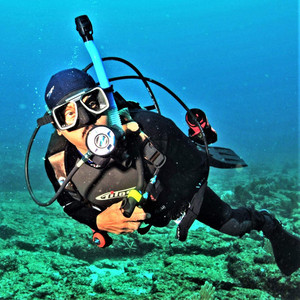
Susan leads a group called Old Ladies Against Underwater Garbage.
They dive into Cape Cod's cold waters to clean them up by hand.
When Marcy heard the group was holding tryouts, she dove straight in.
I had tried other volunteer things, stuffing envelopes and planting trees, picking up trash on the side of the road.
None of them gave me that sense of adventure.
So that day, I was so nervous, I didn't want to be late, make a good impression.
You got out of the car, and in your arms was the biggest Tupperware thing of cookies I had ever seen.
Outright bribery. Yeah. I loved it. And I thought, even if I have to tow this woman for half a mile, she is going to make it.
What I really was responding to was your absolutely quiet determination.
And that came through on the toilet dive.
We had found a toilet and that thing was just stuck in the mud.
But you brute force lifted that sucker off the pond floor and that was it.
One of my first swims, you beckon me over, and this turtle comes out of nowhere and landed on your hand.
It was so magical to see that. It's a feeling of actually belonging.
Yeah. It's as if you're a leaf who suddenly discovers that you're part of a mighty tree.
Yeah. Also, to have the people around me meant a huge amount.
My life was a little chaotic back then. I had just lost my husband and a year later developed breast cancer.
When grief happens and you lose someone, I was under that misconception, you get over it.
Yeah, I know. And you don't. So you have to just find something else and get back into life, which this group and you as a friend helped me do.
Good. Yeah. As I aged, I had the feeling of being invisible.
And that's a hard concept for someone who's younger than we are to understand.
Oh, amen. When you get to be in your 60s, 70s, 80s, you just kind of fade into the background.
But with the work that we're doing, I'm not in the background anymore.
You're right, right, right. I'm not fading into the sunset.
I'm actually growing stronger. Absolutely.
What are your hopes for the future? And you need to say that we're going to be friends forever because that better be one of your hopes.
That's definitely one of my plans, definitely.
Good. Good. Susan Bauer and Marcy Johnson in Falmouth, Massachusetts.
Together, they've been on over 30 dives and retrieved hundreds of pounds of garbage.
So it says something about how big the StoryCorps archive is that we've actually got another story for you about divers.
Albert Jose Jones was in college when he founded the first black scuba diving club in the country.
That was in 1959. And since then, the club has trained thousands of people.
Albert's in his 90s now, and he's dived all over the world.
He came to StoryCorps with his fellow diver and friend, Jay Hagler.
The last thing I wanted to do was start a club and be responsible for a whole lot of people going diving.
Once people found out what we were doing, they thought we were crazy.
But I almost had to do it. All the rest of the aspiring black divers out there, how are they going to learn?
Dr. Jones, I remember my first dive. I looked around the boat. on the horizon and I did not see one piece of land.
I thought, oh my God, we are in the middle of the ocean and I am about to step out of a perfectly good boat.
And when we got near the bottom, I saw all this marine life.
Turtles, black tip reef sharks, barracudas, Right at that moment, I just knew that there was a higher being.
And I do remember when I got back up, I could not wait to get back down.
Divers are always looking for another place to go diving.
No matter how many places they've been, they want to go someplace else.
I've made over 6,000 dives in 50-some countries.
But of all the dives I've been on, if I had to pick the hardest one, it would be diving the slave ship.
As soon as we hit the bottom, we found shackles and muskets, swords, you name it.
How did you feel when you went down there?
You feel like you're touching the souls of your ancestors.
You feel like they're down there with you.
Every diver on that boat could have had somebody on that ship.
Mobile Bay, Alabama. I happened to be one of two African-Americans there. to dive on the slave ship, Catilda, the only slave ship that is intact.
But the cargo hold, the area where the 110 enslaved Africans were, was less than 500 square feet.
And diving in that cargo hold of ancestors, that still resonates in my heart and in my soul.
And we always make sure that we honor those people.
You know, it's not just swimming around looking at fish.
You're swimming around looking at history.
Albert Jones and Jay Hagler for StoryCorps in Silver Spring, Maryland.
Albert's diving club has trained more than 3,000 divers and celebrated its 65th anniversary just this past year.
Give us that story in a voicemail at 702-706-TALK.
That's 702-706-T-A-L-K. This week's stories were produced by Judd Esty Kendall, Michael Garofalo, Jay Bourne, Kayla Lattimore, and Joe Corona.
They were edited by Amy Drozdovska, Vaughn Diaz, and Annie Russell.
Fact-checking by Trinity Jackson, Rachel Goldman, and Sejina Shrestha.
This podcast is produced by Max Young-Rice, Judd Esty Kendall is our senior producer, our technical director is Jarrett Floyd, and our executive producer is Amy Drozdovska.
The art for this episode is created by Liz McCarty.
I'm Jasmine Morris. Thanks for listening.
Support for this podcast comes from the corporation for public broadcasting, a private corporation funded by the American people.