
[The Conflict of Imagination and Faith: A Dungeons & Dragons Parental Dilemma]-[Dungeons and Dragons Disturbs Mary’s Christian Heart | Young Sheldon]
📋 Summary
The Intersection of Fantasy and Parental Anxiety
In this brief but poignant transcript, we witness a domestic clash between the imaginative world of childhood gaming and the rigid boundaries of parental belief. The narrative centers on a group of children deeply immersed in a Dungeons and Dragons session, contrasted sharply against the skepticism and spiritual alarm of their parents.
The Innocence of the Quest
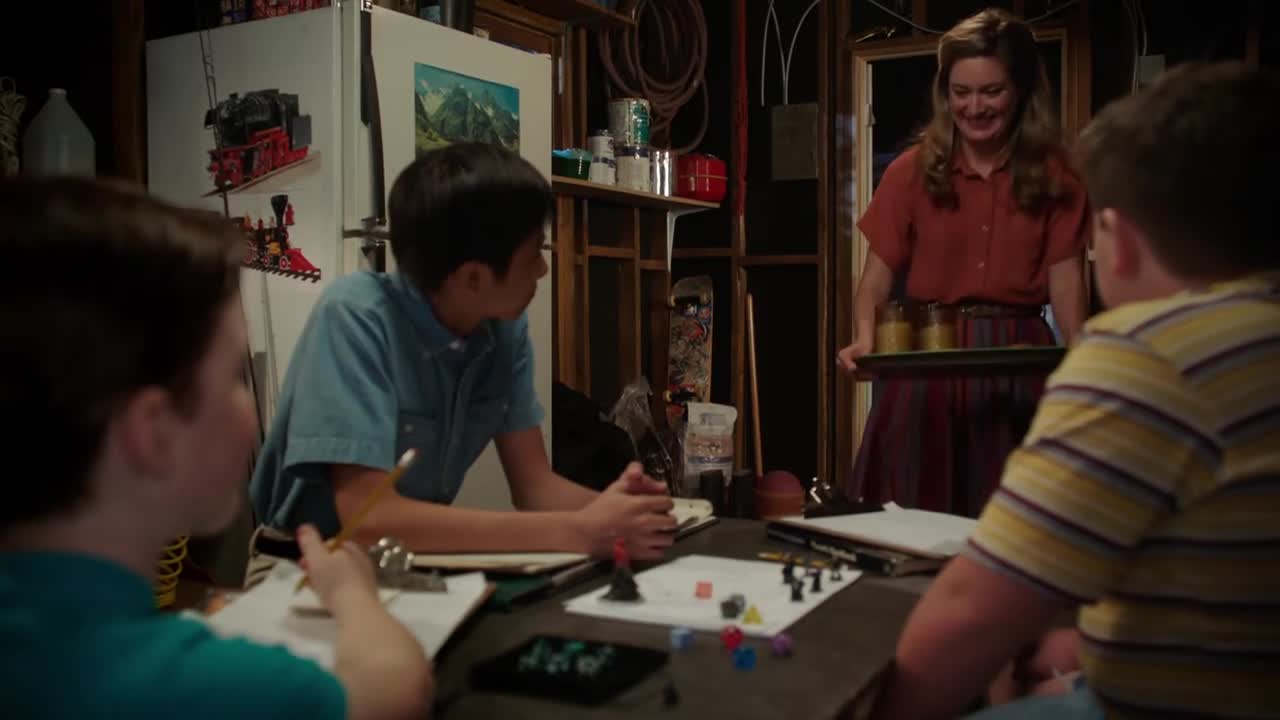
The scene begins with a classic tabletop role-playing trope: a party encountering a "wooden chest" in a hallway. The players, identified as "Lord Grey Matter" and "Firebeak," are engaged in a typical quest, specifically searching for the "pitchfork of a devil named Ballsable." To the children, the game is a harmless exercise in creativity and social bonding. They are navigating traps and monsters, treating the experience as a fun, collaborative storytelling venture. The introduction of snacks by a parent briefly interrupts the immersion, highlighting the gap between the mundane reality of domestic life and the high-stakes fantasy world the children have built.
The Maternal Conflict: Monsters vs. Reality
The mother’s reaction to the game serves as the primary catalyst for the conflict. While she admits she "didn't believe in elves, fairies, or dragons," she holds a firm, absolute belief in the existence of the "devil." Her concern is not merely that her son is playing a game, but that he is interacting with themes she was "warned about in church." She views the game's contents—specifically the "incantations in this book to summon actual demons"—as a spiritual threat rather than a fictional narrative. This creates a tension between the son’s desire for socialization and the mother’s protective, albeit restrictive, worldview. The father’s wry remark, "Is that how we wound up with you?" in response to the mother’s concern about summoning demons, underscores the absurdity of the situation while highlighting the generational divide in how these symbols are perceived.
Generational Perspectives and the Stakes of Belief
The dialogue between the parents reveals a deep disagreement regarding the nature of influence. The mother is genuinely "worried" that the child's "soul may be at stake," framing the game as a moral danger. In contrast, the father adopts a more pragmatic and dismissive stance. He points to his own youth, noting that he grew up listening to "Black Sabbath, all that devil music," and argues that it "didn't hurt" him. His skepticism acts as a buffer against the mother’s panic, though his humor—joking about whether he "traded" his soul for "donuts"—only serves to heighten the mother’s frustration.
Conclusion: The Fragile Balance
Ultimately, the transcript captures a universal struggle: the difficulty parents face in distinguishing between harmless childhood make-believe and what they perceive as genuine moral threats. The father’s reluctance to "scare him off" because the boy has "finally got a couple of friends" reveals that, beneath the theological debate, the parents are grappling with the social development of their child. The irony remains that while the children are busy fighting a monster that "doesn't wet pants," the adults are locked in a much more serious battle over the perceived sanctity of their son's soul.

Deep Learning with ListenLeap


