
[The D.B. Cooper Paradox: The Psychology of Disguise and the Self]-[Dropping the Mask]
📋 Summary
The D.B. Cooper Paradox: The Psychology of Disguise and the Self
The Enigma of Dan Cooper
In November 1971, a man identifying himself as "Dan Cooper" boarded a Northwest Orient Airlines flight in Portland, Oregon, carrying nothing more than a black briefcase. What began as a routine one-way trip to Seattle quickly devolved into a high-stakes hijacking. By revealing the contents of his briefcase—which appeared to be a bomb—to a flight attendant, the man orchestrated a daring extortion scheme. He demanded $200,000 in ransom and four parachutes in exchange for the safety of the passengers.
After landing in Seattle, Cooper released the passengers but retained the crew, ordering the plane to refuel and head toward Mexico City. During the flight, he executed a calculated maneuver: he demanded that the curtains between the coach cabin and first class be closed, isolating himself from the crew. Under the cover of a "moonless night," Cooper opened the rear exit and leaped into the abyss. He was never caught, and his true identity remains a profound mystery. The case of Dan Cooper serves as a dramatic historical anchor for a deeper psychological inquiry: why do we feel the need to disguise who we are?
The Mechanics of Social Camouflage
While the hijacking of the plane is the "stuff of movies and novels," the underlying behavior—the construction of a facade—is a universal human experience. Most of us, unlike the hijacker, are not planning anything "nefarious." Instead, we engage in acts of self-disguise to "fit in" or to ensure we are "taken seriously" by our peers and professional circles.
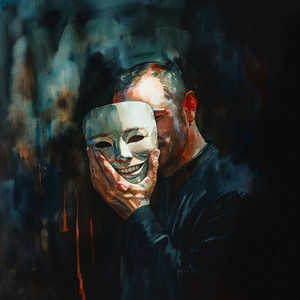
This social camouflage is often a survival mechanism. We curate our identities to align with the expectations of our environment. Whether it is suppressing certain personality traits to gain social acceptance or adopting a professional persona to command respect, we are constantly editing our authentic selves. The podcast highlights that this process is rarely about deceit for the sake of harm; it is a fundamental aspect of how we navigate complex social hierarchies.
The Cost of the Mask
However, the central question posed by Shankar Vedantam is: "What happens when we pretend we are not who we are?" The danger of wearing a mask is that it does not merely "fool others"; it exerts "powerful effects on us." When we consistently disguise our true nature, we create a cognitive and emotional distance from our authentic experiences.
Psychologically, the act of maintaining a facade requires significant energy. When the gap between the "self" and the "disguise" widens, it can lead to a sense of fragmentation. We begin to lose touch with our actual motivations and desires, replacing them with the performance of what we think society requires. The story of Dan Cooper serves as a metaphor for this loss of identity. Just as the hijacker became a ghost—a man who was "not who he said he was"—we too risk becoming strangers to ourselves when our external presentations no longer reflect our internal reality.
Conclusion: The Burden of Identity
Ultimately, the exploration of the D.B. Cooper case invites listeners to reflect on their own lives. We all carry "briefcases" of expectations, societal pressures, and roles we play to get by. While these disguises may offer short-term benefits—fitting in or gaining professional leverage—they carry the long-term risk of alienation from the self. By examining the lengths to which we go to curate our identities, we can begin to understand the psychological weight of our masks and the importance of reclaiming our authentic selves in a world that often demands we be someone else.
Deep Learning with ListenLeap


