This episode is brought to you by Tegus, where we're changing the game in investment research.
Step away from outdated, inefficient methods and into the future with our platform, proudly hosting over 100,000 transcripts with over 25,000 transcripts added just this year alone.
What sets Tegus apart? It's not just the sheer volume, it's the unmatched speed at which our library expands, consistently outstripping competitors.
Our platform grows eight times faster and adds twice as much monthly content as our competitors, putting us at the forefront of the industry.
Our collection is investor-led, ensuring unparalleled quality and giving you access to questions and topics investors care most about.
Plus, with 75% of private market transcripts available exclusively on Tegus, we offer insights you can't find elsewhere.
Forget the traditional way of doing things.
With Tegus, you have the most comprehensive, insightful and rapidly growing transcript library at your fingertips.
See the difference that a vast, quality-driven transcript library makes.
Unlock your free trial at tegus.com.
You may have heard me reference the idea of maniacs on a mission and how much that idea excites me.
Well, David Cenra is my favorite maniac on one of my favorite missions with his weekly crafting of the Founders podcast.
Through studying the lives of legends, he weaves together insights across history to distill ideas that you can use in your work.
Founders reveals tried and true tactics, battle-tested by the world's icons, and has David's infectious energy to accompany them.
With well over 300 episodes, your heroes are surely in the lineup, and his recent episode on Oprah is particularly great.
Founders is a movement that you don't want to miss.
It's part of the Colossus Network, and you can find your way to David's great podcast in the show notes.
Hello and welcome, everyone.
I'm Patrick O'Shaughnessy, and this is Invest Like the Best.
This show is an open-ended exploration of markets, ideas, stories, and strategies that will help you better invest both your time and your money.
Invest Like the Best is part of the Colossus family of podcasts, and you can access all our podcasts, including edited transcripts, show notes, and other resources to keep learning at JoinColossus.com.
Patrick O'Shaughnessy is the CEO and founding partner of PositiveSum, and the CEO of O'Shaughnessy Asset Management.
All opinions expressed by Patrick and podcast guests are solely their own opinions and do not reflect the opinion of PositiveSum or O'Shaughnessy Asset Management.
This podcast is for informational purposes only and should not be relied upon as a basis for investment decisions.
Clients of PositiveSum or O'Shaughnessy Asset Management may maintain positions in the securities discussed in this podcast.
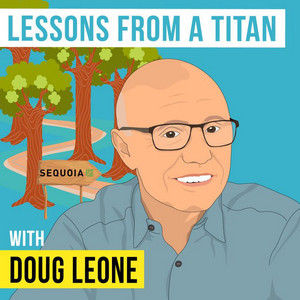
My guest this week is Doug Leone.
Doug led one of the world's most successful venture firms, Sequoia, for over 25 years after he was given responsibility for the firm by its founder, Don Valentine in 1996.
Alongside Mike Moritz, the pair managed its expansion from a single $150 million early-stage fund to an $85 billion global powerhouse.
It was a privilege to sit down with Doug and learn from him.
We talk about his tough start at Sequoia, get into the technicalities of great go-to-market motions, and survey his advice for other investors in the industry.
A key theme that will stick with me from this conversation is Doug's insistence on keeping things simple and clear.
Please enjoy my great conversation with Doug Leone.
Doug, I've heard you interviewed elsewhere and I wanted to start our conversation somewhere a little bit more unique.
I'd love you to talk about the heart and mind of Don Valentine.
I've learned a lot about him, obviously someone that was influential on you, and a key figure in the history of this style of investing, of our style of investing.
Maybe start with his heart.
What was his heart like?
It's truth being known for the first 20 years that I did not know whether he had a heart.
It was all pure business.
It was all for the cause of generating returns for our clients, most of which are in diamonds and foundations.
So for the first, I would say 15, 20 years, he was visionary but extremely tough and certainly dedicated to the cause.
At his eulogy, I was very amused and interested to find out from his kids that they spoke of him as having his huge heart when he went home.
It was really interesting how he segregated his work life from his home life.
As he got older and developed a sense of history and put himself in perspective of other leaders, there were certain things he did not want to do.
He did not want to be one of the older folks that stuck around too long.
He had images and knowledge of other leaders.
His age or a little younger, they were falling asleep in meeting and they're starting to be a drag on their partnerships.
He was very cognizant of not wanting to do that.
The other thing he was very cognizant of is, boy, how do we leave Sequoy in the best possible place for the next generation?
It was interesting that he chose, and I say chose as if he's pointed us out, he had his own subtle way of choosing, assigning Carrie, maybe two of us at 10% more than the other folks.
That's how he chose leadership.
He chose younger folks that he was willing to mentor.
I went to say that the heart showed up and it was a transformation, not a transformation, not a weakness, but a transformation, not a wisdom.
You get to see his heart and how much he deeply cared and how much he cared to mentor and how much he loved youth and how much he loved new ideas and so on.
Very, very, very interested, very interesting human being for the time in which he lived.
He would sell shares at $2 billion, not buy shares at $2 billion.
Back in his day, if you reached $2 billion or $3 billion, there was a huge exit.
There was the learning curve of a world that was changing at a rapid pace.
He understood that he wasn't going to adjust to that world.
He got out of the way. He never asked a question unless he was asked.
The only comments he made once he stepped down, comments when he was asked for his opinion.
I found that extremely interesting.
He was the ultimate of what the, if you will, the old king should do.
In fact, I model my behavior now being the old king to his.
Never intrusive, always helpful, always ready to assist, but never second guess.
You mentioned his toughness in the earlier years.
Maybe draw the spectrum for me in terms of what was the most productive part of his toughness and if there was any unproductive part of his toughness.
It feels like this is an era where that word toughness might become important again.
I remember attending a meeting with a founder.
As we walk out of the meeting, Don only wrote in greening, yellow pads and greening.
In greening, he left a note on the table said, Doug, not fit to listen to founders.
He's just left it there for me to see.
In this new day and age, everybody wants weekly feedback.
Why should I do better? Let me tell you, you read that note from down Valentine.
That's all the feedback you need for the next 12 months.
You have to break that feedback down.
What does he say that? You certainly don't go in his office and say, Don, what do you mean by that?
You know what you mean and you understand maybe you were too aggressive, the wrong style.
The other side of being too tough, he was tough on founders.
But keep in mind, we were dealing at a time where we were investing in semiconductors.
The founders were not the 22-year-old who created new industries because of the internet or mobile.
They were engineering managers at a chip company that started a new company, maybe ages 40 to 50.
Those founders, once they misbehave or something goes wrong, they really can't be saved.
They're too opinionated, too big, as opposed to a 22-year-old that you certainly can make head of products or head of strategy or head of something.
It was a different time where the aggressiveness to founders was far greater, which if you implement that in 2023 would ruin your reputation.
That's both the good side and the bad side of being tough.
I think you have to overlay the issue of time.
Maybe that was appropriate for 1978.
It certainly would not have been appropriate in 2020.
But internally, he knew how to get you going.
It wasn't the same style for everybody.
He happened to know that I needed a good bash on my head to reprogram myself.
He knew what I needed, but on the other hand, just to give you a little sense, when everybody wanted me out as an associate because I was insufferable, it was Don that saw something and said, quote, give the kid more time.
Within that toughness, frontally, there was enormous support when you were in looking.
Boy, I think that's the best way to lead and manage.
I've gotten a bit of feedback on your style now that is the opposite of insufferable and that you weren't fit to listen to founders.
I've heard that you're actually a great interviewer.
I want to come back to that and not that you're insufferable, but that you're quite caring.
What caused the change?
And maybe to begin, what did insufferable and not fit to listen to founders mean when you were young?
To answer the second part of your question, in man, to essentially being an unguided missile.
It means over competitiveness.
Do what it takes. Doug, go take that hill.
I went and took that hill because that was the mission and the cause and nothing else really mattered.
Immaturity plays a role, lack of experience plays a role, and quite frankly, lack of track record.
You are a no track record abrasive, pain in the ass young man with a New York accent and clearly a kid from the street.
Well, that doesn't play.
That's really not the best marketing message.
Now, some people saw through that and they saw a genuine human being and they work well in those cases.
Contrast that with now.
I have a bit of a track record.
I am a little more mature, a little smoother, a coat of paint, not to mislead, but that's the way you lead your life, a little more wisdom.
Suddenly, I went from insufferable to charming and I'm aware of that.
And I chuckled because I was not as insufferable then as I was viewed and I'm not as charming now as I'm viewed.
But I'm very well aware of the mark-com transformation and I find that amusing just understanding what human nature is.
Everybody tries to position things and now the world is full of baloney and three quarters of stuff you read and it's not true, blah, blah, blah, blah, blah, blah.
I spent a lot of time talking to your partner, Ravi, about demons and the demons that are in certain people for whatever reason and the ways that those demons can motivate or drive entrepreneurial type people to enormous success.
And one of the things that Ravi told me was that you are extremely good at sussing out a person's core motivation via listening, ironically, given Don's note to you.
And I'd love you to talk a bit about that skill and why you think it's so important to understand someone's core motivation.
First of all, what we look for founders, we also look for Sequoia partners, investors, young people.
The same set of traits, use the word insufferable, use the word he doesn't listen, she doesn't listen or he's belligerent and she's belligerent.
Those that other people may view as a negative, we actually view as a positive because in order to get something done in life, you can't just walk down Main Street and be a sweetie pie.
We look for outlier people, whether it's founders or investors, and outlier people do extraordinary things.
Outliers, what do I mean by that?
Extra driven, for whatever reason.
Maybe daddy told them they weren't good enough and they want to show daddy how good they are.
Maybe they have a twin brother, when we are competing with one another, they love one another, but they compete with one another.
Maybe they fail miserably in their first startup, they're embarrassed and so on.
We look for those things and sometimes, believe it or not, genetics.
I've actually met some people that I'm now convinced they were just wired that way.
I try to look for that for the simple reason that I view that to be the greatest advantage, but could be the greatest weakness if not channeled appropriately.
Want to look for it to see if it's there because I like to be there?
Then I look to see what it is and whether it's on the right side of this good versus bad trade.
Thirdly, because once we understand it and then that's a good side, then how do we channel it, compliment and make sure this incredibly wonderful, insecure, scared, because that's what we all are when we're coming up, how do we help them as if we were their brothers to achieve maximum type of success?
Yes. I dig for that. I just really want to understand what makes this person tick.
To me, the greatest question is why?
Why? Why? Why? When someone says, I was recruited by, I hear, I was lazy ass sitting down, I got a call from a recruit, I was nothing better to do.
I got suckered into listening to something.
I got sweet talked. Then I talked to a company that made me an offer.
I wasn't too happy with my job or a little bored and I went.
To me, that's what I was recruited by sounds like.
The converse of that, of course, is I was sitting on a job.
I saw an opportunity in a market segment that I didn't know existed.
I call seven or eight companies.
I realized this is the leading company.
I called the companies.
I found a way to get a meeting.
I sold my way in. I got an offer.
I negotiated. I took a job and I went.
Whoa. What an answer. So those are the little things I look for when I interview people.
In addition to asking why in lots of different ways, are there other favorite questions or topics that you find yourself returning to over and over again as you're getting to know people?
I want to know the upbringing.
I want to know what kinds of kids they were, their journey through life, their maturation through life.
I'd love to ask whether they have a sibling to describe three adjectives for their sibling, their close sibling, and three adjectives that describes them by comparison.
I don't really care about the sibling, but you start learning things.
I love asking the setup question of where would you get your best reference?
They're eager to tell you that.
Complete setup question because the next question is where would you get your worst reference and why?
Again, I'm not looking to nail anybody.
We've all had journeys that are up and down.
Very few of us have had a linear up journey, but just understanding looking for self-awareness because self-awareness means breaking problems down to first principles and meaning using your experience to solve a new problem.
While we love best athletes, if we find best athletes with little of experience and first principle thinking, that's a home run, and we look for that.
How much time do you think it takes on average to really understand somebody?
I hate when they set me up for 30 minutes in a view.
I said, forget it. The first 30 minutes is all make-over.
You've got to let people let their guard down.
Then if you really want to understand someone, I think it probably takes two to three hours, including a dinner, when people do relax and start showing you things.
You want to see how people place orders and you want to see what things they say.
I always like to put salt on my food.
Well, that tells me you're high-wired and you're not open to new ideas.
The old classic, how you treat a waiter or waitress, boy, that really drives me crazy.
The questions I asked, that's not asking me.
Well, Doug, I'd like to ask you about your journey.
Why would you ever want to ask me, you're in a job interview.
You got to want to learn anything about the role, who you're going to be reporting to, what you're going to be doing every day.
If you succeed, why will you succeed if you fail?
But the last questions, Doug, let me understand about journey.
That's a made-up question.
Who cares? That's certainly a question I wouldn't ask somebody if I had 10, 15 minutes to ask about a new job.
I think, baby, the answer to your question is maybe one or two meetings and a dinner.
What were the most formative experiences that you had prior to becoming an investor that you think most impacted how you functioned as an investor?
I know you were an excellent salesperson at early jobs at HP and Sun and Prime.
What specific experiences stand out in memory as the most impactful on you?
I remember when I had my first job at Hewlett Packard.
Two guys, they looked like they were six years old, maybe they were 40, and I was 22.
They said, we'll split Manhattan into thirds.
You don't have to be in the medium when we split.
As a naive young guy, I'm going to get third of Manhattan.
Well, I got north of 96th Street of Manhattan.
North of 96th Street now is cool.
Let me just tell you, north of 96th Street in 1979 was not cool.
It was downright unsafe.
The formative part is that for me, I didn't give up.
You always ask yourself, how do you turn a negative into a positive?
Luck does play a little bit of a role.
I was lucky that there was Columbia, the university up there.
There was a head of computer science called Trout that just came from Carnegie Mellon.
He was big in open systems in Unix.
He drew me a graph with the ARPANET.
I never knew what the ARPANET was, which was a predecessor of the internet.
So a little negative turned into a little positive and with a little bit of success.
Then joining Sun Microsystems or in some ways, we're shooting ducks in a barrel.
Just coming up with a business plan that we could be successful on Wall Street, one of the biggest market segment for Sun.
It's all the trading stations and breaking that market down and learning to use the We Pro now.
Here's what being smart and not greedy.
Whenever I sold something and somebody helped, I insisted on commission splits and those things.
I understood management took an eye of that ball.
Not only is this kid selling, but look, everybody loves it.
He's taking care of other people.
Next thing you know, they had an eye on me.
Boy, I took note of that.
That's how you do things.
The other thing is the mistakes that you make.
When you're too aggressive, when you're too hardcore and you say, boy, I don't want to do that.
And the people that you meet, you meet two kinds of people that teach you.
The one that teach you what to do and the ones that teach you what not to do.
And the trick for me, I never understood when the father is an alcoholic or is an abuser and the son becomes an abuser because I have to tell you, I've had some tough rides, but I made a promise to myself that if I ever became someone, I would not do one to others as I was done to.
I thought that was disgusting.
I thought it was very upsetting.
And when you've come to Sequoia, when I was running it, I made sure everybody respected the people that feed us.
You better put your plate away.
You better say thank you and so on because it starts at the foundational layer.
And if you do that right, then the culture starts being right.
And if you share your winnings, and if you just don't talk to talk, we are team, we are this.
No, you have to share the dough appropriately.
And in my case, I never called us a family.
I thought family is bullshit.
I've got members in a family I have to endure forever.
Can't get rid of them. I tell people, we are high performance and pick your noun.
We're a performance team, if you don't believe in sports, production, a movie, and maybe the investors are the actors, maybe the investors are the goal scorers.
But you know what we need?
We need trainers, we need coaches.
If you're a movie, we need a director, a producer, a makeup artist, and it takes everybody.
And so just believing internally, that's what we need.
And incorporating into the investment business into what I think is the most fabulous culture of any partnership in the investment area is really our secret sauce.
You and a unique perspective having been a part of Sequoia across four different decades, more than 30 years.
So you've seen an enormous evolution of this industry, which today feels very institutional.
It's big. There's lots of norms.
It's a career path for lots of people.
And I think that's probably different from when you started.
I'd love you to reflect on what venture looks like to you today relative to the perspective of all the time you've worked in the business.
Well, first of all, in my opinion, it's gone from a high margin cottage industry to a lower margin mainstream business.
And when you see that, you see all type of people's coming in.
You start having all these cycles, momentum cycles, down cycle in a momentum cycle.
You hear things from people that have never made a dime, don't know what they're doing.
Raise us as money as you can, screw the venture guys, give us a little equity as you can.
And without being self-serving, I think those are the wrong types of messages.
The messages are raise us little money as you can to get to the next milestone.
Find an investor in the same way you find an engineer.
It's not. I just got a term sheet.
Achieve balance on your board and your company so that you are in some ways a force to behave correctly.
And in a momentum cycle, as we've seen them before, whether it was 97 to 99, 06 to 08, or 20 to 22, all these horrific habits got involved where CEOs wanted, I want to be a unicorn.
And venture guys were stepping all over their feet to try to do that.
And what we have right now is a bit of a shitshow, a whole bunch of companies.
There's companies with 500 million in the bank.
A billion in the bank, I heard of one, with maybe an $80 million run rate and no growth perspective.
They don't know what to do.
That habit's all over the place.
And that's what happens during, quote, wonderful time.
All these lousy habits are built.
You're in times like these where I'm much more optimistic.
You have real founders coming out.
There's a lot more balance between investors and founders.
That helps founders. It doesn't hurt founders.
There's still people that are willing to invest.
Now it's AI, will invest in every AI.
There is a lease in the water, a little more of a restraint, a little more thought process of who do I want to bring as my next 10-year partner?
Not, I got a term sheet last Thursday.
Very different. Got a term sheet last Thursday is I walk into a bar and the first male or female that talked to me, I got married, as opposed to, no, I met and dated someone for a year, six months, so whatever it is, or three months, got to know him a little bit.
I decided our value system was going to be aligned.
We decided to get together and build a company.
These are much healthier times.
And like everything else in life, reality is usually opposite of what it seems.
Tough times, healthier times, some of the greatest companies got created during times like this, whether it was Cisco, whether it was PayPal and Google, whether it was Stripe and Square, those companies with terrific DNAs got built during very difficult times.
We're seeing right now a harder market for sure, but with AI as a subsector of the technology market, one that is very red hot and still seeing prices for deals that seem crazy from the outside without investigating the companies, I'm sure you've seen countless little mini cycles like AI is today.
So what is your style of approaching one of these new thermonuclear technology markets as an investor?
I actually think that AI is the next platform shift in the same way that mobile was the one before, internet was the one before, infrastructure, the hardware, software layers that allow the internet to be overlaid over that.
So I think AI is real. But I said earlier, we're going to overestimate it in a short term.
We're going to invest in everything in the same way that in 1999, we invested in everything.
But then Google came out of that or Facebook came out of that.
So I think you have to have a good head on your shoulder where you don't practice FOMO, where you don't chase every company.
And you make the investments that you think are appropriate, where if it doesn't make sense to you, a lot of things don't make sense and you see every five venture firms wanting to invest.
And the thought process, if you're a young investor said, well, I don't really get it, but they get it, it must be great.
Let me go in. And there's a lot of that, believe it or not.
I think one of the benefit of being around for 50 years is that, well, too, we have the fear of FOMO, of course we do, right?
We're humans. We have a little more perspective of how deep to jump in AI is real, AI is the next platform, but how do we not invest in everything that walks?
How do we make certain investments based on market maps, based on thought processes that are more rational and not do every investment just because every other venture firm is doing every investment?
So that's how we're going to be participating.
We are going to be for real, whether it's with our ARC program, a C program, venture program growth, we have many ways in which to invest in companies, but we're not going to jump in indiscriminately as we never had.
Now, we've drank our load of Kool-Aid, whether it's 1998 or 2018, 2019, but in both cases, I'm happy to report we drank a carafe full of Kool-Aid, not a garbage can full of Kool-Aid.
So of course you're going to drink Kool-Aid because it's a private investment business, it's a 60-40 type of business.
We too got caught a little bit in momentum investing, but I'm proud to say that by comparison, it's not even close to some of the things we've seen in the background.
And you know who suffers at the end from all this?
Founders. If you're 28 today and of similar gumption and interest, do you think you'd be going into venture given that what you described as the more mature nature of the business?
I think I would go into venture by not out of a greed gene.
It's a nice way to make money.
I think I'd go to venture if I had a passion or if I didn't know how to start a company, because if you think about venture and capital, it's the large supply side.
The scarcity side is talented founders.
So if I have a choice and if I thought I was a talented founder of venture versus be a founder, in fact, I always laugh when these super smart, great people say, I want to go into venture.
I said, why do you want to go on a commodity side?
Stay where you are and do something great.
But at the end of the day, it's a preference as to whether you're a builder, if you will, a player, or if you are a coach.
Now, I want to use that coach term because coach implies, I know more than a builder.
I don't mean it that way.
I mean, coach is not being in the field on a day-to-day basis.
It's not a hierarchy of knowledge.
Okay. Whether you want to be on the sidelines, maybe it's a better way to say it.
You want to be on the field of being a sideline.
And that's a personal choice that are people that are inherent builders.
Elon Musk, he's a builder.
And there are people that just love to help companies go to market.
Look, my knowledge has been the go-to-market side.
I love helping founders figure out how to sell something from the customer standpoint and then scale that sales force.
Maximum speed. That's my passion.
So I'd be a lousy type of builder.
So it's not an easy one or the other.
What you shouldn't do and say, does money venture?
I want to cushy life. I want to go into venture.
That would be the wrong choice, both in 1999 and in 2023.
Speaking of your passion for go-to-market, describe what you've seen the very best at that do consistently.
Is it working from the product towards the customer's need?
Is it working backwards from the customer?
Are there other things that you've seen and recommend over and over again of the very best at this?
So I've actually given a name for this cycle called the merchandising cycle.
And I explain this to founders.
It starts with product management.
What exactly are we building?
If truth be known, it starts with vision.
But if the vision is wrong, we're all going home.
Assuming we're someplace in a ballpark.
It starts with product management.
What are we building? To product marketing.
How do we position it? How do we tell the story?
How do we have the three words for describing what we do?
How do we have the 30 seconds, two minutes, and everybody can do the 10 minutes.
Very few people can do the three words.
And then how do we do the the demand gen?
How do we do the sales? And wherever that cycle is broken, it looks like a bad sales person.
This guy can't sell. Actually, the truth of the matter is, if you've got product market feet, even shitty sales people can sell.
When we first invested in service now, we had the BT prior to Frank's Lutman coming in in sales.
And they were selling like crazy.
So that was my lesson. And so for me as a board member, I have to debug the merchandising cycle.
Product can't sell. Why?
There's not enough leads.
Oh, well, I know to fix that.
Why don't we get some more BDRs?
Then you could talk to the BDR guys here, you can never not five BDRs.
Well, then they start festing up.
Well, you know, it's not really a BDR account.
It's that the message isn't playing, right?
Aha. Well, I knew that, but it's nice to admit it.
Let's go back to product marketing.
What's the message? Is that the right message?
Is that the wrong message?
And that's based on a product we're building.
This is product management.
And so I worked very hard at debugging upstream this merchandising cycle so we can figure out where the real problems are.
And as I think about it, take these rocks out of the river so that damn water can flow as fast as possible.
And once you do that, and once you know that two or three sales reps can sell something, and you have your first four or five sales that don't include the seal, those are telltale sign that you can start ramping.
And so that's what we do.
That's what I do as a board member.
The thing I can't do is the black magic.
If you don't have the right vision, if you not close to product market fit, I will tell you Doug Leone or any other people in venture, I'm not going to help you.
Black magic is reserved for founders.
Everything else is mere mortal stuff.
That's what we can do. And we're probably the very best in the world at Sequoia in doing that.
What are the components of great positioning for a product?
Simplicity, crystal clearness, something a mere mortal can understand.
If you can describe it and you can't understand it, you're out to lunch.
Singularity of purpose.
When I go to the store, I buy a pencil because I want to write.
I don't want a pencil because I want to write.
I scratch my back with a tip.
It doesn't work like that.
Singularity of vertical market early on because you want to be narrow.
You have no resources. You've got to be narrow.
Oh, we're chasing these four vertical markets.
It sounds good. But in order to do that, you have to have marketing that talks four different languages for four markets.
And maybe you have to have engineering that develops different features for a little company can't do that.
So be at the bullseye, as sharp as you can, and then starts to expand in consensual circles when you get your legs under you in that vertical market.
That's what I look for in position.
If you think about what I'll call mediocre positioning, you'll know if there's amazing positioning because you'll just see the thing flying off the shelves.
And you'll know if there's terrible positioning and that the danger is somewhere in the middle, like it's kind of working.
What have you done historically when you see that and you see founders start to build upstream the demand gen and the sales orcs on top of mediocre positioning?
That seems like a very dangerous spot for a company to be in.
So keep in mind that we as board members, our job is to make these founders very capable and successful.
You lose the founder, you lose the soul of a company.
There's no question about that.
And telling the founders cuts a little bit of the pinky.
And you want to founders with 10 fingers and 10 toes.
But there are certain times where the thing is soft, the rails that it's worth a small piece of the pinky to get back in the right direction.
First, what I try to do instead of telling I like showing.
So let me give you an example.
Your VP of marketing stinks.
If I say that, means nothing to a founder.
But if I say, I'd like you to meet these three VP of marketing from other companies.
Let me tell you what happens nine times out of 10, they come back and they say, holy shit, the guy we have or the guy we have is nothing like this guy.
So try to show, not tell, tell, build trust, which doesn't get build day one.
It really gets built with the first time the CEO founders in a pinch and he understands you're there to help them out.
So once you have trust, which is really the foundation layer, it's the grease that makes all business runs.
And once the founder understands maybe you have a little of experience that complements his incredible talent.
And once you show the founder without telling the founder, and once in a while you have to tell because maybe you don't have the time to show, but you better do that once a year.
It's very rare. That's what you do.
Those are the actions that you take.
And you want to come out of that in the win-win.
You want to come out of that with an enlightened founder who's extremely happy and better in his role, rather than having achieved your goal of a new VP of marketing with a founder feels like his knees were cut off.
Assuming we've got a company that has a fantastic positioning story.
The next stop upstream is demand generation, which I assume by which you mean the proliferation or the propagation of that message through a bunch of different channels.
Leads, getting leads. Getting leads.
What are the great components of demand generation?
Well, the first thing to understand is that a broad product is at a widget.
If you have a widget, it's simplicity.
If you have a widget, you do less account-based management because you've got 10,000 accounts that you can call.
So that becomes a volume play.
You build something a little more complex with a little more of a solution cell versus a widget cell.
A pencil is a widget. A solution is you've got to tell a story.
Fewer accounts, you better have your story right per account.
So you have to understand what that is.
You have to make a guesstimate of what percentage of leads comes from BDR versus salespeople.
I will tell you that early on, it's a role that's of the salesperson.
First, you got to make those decisions.
Then you have to find the optimal curve with the optimal leads.
You don't have too few because the greatest sacrilegious to hire an expensive sales rep.
If you go the direct sales route, if you go PLG, it's a whole different game because the worst case is to hire expensive people with not enough leads.
And so to find that balance, to figure out where that slope curve is in the ability to close account, you over invest and you have too many people, the word gets around, your salespeople cannot make money in your company.
Nobody's going to want to join you.
So you have to make them very successful.
If you will over pay because word gets around, this is a place to make money.
And then at some point, figure out the optimal curve and be fearless in that growth.
You also have to understand for each product you sell, how much drag is it on the back of the company?
If I sell your pencil, there's no drag on the back of the company.
If I sell your solution that everyone requires, six months implementation plan, three features for each one, then you can go as fast as you can because your bottleneck is no longer the front end, it's the back end, which sometimes goes back to cash because now it's a lot of people.
So getting that soup right, getting that right and figuring out that optimal point and doing it in the linear growth so you can readjust, re-forecast every quarter and not hire your 32 people in Q1 and then no one for the rest of the year.
So the seal has room to maneuver.
Along a backup plan of what if I don't do X and do 0.7X, it is back pocket from the CFO that I always ask them, please arm the seal with that, should give the chief executive officer.
And the knowledge of everything I just told you that in many cases, I have to tell you it's the first time they hear this, should give them the armament to begin to learn how this thing is done.
If you think back to your early days, you mentioned earlier, a lot of investing in highly technical companies and founders.
And maybe as Sequoia has grown and as the world has grown, more founders who are less technical, but nonetheless can still build huge technology businesses.
How does that change over your career manifest in the way that you interact with companies early on?
Is it a different set of people that you're looking for?
Is it a different set of attributes or characteristics?
Talk about that shift. So as usual, what happens outside the building dictates what happens inside the building.
So if you do a marketing strategy, don't just talk to me about a marketing trend.
Talk to me about the dynamics in a market first.
That's the reality. You can't change.
And then you apply the strategy based on those same thing to the question you answered.
So when we're building technology, and now with AI, we may build in tech again.
There are these cycles.
But I think of technology as semiconductor system software.
The founders were older because you didn't want first time founders.
You wanted people that have done it before.
Suddenly the internet connects us all, mobile connects us all with, as we move around, new business model.
It turned out people who were 20 who had never seen a business model were more creative.
And they're the ones that did that.
And it also happened that you can build a prototype, whether it's open systems or whether it's hosted services or low cost computing coming down, you could build a prototype in 90 days.
Thus, the advent of seed investing.
Seed investing didn't happen.
We're building ships because what would a million do?
It wouldn't do anything.
And now you have this competitive nature, a bunch of seed funds, try to get in front of you, trying to position sequoias, go to them later.
I.e. we want our own 20% and you let sequoia own 10% for working for the next 10 years, just so you know.
It changes everything.
It changes your strategy.
You better have a seed fund.
You better get there as early as you can because you also get to affect the DNA of the company and what I believe to be the right way because you've had 30, 40 years of experience.
And the DNA set in the first 30, 60 days.
So everything changes.
Your approach to the market changes.
Your ability to move changes.
You have to create a spec for what is a seed investment.
Is it really the same type of due diligence as you do in a Series A?
Or is it just a spiky, super talented founders?
Here's a million dollars.
Everything changes. Your strategy changes.
And when that happened, we did a few things.
We did three things actually.
We vertically integrated from a 100k, 50k investment to our biggest investments are billion dollars.
We have written twice a billion dollar investment.
Second, we have gone across GEOs.
Why? Because all companies in the U.S.
go to Europe or companies go to the U.S.
We know the world irrespective of everything you're reading is more globalized now than it's ever been.
India. India founders in the U.S.
There are certain companies we can't tell if they're in the U.S.
We went into China, as you know.
Now, China has to build their own tech stacks, which is a smart thing.
We have to build our own.
So there's some issues there for sure.
We went into Israel. So we went across GEOs because companies want to go across GEOs, we vertically and greater.
And the last thing we did, we threw technology at our business.
We can't run like a law firm structure.
We can't have five, six partners quote looking for deals.
Some way the lawyers technology in every aspect of the business to help us look to help companies assess, not just for us, but for our founders.
And we know we have to be at tech companies.
And that is the transformation that we've done over the last three, four years.
All of it to look for, win, and then help.
Those are the three goals.
It sounds like in that description, one of the things that, whether this was the goal or not, I guess doesn't really matter.
But one thing that's happened is that Sequoia itself has built serious enterprise value.
It's a private company.
But unquestionably, if you were to float it in the public or go to a firm that wanted to buy, Goldman wanted to buy a piece of it, the price would be really high.
And that's probably quite distinctive from the older school law firm like Cottage Industry Partnership.
Do you think that's the right orientation for new entrants into the venture space that they should be trying to build a firm that has enterprise value?
I think that is the kiss to death.
Let me explain. One, you want to be competitive.
You want to pay well. You want to get the best people.
The moment you build enterprise value, what you're really asking, you're not asking about enterprise value.
What you're asking is to monetize the enterprise value.
That's what you're really asking.
Boy, now we can sell Sequoia.
Selling a piece of that firm means that the people in the building today are getting richer, but the pie to be shared for the next generation is smaller.
We looked around, Mike Moritz and I, in the early 2000, we looked around and we wanted to see what the enduring firms did and how they worked it.
And our favorite was the capital group.
They managed a trillion dollars public vehicles.
I think the founders are 1%.
And they have a way to have the people in the building enjoy, maybe have a little tail on the way out.
But the bulk of the ownership, the money that returns, is the people that are working in the next generation.
Sequoia was given to us by Don Valentine.
Given, I want to use the word given, Mike and I didn't write a check to Don Valentine.
Zero. We were in the founders.
Our job is really to make it a better place.
How do you do that by being helpful to founders, by understanding founders are first, our limited partners, which are mostly nonprofits.
Second, our clients, 70% are mostly charities.
I want to make sure you know that.
And we are thirds, not because we're Boy Scouts, because we know if we do right by founders, right by clients, of course, we'll do right by ourselves.
But we can't put ourselves first.
And leave it a better place for the next generation.
So I created a constitution with Mike Moritz, that said I had to leave at 65.
On my sixth birthday, I left.
I'm not a partner in a new fund.
I have zero carrying in new funds.
If I make an investment, I'll get some carry.
It's in the hands of the generation who are extremely motivated, because they're the owners.
They think creatively, they can move.
It is their partnership.
I have no management, no ownership in a management company, zero.
And I ran Sequoia, co-run it with Mike since 1996.
And I ran it since 2012 on my own.
And I have zero ownership in a management company.
I'm a partner in 28 funds.
That's plenty. And the pride, at least in my case, of knowing that the next generation, young, they wanted the same way I wanted it.
They can make money the same way I make money and have a right to greatness.
If they execute, it's the biggest thrill for me.
Maybe to sum that up, I would say stewardship over ownership.
You got it. You got it. And what I'm sure is this is incredibly fruitful and colorful partnership with Mike Moritz all these years.
When have you and he most disagreed on something?
We disagreed a lot. Keep in mind, Mike is a very introspective Brit, strategic.
And I am a gregarious Italian.
And I am more, let's take the hill.
When Mike and I were in business, while we were peers, it was effective CEO.
And I was effective COO.
And Mike might point to hills and not go execute.
Now, China and India were my ideas too.
So it wasn't black and white.
And I would tell you honestly that 70% of the time we did what Mike did.
But there were 20, 30% of the time that I said no freaking way.
And Mike might say, with retrospect, Doug held me back.
And with retrospect, I'd say I kept Mike out of trouble for some things.
And I think the truth is somewhere in between.
But we were very different cats.
And we survived. And we excelled.
We made it up as we went along.
We had guts the like of which you've never seen.
We were killers. I want to make sure you know that we were killers, not killers to make the most money, killers to get the job done with one another from 96 to 2012.
And so it worked. Mike and I are friendly, but we're not friends.
I don't go to have dinner with Mike.
If I see Mike, you know, hey, Mike, what's going on?
We'll have a drink together kind of thing.
But we're not buds. We're just two different characters.
And that's just the honest assessment.
I respect them a great deal.
How do you suss out the killer gene in somebody?
You look what they've done.
Have they taken risks in life early on?
Have they put their guts on a line?
I tell candidates or children that it's okay if you choose a parallel track life.
I.e. you want to become a banker or consultant and it's okay if you want to take risks.
What's not okay is do one and always spend your life thinking you did the other.
And the killer gene for me is stay away from the parallel tracks.
Just put yourself out there with no net.
And usually people that are a little desperate in life that only have one way to go and that's up or forward, they tend to have the killer gene.
And I've also come to learn that I call American competitors.
I'm an immigrant. I didn't know about this athletic go to college.
Schools in Europe don't work like that.
But these American kids that have this inbred competitiveness sometimes brought to sports, sometimes brought by family reasons that I never knew existed with my Italian brain.
But I've certainly learned to appreciate with my American brain.
You were 10 or 11 when you came to the States, is that right?
I was 11. What was high school like for you?
I'm on record. It was abusive.
Keep in mind that I didn't go to high school.
Oh, don't use that word.
It was the high school that it would not be unusual for someone to pick you up in lunch and throw you upside down into a garbage can.
And you certainly didn't go complaining to a teacher.
And I happened to have to high school that had knives and guns.
We were ahead of our time.
And they really teach you to survive.
It teaches you respect.
It teaches you what you shouldn't.
It teaches you street smarts because you are surviving every day in high school.
It was that kind of experience.
But it was formative. It was formative.
It was, you know, oh, oh, mommy, some guy did that.
There was none of that. You just went back the very next day and survived in hope and zig-danzag.
If there was a big red button on your desk that if you pressed it, you would have gone to a pristine super nice school instead of the one you went to.
You wouldn't press it. No chance.
Not a chance. In fact, I worry about my grandkids.
I do worry about my grandkids.
I hate to say it, but there's too much comfort.
There's the semi-year birthday party.
It's a half birthday. I want to shoe myself.
And my kids know that. My kids know I want to shoe myself on that.
In fact, I refuse to attend those.
I actually refuse. I fight my own battles.
I love my kids. I love my grandkids.
They're doing a fabulous job as parents.
I want to make sure I'm on record to say that terrific parents with terrific children.
But, you know, all this soft things, it takes hard times to make strong people.
Strong people don't make it from easy times.
How can successful people with means that have kids and love them and want the best for them take heed of that advice and do something with it?
I think you expect a lot and you don't let the kids, you know, kids are smart.
They start blackmailing you at the age of six months.
Just understand that loving them sometimes means not catering, letting them struggle.
I told my kids, how do you inject some misery?
Because it's not about the kids.
Yeah, if you want, quote, very happy kids, that's fine.
But I'm not sure you want very happy kids.
I think you want kids that are happy and they want to do something.
I think doing something, achieving something in life is a key to later happiness.
Those are the conversations we have to expect a lot, give jobs, give reward, a lot of love.
But I know that something has to be delivered and tell them the truth.
Oh, nice try when he shoots a basket and you're four feet from the rim.
One of the things I never did, I never bullshitted my kids.
I always told them that was a crap shot.
Try it again. I remember my son playing basketball.
I told him, I will never let you in and I will never be happier than the day that you beat me because you'll have earned it.
And he's beat me and he knows I meant it.
The other thing you should know, there are many ways to have it.
There's not just one way to have it.
I'm quoting my partner, Shalendra, in India that tends to be a philosophical man.
There are many ways to have it.
There are many ways to do it right.
I don't think catering and making things easy all the time is one of them.
The corollary is probably that there are many ways to hell too.
What are the most common failure modes that you've seen for investors?
So investors that either you've employed and worked with at Sequoia or seen and observed that just do a bad job, what are the most common reasons why?
The careers of investors that's they, the founders has no idea of that and they do certain things that are contrary to the founders' best interest.
They are wonderful analysts but can't seem to make an investment.
They get enthralled by the technology, never asking where's the beef, where's the business, who's the buyer.
It has to be a simple solution.
It's so wonderful, I can't really explain it, then you run the other way.
It comes down to a human being issuing a purchase order for something that he or she understands to which they have to convince their managers and their peers to go buy with single use.
Oh, that is really cool.
Cool is the enemy of reality.
Those are the failure modes.
Fibbing, lack of business sense.
When one of our partners or associates, they describe a company or the issues facing a company and the founder comes in the next Monday and what we heard the week before has nothing to do with what the founder says.
That's a huge warning sign.
There are many, many things.
At the end of the day, you got to have this spidey sense.
You have this amorphous early stage, five, six people.
Would you really go and spend the next 10 years with them?
Not understanding or investing somebody else's capital and playing the laws of percentages.
If I just make 20 investments, two will work.
Really not giving a shit about your investors, founders, and so on.
Those are the failure modes.
As you were building Sequoia and as you watch founders build companies, do you think that competitive advantage can be architected ahead of time?
Or is it something that emerges and then gets fostered after the fact?
I've seen it both ways. Think of Google.
Competitive advantage was architected in the product.
Think of many companies.
Think of ServiceNow. It was simple workflow.
You asked me to do something that you need a PC.
It goes to someone. I fill that workflow.
I give you a PC. Couldn't be any simpler clarity of thought or what the easiest way to do workflow.
But that got built upon, built upon, built upon.
And there's a history of the simple utilities becoming platform because the founder has a vision.
How to do that. So I've seen it both ways.
Look, sometimes you build a utility and you're stuck that there's just no way to go.
But these little seemingly simple utility for which you get purchase orders for, which allows you to now have a two-way conversation with a customer.
What else do you need? These bottom up things tend to be, for me, way more interesting than these top-down, monolithic, big solution for a million dollars.
I like these 25, 30K quick and solve a point product.
Now we've got a hundred customers.
I love those the best. Has your view on competitive advantage changed or evolved a lot over the years?
I remember in the days of the consumer type internet, a competitive advantage was a 30-day head start.
Competitive advantage was a founder who can run like crazy.
So yeah, it's change. It's not always technology.
Sometimes it's the first one in.
Sometimes there's many lay market entrants that have come in and have said, I've seen all the mistakes.
So all these rules you've got to be first, you better write in pencil.
All your principles, ethics, careful due diligence, those get written in pen.
But all these other things, competitive advantage, should you build an imperfect product and get to market early?
Sure. Should you build a perfect product that takes longer?
Sure. If you look at what Steve Jobs did, everything you put in your hands, that was not some rev one sheep shit.
So there's many ways to heaven.
There's many ways. The trick is to understand where you are and break it down to first principle.
If I'm selling a hardware software product with the cost of goods to millions of people, I probably don't want a very shitty first product.
If I'm selling a simple utility and I need customer feedback, I want to get that out there, especially in the consumer marketplace.
Piece of software, I want to get that out as quick as possible, as imperfect as possible, knowing that rev one is the wrong product.
But at least we're talking.
So don't have a textbook.
Something in the history of Sequoia that sounds incredibly stressful was the early 2000s and the word clawback comes to mind.
Can you talk about that story and coming to terms with what that term meant in the fund docs and what you did to work through it?
Don turns Sequoia in his own way to Mike Grits and me.
We have never managed a fund.
Everything is up and to the right.
Suddenly, these non companies go public 1999.
There is the stocks that we either hold on or we distribute that we hold personally.
Everything else goes to zero.
These gains are not real.
But in the meantime, we have paid ourselves stocks that at some point had value, value that was real, the millions of dollars.
Well, those go to zero. There's no money in a bank.
And because we distributed money at some point, now we have money back into the funds.
So I remember looking one night and I said, I am in a hole from a net worth standpoint to real money in the many millions of dollars, meaning I was negative.
I was broke. So where are the other folks within panic?
We started have evening things and we said, what's the right thing?
And the right thing is to completely cut our carry, completely cut our fees, writing checks, personal checks to the individual investors because we had to now recycle fees.
But the individual investors were in paying fees.
There was no money for them to reset.
How do you make them whole even if you make future investment?
They can't participate.
So we wrote checks and we made everybody, can you believe it?
We wrote like a hundred checks.
Nobody was going to lose money.
It's a quarter account from our personal accounts.
And then we took what little gains we were going to have and all the fees.
And we said, those fees are not ours anymore.
We're going to reinvest them and reinvest them and reinvest them on behalf of our non-profits limited partners.
And we turned 0.3X funds, 0.3, meaning if a fund is 300 million, it's not worth 90 million.
And we turned them into 1.9X and 1.5X fund because we refused to give up, because we gave a shit.
In a world where every other venture firm started using the words, these are the Mulligan funds.
If you play golf, what Mulligan is, is your first golf shot.
That's no good. You do a do-over.
This is a do-over fund. We're just going to forget about 1999.
And we didn't. And I say it again.
That might be my proudest moment at Sequoia.
That deserves a chapter in a Sequoia book.
You learn most in misery.
You want to talk about united at night, how to do that.
Mike really took the leadership on that.
Mike was a senior. I was a little younger.
He was a partner a couple of years beforehand.
And I watched. I watched the calm hand.
I watched the long-term strategy and I learned.
And we worked as a team. Don't get me wrong.
I also had a lot of companies and boards.
I know of money, but we got it done.
And I'm incredibly proud of that.
If I were to do a return attribution going from 0.3 to 1.9, it's a big swing.
What were the literal components of that that were influenced by what you did?
What did you literally do to make that change happen?
I wish I could tell you what is one company.
It was all the partners contributing a few gains.
We would take a company public or sell it.
And we wouldn't take any carry.
And we would just reinvest everything.
So for the next 10 years, even though we were investing new funds, we took a little piece.
And we told the new funds LPs, yeah, we're taking a little piece of yours to put back in the old funds.
But one day you may be caught in that.
And it wouldn't be nice that you're in business with partners that care a lot enough so that investors not only never lose money, but make money.
They were completely supportive of that because they knew one day the shoe might be in the other foot.
I'm happy to report 20 years later in the US, the shoe has never been on the other foot.
But it could happen. As you think about your LPs who you've mentioned already, your predominantly foundations, charities, endowments, et cetera, even just constraining to that world, what do you learn about picking the right LPs?
Even if I was only going to sell the foundations, let's say, what have you learned about the right LP partners and finding them and partnering with them?
I would say long-term thinkers with business sense.
The thing we don't want to do is get a call from an LP.
I hired a new analyst. Please give us all the investments you've done in odd year every Tuesday of the month.
We're not going to give you that.
The other thing I tell LPs, please ask the tough questions because I've learned from sales, a customer who's talking, a customer is asking a tough question as an engaged customer.
Sometimes they're a little more pissed.
Sometimes less, but they're talking.
It's a customer that doesn't talk, that you have to be terrified.
You don't know what they're thinking.
Sometimes LPs don't talk.
They're afraid of upsetting Sequoia, getting fewer allocations.
I remind them, you are the client.
You are the important side.
We build great LP relationships where we have no turnover.
We have more and more than one to commit.
Unfortunately, the funds are closed now.
We have most large endowments, most foundations.
We have schools, schools that your friends, I don't know if you have kids I want to go to, that 20% of the endowment, not of the private equity side, the whole endowment is Sequoia.
You want to talk about responsibility because these people have scholarships that have to hand out, they have operating budgets, and so on.
We feel that huge burden, huge.
What seems to be the most interesting question that an LP has ever asked you?
Let me give you a little secret.
Our culture of Sequoia is not to spit shine things.
Our culture of Sequoia is to let them have the bad news.
First of all, any Sequoia pitch as returns on slide one, not slide 28 where you bury it.
Slide one, welcome, here's returns, and then net returns, not gross returns before fees.
No, it's the money you get back.
Slide two is probably the lowlights.
Not the highlights, the lowlights.
Let me tell you everything that's screwed up.
So once you have that conversation, first of all, they're blown away.
The newbies are a little scared.
Oh my God, I didn't know they had all these problems, but that builds trust because then they go to all the other meetings and they've sold the pile of shit.
Here's our returns before marketing expenses.
What does that mean? So to me, the questions are the drill down questions.
Are you doing too many things?
When we went into China, oh, what are you guys doing in China?
Of course, they made a ton of money in China.
When we vertically integrated, are you doing too many things?
Well, we've already integrated, but we have very small teams.
Our family office maybe has eight or nine investors.
A hedge fund in the US, seven or eight or nine investors.
A venture team about 10.
So we decentralize things to empower the local people that know something.
So even though it may be bigger, it's made up a very small team that are accountable to one another.
At the end of the day, we will not put up with our performance teams.
We will shut down lines of businesses.
Yeah, I've heard you say elsewhere that performance, maybe there's a lot of values, but ultimately performance is the cultural thing that matters most, which makes a ton of sense.
Obviously, given everything we've talked about, how do you make sure that that is on everyone's mind all the time?
What are the actual behaviors that you've engendered in the firm that makes sure that performance is the thing at the top of that list for everyone?
First, appreciate that we are in the latency business.
If you're in a hedge fund, you mark everything mark to mark at the end of the day.
We're in a business where cancers can grow and you may not see them for three years.
Just think about that. So how do you drill down so you don't have to wait for two, three years?
To me, it's established very clear norms of what performance is for someone who just joins us.
Performance is for someone for two or three years.
Someone just joins us. They figure that with the bathrooms.
It's a metaphor, but you know what I mean.
Two or three years, can they source anything?
Can they hold a meeting?
Partner, someone a little older, are there the right side of an argument?
Do they have the courage to have an opposing point of view when six people have another point of view?
You're about to be partner.
Do you have a history of being right?
When you're on five boards, can you point to two that we are going to generate?
No, we all made investments, but you were the one that pushed it.
That's how we measured it.
Are you a good human being?
Do you use the we pronoun a lot?
Are you likeable to founders?
Can you win situations?
Do you have the smarts that ask for help because we don't care if you win and ask for help.
That's a win. That's not everybody win, but you know what's terrible when you lose by yourself because you had the ego or you didn't read the tea leaves, right?
Those are the things we look at and we look at them quite often.
Speaking of the argument piece, what are the components of a fantastic memo?
A fantastic investment memo?
I have to rule off the same question.
I love this answer. Complete clarity.
Here's the thesis. Here's one or two reasons why one of it.
That's 17 reasons. Here's the supporting data.
Here's the opposing data, an intellectual honest memo that gives you both sides, but then argues at the end that in spite of both sides, you think side A is more important for the following three reasons.
Therefore, we recommend that investment with an appendix with a reference checks that either are the full reference or summary two lines on top because not everybody's going to read the whole reference.
You do that in three pages, not in 32 pages, not in these investment banking.
Let me show you how hard I work 35 pages that nobody reads.
Nobody reads. A two to three page memo, we all read.
I can't imagine the number of people that you've encountered of extreme skill level.
If you think about a dinner where you're taking a founder that you've just invested in who's beginning to see some success, but it's still early, and you could pick any three dinner companions to impress upon that founder, some of what they've learned, and these people could be living dead, whatever people you've encountered.
Which three people would you bring to that dinner and what about them?
Frank Slutman, who's when you net it out, the execution is 90% of the goal.
Execution is strategy for breakfast.
He execute, take no prisoner, don't give me this baloney that you need, cappuccino on 915 to be productive.
No crab. Everybody buys in.
Go, go, go. Because if you want a great culture, nothing builds a great country like winning and all the other things are irrelevant.
David Vallez, new bank, probably the second best CEO I've been in business with after Frank.
Frank has great execution.
David Vallez has vision and very strong execution and the blend of the two.
And then I'll probably bring Elon, if he's serious, when I'm talking about should I be CEO of Twitter.
Elon, I'm point to discuss scale of ambition.
Those would be my three dinner guests.
What black magic popped out at you most powerfully when you first met a founder?
If you think back on just someone where it's just instantaneous recognition of black magic, who pops them on?
Let me give you the investment thesis on new bank.
The best investment thesis are very simple.
Let me give you the new bank investment thesis in 30 seconds.
The seven largest market cat company in Brazil are all banks.
I went to see four banks in every corner.
Let's go try to get a credit card.
You wait in a line outside.
You finally get let in six weeks.
He says, we think we can upend us with technology.
So when he came to us, we only gave him one word of advice.
Don't build a fintech company.
Build a technology company that does fintech.
We're going to beat him on fintech.
That was to me the clarity of the opportunity or Drew Houston who told us of Dropbox who explained there were these 16 products and why they all suck.
Let me tell you what a great product, just total clarity.
You and I would have been the student.
Look, I'm assuming you're a smart guy.
I'm a smart guy. Yes, I program a few languages, but you just understood it.
You came out of that meeting.
Of course, we're going to be investors.
It's never something you scratch your head.
You have to go to your AI expert and say, what does this mean?
It's never that. It's always the other.
Simplicity is a wonderful core theme of the conversation.
Exactly. I've loved your talk.
I've learned so much from you and your partners and watching and learning from the firm.
I ask everyone that I speak with the same traditional closing question.
What's the kindest thing that anyone's ever done for you?
I can think of a couple of things.
There was this popular, good-looking athletic kid in high school, unfortunately committed suicide much later, who when people were abusing me for no good reason, he was sticking up for me.
I always wonder, why does Steve Weiss always protect me?
I wasn't particularly his friend.
If we get to the real world, I say Don Valentine, who in a world where I will tell you with total certainty that the other four partners wanted me out after two years.
He wasn't kind, business.
He just understood that I was making progress and that I needed time.
I wouldn't be here if he weren't for Don Valentine.
There's no doubt about that.
Why do you think Steve stood up for you?
Maybe because, remember, he committed suicide.
There was a side of him that had pain that I never began to understand, that thought what was happening to me was very unfair.
Pretty powerful. Doug, thank you so much for your time.
My pleasure. If you enjoyed this episode, check out JoinColossus.com.
There, you'll find every episode of this podcast complete with transcripts, show notes, and resources to keep learning.
You can also sign up for our newsletter, Colossus Weekly, where we condense episodes to the big ideas, quotations, and more, as well as share the best content we find on the internet every week.