This BBC podcast is supported by ads outside the UK.
If you've got a move coming up, you really need to look into United Van Lines, the do -it -all moving specialists.
With United Van Lines, you don't worry about a thing.
You have a dedicated moving coordinator, qualified drivers, and full value protection for your possessions.
Compare that to a couple of dudes manhandling your family heirlooms or cramming your things in a container on your driveway.
Rather than hope for the best, you deserve a hassle -free move.
visit united van lines .com big moves small moves all moves easy choice as a parent you wear many hats at dinner you're the chef when your kids play you're the ref and let's face it you're basically a full -time chauffeur fortunately when it's time to wear your teacher hat abeca makes things easy our proven flexible homeschool curriculum is designed to let your kids retain and build on the knowledge they acquire setting them up for success later in life This is the Global News Podcast from the BBC World Service.
I'm Nick Miles, and at 13 hours GMT on Monday the 14th of July, these are our main stories.
A U -turn from Donald Trump over critical air defence systems for Ukraine.
grain. Meanwhile, his envoys in Kiev ahead of what the president said would be a major statement on Russia.
The world's largest cryptocurrency, Bitcoin, is trading at more than $120 ,000 for the first time.
Also in this podcast, we look at so -called baby farms in Nigeria.
And these new so -called friends are often not questioned by kids.
So they're looking at these as a dominant authority.
The pros and cons of young people using chatbots as trusted friends.
We start this edition in Ukraine, where President Zelensky and the US envoy Keith Kellogg have met in Kyiv.
Pictures show the two men shaking hands across a table with beaming smiles.
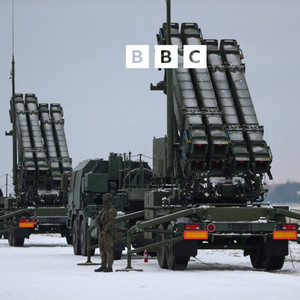
It comes after Sunday's announcement by President Trump that the US would provide Kyiv with key military equipment, including Patriot air defences.
He made the announcement at Andrews Air Force Base near Washington.
I haven't agreed on the number yet, but they're going to have some because they do need protection.
But the European Union is paying for it.
We're not paying anything for it, but we will send it.
It'll be business for us and we will send them Patriots, which they desperately need because Putin really surprised a lot of people.
He talks nice and then he bombs everybody in the evening.
So there's a little bit of a problem there.
I don't like it. Ina Sovsun is a Ukrainian MP for the opposition Golos Zmin party.
She says daily Russian attacks on Ukrainian cities mean the weapons are vital.
Without Patriot air defence systems and the missiles that come with them, it's close to impossible to defend the airspace of Ukraine altogether.
So it's really a matter of life and death.
There is no alternative to US air defence.
There is no alternative to Patriots.
There are some other air defence systems, of course, but none of them can intercept the missiles that Patriot can intercept.
So are the diplomatic stars aligning for Ukraine?
Just months after the US president gave Volodymyr Zelensky a public dressing down in the White House.
Will Vernon is our Europe regional editor.
These Patriot missiles are desperately needed.
Russia has stepped up attacks significantly in recent weeks.
the death toll has gone up a lot.
And you know, this is affecting the will and the morale of the Ukrainian people.
I was in Ukraine a couple of weeks ago, talking to residents of Kiev, it's not only the death and destruction brought by these attacks, but people just desperately need to sleep, right?
They're absolutely exhausted by this war.
Every time there's an attack, they're then spending hours checking up on friends and relatives.
So these Patriot missiles, they are really are kind of the top tier in air defences.
They're very effective against ballistic missiles.
But of course, the main problem for Ukraine at the moment is drones, and they're less effective against those.
So Ukraine needs other equipment as well to help it repel these drone attacks.
So more equipment. We're also expecting when we hear from President Trump a little bit later on possible news on sanctions.
What might be on the table there?
Yeah, the main thing is we don't know if and when this announcement will come.
Trump himself said there was going to be a major announcement on Monday, but perhaps we've already seen it.
He's due to meet the NATO Secretary General Mark Rutte a little bit later on.
Perhaps there could be another announcement then.
If there is an announcement, I think possibly there could be new weapons pledged, even offensive weapons that can then strike targets, military targets deep inside Russia, although Mr. Trump hasn't been very keen on that kind of thing in the past. But the second thing to watch out for is sanctions.
There is a bill going through Congress that's being kind of shepherded by Senator Lindsey Graham that could give the president the ability to apply 500 percent trade tariffs on any country doing business with Russia.
So that would be quite a kind of sharp stick in America's toolbox if it does come to that.
But we'll have to wait and see if there's an announcement.
You never really know, do you, with Donald Trump?
Indeed. Now, Will, you're a former Russia producer and correspondent there in Moscow.
go. You've been watching reaction to this.
How has Moscow been reacting?
And how is it likely to react when we hear more information from Donald Trump?
Well, we've already heard from the Kremlin spokesman Dmitry Peskov, who kind of dismissed this announcement by Donald Trump.
I think there'll be another kind of almighty shrug in Moscow about all this, because no matter what the West promises, Russia's military campaign continues, they have the upper hand on the the battlefield.
They are advancing.
Does a new sanctions bill worry them?
Frankly, no, I don't think it does at all.
Russia is already the most sanctioned country in the world.
The economy is relatively resilient.
They have come up with all kinds of tactics and methods to avoid or evade these sanctions.
And in Russia, they think that the West in general and President Trump in particular has a short memory, has a short attention span.
They think governments come come and go.
But Russia is in it for the long term.
But I think, you know, all parties involved in this, Ukraine, Russia, the European Union, many in the Trump administration itself, just can't predict what Trump is going to do next.
Will Vernon. EU trade ministers are gathering in Brussels to discuss their response to Donald Trump's threat to impose 30 % tariffs on their imports from the 1st of August. It comes after Ursula von der Leyen, the president of the the European Commission, announced that the EU's retaliatory tariffs on US exports will be delayed until August. They were due to come into effect on Tuesday in response to American import taxes on steel and aluminium.
The EU's trade commissioner, Maros Sefcovic, says he's working on an agreement.
I intend to speak with my US counterparts again, as I cannot imagine walking walking away without genuine effort.
Our reporter Sofia Betitsa is in Brussels.
Trade ministers are currently discussing how to respond to Donald Trump and how strong a line that they should take with Washington.
Now, Brussels wants to avoid a trade war, but there is worry.
We heard from the European Commissioner for Trade and he said that he regrets Donald Trump's announcement and that 30 % tariffs would be prohibitive to mutual trade.
There is anger here in Brussels too because European officials were blindsided by Trump's announcement at the weekend.
We heard from the European Parliament's chair of the Trade Committee and he said that Trump's announcement was a slap in the face, especially because both sides had been negotiating nonstop for weeks.
Now, there are some countries that are urging Brussels to be tougher on Washington and to impose countermeasures.
Both Germany and France said that if negotiations fail, that's what needs to happen next.
We heard this morning from the Danish foreign minister, and he said if you want peace, you have to prepare for war.
He thinks that's where the EU is now.
They should not impose countermeasures yet, but they need to be ready.
Sofia Petica. Well, Donald Trump's tariff policies have seen the world's stock markets fluctuate wildly in recent months.
But throughout it all, the value of Bitcoin's trajectory has been relentlessly upwards.
The world's largest cryptocurrency has now set a new record, trading at more than $120 ,000 for the first time.
It comes as US lawmakers debate a number of bills aimed at regulating the cryptocurrency sector.
Our business reporter Katie Silver told me to what extent Bitcoin's rise is down to Donald Trump's actions during his second term as president.
I think pretty significantly both in terms of how bullish he's been when it comes to cryptocurrencies he's called himself the crypto president but also I guess in terms of different moves he's made when it comes to his big beautiful bill and tariffs that might be seen as stimulating the economy and therefore also pushing up the price of these cryptos to give you an idea we've seen it climbing about two and a half percent to hit these new highs currently it's about 122 thousand dollars That's a rise of more than 10 % in the last week.
As I say, we've heard him call himself the crypto president.
He's promised to make Bitcoin the superpower of the world.
And even, of course, pledging when he was running for his election campaign last year to create a Bitcoin sovereign reserve that would be owned by the US government.
Now, he was asked as well about why he had this U -turn.
He used to be very anti -crypto.
And he said that it was actually because he used to not be able to understand what it was about.
but now that he understands it, he is very in favour.
This is being dubbed Crypto Week in Washington.
Tell us more about what the House of Representatives is going to be doing and the impact that could have. So there's three main acts they'll debate.
The Genius Act, the Digital Asset Market Clarity Act, certainly a mouthful, that one, and the Anti -CBDC Surveillance State Act.
Now, the Genius Act has already been approved by the Senate.
It enables private companies to issue what are known as stable coins.
if this does take place, that's likely to drive up demand for short -term US government debt.
So that would benefit the Trump administration, benefit the White House in balancing their books.
The others are about, for example, prohibiting the Federal Reserve from issuing a central bank digital currency.
And also, as I say, establishing this regulatory framework for digital assets to quote the regulators to establish clear lines.
And that, I guess, as I say, might help to boost investment.
Now, Donald Trump and members of his family have their own crypto coin brands.
Is there a concern in America about a presidential conflict of interest here, do you think?
There definitely has been concern raised.
So the Trump meme coin, as it was called, it launched just the day before he came into the office.
The Melania coin launched just 48 hours later.
Now, according to an investigation earlier this year by the Financial Times.
They found that that project netted about $350 million for the Trump family through sales of tokens and fees.
Katie Silva. Now, imagine a version of your best friends, but they're on hand for advice 24 -7.
They don't disagree with you and they never ask for anything in return.
The downside? Their artificial intelligence.
Well, according to a new report, that's a situation that children in the UK are increasingly finding themselves in as they turn to bots like ChatGPT for advice.
The BBC's Will Chalk has more.
You'd be forgiven for thinking this warning about the dangers of letting your child befriend a robot had come from a horror movie.
These new so -called friends are often not questioned by kids, so they're looking at these as a dominant authority.
It's actually Caitlin Reger, digital humanities expert at University College London, talking about children treating chat GPT as a friend.
I was in a research school with a bunch of 16 -year -old girls and a girl said to me, I now use chat GPT to compose text to my friends because I've lost confidence.
Almost a quarter of the 1 ,000 children campaign group Internet Matters spoke to admitted using chat bots for advice, with vulnerable people more likely to go further and admit using them to simulate friendship.
friendship the BBC asked young people at a music festival in the UK earlier this year whether they'd ever done it I have when I've been a bit down yeah which is a bit shameful in a way you have to take a bit of salt because it's just a robot but bits of it can be helpful but fire up chat GPT and come up with a random prompt and it is quite easy to see what the attraction is if you You type in, I'm feeling low on self -confidence right now.
What are some things I can do to feel better?
It gives you this. I'm really sorry you're feeling this way.
It's something most people go through at times, but that doesn't make it any easier.
It then lists advice, including doing one small task, for example making your bed or tidying up somewhere, and naming three wins from the past week.
And if that's solid advice, what's the risk?
Professor Paul Ferrand is clinical scientific director at Iona Mind, a company that provides AI -driven CBT on an app for depression and anxiety.
I think separation is needed, and companies and AI developers need to ensure there's that separation.
But it is possible.
Bia's report highlights how children using AI chatbots like this is leading them to be exposed to harmful content because the bots weren't designed with children's therapy in mind.
Internet Now thinks the industry, the government, schools and parents need to work together to educate children.
But if young people have grown up with a certain tool available to them, it might not be easy to convince them to stop using it.
Well here, for what it's worth, is ChatGPT's advice.
Getting young people to use less AI isn't about banning or shaming its use, which usually backfires, but about rebalancing their relationship with it.
That report was by Will Chalk.
Still to come on this podcast. In his first issue, he is not billed as the man of steel or the man of tomorrow.
He's actually billed as the champion of the oppressed.
In the light of a new movie, we take a look at the history of Superman.
van lines you don't worry about a thing you have a dedicated moving coordinator qualified drivers and full value protection for your possessions compare that to a couple of dudes manhandling your family heirlooms or cramming your things in a container on your driveway rather than hope for the best you deserve a hassle -free move visit unitedvanlines .com big moves small moves all moves easy choice as a parent you wear many hats at dinner you're the chef when your kids play you're are the ref and let's face it, you're basically a full -time chauffeur.
Fortunately, when it's time to wear your teacher hat, Abeka makes things easy.
Our proven flexible homeschool curriculum is designed to let your kids retain and build on the knowledge they acquire, setting them up for success later in life.
Abeka, learning for life begins with the right homeschool education.
Learn more at abekahomeschool .com.
Saks Off 5th, up to 70 % off every day.
Summer is officially here.
And Saks Off 5th is your destination for deals on all of this season's designer must -haves.
From breezy linen and floral dresses to chic sandals and beach -ready swim, you'll find everything you need to refresh your summer wardrobe.
Discover the latest men's essentials, too.
Think lightweight camp shirts, cool summer suiting, and trending loafers.
Plus, shop new designer arrivals every week.
We're talking Valentino Garavani, Balenciaga, Stuart Weitzman, Hugo Boss, and more.
At prices you won't believe.
Whether you're packing for a summer getaway, getting ready for upcoming special occasions, or updating your work wardrobe, Saks Off 5th has all the fashion you need.
Head to saksoft5th .com or a Saks Off 5th store near you for up to 70 % off every day.
This message is sponsored by Greenlight.
With school out, summer is the perfect time to teach our kids real -world money skills they'll use forever.
Greenlight is a debit card and the number one family finance and safety app used by millions of families, helping kids learn how to save, invest, and spend wisely.
Parents can send their kids money and track their spending and saving, while kids build money confidence and skills in fun ways.
Start your risk -free Greenlight trial today at greenlight .com slash iHeart.
Now to the murky and unsettling issue of alleged child trafficking and so -called baby farms. A court in the UK has ruled that a baby who was allegedly trafficked here from Nigeria will now be adopted in the UK.
The court heard the woman who brought the child into Britain repeatedly claim that she was the child's biological mother.
Other DNA tests and physical examination showed that she wasn't.
Sancha Berg, who's following the case, tell me what's known about the baby involved.
We know nothing really about the origins of this child other than that she came from Nigeria, from Lagos, but we don't know where she was born and who to.
The mother who falsely claimed her as her child, who brought her to the UK, wouldn't explain to the family court how she had got her, if you like.
And the family court did ask a forensic expert to have a look at the woman's mobile phone where they found a text message exchange with someone whose number had been saved as Mum Offed Lagos Baby.
So there did seem to have been some communication, but as I say, the woman who said she was the baby's mother, she absolutely refused to say any more about it.
And I think it's worth pointing out, as you said, that this is the second case that we've reported in the last few months of a baby brought unlawfully from Nigeria, whose case ended up in the family court.
But the expert social worker who gave evidence to this court hearing told us that she had dealt with several other cases just in the last few years.
And if you have a look at the saved family court judgments of the past, you can see that 10, 12 years ago, there were more cases like this so there may be quite a few more babies who are brought unlawfully to the UK.
And Sandra whilst as you said we didn't learn anything from the court from the baby's alleged mother about where this child came from there's a possibility that she was the product of a so -called baby farm what are these?
Well the expert social witness who's based in Nigeria and as I say has investigated other cases told the court and she told us as well about the phenomenon of baby farming and she said there were two dimensions to it really.
First there were pregnant girls who didn't want to keep their babies who would go to a so -called mother and baby home and then they would be paid for their baby but there was also a much more sinister version version of this, which will be familiar to listeners around the world because our colleagues on Africa Eye, I know, have investigated this before, which is the baby farm where young girls are kidnapped, they're raped, the children they bear are taken from them and sold.
And while the Nigerian authorities do act against this and they do close them down, they spring up again in other other parts of the country.
Sancho Berg. Mexico and the United States are entwined in many different ways in the flow of goods, people and water.
Under a treaty signed over 80 years ago, Mexico has been sending vast amounts of the stuff across the border into Texas.
In return, the United States has piped even larger amounts of water back south across the border.
But with much of northern Mexico in the grip of a severe drought, out, the future of that historic water -sharing agreement looks in jeopardy.
Our correspondent Will Grant reports from the northern Mexican state of Chihuahua.
After 30 consecutive months without rain, the townsfolk of San Francisco de Conchos gather to plead for divine intervention.
On the shores of Lake Toronto, the reservoir behind Chihuahua state's most important dam, called La Boquilla, farmers on horseback and their families pray pray for a very wet, rainy season.
So far they've had no sign of one.
From its high watermark, the lake has lost 26 .5 metres of depth.
It's now at less than 14 % of its capacity.
In the congregation is Rafael Betance, who has monitored La Boquilla for the state water authority for 35 years.
Few know the lake's fluctuations as well as Mr Betance, and as we head out on the reservoir for a closer look, he says he's never seen the situation get this dire.
It's impossible. We are not able to water crops.
You can see that the dam lies idle.
There's no hydroelectric power being generated and we can't use any water for agriculture.
They're just decent enough.
Despite the meagre supply in Chihuahua, Mexico must abide by the terms of a 1944 water -sharing treaty treaty with the United States.
Under the agreement, Mexico must send some 430 million cubic meters of water per year from the Rio Grande to Texas.
In return, the US sends its own much larger allocation from the Colorado River to supply the Mexican border cities of Tijuana and Mexicali.
Mexico is in arrears and has been for much of the 21st century.
In April, on his Truth Social site, President Trump accused Mexico of stealing the water and threatened tariffs and maybe sanctions unless Mexico sends Texas what it owns.
The thing is, the complaints from Texas are valid, but people here on the Mexican side say you simply can't take from what isn't there.
People in these communities feel trapped by the terms of what they consider to be an outdated agreement, which doesn't account for the ravages of climate change.
The cross -border arguments go beyond just water scarcity.
They're also about agricultural methods and efficiency.
Walnut trees need on average 250 litres a day.
Traditionally, Mexican farmers simply flood their fields with water from the irrigation channel.
Jaime Ramirez, a walnut farmer and the former mayor of San Francisco de Conchos, shows me how his modern sprinkler system ensures his trees are properly watered all year round without wasting the precious resource.
With the sprinklers, we use around 60 % less than flooding the fields, he says, but admits that many of his neighbours are less conscientious.
As bad as the crippling drought has been for farming, the problems extend even further.
The reservoir's critically low level means the little water in it is overheating, killing the lake's marine life and with it a once thriving tourism industry.
In the face of such a litany of problems, the community around the Rio Conchos can do little besides bow their heads and pray the rain falls sometime soon.
Will Grant reporting from northern Mexico.
Since Islamist rebel forces overthrew Syria's President Bashar al -Assad in December, they've repeatedly struggled to keep the country's various religious minority communities from erupting into violence well the latest clashes between the sunni bedouin tribal fighters and druze militias on sunday are thought to have left at least 50 people dead so what hope does the country have for stability our middle east correspondent hugo beshega talked us through the background to this weekend's violence this is happening in swaida which is a mainly druze city in southern Syria, and Bedouin tribes and the Jews
community have long -running disputes in this area.
There have been clashes in the past, but this has been a particularly deadly cycle of violence, which is again raising concerns about the situation in this particular part of Syria.
It all started on Friday.
It seems that the trigger here was when a local militia stole and then abducted a Jews cellar.
And that led to a wave of tit -for -tat attacks, a wave of kidnappings.
It seems that the situation has de -escalated a little bit.
Many of those people who were abducted have now been freed.
But again, it shows how delicate, how sensitive the security situation is, particularly in this part of Syria.
Yeah, I mean, there have been conflict between the new government troops and the Druze as well because they don't trust the new authorities to look after their interests?
Yeah, the Jews have their own militias and many of these different factions disagree over whether they should integrate with the new government, the new armed forces.
They have very strong suspicions about the government's intentions in Syria.
And I think, again, this shows how fractured the country is with a number of different groups, armed groups as well.
And I think, you know, these violent attacks that we've seen since the fall of President Bashar al -Assad back in December are proof of the difficulties that, you know, the new leadership have in Damascus.
Because, again, minority groups in particular remain very sceptical about the intentions of this new Islamist -led government, despite a number of pledges, despite the speeches of the new leadership, including the President Ahmed al -Shara.
But also, I think these incidents are proof of how extremely difficult it's been for the government in Damascus to exert its authority across the country.
The government doesn't have control of the entire country, and I think this is one of the reasons why you see these kinds of attacks.
Hugo Bechaker. The new Superman movie has just hit cinemas around the world to mixed reviews, but it has already raked in more than 200 million dollars at the box office.
The James Gunn film has proved to be like kryptonite for some on the right of the political spectrum.
In a pre -release interview, the director had said he saw the story as that of an immigrant whose mission was to spread human kindness.
What utter woke nonsense, Nonsense, said some commentators.
But what of Superman's origin story as a refugee alien from another planet?
A story going back to his first appearance in a comic strip back in 1938.
Paul S. Hirsch is an expert on early comics at the University of Texas in Austin.
Early Superman was certainly very different than the way he's more popularly imagined.
In his first issue, he is not billed as the Man of Steel or the Man of Tomorrow.
Tomorrow. He's actually billed as the champion of the oppressed.
That's the tone that early Superman comics take.
In that very first issue, he stops a woman from being unjustly executed.
Soon after that, he attacks a domestic abuser and beats him pretty severely.
And then the issue ends with him investigating corruption in Congress.
And he kidnaps a crooked lobbyist. And he says to the lobbyist, unless you do what I tell you, I swear I'll follow you to whatever whatever hole you hide in and tear out your cruel heart with my bare hands.
Early Superman is not corny.
He's very earnest. He's quite violent.
He kills people and he's very clearly fighting for the average person.
And he's trying to defend them, not against cosmic supervillains, but against very personal, very human bad people.
And the violence he inflicts on those bad people is very intimate.
You know, he's not, he's not flying backwards to reverse time.
He's not throwing buildings at super -powered bad guys.
He's grabbing domestic abusers by the shirt and shaking them until they plead for mercy.
Am I right in saying that you describe him as a violent socialist?
Is that right? Sure, but that was a more off -the -cuff comment.
The way I look at Superman is that he's a product of a really remarkable medium, which is the early American comic book, which was subject to no censorship.
It was wildly different than Hollywood.
He was wildly popular from the outset.
They sold a billion copies a year from the 40s through the mid 50s.
And I think the focus was on Superman as someone who was trying to right very human wrongs in the middle of the Great Depression.
It's not until World War II when comic books are called on to be patriotic and to contribute to the war effort that Superman shifts into what we think of now as a kind of hyper -patriotic, very, very earnest do -gooder.
And did this also have something to do with the men, the Jewish men, who were behind this?
Well, as I was saying, the comic books at that time were a fairly unfiltered representation of what their publishers and creators wanted them to be.
Both of his creators were Jewish.
They worked for publishers at National Comics, what we now call DC, many of whom were either immigrants, the children of immigrants, and or Jewish.
I don't think there's any way that their experiences didn't bleed into their creation and shaping of the character.
Paul S Hirsch speaking to Tim Franks.
And that's all from us for now, but there will be a new edition of the Global News podcast later.
If you want to comment on this podcast or the topics covered in it, you can send us an email.
The address is globalpodcast at bbc .co .uk.
You can also find us on X at BBC World Service.
this, use the hashtag globalnewspot.
This edition was mixed by Rosenwyn Dorrell and the producers were Terry Egan and Charles Sanctuary.
The editor is Karen Martin.
I'm Nick Miles. And until next time, goodbye.