This BBC podcast is supported by ads outside the UK.
If journalism is the first draft of history, what happens if that draft is flawed?
In 1999, four Russian apartment buildings were bombed.
Hundreds killed, but even now we still don't know for sure who did it.
It's a mystery that sparked chilling theories.
I'm Helena Merriman and in a new BBC series I'm talking to the reporters who first covered this story.
What did they miss the first time?
The History Bureau, Putin and the apartment bombs.
Listen on BBC.com or wherever you get your podcasts.
This is the Global News Podcast from the BBC World Service.
I'm Alex Ritson and in the early hours of January 17th, these are our main stories.
Donald Trump names his so-called Board of Peace to oversee his Gaza peace plan, including Secretary of State Marco Rubio and former British Prime Minister Tony Blair.
Meanwhile, the US President justifies his decision to keep Nicolas Maduro's former deputy in charge of Venezuela for now, and Germany returns two fragments of the near-thousand-year-old Bayer tapestry seized during World War II.
Also in this podcast.
There's so much proof out there that there is very harmful content on TikTok's platform and this had a huge, huge impact on Isaac's loss of life.
The families of five British teenagers who died after using TikTok sue the social media platform.
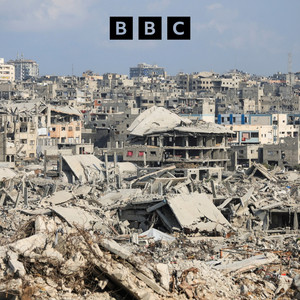
It's called the Board of Peace, a group of men tasked with rebuilding Gaza, one of the most densely populated places on earth, which was shattered by war.
Most of the buildings in the Palestinian territory were destroyed or made uninhabitable.
Many there are living in tents.
Food remains scarce and basic education and health care needs still aren't being met following two years of fighting between Israel and Hamas.
Stepping in to try to end the suffering are, among others, the U.S.
Secretary of State Marco Rubio and the former British Prime Minister Tony Blair.
President Trump's Board of Peace will oversee the second phase of the Gaza peace plan.
But no Palestinian or Arab has been appointed.
I heard more from our North America correspondent, David Willis.
As well as the names you mentioned there, the founder members include Donald Trump's special envoy, Steve Witkoff Alex who, together with Jared Kushner, of course, was credited with brokering the ceasefire in Gaza, the president of the World Bank, Ajay Banga, the billionaire Mark Rowan and Donald Trump's deputy national security advisor, Robert Gabriel.
Now The White House says that each of these individuals will hold a specialist portfolio related to the stabilisation effort in Gaza, although it hasn't revealed precisely what those specialisations will be.
But the suggestion is that these seven founder members of the Board of Peace represent a diversity of skills relevant to establishing a peaceful transition, a peaceful solution in Gaza going forward and, of course, the oversight of the reconstruction and economic revitalization of the territory.
And the White House says that other members of the Board of Peace will be appointed members in due course.
So exactly what is it going to do?
Well, the plan is for a Palestinian technocratic body that will be overseen by this International Board of Peace.
That is intended meant to supervise Gaza's governance for a transitional period in And the reconstruction and the rebuilding role will include the restoration of essential services, essential public services, things like schools and hospitals and so on.
And in addition, the White House says... that a former U.S.
Special Operations commander, a man by the name of Major General Jasper Jeffers has been appointed commander of the International Stabilization Force.
But these officials all face a tough task, given the extent, of course, of the devastation that Gaza suffered during the conflict and the displacement of its population in the face of that long-running Israeli assault.
The elephant in the room, of course, is the disarming of Hamas, which is a red line for Israel.
Is there any chance of it?
Well, you're absolutely right.
That is the elephant in the room, and Israel and Hamas have each accused each other of of ceasefire violations in Gaza.
Since that ceasefire came into effect back in October, and indeed since then, more than 440 Palestinians and three Israeli soldiers are reported to have been killed.
On top of that, there is the problem of a shortage of aid, and And Hamas has refused, of course, to publicly commit to a full disarmament in Gaza.
So this border peace faces a tough task indeed going forward, Alex.
David Willis in Washington.
Meanwhile, on the ground in Gaza, a BBC verify investigation has found that some of the yellow concrete blocks which are meant to mark Israel's post-ceasefire line of control have been moved further into the territory under the terms of the US broker deal with Hamas.
Israel agreed to withdraw troops beyond a line marked in yellow on Israeli military maps.
Merlin Thomas from BBC Verify has the details.
One of the key aspects holding together Israel and Hamas's ceasefire agreement is the separation of Israeli troops from Palestinians in Gaza.
Hundreds of concrete blocks placed by Israeli forces functions as what it calls a new borderline.
Yet a BBC verify investigation found Israel have been repositioning these markers, leaving Palestinians confused about whether or not they're in IDF territory.
We mapped over 220 of these yellow blocks using satellite images and eyewitness videos.
We found more than half were placed by the Israeli military 100 metres further inside Gaza than what the IDF had initially indicated on its maps.
In total, we found 16 blocks in northern Gaza had also been repositioned.
Further south, six miles of territory remain unmarked even three months on from the ceasefire, leaving people with no visual marker on whether they're encroaching on what the IDF calls a dangerous combat zone.
Analysing IDF statements posted on social media or given to the BBC in response to the questions, there have been at least 69 incidents where IDF troops shot at people it claims had crossed the yellow line.
Some of these incidents near the Yellow Line have had deadly outcomes.
In December, an IDF strike hit displaced people in Al-Tufa in a school-turned-shelter about 330 metres on the Palestinian side of the Yellow Line.
Five people, including children, were killed.
That's according to Gaza's Hamas-run civil defence agency.
Eyewitnesses said it happened during a wedding taking place next door.
The IDF said it fired at suspicious individuals west of the Yellow Line, but didn't provide further details and said the incident remains under review.
Other military actions the IDF has taken across this boundary include mass demolition of buildings.
For example, in Jebelia, we found hundreds of flattened structures up to and even beyond the concrete boundaries.
In some instances, debris from the destruction had buried the markers.
The IDF rejected many of our findings and denied it had moved the blocks.
A spokesperson said it was operating in accordance with conditions on the ground and ongoing situational assessments.
For Palestinians, though, this line can be the difference between life and death.
Merlin Thomas.
And for more on today's big stories.
You can go to YouTube search for BBC News.
Click on the logo, then choose podcasts and global news podcasts.
There's a new story in Vision available every weekday.
When the US military seized the Venezuelan president, Nicolas Maduro, almost two weeks ago, it sent shockwaves across the region and raised questions about who would run the country next.
Donald Trump did not endorse the opposition leader, Maria Corina Machado.
Instead, he has backed Mr Maduro's former deputy, Delcy Rodriguez, arguing she can provide stability in Venezuela.
Mr Trump has now justified his support for her using the example of how the US experience in Iraq led to a damaging power vacuum.
Whoever...
Remember a place called Iraq, where everybody was fired, every single person, the police, the generals, everybody was fired.
And they ended up being ISIS.
Instead of just getting down to business, they ended up being ISIS.
So I remember that.
Mr Trump's remarks came after it emerged that the head of the CIA recently met Ms Rodriguez in Caracas.
Meanwhile, the regional ramifications of Venezuela's political upheaval have been playing out in Cuba, which had been a staunch ally of President Maduro.
On Friday, the Cuban leadership organised a protest march past the US embassy in Havana to demonstrate against the killing of 32 Cuban security personnel who were guarding Mr Maduro at the time of the US raid.
From Havana, Will Grant reports.
With his voice faltering, the Cuban president, Miguel Díaz-Canel, delivered a speech railing against US imperialism before leading a march past the US embassy in Havana.
The sentiments expressed by both the island's leadership and the crowd revolved around similar themes in Cuba that the relationship with socialist ally Venezuela is unbreakable and forged over years of a shared struggle against Washington.
However, as President Díaz-Canel was speaking, it became clear that the director of the CIA, John Ratcliffe, had travelled to Caracas and held talks with the interim president, Delcy Rodríguez.
The move comes just two weeks after elite US troops forcibly removed Nicolas Maduro from power in Venezuela and took him to the US to face drug trafficking charges.
While it isn't yet clear if the apparent turnaround in political direction in Venezuela will represent a rupture with the Cuban government, there are many in Havana who are worried about the future, with Delcy Rodriguez in power in Caracas.
As well as the CIA meeting, she also recently held a lengthy phone call with President Trump, after which he described her as a terrific person.
Meanwhile, the remains of the 32 Cubans, many of whom were part of Nicolas Maduro's personal security detail, will be interred at the military pantheon in Havana's main cemetery.
Will Grant in the Cuban capital.
Germany has returned two fragments of the Bayer tapestry that were taken during the Nazi occupation of France in 1941.
The small unembroidered pieces were discovered by historians in state archives from northern Germany and are believed to have been removed by Nazi-affiliated scientists who thought the tapestry could be used to support Hitler's theories about the superiority of an Aryan race.
Our Paris correspondent Hugh Schofield reports.
Why would Hitler have been interested in an early medieval artwork depicting the Norman conquest of England?
While not we can assume for any tips on invasion that William the Conqueror might have been able to offer at an interval of nearly 900 years,
No, the reason scientists were dispatched in 1941 to Bayeux by the SS's Ahnenerbe or Ancestral Heritage Organisation was to see what evidence the tapestry might offer to bolster Nazi racial theory.
You see, William the Conqueror was a Norman.
His ancestors were Vikings, so he was a kind of honorary Aryan, and the Nazis regarded his exploits with a sort of veneration.
The SS scientists scrupulously examined the tapestry, but their report never got written.
D-Day intervened, and the whole episode would have been forgotten.
But for the discovery last year in a museum in Schleswig-Holstein of these two tiny pieces of linen, brought back to Germany and preserved by one of the team.
Last vestiges of a failed bid to harness English history to the Nazi cause.
Hugh Schofield in Paris.
Still to come in this podcast... He was absolutely petrified... he'd recognise my name on the door.
The Americans said what we'll do, Captain Stonehouse, we'll close the camp for the day.
You can do what you like with him.
And here's a machine gun.
No-one will ever know.
We hear about the former British spy who was sent to the Nazi concentration camp at Dachau and made sketches of the atrocities that took place.
If journalism is the first draft of history, what happens if that draft is flawed?
In 1999, four Russian apartment buildings were bombed, hundreds killed.
But even now, we still don't know for sure who did it.
It's a mystery that sparked chilling theories.
I'm Helena Merriman and in a new BBC series I'm talking to the reporters who first covered this story.
What did they miss the first time?
The History Bureau, Putin and the apartment bombs.
Listen on BBC.com or wherever you get your podcasts.
The exiled son of the last Shah of Iran has urged the international community to support anti-government protesters, saying he is confident the Islamic Republic is about to fall.
Reza Pahlavi called for a series of actions, including surgical strikes, against the Revolutionary Guard.
There's little evidence that street protests are continuing after authorities began a violent crackdown.
Reza Pahlavi has vowed to return to Iran and is promising... a peaceful transition to democracy.
Our chief international correspondent Lise Doucette has more.
Previous waves of unrest in Iran have been leaderless.
This time, one name has been shouted by some protesters, Reza Pahlavi.
Some have even waved the flag, symbolising the rule of his late father, the Shah.
Pahlavi claimed the people of Iran have chosen him to lead at this time. the regime will fall.
It will fall sooner, and more lives will be saved if the world turns its words into action.
A free, democratic Iran will not be a source of endless crisis.
It will be a pillar of peace, partnership, and prosperity for the Middle East and beyond.
The choice is clear.
Stand with the people now or watch the cycle of instability continue.
Pallavi outlined what he called a clear plan for a transition to democracy.
But his support inside the country is still hard to measure.
There are many opposition voices inside and outside the country.
Even President Trump has expressed doubt about his strength on the ground.
But one of Pallavi's main calls was for the U.S. president to take action.
There are moments in history where the moral imperative for action is so strong that the weight of inaction becomes unbearable.
This is one of those moments.
The people of Iran have risen to reclaim their country.
History will honor those who stand with them.
That report by our Chief International Correspondent, Lise Doucette.
A court in the US has begun hearing a case brought by five British families who are suing the social media platform TikTok over the deaths of their children.
They say their youngsters died after being exposed to harmful content which had been promoted by TikTok's algorithms.
The company says it strictly prohibited content that encourages dangerous behaviour.
Our North America technology reporter, Lily Jamali, sent this report.
Some of the bereaved british parents arrived in court in wilmington delaware, at the start of what could be a landmark legal battle.
They're convinced their children died after being exposed to harmful content amplified by the algorithms of tick tock.
Ellen room lost her 14 year old son jules, in 2022.
A coroner ruled jules took his own life but probably didn't mean to.
Ellen believes he may have been attempting an online challenge that had been circulating on social media at the time.
But she's been unable to access data from Jules' phone which could shed light on what he'd been watching.
There's so much proof out there that there is very harmful content on those platforms, on TikTok's platform.
And I do strongly believe that this had a huge, huge impact on Isaac's loss of life.
We're the first British parents to sue TikTok over the death of our children.
And the court case is in about 15 minutes, so we're about to go in.
Liam Walsh is another of the parents saying TikTok should be held to account.
His daughter, Maya, died in 2022, aged 13.
He believes she'd been accessing harmful content online.
TikTok deny responsibility for any harm to the children.
They've said our deepest sympathies remain with these families.
We strictly prohibit content that promotes or encourages dangerous behavior.
Using robust detection systems and dedicated enforcement teams to proactively identify and remove this content.
We remove 99 that's found to break these rules before it's reported to us.
As a company, we comply with the UK's strict data protection laws.
TikTok said it no longer has the history of what Ellen's son Jules watched or searched, because the law requires it to delete personal data unless it's needed for running a business.
The social media companies here in America have enormous wealth and power, but they're under growing pressure, particularly to protect children.
Just this week, pressure from regulators in the UK prompted Elon Musk's AI chatbot Grok, to say it would stop generating sexualized images of women and children.
Increasingly, US tech companies find themselves under fire after years successfully avoiding legal scrutiny.
Lily Jamali.
A compelling yet disturbing and rare set of drawings of a Nazi concentration camp will be put up for sale in New York later this month.
The artist was a British spy.
Brian Stonehouse was parachuted into occupied France in 1942 by the Secret Special Operations Executive, the SOE, but he was captured in France and then sent to the Dachau camp in Germany.
Very soon after he was liberated in 1945, he made sketches of piles of corpses, the mortuary, the crematorium and the gas chamber.
Brian Stonehouse then became an interrogator at the war tribunals, where he came across a Nazi from his past, as he later told the Imperial War Museum in London.
After about three days I said, well, why doesn't he ever look up?
And he looked up and I recognised him.
It was the interrogator from Paris.
And he was absolutely petrified.
He'd recognized my name on the door.
Then I told everybody in America and said, God, would you believe it?
And they said, well, you know what we'll do, Captain Stonehouse.
We'll close the camp for the day.
You can beat him up.
Do what you like with him.
And here's a machine gun.
No one will ever know.
I said, no, I can't do that.
If I did that, I'd be no better than the Germans.
In any case, I'm free.
He isn't.
Tom Edwards is the owner and managing director of Abbott & Holder, a gallery in London which has put the drawings up for sale.
My colleague Katie Razzell spoke to him about Brian Stonehouse.
He was an art student really not an artist when he entered the war and taken up as a very, very young man by the SOE.
And, like all of those brave young people, he was dropped into enemy France, as it was then, as a pretty inexperienced person.
And was caught pretty soon afterwards, wasn't he?
Exactly, yeah.
He was caught only after a few months.
And so spent really the most of his war being moved between concentration camps, because the Germans labelled the SOE, who were captured, Nacht und Nebel, which meant that they were supposed to disappear into the death camp system rather than into the POW camp.
And we know, as well as making these sketches that we're going to come on to he reflected on what he was seeing and drawing in his diary as well.
And how does that inform his work and our understanding of it?
The wartime work for him was very much about survival because he was making it almost immediately as he was captured by the SS.
He was in solitary confinement for a long time, so it enabled him to keep sane.
In the camps, it was then currency really for him.
He made it known very early on in each camp he was moved to that he had this skill and the SS picked up on this and they would ask him to make portraits of them.
And that relieved him from slave labour.
His fellow prisoners asked him to make drawings of them.
He exchanged those for cigarettes and those cigarettes were then used to exchange for bread.
So it was an integral part of how he survived.
And then when he did survive and Dachau was liberated, he then did these series of drawings.
Just describe them.
The drawings themselves are extraordinary.
They're intense, very expressive sheets.
They're quite large, made in charcoal.
They're very visceral responses to what he saw.
Remember, these were parts of the camp he wouldn't have seen.
So there are works of art that exist, made by prisoners of concentration camps, but inevitably they show the huts and bunks and parts of the everyday fabric of the camp.
It was going in the next day is the extraordinary aspect to this.
The fact that after his incredible survival, he wanted to go back in and to record.
And part of it, I think, is a compulsion, an artist's compulsion to record.
But really, I think it's to do with a human response to it.
His survival, as he's talked about in various interviews, was very much down to keeping a strong sense of humanity and his humanity.
The Germans, the SS.
They wanted to turn you into beasts and once they'd done that and broken you, they knew they had you.
Brian was very conscious that he needed to keep his humanity, and what better expression of that than expressing himself through drawings, even at the moment when most of us would want to run and flee.
Tom Edwards speaking to Katie Brazel.
And that's all from us for now.
This edition was mixed by Rosenwyn Dorrell and produced by Muzaffar Shakir and Wendy Urquhart.
The editor is Karen Martin.
I'm Alex Ritson.
Until next time, goodbye.
If journalism is the first draft of history, what happens if that draft is flawed?
In 1999, four Russian apartment buildings were bombed, hundreds killed.
But even now, we still don't know for sure who did it.
It's a mystery that sparked chilling theories.
I'm Helena Merriman and in a new BBC series I'm talking to the reporters who first covered this story.
What did they miss the first time?
Listen on bbc.com or wherever you get your podcasts.