

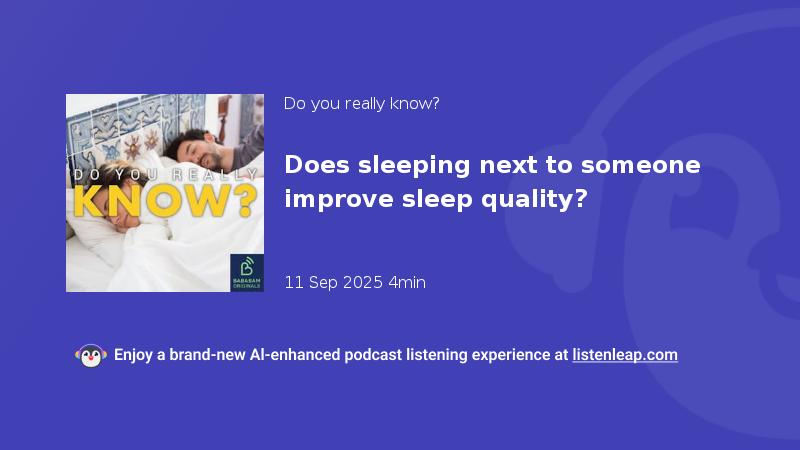
[The Science of Bed Sharing: Does Sleeping with a Partner Improve Sleep Quality?]-[Does sleeping next to someone improve sleep quality?]
📋 Summary
The Science of Bed Sharing: Does Sleeping with a Partner Improve Sleep Quality?
In the modern landscape of relationship dynamics and health optimization, one question frequently arises: does sleeping next to someone actually enhance our sleep quality? While the frustration of dealing with a partner who "snores or spends the whole night tossing and turning" is a universal experience, the scientific consensus suggests that sharing a bed often yields surprising benefits for our overall well-being.
The Positive Impacts of Bed Sharing
Research published in the Sleep Journal in June 2022, titled "Bed Sharing vs Sleeping Alone Associated with Sleep Health and Mental Health" by researchers from the University of Arizona, provides compelling evidence regarding this phenomenon. Through a survey of 1,007 working-age adults, the study revealed that bed sharing is associated with several positive health outcomes. Participants who shared their beds reported a "reduced risk of depression, lower stress and fewer problems with severe insomnia, sleep apnea or fatigue."
Furthermore, the data indicates that individuals who share their bed with a partner typically "fall asleep more quickly" and experience "shorter wakeful periods during the night." The cumulative effect of these factors is a greater duration of total sleep time, which is essential for cognitive function and emotional regulation.
Scientific Validation: REM Sleep and Connectivity
The findings from the University of Arizona are further supported by a 2020 study from Kiel University in Germany, published in Frontiers in Psychiatry. This research highlighted that couples who share a bed experience "less sleep disturbances" and, notably, obtain "up to 10% more REM sleep" compared to those who sleep alone. This suggests that the presence of a partner may provide a sense of security or comfort that facilitates deeper, more restorative stages of sleep.
The Exceptions: Children and Family Members
It is important to note that the benefits of bed sharing are not universal. The study identifies a clear exception: sleeping next to a child. In these instances, the adult’s brain remains "vigilant," which can paradoxically "increase the risk of insomnia or sleep apnea." A similar, though less pronounced, effect is observed when sharing a bed with other family members, suggesting that the psychological state of the sleeper plays a significant role in sleep architecture.
Addressing the "Sleep Divorce" Phenomenon
Despite the benefits, the reality of disruptive behavior cannot be ignored. "Snoring and other disruptive awakenings" can certainly have a "lasting impact on the quality of a person's sleep." When couples have conflicting routines or incompatible sleep hygiene, they may opt for a "sleep divorce."
It is crucial to clarify that a sleep divorce is often a "practical arrangement" rather than a sign of waning intimacy. It is a strategic choice to prioritize health. However, the Sleep Foundation notes that this is often a temporary state; approximately 25% of adults who adopt this practice eventually return to sharing a bed, primarily because they "miss their partner."
Conclusion
Ultimately, while the occasional snore or restless movement might tempt one to move to the sofa, the evidence suggests that for most adults, the companionship of a partner is beneficial. By balancing the practical needs of individual sleep routines with the emotional and physiological benefits of sharing a bed, individuals can navigate the complexities of modern rest to achieve a healthier, more restorative sleep experience.
Deep Learning with ListenLeap


