Discussion keeps the world turning.
This is Roundtable.
You're tuned in to Roundtable.
I'm Steve, joined today by Yushin and Feifei.
Coming up.
Here's a question.
How many times in your life do you retire?
Waiting for you to answer, you probably just said, But are you wrong?
A new wave of workers is taking recovery breaks now.
Months long disconnections called micro retirements will unpack the burnout driving the trend and the real career risks.
And there are risks of trading future securities. for present sanity.
After that we use music to manage our own mood but does your pet need its own playlist?
The answer isn't a simple yes.
It's a question of species and stress and the surprising soundtracks that can genuinely calm our furry family members.
Our podcast listeners can find us at Roundtable China on Apple podcasts.
And don't forget, we love hearing your voice.
So send your voice notes our way with any of the thoughts that you might have on the things that we discuss here on the show.
Here's how you get in touch.
Roundtable podcast at qqcom once again roundtable podcast at qqcom.
And now We all dream of retirement, that long deferred promise of freedom, around 60 or 65 perhaps.
But a new trend is challenging that entire structure.
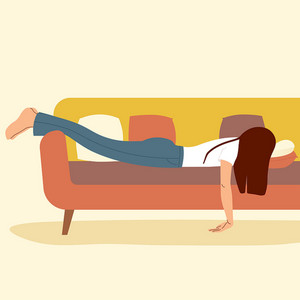
It's called the micro retirement, some call it the mini retirement, and it's essentially a temporary, intentional exit from your working life, lasting anywhere from a good few weeks up to several months.
Here's the interesting part.
This concept isn't actually new.
The term was popularized way back in 2007 by a guy named Tim Ferriss in his book called The 4-Hour Workweek.
Farris envisioned it as a tool for the new rich, a part of a designed lifestyle where you sprinkle frequent breaks throughout your career to enjoy life now.
But today, Gen Z is redefining this micro-retirement not as a luxury lifestyle choice, but as a survival tactic against chronic burnout.
It's a complete disconnection.
It's a full reset button.
But what does it tell us about the state of modern employment when young people feel compelled to kind of quit their jobs just for a couple of months rest and beyond, the mental health benefits that you would get from that?
What about the serious financial and career risks that they are taking by choosing present freedom over future security?
It's an interesting concept.
I was surprised to learn that it's not new.
It does go back a long way, to two thousand seven, but it's kind of been redefined.
So, In this year 2025, what exactly is a micro retirement and how has Gen Z's application of it changed from maybe almost 20 years ago?
Yeah, now I think the mini requirement or micro requirement is characterized by its purpose and duration.
And it's a sort of a short, deliberate career pause, typically lasting between two weeks up to several months.
And so the duration is critical, because it's long enough to have this break away from your career entirely, but not completely that you just have a short break.
And it can often plan to be frequent, reoccurring every few years.
So, instead of waiting for decades until you are 60 or 65 or 70 for that big retirement announcement, you can start taking shorter, more frequent breaks that can ensure a higher quality of life throughout your career.
Can also now think be a necessity for Gen Zs to escape away from the burnout that they experience in their workplaces.
So escaping this kind of always-on burnout work culture does?
Does that mean you need to like work more so that you can have more holidays after that kind of period of time and then you have that kind of gap?
Well, I think that's a big question.
When it comes to the risk,
Yeah, risk and then how companies are responding to, but we'll get to that in a little while.
There is statistical evidence to support that this is growing trend.
There was a major global survey that showed that almost half of Gen Z workers from America this is where the story initiated yes, but also globally to 46 anticipate leaving their current employer with within two years.
That's not good. for the employers.
It's really high mobility and it's kind of indicative of Gen Z searching for, perhaps for a better fit, work wise, but also just trying to avoid burnout in general.
It's like a career pause, I suppose we can look at it like that.
Also, there's a significant portion of resignations among workers under 35.
And that is being done for self-care.
There was another study that found 35 of Gen Z workers who quit their jobs did so without another job lined up.
And the reasons they did that was because they said they were exhausted, they needed a life reset and only a micro-retirement could provide provide that.
I'll share just a couple of more statistics for you here.
More than half of employees globally 54 say they're actively thinking about how to manage their mental load.
Again, that's talking about the work stress, which could lead to a micro retirement.
And then about 42 percent of young workers report that, being reported being highly interested in taking a year long sabbatical at some point in their career.
And when you compare that to baby boomers, that was only 23 percent.
So these young workers are under a lot of stress these days.
They're under a lot of stress.
And according to these statistics, they're not willing to simply live through it.
Yes.
Exactly.
And I think also it sort of indicates a change of mindset of how they view work.
I think, for example, for baby boomers, they may view work as essential and necessity in their life.
But maybe now what Gen Z is saying is that work, it shouldn't be the center of my life, but shouldn't we only be a part of it?
So I shouldn't be, you know, 100 dedicated to it.
It sounds like we're kind of a blaming a generation of people, but it's.
It's also connected with the whole change of the society and maybe the market as well.
Because when you're working in companies nowadays, the competition is there and can be quite fierce.
When you want to keep a job or having a job can be already like challenging.
So I think it is like young people or Gen Z.
They're like claiming that having high level of stress for a good reason and I would say this kind of mode is quite good and giving people an opportunity to actually experience or have the time, because because back then we talked about gap year right, people quit their job and take a gap year Maybe.
And then after I go back to workplace.
Yeah.
Students will do that sometimes, too.
Yeah.
So and then I think this is a even a gap year with less risk.
I would say because you are still employed in this company, but you can have time to actually maybe recover or to rest.
Well, the risks, I think, are there.
I don't think this is risk-free.
And I'll talk about that in just a sec.
But I'm curious first, would this concept of a micro-retirement, would this go over well in Chinese work culture?
If you approached your boss and said I would like to take a break for four months and then come back to my job?
How does that sound?
What kind of response would you expect?
Well, no, of course.
Four months, what are you thinking?
Well, that's a micro-retirement.
But I don't think right now in the systems we have a vacation that's long enough to be can be stretched out into months.
And also, I think unless the maternal leave.
Yeah, the maternal leave, or you're handing your hospital leave, sick leave ticket.
But if you are just taking days off or months off just, for example, for a hobby or for side projects, I don't think a lot of companies will be very supportive that currently.
Yeah, I would say there are like similar situations, right examples but they're not exactly the same, because you can actually like accumulate a lot of compensatory leave and then from work overtime.
And then combine these, leave also your regular vacation days to take a slightly longer break, maybe long enough to be one month or several weeks.
That's, I think, the longest vacation that I can imagine.
If you take an extended break, let's talk about the risks now, since you brought it up a moment ago.
A micro-retirement is not a right.
It's kind of a privilege.
But it also does come with a financial toll.
Yes, that can be worked around.
You mentioned it briefly.
Companies are trying to adjust.
Some, not all, by the way, but some are.
But there are risks for the employee themselves.
Yep, it's going to cost you a lot of money, of course.
It's going to drain your savings, perhaps, or increase your debt.
But I think Maybe two.
The biggest risk might be for career stagnation stuck treading water, career-wise.
Think about that.
You're stepping away from the office for a few months for a break.
Well, life doesn't cease to exist in the office.
It carries on.
So therefore, the opportunities for promotion might be missed.
And maybe...
Even if your company allows this kind of micro-retirement, maybe there's an unspoken penalty there.
Perhaps from the management, even though they approved it.
Or perhaps from your co-workers, who might look at you and say lazy, not committed to our team, not committed to our company.
That can also lead to, for example, complaints.
For example, if you walk away from your work for, let's say, one month And that work still needs to be carried out by somebody else.
And that means somebody else in your team need to carry on with that project, so that can also lead to problem within the team about how to reorganize and coordinate these workload.
And so when it comes to, this topic of micro-retirement.
And I also think that the insecurity and instability that can come out of it is also a big concern for me at least.
I just can't imagine walking away from a job with no one lined up in the next.
No, but with a micro-retirement, you're not quitting, right?
The agreement is you are coming back to your work.
Your position will be there.
But would you still feel guilty about it?
I would.
Yeah.
I think another aspect is that some people may worry about.
Okay, I've laughed for maybe a month or half of a year.
But the operation of the team is working smoothly.
And that means that person is replaceable because the team doesn't need you and they can operate so good.
Well, that doesn't mean that you're not valuable.
It doesn't mean that you don't have a lot to contribute to the team.
It's a bit arrogant to think if I walk out the door of this building, this company will cease to exist.
I don't know how many people that would apply to.
Yeah, that's another perspective, and when people are like worrying about my existence may affect the team, because a lot of times people have that occupation for That thing.
Right.
And if you're not there and the thing goes well.
Well, OK, let me challenge you guys a little bit here.
Maternity leave. is in China it's six months?
Eight months.
It can be stretched from four months to eight months depending on the companies.
So does that mean a pregnant lady is replaceable in the company?
It's the same kind of question, isn't it?
You know, you're leaving, you're taking time off to raise your child.
But here in this micro retirement, you're taking time off to take care of yourself.
Why is that different?
It's no different.
But you know, when it comes to maternity leave, there is also problem with that.
Is that because you are walking away from your, your position for at least four months, sometimes you will be replaced after you come back.
That happens multiple times among many countries and many companies.
So when you are talking about this micro retirement, there is also a risk that when you come back, Your old position and your old work, your old project, is no longer yours.
Yeah, I think that's kind of to be expected.
And I would assume that employees would kind of know this.
Perhaps they're just willing to accept that.
It's interesting that stress and burnout has always been there for decades.
It's not new.
It's just how to approach it. is what Gen Z is handling a little bit different.
And because Gen Z is interested in this type of thing, companies are needing to respond somehow, some ways.
So how are companies reacting to this?
Some of these forward-thinking companies are proactively integrating these paid or unpaid sabbatical policies and some progressive organizations are even recognizing that a micro retirement is a powerful retention tool and a rested and healthier employee is more loyal to and also productive, and they are implementing formal leave structures to avoid losing top talent, because i think that is a kind of positive cycle that they, that employees, have a good wellbeing and they can be indeed and productive and then create more benefits for the company.
Companies, some companies are doing this too.
So, for example, an employee might work 100 of their hours but only receive 80 of their salary for a period of time.
So that means you'll get your paycheck reduced by 20 for a I don't know a year and the company saves that.
It's not that you're not getting paid, it's just that the company is going to hold on to that money for you.
Then when you take your three or four or five month whatever micro retirement, the company gives you the money because you've worked for it.
The rest 20 yeah yeah, and That's how you fund your micro-retirement.
But that requires a great amount of cooperation from the company to do that.
It's a really interesting concept.
And I guess for the top top, top tier talent, then maybe the answer might be yeah okay, we can negotiate that.
But for...
The average employee at a company, I don't see this becoming a normal thing.
Yeah, it would be just very inconvenient.
A lot of coordination, a lot of planning for the company.
I don't see what can motivate them to put that as a systematic restructure.
Yeah.
And then what if Yushin says I'm taking a micro retirement, see you in may?
And then i say well, i want to do that too.
See you in june.
And then feifei says well, i'm going now too.
Then i'm going to be gone until uh, next november.
Who's going to be on round table?
Yeah, exactly.
That can be a big problem.
That probably means the company needs to hire more just in case.
So then where does the company draw the line?
The lines need to be drawn.
Who's able to apply for this type of thing and who's not able to apply?
It's a big headache, I think.
But still, the concept is there, and it's a real thing.
Some companies are responding in a very positive fashion.
Final question.
Would you ever consider doing this? you should.
I would.
As a person who just got back from the relatively long vacation.
You have one foot out the door already.
Yeah.
And as I said, there's an opportunity for you to have a... I think it's different.
Let's say, a long, long vacation and a like four day work and three day weekend.
Which which strategy that you prefer?
I think I may pick the long vacation.
Hmm.
For me it would be very difficult to say yes, because you know for many Gen Zers they don't have two kids at home screaming and you know running around.
Extra details.
Yes.
Sorry.
But the thing is, I just can't imagine taking, for example, four months off and staying at home.
So I think that depends on your life, what's period of life you're in right now.
To a working mom, that doesn't even sound like anything realistic in this world.
Again, though, it's real and it's happening and it's kind of an interesting thing to talk about.
You're listening to Roundtable.
Coming up next, does your pet care what kind of music it listens to?
Looking for passion?
How about fiery debate?
Want to hear about current events in China from different perspectives?
Then tune in to Roundtable, where East meets West and understanding is the goal.
You're tuned in to Roundtable.
I'm Steve with Yushin and Feifei.
We all know the power of a good playlist.
Perhaps for you it's a slow jazz track to unwind after work or a motivational pop hit for a Monday morning run.
But what about for your daughter, dog or your cat if you play music for them?
Are you helping them or are you just projecting your feelings onto them?
Well, it turns out the answer is a little bit complicated.
Animals do indeed respond to sound and to music, but the relaxing track that you might enjoy might not work for your dog.
And then the one that works for your dog might actually stress out your cat.
To me, this is kind of an interesting topic.
So does music affect all animal species in the same way, or is it a species-specific response?
The answer is it's not universal.
Yeah surprisingly, some music that sounds pleasant to human ear can be even played softly, can feel much faster and high-pitched to, for example, dogs.
So when we are playing, for example, a templed jazz music, maybe the dog in the same environment may find that to be very disrupting.
Maybe
And so that means music sometimes needs to be tailored to different species, because they respond differently too.
They do.
This is the science behind it.
Research shows that it has to be in the same acoustic range and tempo of the animal's natural communication style.
And that means music, for humans will often sound completely alien to a dog or another type of species and thereby ineffective.
And the reason for this is animals process pitch and tempo differently than humans do.
So we tend to perceive music based on our own auditory range, what we're capable of hearing, and the vocalizations too.
But a dog... hears sounds at a much higher frequency.
Therefore human music, even if you do play it softly for a dog, it'll sound much faster and the pitch will be much higher.
So Adele or Taylor Swift is an amazing... They are amazing singers, but your dog doesn't think so.
Maybe think they're electronics.
Maybe.
That makes sense, right?
Even human... like perceive music differently.
Some people just don't like that type of music and they think they're just noisy, let alone their different species.
So if the music then is too... So if animals will perceive...
Dogs and cats will perceive music to be at a higher pitch than we are hearing it.
Does that mean that the faster, higher pitched music or loud music is actually hurting your dog?
Yeah, it can mean that, for example, loud and fast music can increase their level of stress, and exposure to genres like heavy metal in particular, which are fast and very, very chaotic, can cause increased heart rate levels, variability and visible agitation in dogs.
So maybe, when you are playing heavy metal loudly in your apartment, think about your pets before you do that.
Yeah, you're not hurting them per se, but they're not enjoying it.
Yeah, but slow genres like classical or country music are uh, most effective for calming dogs.
And to achieve music yeah, to a um, achieve a genuinely calming effect, the music needs to have a slow tempo that mimics a relaxed heartbeat, which is why classical music and country music were consistently associated with decreased stress levels in dogs.
So if you're looking for some music to chill out your dog, then think about the dog's heartbeat and find some country music with that same tempo.
That's kind of cool.
All right.
Now, the cat owners out there are super mad right now.
We don't talk about cats.
Because we're not talking about cats, but we're going to do it right now.
So what about... the music that's best for cats?
Well, cats are much fussier than dogs and requires a truly specific sound profile to register that music as coming.
So they need music pitched higher than human vocals, because cats rely on high frequency sound, meaning music must be composed in the same frequency range as a purr or to effectively get their attention.
So human music tends to be pitched too low for them so they cannot really engage with that music.
Okay.
And also, music also must match the tempo.
The tempo of effective cat music is based also on the speed of their heartbeat, and their music is created using sonic elements similar to their own vocalization.
Not your purse, maybe.
Here's a tip.
If you're a cat owner, this is what the experts say.
Cats like audiobooks.
But here's what you do.
Record it yourself.
Or if you don't want to do that, then you can leave a talk radio station or podcast.
Like Roundtable China.
Perfect for cats.
We've never thought about this before.
We've got a whole new target audience now.
But seriously, the science says that these types of slow tempo shows or audiobooks or even music can really take your cat's stress away.
I think that's a cool idea though recording a bit of an audiobook for your cat with your own voice, so they can enjoy it when you're not in the house.
How about that?
That's our last tip for today.
That will do it for Roundtable 4 this afternoon.
Thank you very much for sharing your time with us.
For Yuxin and Feifei, I'm Steve.
Enjoy your time, and please do join us again.