This is Hidden Brain.
I'm Shankar Vedantam.
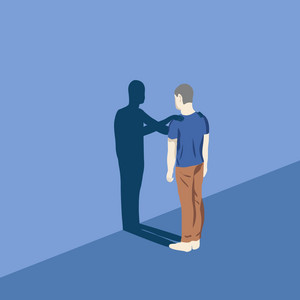
I am invisible, understand, simply because people refuse to see me.
So says the protagonist in Ralph Ellison's 1952 novel, Invisible Man.
Readers never learn the character's name, but they're invited to experience his life.
Walking down the street in Harlem, passers-by look right through him.
Diligently working at a paint factory, his efforts go unnoticed.
He joins a political organization, but he is treated as a pawn, a tool to advance the agendas of others.
Ralph Ellison's novel was about the dehumanizing effects of racism, but the feeling of invisibility affects many people.
I recently met an older woman at one of the stops on a Hidden Brain live tour I've been doing across the United States.
She told me that when she walks through a mall nowadays, people look right through her.
It's as if she isn't there.
In a 2023 advisory, former U.S.
Surgeon General Vivek Murthy said that social isolation and feelings of invisibility profoundly affect workers in many fields.
In a conversation on Hidden Brain, he called loneliness an epidemic that is having profound implications for depression, heart disease and public health.
This week on Hidden Brain and in a companion story on Hidden Brain Plus, the human need to be significant and what happens when this deep yearning isn't met.
Also, how to help others be seen and be seen ourselves.
As a species, humans have certain non-negotiable needs.
We need air, we need water, we need food.
Beyond these basics, however, we also have psychological needs.
We need to feel like our existence matters, that we are valued.
Psychologist Gordon Flett remembers a moment like this in his own life.
It started when his wife noticed something about his complexion.
I woke up one day after having some pain, and my wife said, you don't look good.
Your skin is turning yellow.
And we phoned the hospital.
They said, come in right away.
And I had a problem with bile duct issues, where they figured though, that if they addressed whatever blockage there was, that I would get better.
Instead, I didn't get better.
I started to get—went deep yellow in terms of jaundice and eventually orange.
And I'm talking pumpkin orange at one point.
Ended up losing—
40 pounds, had four different procedures where they thought they must have just missed something.
And then eventually, the one doctor who I ended up on his operating table, who I'd never met.
He figured it out.
I call him my doctor house like the TV show.
Because he figured out there was only one variable that was left and that was the IV that was going into me.
Somehow I had a weird interaction that actually had put me in liver failure for almost three weeks being hooked up to IV.
And when they took me off the IV or they replaced that with something else, then I started to get better, to the point I was able, after three full weeks in the hospital, being able to go home.
So on the very last day, I'm there at night and a nurse comes in wearing a Late Night with David Letterman t-shirt.
And she goes, you don't know me, but I know you, and I know what you've been through.
And she says your file is like three feet thick with all the tests that have been run on you and you had a very close call.
So I'm just here.
I know you're medically okay now and you're putting back the weight and you're restoring some color.
But I'm just here to make sure that you're okay in a mental health sense, that you're okay, because it's quite a trauma you went through and some dark thoughts.
So she sat with me for three hours.
Wow.
Two in the morning to five in the morning.
Wow.
And we talked about everything life, the big picture, her brother with the David Letterman show, because that's where she got the T-shirt.
And I thought this is the essence.
You know what an ideal world it would be if medical people had the time and the resources to be able to sit there and say I'm now giving patient care in terms of the person.
You know I wanted to hug her at the time because I just thought how does somebody be that in tune with what somebody needed at just that time?
And also the fear of knowing that this could happen again and trying to dispel some of that.
So, you know, thanked her profusely at the time.
And maybe she's still out there and she'll hear this segment.
At York University in Canada.
Gordon, who goes by Gord, studies the physical and psychological conditions that can help people flourish.
He says, interactions like the one he had with his nurse remind us that we matter, and mattering is a feeling that is vital to our well-being.
God also researches what happens when we feel we don't matter.
He remembers a time more than two decades ago when two students at a high school in Colorado felt like they were invisible.
Eric Harris and Dylan Klebold had families and a few friends, but they were obsessed with the notion that they didn't matter to the people who held the most power in their social world the popular kids at school.
Dylan's journals show a kid who felt like a ghost, wandering through the halls and feeling completely overlooked and ignored.
On the other hand, Eric felt he was actually better than everyone else, and it made him furious that no one recognized his greatness.
They fed off each other's bitterness, eventually deciding that, since they couldn't get the respect or attention they wanted through normal means, they would take it by force.
To fix that feeling of being nobodies, they planned a tragedy that they hoped would make them the most famous names in the country.
They didn't just want to commit a crime.
They wanted to stage a massive cinematic event that would be studied for decades.
We now know that event as the 1999 Columbine High School shootings, in which Eric Harris and Dylan Klebold killed 13 people and injured more than 20 others.
More than a quarter century later, in 2025, the death toll was raised to 14, after a woman who was paralyzed in the shootings died of complications related to her injuries.
Gordon Flett says the two killers at Columbine High School are an extreme example of a theory propounded by the social psychologist Ari Kruglansky.
People will go to extraordinary lengths to feel noticed, to feel significant.
They decided that they would live in infamy by shooting at the school.
And this idea comes from work by Kuglansky.
The notion of people wanting to be significant by doing something, even though they realize that it will harm them and they'll no longer be with us.
But they'll take means that are quite violent as a way of showing and proving their sense of significance and value, but in a very heinous way.
You know it's sad when it gets to this point that people don't get their attention satisfied through more positive means.
Gordon has spent time reading the journals of the killers.
He says they paint a chilling picture of social isolation and alienation.
You see a lot of issues with self-worth, a feeling of a sense of being bullied and being ignored and ridiculed.
A strong feeling that arouses both depression and anger is a sense of being humiliated.
So often you'll see this, and there are multiple accounts.
There are differences between the two boys in terms of their personalities.
But this was a theme of, you know, I'm not getting the respect I deserve.
I need to get some respect, and I'll do something you'll never forget.
Typically, Gorton says, most of us seek to make our mark on the world by achieving something of value, by doing good deeds.
Influencers might try to create a video that goes viral.
Athletes might try to break some long-held record.
Entrepreneurs might try to build a successful business.
But if those means to achieve recognition are closed off to us, some of us turn to more drastic measures.
Typically, it's the case of some form of mistreatment or being ignored or being made to feel invisible that arouses these feelings of needing to be significant.
And you can do that through positive ways of interacting with people, but you can also affiliate with people who are less than desirable and engage in antisocial behavior that will impact others.
And This need to matter will become expressed when it's frustrated, ideally in socially acceptable ways, but often in terms of delinquency, gang activity and so on.
And I try to remind myself, when things happen that are really troubling, that you know, everybody has a need to matter and that this will get expressed one way or the other.
In August 2005, a huge storm hit the Gulf Coast of the United States.
Hurricane Katrina of course caused devastating flooding and widespread destruction across Louisiana, Mississippi and Alabama.
In the aftermath of the disaster, people had many basic needs.
They needed shelter, they needed food, but they also needed to feel like they weren't abandoned.
Talk about this idea that after a mass disaster, a huge problem as a collective, we can feel like we need to matter.
Yes, I think a key time for that sense of mattering is when you really do need people to step up and show you some comfort and some support.
And the example of Hurricane Katrina and the events in New Orleans and the accounts that people have of feeling abandoned really stuck with me because in fact I was at a conference last not too long before that.
And I know there was stories of people going to the casino which I went to with a friend who thought she'd lost her purse there.
And the notion of locking the doors and not opening the doors on people who are desperate for some safety really troubled me.
In terms of the accounts that I heard.
So this is when you'll feel the sense of not mattering quite acutely when you're You're in need and then somebody's treating you as if you're insignificant expendable, worthless.
So it's absolutely critical, I think, to show, when people are really down and needing help, that sense of hey, you're recognizing what they're going through and providing that comfort before it escalates and magnifies their despair, their stress and even maybe trauma.
You know, a few years ago, we had former U.S.
Surgeon General Vivek Murthy talking to us on Hidden Brain, and he was describing a time when he visited Flint Michigan, and this was shortly after people there suffered from a major contamination in the water supply.
And one thing I remember he told me was that people were desperate, but not just for their water supply to be fixed, but for the sense that the world was not moving on, that the world actually stopped to notice what was happening.
To say we recognize and we empathize with what you're going through.
Yeah.
And anybody who's in tune with people like he is would know that, at a basic level, we need to know that we matter, especially when we've been made to feel like we don't matter.
And unfortunately, some people are really needing a lot to know that they matter, because they've got such a life of being marginalized and ignored and invisible that even when somebody's initially reaching out they might say well, you know, that's just more of the same, not realizing that somebody has a sincere interest in their well-being.
Above and beyond what we need to survive.
In a biological sense, human beings need to feel valued and special.
When we are in trouble or in pain.
In particular, it's important to feel that we are not alone, that what happens to us matters to other people.
When we come back, the urge to feel seen and heard and cared about, and the consequences of feeling like we are not.
You're listening to Hidden Brain.
I'm Shankar Vedantam.
This is Hidden Brain.
I'm Shankar Vedantam.
Gordon Flatt is a psychologist at York University in Canada.
He studies the psychological conditions that people need in order to thrive.
Gordon, early in your own life you were fortunate enough to have many experiences of feeling like you were seen and heard and valued.
But I understand that being around your grandmother in particular made you feel like a mini celebrity.
Tell me that story.
Yes, yes.
Me as well as my sister Karen, who since has passed.
But I was the firstborn grandchild, so that automatically comes with a specialness.
And I would spend summers and various days down at my grandparents' place, which was not too far from where we lived.
And we would go down on weekdays to visit both grandmothers at the cafeteria up the road which was run by my one grandmother, the one who lived there, and my other grandmother as well.
So when my sister and I would go, it was literally like.
Where's the red carpet?
It was the only thing that was missing.
Here they come.
And, on top of all the attention which is critical to the sense of mattering, is people showing an interest in you, lighting up when you come in a sense of attention to you, getting their full attention.
On top of that, we could order anything we wanted because it was my grandmother's cafeteria.
So for me that was usually macaroni and cheese and chocolate milk and And you know, but that's not why we wanted to go there the most.
It was just that incredible.
And you know all the people that worked for my grandmother as well, including my other grandmother.
You know it was really like, as you said, being like a celebrity.
And so when I came into this field, I started to think, well, you know, I've been fortunate.
And it took me a very long time to realize other kids weren't so fortunate, but we were.
So when you went to this cafeteria guard, it wasn't just your grandmothers who were rolling out the red carpet.
It sounds like it was everyone who was there.
Yeah, yeah.
There was a staff of about six or seven people, but also people who worked there were getting their lunch.
And my grandmother said, well, we told everybody you were coming.
And it's like...
You know, and, you know, ideally you have at least one person like that.
You know Uri Bronfenbrenner, the famous social scientist who was involved for many years trying to make things better in the US and elsewhere.
He said every kid needs at least one special person who makes that kid feel like they can do no wrong and essentially is their champion.
I think we also need that as adults, too.
We need somebody in our life who sees something special in us and who really believes in us in a way that maybe other people have overlooked.
So many years after those memorable experiences at that cafeteria, you were sitting in a library reading a textbook as part of your graduate studies in psychology and you came across this term that was new to you.
What was this term?
Give me the context, Gord.
Sure.
Well, we're talking about the term mattering.
And I'm reading this chapter in this book by Morris Rosenberg, who originated the term and the focus on mattering.
And in about five pages of an overall chapter, he said this might be the most important element of the self-concept, particularly for people of certain ages, adolescents in particular, with all the identity issues and the need for reassurance, and also when we get older we might feel that we're being lost in the shuffle.
At that point,
One of the things that Morris Rosenberg wrote was to believe that the other person cares about what we want, think and do or is concerned with.
Our fate is to matter.
So that's how he defined what mattering was.
Yes, yes.
And there's so much in those three lines.
If somebody said to me pick two quick words to say what is mattering.
You know, Somebody cares about you and somebody appreciates you.
And not just for what you do, but who you are.
Cares about you as a person, cares about you and appreciates you as a person.
I often think about people who are in such important jobs and they get burned out and dejected.
And I thought they've lost sight of the fact that they're cared about not just in terms of what they offer people, but also in terms of who they are.
Yeah.
One of the fascinating things that Morris Rosenberg and others have noticed is that there's almost a cyclical pattern in mattering.
So we can matter a lot when we're small children, because of course we can be the apples of our parents' eyes.
But then when we hit adolescence, we sometimes might experience a trough.
And again, when we're adults and we have careers and the careers are thriving, we can again experience a peak.
But then as we retire and as we move into our retirement years, we can experience another trough.
So it's not like mattering is one linear thing across the lifespan.
It often has this pattern of waxing and waning.
Yes, it can fluctuate because you're not always in your grandmother's cafeteria.
And one transition that we focused on was moving from elementary school to high school, where you might suddenly feel like you're lost in the crowd.
You had special teachers and friends, and now you're just in a sea of other people.
So there's immediate challenges and that's why it's important for any efforts on mattering promotion to try and get to what I call deep mattering, where you know that, despite the world going to hell and feeling that things are going to hell in your own life,
That you still have those people in your life who care about you, who can be sort of like your touchstones in terms of your sense of worth.
And you still want to have as part of that identity that people care about you and appreciate you and indeed will not forget you.
So when we don't have this feeling that we matter, when we feel invisible, you say that this can produce very powerful effects.
Talk about the effects of not mattering on social anxiety, Gord.
First of all, I should say that when we talk about not mattering and the pain as opposed to the joy of mattering, we talk about a concept called anti-mattering, which is that sense of feeling invisible insignificant, unimportant.
And in the case of social anxiety, it's very easy to be too convinced that other people are going to see you in a particular way.
There's a fear of negative evaluation that drives a lot of social anxiety.
But here with a mattering focus, it'd be the fear of a negative evaluation in terms of people don't even think about me or, if they do, they just see me as somebody who's irrelevant, who's unimportant.
And as a result of that, you can become very avoidant because you're just expecting.
You're going to find more of that treatment waiting for you if you happen to encounter these people.
So there's a lot of advanced isolation with people who are socially anxious because they've got a negative expectancy.
And that expectancy includes, I'm not going to be significant.
I'm going to be seen as somebody who's less than important.
Are you saying in some ways that, as people perceive that they are not important in the eyes of others, in some ways they become less important in their own eyes, that it triggers self-criticism, self-hatred?
Yes, it does.
I think, especially for young people and perhaps older people as well, that the feeling of not mattering is used as a self-evaluative cue.
So you have the self-criticism and even self-hatred, but you're also confronted with hey, my life's not going the way it's supposed to go and it must be something about me.
And what happens is sadly, people internalize what they see as the messages in their life, so that they can now not matter to themselves.
So the key that I try to say to younger people is know that when you're going to get this, you're going to be getting it through messages on the Internet, social media.
The key is not to internalize it.
So people who feel like they don't matter also end up experiencing more conflict with their friends and family members.
What's the connection here, Gordon?
I think it's a detachment.
Sometimes people are carrying around an anger or resentment.
You know, how can they treat me like this?
And that will spill over in terms of daily interactions, where there'll be a low level of anger or hostility.
And we did show in some of our research on this, with just self-report measures, that when asked to rate themselves in terms of daily experiences, that those with a higher level of anti-mattering said they had more conflict and less positive engagement with other people.
And what would happen if you're very sensitive to that is then you'll become more removed from other people and more aloof, and you might actually be generating some of those interactions by people saying why is this person being so standoffish to me?
And you have to remember that it's an interaction between two people or more in a dyad.
And you can generate your own stress by the way that you're responding to how you think other people are seeing you.
So it's almost like a vicious cycle.
I think that I don't matter to you.
Maybe in response, I derogate you or I hold you at some distance.
You perceive me now as being standoffish, and now I have even more evidence that I don't matter to you.
Yeah, and I can go on to the point where somebody can feel so isolated and alone.
This is a big thing about that mindset and that interaction pattern is that there are some people who then say I don't matter to anyone.
And, you know, in fact, they do, but this is what they've convinced themselves of.
So that's why it's critical that one caring person at least shows them that they do matter.
So at least don't go into the I don't matter to anyone mode and can start to look at things in a more differentiated way.
What's the relationship between not mattering and depression and substance abuse?
Yes, there is extensive research on the depression side and a little bit of research so far in terms of substance abuse.
We just published a new meta-analysis showing that anti-mattering, across about 20 studies or so, is strongly associated with depression, even more so than the positive feeling of mattering being linked with less depression.
There are a few studies now linking not mattering with addictive tendencies, including social media addiction.
And there I would look at it as these are people who have likely internalized the feeling of not mattering, so that they've got into the sort of the what the hell, I'll do whatever I want, because I don't have much happening and I don't see a positive future.
So I'll do whatever that is and not worry about the consequences.
So the most extensive research so far has been focused on two themes the link between the feeling of not mattering and depression, and the link between the feeling of not mattering and loneliness.
Every time I read the statistics on suicide, Gord, I'm really taken aback.
Some 50,000 people die by suicide in the United States every year.
I'm sure the number is high in Canada as well.
And, of course, worldwide.
I think the statistics suggest that more than 700000 people a year kill themselves.
Is there a connection between a feeling of not mattering and extreme actions like attempting or contemplating suicides?
Yes, there is.
It's shown both in terms of research as well as in case studies.
And in terms of the research, there's about 10 studies now that show the link between the feeling of not mattering especially with our anti-mattering scale and suicidality.
And some of these people also tend to be perfectionistic, where they feel that too much has been expected of them and they feel that they don't matter.
And the sad part is often with people who have clearly reached some conclusion that they don't matter.
They've convinced themselves that they are so insignificant.
But importantly, I have to point out that the main slogan of the suicide prevention program in the United States is you matter.
And that slogan was out there before any research was done and I think it was because people realized that there's a life-saving potential to showing somebody that they matter and also finding a way to get the people to feel that sense of mattering so that they're not going to get to that point.
And it's so uplifting when somebody says I'm not feeling great today, I don't matter, and then And legions of people jump in saying yes, you do.
You can call me total strangers or people that know them.
And I'm convinced that there's an enormous potential here for suicide prevention, where it's not just the slogan, where the promotion of the feeling of mattering
And how to reach out to people when you're feeling psychological pain and wondering about your significance.
That could work wonders in terms of saving many of the people that you referred to.
And it's important to note here for anyone who may be struggling with thoughts of suicide help is just a call or text away.
In the United States, listeners can reach the Suicide and Crisis Lifeline by calling or texting 988.
For those outside the US, there's a link in today's show notes with information on how to connect with support in your country.
Gord, we hinted at this a little while ago, but research suggests that our unmet need to feel like we matter is linked to aggression and violent behavior.
We talked about the Columbine school shootings, but I feel like almost every time there's a report of a mass shooting or a school shooting, it invariably transpires that the shooter was socially isolated or felt humiliated and ignored for years.
And sadly, you know when you think about it.
When people are at the point where they're willing to do something where they will no longer be with us, it clearly is something that means that they've lost the sense of mattering in a positive way.
The way I talk about it is, well, you've got an incredible double-edged sword here.
There's the joy and the happiness and the sense of contentment and engagement that comes from feeling like others see you as important and paying attention to you.
But the flip side is the pain of the feeling of not mattering, or the fear of becoming someone who doesn't matter.
And then that can be channeled in many different directions, often turned against oneself, but sometimes it's turned against other people.
And you know, in that case anything goes because of that sense of not having a concern about the future other than being somebody who's remembered.
But it's a remarkable thing in terms of the intense feeling, both for the positive, when you feel like you matter.
But everybody knows what it feels like when somebody seems to go out of their way to make you feel like you don't matter.
And if you have a life like that, eventually you can build up the kind of resentment that potentiates many of these acts.
So in some ways, people are saying you know, I feel like I don't matter, but I'm going to prove to you that in fact I do matter and I'm going to do it, you know, at the point of a gun.
Yeah, exactly.
It's like you're going to say, okay, you know what, I do matter.
You people were mistaken about me and you're going to get to think this, to remember by, and it's so sad because you know innocent people who have nothing to do with this person are lost in the process.
And that just shows you how personal mattering is.
I say, you know, it's something that's modifiable, but it's something that's very, very personal.
And it's not the same as belonging.
Belonging is you have a place at the table.
I say mattering is do they hear your voice when you're at that table or do they ignore you and talk over you at that table?
So it's not the same as belonging.
It's not the same as social support.
It's that core sense of worth in terms of how you feel you're regarded or disregarded or unregarded by other people.
You say that once a sense of non-mattering is in place, there are several factors that can make that condition worse.
And one of those is perfectionism.
Why would there be a connection between perfectionism and a feeling of not mattering?
The bottom line is, there's many thousands, millions of people who have this notion of well, if I am perfect, I will matter to those people.
But it's a very conditional sense of mattering.
It's like I have to be perfect. in order to get the love, the respect, the attention, the interest.
And unfortunately, my colleague has told me that he's had some famous people that he's spoken to as his private practice.
And he says, these are people with remarkable achievements.
And then they learn, wait a minute, I've done this remarkable achievement, but it didn't matter.
I'm still being treated this way.
And I
I remember the story of Marvin Gaye, and he, of course, was a famous singer with all kinds of hits sexual healing, heard it through the grapevine and an icon to many.
And unfortunately, what happened with him was he eventually got into a dispute and was shot by his father.
And Marvin had a situation.
I remember a story whereby he had one of his hit singles it could have been, I Heard It Through the Grapevine And he came to his dad and he had something like 50000 in cash.
And he put the cash on the bed and he said to his dad, okay, now are you impressed with me?
Now did I do something right?
And his father's response was something along the lines of all that matters is how you're viewed by the Lord.
No, that money doesn't do it for me.
It's how you're regarded in terms of the impossible standards of some higher being that's judging you, which is the essence of what we call socially prescribed perfectionism.
So there you have a case of, you know, now do I matter?
I've done this.
Nobody else has done this.
I've got the hit song everywhere.
And it still wasn't enough.
And this is what sadly happens with some people who are trying to strive for significance through being perfect.
They discover that the interpersonal issues are still there.
They're not getting that sense of importance, that sense of love and attention that they absolutely covet.
And it's very sad that many famous people still have the problems of not feeling great about themselves.
Due to that, unmet need to matter.
I can also imagine then, if people are measuring themselves up to these impossible yardsticks, that a lot of what they're doing then is comparing themselves to other people.
Yes, there's an incredible amount of comparison that goes on, and it's really destructive.
There's no way to win the comparison game, especially now when people are putting crafted images of perfect lives online that are not actually real.
But I do remember, in terms of social comparison.
The best example I can give of somebody who was a perfectionist, who compared too much, was the late great Brian Wilson, who just recently passed away, who suffered from extreme mental health problems that became well-known to everyone.
And he was comparing himself to the Beatles and driving himself to the point of right over the edge.
And at one point, he said that he couldn't keep up with the Beatles.
The Beach Boys, of course, were remarkable in their own right, but He needed to try and keep up with the Beatles in the heydays of Beatlemania.
Yet this is Brian Wilson, who becomes famous and has entertained people around the world and will continue to, even as his legacy.
But he was torturing himself through these comparisons.
And you know, the lesson to people listening would be there's no way to win the comparison game, even if you're somebody as famous as Brian Wilson, because you can always find a way.
Yeah, I mean, there's always going to be someone who has done something more than you, better than you, faster than you, is richer than you.
You know, how do you get out of that?
Yeah, I've heard Olympic champions talk about how they're frustrated because if they'd only not made a mistake including some of our own Canadian champions nobody would have beat that record for a longer time.
Yet, you know, you did it.
You won the gold medal.
Donovan Bailey talked about the mistake he made coming out of the blocks as he set the world record and won the gold medal at the Atlanta Olympics.
And later he's thinking about the mistake that he made, because he could have gone faster and then his record would have been protected longer.
Talk about how this feeling of anti-mattering is related to how we can become trapped in these cycles of rumination.
In some ways, you're hinting at this already.
Someone has accomplished something extraordinary winning a gold medal at the Olympics, breaking a world record is caught up in their own heads with what they haven't done instead of what they have done.
Yeah.
And I think not only are they caught up in terms of ruminating about mistakes and falling short.
I believe they also ruminate and brood over interactions where people have made them feel like they don't matter.
And what happens is that that then is a bridge to depression.
So imagine if you're feeling depressed and then you're also ruminating about why you're feeling depressed, and then you're ruminating and thinking over and over about why aren't people seeing me and treating me as more significant?
And why is my friend so significant and I'm not?
What is it about me?
And then people unfortunately conclude, well, they must be defective.
They must have some shortcoming, that and they're just getting treated the way they deserve to be treated, when in fact they don't deserve to be treated that way.
So Among people who are struggling with life's challenges, and also among those who seem to navigate those challenges with ease, there may be a shared sore spot.
The sense that, at the end of the day, they don't really matter.
The good news is that a sense of mattering can be consciously cultivated in ourselves and others.
When we come back, how we can foster a sense of being seen, heard, and valued for who we are.
You're listening to Hidden Brain.
I'm Shankar Vedantam.
This is Hidden Brain.
I'm Shankar Vedantam.
Have you experienced a moment in your life when you felt profoundly invisible?
Have you found a way to not feel invisible or to help others feel seen?
Use the subject line, invisible.
The drive to feel like we matter is deeply woven into the human psyche.
Gordon Flett is the author of The Psychology of Mattering Understanding the Human Need to be Significant.
Gord, you say that a feeling of mattering can be deliberately cultivated.
Are you saying in some ways that we don't have to wait for the world to make us feel like we matter?
We can start to do it ourselves?
Yes, that's the great thing about it.
We can get a sense of agency and a sense of importance by engaging in a pursuit of making other people feel better, making a difference.
I saw this with my wife's uncle who almost lived to 100.
He lived by himself in the house he was born with by himself for almost 100 years.
And he became the incredible volunteer to his community.
He would actually deliver Meals on Wheels to people who were younger than him, and he would cackle when he'd tell me this.
I'm in my 90s, and I'm giving help to people who are younger than me.
He was also the church organist for over 80 years because it was right around the corner the church from his time, from his home.
And I said to him one time, Derek, Uncle Derek, I said, how on earth have you got by?
Have you ever had experience of loneliness?
And he cut me off.
He goes, not even for a second.
He goes because I know there are people in my community who care about me but also rely and depend on me, which is a key part of feeling of mattering is that you can satisfy your sense of mattering by getting people who come to depend on you through coaching, mentoring.
Just being that person who reaches out to them when you're worrying about this and then it comes back to you.
So it's sort of like an investment, where you're investing in your own sense of well-being by doing that and establishing those relationships with people who care about you.
And the best kind of mattering is reciprocal mattering where you matter to each other.
You say that one way we can begin to foster a sense of mattering is to reflect on all the ways in which we are already making an impact on the people around us.
Say more about this idea, Gord.
Yes, people, I think, forget what they've done for other people.
They just lose sight of how much difference they've made in the lives of other people.
They say, everybody at some time has dark thoughts, but at that point that would be a great time to think about somebody who you've made a difference to, who would miss you.
So when we talk about in psychology, about mindfulness, I say we need to be mindful about mattering, and you know mattering mindfulness where we say okay, not just in the here and now, but how have we thought about ourselves in terms of making a difference to other people?
I want to spend a moment talking about how and why we lose track of what we have actually done for others and how we actually do matter to others.
I want to play you a clip from the 1995 film, Mr. Holland's Opus.
In that movie, Richard Dreyfuss plays a music teacher who is determined to write a great symphony.
He struggles to achieve this lofty goal and toward the end of his life, he feels like he has failed.
At a gathering to commemorate his retirement, a former student of his takes the podium and here's the clip of what the student tells him.
Mr. Holland had a profound influence on my life, on a lot of lives, I know.
And yet I get the feeling that he considers a great part of his own life misspent.
Rumor had it he was always working on this symphony of his, and this was going to make him famous.
Rich.
Probably both.
But Mr. Holland isn't rich, and he isn't famous.
At least not outside of our little town.
So it might be easy for him to think himself a failure.
And he would be wrong.
Because I think he's achieved a success far beyond riches and fame.
Look around you.
There is not a life in this room that you have not touched.
And each one of us is a better person because of you.
We are your symphony, Mr. Holland.
We are the melodies and the notes of your opus.
And we are the music of your life.
What do you hear in that clip, Gord?
What's going on?
Mattering is so subjective, where people can very easily lose sight of having an impact on others, that they don't realize.
This is quite common with teachers, where they don't realize they get frustrated, maybe focused on the one student who doesn't seem to be getting it, rather than all the ones who are getting it.
And a key thing is that mattering is subjective, that it's our appraisals of how we think.
Do we matter to others?
Are others holding us in esteem?
That's why it's very important to show somebody they matter in a way so it's not subjective.
And in the clip of course the famous clip of that student is the governor, who's come back now to be part of the band to play Mr Holland's opus that he never got to have.
And I said how wonderful it would be for everybody who's facing a job transition, whether it's retirement or whatever to have people come and just express their appreciation and just tell a very quick story.
So I mentioned this at a conference just back in the fall of last year.
And in the question period a teacher put up her hand an educator, and she said this notion of not being able to see what effect you've had on others.
She goes.
I was recently contacted by a parole officer of a former student who said that the student provided her name as somebody to contact to essentially the character reference.
And she said, I remember the student as being someone who I thought I just didn't get through to.
But when asked, he said that he's giving her name because she is the only one who saw him for what he was, who really gave him a sense of being valued and cared about.
Yet she, until that point, had not realized that she actually had that kind of an impact on the young man.
So we're often not a good judge of how much impact we have of others, which makes me That sense of not mattering or not sure if you're mattering very insidious and potentially destructive.
And I've seen cases where I say you know, it's too bad.
The person never realized how much regard others had for him or her or them.
One of the things that has come up in this conversation that I think is worth flagging here is that mattering might be more a matter of Quality rather than quantity.
And what I mean by that is you don't need necessarily you know five billion people to think that you're great for you to have your psychological needs met.
You might need one person.
You might need two people.
And this speaks to the story you just told me.
This guy is in trouble.
He's basically speaking to a parole officer and he's referring the parole officer to someone who was in his very distant past, because that's the person his mind gravitates toward.
Yeah, it's such an excellent and underscored point that you know the quality of the relationships, the quality, that sense of somebody truly caring and you know they care and they're not going to forget you is a huge thing here.
And you know, in terms of that one to one relationship, I always come back to the famous book by Mitch Albom, Tuesdays with Maury.
And referring to a former professor as coach and going to see him right through to his final days due to his illness, as he's approaching the end of his life.
That's.
I think what made that book so famous is that people could relate to that basic feeling of having somebody who cares that much about you.
And nobody can take that kind of a relationship away and nobody can take that kind of feeling away from you.
You say that it's also possible for us to intentionally set out to make others in our lives feel like they matter.
If we are parents or teachers, for example, we can engage in what you call micro practices that promote mattering in children.
What are these practices?
Yeah, that focus in part comes from the school that's just two blocks away from where we live here, where it was an incredible I want to call it mattering milieu, because the principal, Peggy Morrison knew, even though there was almost 1000 children in the school, knew every child by name would go up and talk to them while waiting to go into school or at recess, could mention a brother or sister, something that was important to them
So it's partly, you know, acknowledging somebody, showing them the personal attention, knowing and remembering something about them.
If they've been away for a while, tell them that they've been missed.
Peggy Morrison is also the master of the lost art of writing a personal note to somebody.
Bottom line is when you give attention to somebody and more importantly, you give time to someone.
Hmm.
You're locked onto them in a way that they can feel unmistakably that, that they matter.
So, in addition to our role as parents and teachers, you say that as leaders of all kinds, as managers or coaches, we can help others feel like they matter.
And you tell a story about the famous football coach, Vince Lombardi.
Tell me that story.
This is a story that's in a book by Jerry Kramer, one of the offensive linemen who grew up to be one of the stars and became a member of the football hall of fame.
And uh, kramer made a horrible mistake where he let the guy go by him and the star quarterback, bart star, got.
He was hit so hard they wondered if he was going to be able to play from that point on.
So on monday practice came along, they have film session and vince lombardi, the famous coach, put Kramer right at the front and then he showed the video of Kramer blowing the block that almost killed the star quarterback about 30 times.
And it got to the point where Kramer said, I guess this is my last day with the Green Bay Packers.
I'll be clearing my stuff out of my locker because why is the coach doing this, humiliating me with all the teammates there?
So he's sitting there flash forward.
He's sitting at his locker thinking maybe it's time to start clearing this locker out.
And an arm comes around him when nobody's there.
And it's Vince Lombardi who says to Kramer, you're probably wondering why I did that to you.
He goes, I know that you have greatness in you and you'll never make that mistake again.
You say that, as people going about our lives, we have endless opportunities to offer a sense of mattering to the people we meet.
I understand that your brother once met a very famous person who took the time to make him feel like he mattered.
Tell me that story.
It's a story of my brother, Glenn, my youngest brother.
And he decided to become a photographer's assistant as his hobby.
And one time he told me that they had an event in Hamilton Ontario, where And it involved taking photos of President Bill Clinton.
And he's helping out.
And there's the famous guy.
And all the Secret Service guys are there and women.
And at the end, when they're wrapping up, he gets a tap on his shoulder.
And he turns around.
And it's Bill Clinton.
And Bill Clinton says to him, you've heard my story.
Tell me about you.
What's going on with you?
And I thought, that's amazing.
People talk about what charisma is.
I think sometimes charisma is that you're just generally interested in people.
It's not fake.
It's not phony.
And that made all the difference in the world to my brother, who I have a feeling at times had not felt that way in terms of being significant.
Gordon Flett is a psychologist at York University in Canada.
He's the author of The Psychology of Mattering, Understanding the Human Need to be Significant.
Gord, thank you so much for joining me today on Hidden Brain.
Thank you.
Have you experienced a moment in your life when you felt profoundly invisible?
Have you found a way to not feel invisible or to help others feel seen?
If you have a story or a question you would like to share with the Hidden Brain audience, please find a very quiet room and record a voice memo on your phone.
Two or three minutes is plenty.
Email it to us at feedback at hiddenbrain.org.
Use the subject line, invisible.
When we come back, remarkable stories about the healing power of nature.
I saw the fall leaves, the oranges and reds and yellows and shades of brown, and it was just so gorgeous.
And I just said to myself, that's what I'm going to live for, and that is enough.
The beauty of the fall leaves is enough.
Blood psychologist Mark Berman returns to the show to answer listener questions about our relationship to the great outdoors.
You're listening to Hidden Brain.
I'm Shankar Vedanta.
This is Hidden Brain.
I'm Shankar Vedanta.
Some time ago, we invited listeners to share stories about their experiences with nature.
One person who responded was a woman named Stephanie.
She told us about a time when she was 18 and got into a serious car crash.
Stephanie was driving and her boyfriend was in the passenger seat.
They were both flung from the car.
Stephanie broke five vertebrae in her back but recovered from her injuries.
Her boyfriend was paralyzed.
His neck was broken.
And although it was an accident and it was probably unavoidable, I felt entirely responsible for that outcome.
And I just felt worthless as a human being.
I didn't want to live anymore.
I just didn't feel that I brought any value to the world.
And I was just desperately looking for something to live for.
Sometime later, Stephanie found herself in a cafe.
It was autumn in the Midwest.
The leaves were changing color on the trees outside the cafe.
She looked at them as she drank her coffee.
And I saw the oranges and reds and yellows and shades of brown, and it was just so gorgeous.
And I just said to myself that's what I'm going to live for and that is enough.
The beauty of it, of the fall leaves, is enough.
And now I'm 57 and I've had a great life and I'm so glad that nature really saved my life.
Many of us will experience losses and setbacks.
We'll say goodbye to people we adore and to jobs we love.
We'll face illness and injury.
One thing many of us forget during such times is the solace offered by the natural world.
At the University of Chicago, Mark Berman studies our relationship to nature.
He joined us some time ago on an episode titled, How Nature Heals Us.
If you missed it, you can find that episode in this podcast feed or at hiddenbrain.org.
Today, Mark returns to the show to respond to some of the hundreds of stories and questions we received.
Mark Berman, welcome back to Hidden Brain.
Thank you again for having me.
Mark, many listeners wrote in to share the benefits that nature has had on their minds.
Can you remind us of what the researchers found about how nature affects us psychologically and emotionally?
Yeah.
And a lot of the research that we've done and other people have done has looked at how interacting with nature can improve your attention or your ability to focus.
And people also find that interacting with nature just makes people feel better, that it can improve your mood, that it can kind of even make you feel more connected to the rest of the world.
And so many researchers, including researchers in my lab, have found that interactions with nature can also make you feel more connected to other people, more connected to the physical environment, and also kind of helps to make you more reflective in your thoughts.
So there's just a multitude of benefits to interacting with nature.
I think the most common theme we heard from listeners is that nature helps them calm down when they're feeling anxious or overwhelmed.
We heard from a listener named Jennifer, who says that when she's stressed out, she visits the bees who love the flowers in her backyard.
I've never been stung.
And I just listen to the buzzing and feel them around my face and arms.
And they really, really calm my heartbeat.
They calm my nerves.
And when I'm done communing with the bees, I always tell them, thank you.
And then I go back inside and I just have this sense of peace and calm that only bees can bring.
So Mark, there were a series of studies done in the 1980s and 90s that looked at how nature can affect us when we are feeling stressed out.
Those studies had a great influence on you.
What did the research find?
Yes, these were some really seminal studies done by Roger Ulrich where Roger was really interested to see if interacting with nature could buffer people against stress.
And what Roger did was he would show people some imagery that would cause people to feel kind of stressed, like looking at a picture of a knife that's about to cut somebody's finger.
And Roger was then interested to see.
Okay if, after presenting people with these stressful images, if he then showed people pictures of nature or movies of nature versus pictures of a more of an urban environment or urban movies, he found that people returned more to baseline stress levels faster after seeing the nature stimulation compared to the urban stimulation, suggesting that The natural stimulation could sort of de-stress people or even buffer them against stress.
I'd like to circle back to something you mentioned earlier, that spending time in nature can improve our attention.
You've done some research on this, Mark.
Tell me about that.
Yeah, absolutely.
We had done a study where we had participants and we had them walk in nature one week or walk in an urban environment a second week.
And what we found was interesting that when participants walked in nature, they showed about a 20 improvement in their ability to concentrate, compared to a 50-minute walk in a more urban environment.
And Another interesting element to that study too, was that participants didn't even need to like the nature interaction to get the benefit.
So when we had people walk in June when it was about 80 degrees Fahrenheit in Ann Arbor Michigan, participants really enjoyed the walk and they showed really large attention benefits.
But we also had some participants walk in January when it was about 25 degrees Fahrenheit and people did not like the walk in nature, but they showed the same attention improvement as the people that walked in June.
So that was very interesting that you didn't have to necessarily like the nature walk to get the benefit.
Hmm.
You also looked at how nature can affect our moods.
We heard a story about nature and depression from a listener named Betsy.
My daughter was diagnosed with cancer when she was five months old and I fell into a really dark depression.
But what I did every day, no matter the temperature and I live in Minnesota so it's pretty cold is go for a walk outside, and I think that is one of the reasons I was able to get through such an impossibly difficult time.
It helped me get back to the moment and stay outside of myself for moments of time, instead of focusing on the scary future and scary present.
I really, really am a huge advocate for nature and getting outside and walking.
My daughter is now two years in remission and my family tries to get out every day for that walk, no matter the weather.
I'm so glad that Betsy's daughter is doing better, Mark.
But one thing that struck me about what she said is that walking helps her get outside of herself for a period of time.
Does nature help us see ourselves differently?
Yes.
And that's a very powerful story from Betsy.
And again, too, I'm very happy that her daughter is in remission, too.
And yes, I think What Betsy's intuition is about being in nature can get you sort of maybe less thinking about yourself is something that we actually find.
So we did some studies where we had people walk in an indoor nature conservatory in Chicago the Garfield Conservatory versus also interacting with a nice indoor space, the Water Tower Mall in Chicago.
And a few things really struck us.
So one is that in nature people tended to think less about themselves and more about others, even though, you know, there might've been fewer or the same amount of people in the Nature Conservatory versus the mall.
So that was pretty interesting and also kind of consistent with what Betsy was saying.
We also found that people's thoughts were more positive in nature.
Their thoughts were a bit more creative and they felt more connected to the larger world, which I think is also really interesting.
So it does sort of seem like interacting with nature can sort of make people maybe be a little bit less egocentric and feel a little bit more connected to the physical world but also to people around the world.
It might help us to see each other as being a bit more human, which other studies have found too that interaction with nature can actually make people to humanize other people rather than dehumanize other people.
And I think it can make us feel more connected to the actual natural environment.
And we know that, with the problems with climate change and things like that, that it's going to be important for us as humans to strengthen our relationship to nature.
Hmm.
We heard from many listeners who have dealt with the death of a loved one by seeking out nature.
We can't play all of the messages we received, but let's hear two of them.
Here are Anjali and Randy.
My husband died at the age of 43.
I was 37 with an almost two-year-old.
And taking walks in nature, being at the beach, being in the woods was transformational.
My partner had just passed away after a difficult battle with Parkinson's and dementia.
But instead of going directly to the house, I decided to go out to the open space desert, just a few minutes away.
There are these really big stones and boulders out there.
I don't know how they got there.
And I decided to just stand on one of them and I let it go and I gave my grief to the earth because I've always believed, as a Native American, that the earth heals you.
So then I got down and I literally just put my arms around that rock and I just let it all out and I cried and I sobbed and I said little prayers and found a way to comfort myself.
As I got back into my car to go home.
Finally, I noticed I did feel a little lighter, a little more grounded.
Mark, these are such powerful and moving stories.
Has there been any research specifically on the effects that nature can have on people who are grieving?
Yes, absolutely.
And those are incredibly powerful stories.
So I appreciate the listeners for sending them.
And yes, there has been work looking at how interacting with nature can help people when people are grieving.
And when I was doing some research for my book Nature in the Mind, I ran across some interesting stories of people who grieved in nature with something called a wind phone.
And what a wind phone is, it's this big physical phone, but it doesn't have a line.
It's not connected to anything.
And people were putting these phones out in beautiful nature to use, sort of metaphorically, to talk to loved ones when they were out in nature.
And I just found that to be really, really powerful.
And when you're grieving.
It's not quite the same as clinical depression, but it sort of feels like clinical depression.
And people are going to be ruminating and they're going to be very upset not being able to talk to those loved ones.
I mean, I went through a time period about 10 years ago when all three of my living grandparents died within six months of each other.
And it was a very difficult time.
And often when you're feeling such extreme grief or you're having really really hard difficulties, it can be really really beneficial to turn to nature.
And so I did try myself to walk in nature in these times.
And again, because we're all a part of nature and, as our research has shown, being in nature makes us feel more connected.
It kind of can put things into perspective and interactions with nature are not going to bring our loved ones back.
But I think being out in nature can help us to feel more connected to those loved ones and more connected to the natural world.
We're all part of the natural world.
And unfortunately, death is part of the natural world, that we're all going to face that.
And I think that nature can kind of help to give us that good perspective.
When we come back, how our cultural views shape our engagement with nature.
You're listening to Hidden Brain.
I'm Shankar Vedantam.
This is Hidden Brain.
I'm Shankar Vedantam.
We have many idioms and metaphors about nature.
Mother Earth, the Tree of Life, a River of Time, branching possibilities.
All of these suggest the many ways our experience of nature is woven into our experience of the world.
Mark Berman is a psychologist at the University of Chicago.
He studies the effects that nature has on our minds.
Mark, we talked about how nature can help us when we're depressed or stressed or grieving.
We also heard from listeners with thoughts about our cultural and philosophical views on nature.
One of those messages came from Lisa.
She's from Canada, and she shared the perspective of her indigenous culture, the Métis people.
The thing that we understand is that we're a part of nature.
We're not separate from nature.
And so when we are there surrounded by the water or the forest, that we feel, well, we feel at home.
We understand that the forest, the water, the trees, that they're relatives to us.
And so it's like being surrounded by family.
It's very healing.
What do you think of this framing, Mark?
We often use the phrase the natural world to describe what it's like to be in the woods or by the ocean.
There is something natural about being in nature.
As Lisa says, we are one with it and it is one with us.
Yes, I think that's a very powerful concept that Lisa is bringing up.
And I think one thing that we sort of forget about as humans is that We evolved in nature and the world that we've kind of constructed right now is pretty new and pretty artificial.
I like to joke with people that there are no straight lines in nature.
You know, humans invented straight lines.
And we live kind of in this straight line boxy world and I think we kind of distance ourselves from nature and from this environment that we evolved in.
And I think when we go back into nature we feel this comfort, possibly because those are environments that we evolved in and that we spent most of our evolutionary history in.
Many cultures, like many indigenous cultures, really understood and valued nature and really understood nature.
As we've built a world, to house people efficiently and move goods efficiently.
We've kind of distanced ourselves from our home environment.
And I think now we maybe need to take a moment and think you know, actually we've we've become too divorced from nature and that we need to really bring nature back into our lives at a very, very big scale.
Hmm.
We received a message from a listener named Allison about the many ways in which we imbue nature with human qualities.
When my husband died in 2011, I was driving back and forth to work.
After that, and immediately, the first thing that I noticed was how prominent the mountains became.
And I had like San Gorgonio on one side, Mount Baldy's on the other side.
There's, I think there's even San Jacinto.
So there's three different mountain ranges.
And as I would drive to work, I would pass by the different views of each different mountain range.
And the mountains became personified and they stood for stability and strength.
And they, I'm sure, you know, I animated them in my intense sorrow at the time.
And so they made me feel like I, you know, was going to be okay.
Talk a moment about this, Mark.
We don't see a lake as just a body of water.
We see it as peaceful.
We don't see a volcano as just a geological phenomenon.
It feels like it has agency.
Randy told us about how, when he hugged a boulder in his grief, it stood for stability in the midst of impermanence.
Is it possible that some of the effects that nature has on us is because of our own tendency to anthropomorphize the world?
It's an interesting idea.
I think humans do naturally do a lot of anthropomorphizing of the natural world.
Alison or Randy or Anjali in their intense grief.
Maybe it kind of opened people their eyes a little bit to see the natural world in maybe a different way.
I remember I had my tree in Barton Park in Ann Arbor, a big, big oak tree that I, you know, I kind of used to talk to a little bit.
But whenever I had some troubles or things that were really bothering me, I did like to walk in Barton Park and walk by that tree.
And that tree seemed like it had a lot of wisdom.
And that tree had probably been around for 200 years.
And those mountains that Allison has talked about have been there for thousands and thousands of years.
And there's just something about that.
They've been there for so long that it almost seems like they carry some kind of wisdom and again, just see that you know, we're just a part of something bigger than ourselves.
One critique that we received from listeners is that our original conversation romanticized nature, Mark.
One listener moved from a city to a rural area and writes for me now, walking in nature is a high-stress situation.
My dog and I are hypervigilant, always on the lookout for coyotes porcupines skunks badgers bears, mountain lions and, worst of all, humans with unleashed dogs.
In my opinion, your guest maybe hasn't spent enough time in natural settings where there are very real dangers, such as wild animals and crazy humans that realize they can get away with anything because there is no one around to call for help.
Walking in nature is not a panacea.
What do you think, Mark?
Is there a risk that many of us romanticize nature?
Yeah, I think it's a really interesting point from that listener and I definitely don't want to equate all nature experiences.
I mean, sometimes when we publish our papers, people ask us, you know, what about a wildfire?
Or what if you're in nature being chased by a bear?
In my book Nature in the Mind I talk about one experience that I had in nature that was not restorative at all.
And that was when I was hiking in the Smoky Mountains and we were hiking up this one peak and we decided to take an alternative route down.
And it turned out that the path was three times longer than the one that we had taken on the way up, which meant that we started to hike in darkness.
And it was terrible.
It was not restorative at all.
And we all started to fight with each other.
And it really took a lot of mental energy to navigate our way down and not get into fights with each other.
So it was not pleasant at all.
As the listener says, if you don't feel safe in nature, we don't think it's going to be restorative.
If you feel like you have to be looking over your shoulder, we don't think it's gonna be restorative.
So the kind of nature experiences that we've been talking about are the kinds of natural experiences where you feel safe.
You can let your mind wander, you don't have to be so vigilant.
I think what I'm saying is that Nature is very important and we need to figure out ways to incorporate more nature into our lives, even if those lives are in a very kind of urban environment.
We heard from a listener named K-Bird who talked about how dealing with the cycles of nature can help us see the cycles in our own lives.
On her birthday, following a very painful divorce, she visited a peaceful mountain spot to spend the day.
It was October, with a bright blue sky and gorgeous autumn leaves, but suddenly sheets of rain started pouring down.
I just went down this like Purge cry rabbit hole of like everything that I had just been through and I felt like I was crying with the nature and when it finally eased, which I was not expecting
It was like, oh, this isn't going to last all day.
I had no idea.
Suddenly, the clouds are parted and I'm staring at this beautiful mountain, with these sun rays coming through and a flipping rainbow bridging across the river in front of me.
It just lasted a minute.
So you had to have gone through the rain to see it, Like you had to have stayed through the storm to see that rainbow.
So I feel like something in me fundamentally shifted that day.
That's another powerful story by Kay Bird.
And it reminds me of some research that my mentors, Steve and Rachel Kaplan did, where they were looking at people who are gardeners and looking to see how gardening could also be beneficial for people.
And what they noticed was that some gardeners used pesticides and different kinds of fertilizer in their garden and other gardeners kind of just did it more organically and just kind of let nature run its course.
And Steve used to tell me that it seemed like there was more benefits for the gardeners who are gardening without the pesticides and the fertilizers that were just letting nature take its course compared to the gardeners who are gardening with fertilizers and pesticides.
And why he thought that was the case was because when you're letting nature just take its course, you're not so tied to everything.
But if you're trying to exert so much control over that natural environment, if a plant dies or something doesn't grow accordingly the way you like, it's gonna be distressing.
But if you can just kind of take that level of control away and just say, you know, I'm just going to let it go the way it's going to go, it's sort of freeing.
And that kind of reminds me of Katie Bird's experience.
She didn't have any control of the rain coming.
The rain came.
It was uncomfortable and she just kind of succumbed to it.
Then she kind of got this reward.
And again, being in nature can kind of just help us to accept that we're not always in control and that things aren't always going to work out.
But that's part of life and that's part of nature.
When we come back, should you take your important business meeting in the woods?
You're listening to Hidden Brain, I'm Shankar Vedantam.
This is Hidden Brain.
I'm Shankar Vedantam.
Mark Berman is a psychologist at the University of Chicago.
He is the author of Nature and the Mind the science of how nature improves cognitive, physical and social well-being.
Mark's research has found that humans are profoundly drawn to features that are found in nature, not just trees and grass and water, but more abstract and subtle elements.
In one study, for example, he and his colleagues showed volunteers pictures of different types of buildings, some with curved edges and some with straight edges.
The building facades and building interiors had no overt nature to them, but some of the buildings had more curved edges to them.
Like you can imagine, a building by Gaudi in Barcelona that has a lot of curved edges, versus maybe a building with more brutalist architecture that just is very boxy with just straight lines.
And it turns out in architecture, if the building has more curved edges to it, people actually rate those buildings as being more natural and they like those buildings more and they rate them as more comforting.
So this suggests that there's something about mimicking the patterns of nature, the curved edges, the fractalness, maybe the some of the colors, that if we mimic that in our built environment, that might also confer psychological benefits.
What you're saying here Mark, is that even when we are in human designed environments, like buildings, we can still gain some of the benefits of the natural world if these buildings are modeled after nature.
A similar theme that listeners brought up is that not everyone has easy access to the great outdoors.
If you live in a city, maybe it's hard to get to a wooded area.
Now I would argue that most people, of course, can at least plant a pot of flowers or vegetables wherever they live.
Does nature in miniature have the same effects on our minds?
Another great question.
And I would say it can have benefits.
So I would say that the best thing you can do is go out in real nature.
But if you don't have access to go out in real nature, can you look at real nature out of a window?
And if you can't look at real nature out of the window, can you bring some real nature into the home?
And if you can't bring real nature into the home because maybe you don't have good enough lighting, you can have fake plants in the home or office.
And even if you can't, if you don't want to have fake plants in the home or office, we find that even just mimicking some of the patterns of nature, like curved edges and some of the fractalness, and in some kind of you know abstract artwork, or mimicking these patterns and in other textures, like in carpeting or in tables, might also confer some psychological benefits.
So that's another thing that I write about in the book Nature and the Mind is that We can try to naturize all of our spaces, and that means naturizing our indoor spaces.
So in my home office, where I don't have good natural light, I do have fake or artificial plants in my office.
In other areas of our home where we do have good natural light.
We do tend to place a lot of plants there, and even rather large plants that are beautiful for us to look at.
But again, because a lot of us don't have easy access to nature, it's really comforting to know that we can get some of these benefits from pictures of nature plants, fake nature plants or even just mimicking some of these natural patterns.
Hmm.
You believe that when we go outside, it might even be beneficial to leave our devices behind and perhaps even refrain from meeting up with a friend or engaging in conversation while going for a walk.
Why is this, Mark?
So when we did our initial studies having people walk in nature, We took participants' cell phones from them when they went on the walk.
And the reasons why we did that is because we didn't want people chit-chatting on the phone or texting on the phone when they were out in the natural environment, because that would distract them from the softly fascinating stimulation in nature.
We wanted all of their attention to be captured by this interesting stimulation in nature and for people not to be distracted.
People often ask me, well, what about earbuds if I'm listening to a podcast or music?
And I would suggest don't do that either.
You want to be able to hear all the sounds of nature as well.
And you want all of your attentional capacity to be able to be captured by the interesting stimulation in nature.
So many of us spend a lot of time on screens, often because we're using computers for work or for school.
We heard from listener Lisa earlier.
She is the indigenous woman from Canada, and she has a suggestion for all of us.
We all have to work.
And so in my work, when I'm contacted for a business meeting, oftentimes I will ask people if they prefer to meet in a coffee shop or would they prefer to meet on the trail.
And we'll meet in the forest and we'll do a forest walk, as we have our business meeting and do our talking that way.
I'd say about 95% of the time people choose to meet me in the forest.
And for me, that shows me that they also desire to have that connection with nature.
So it makes me feel good that I can do that one small thing to try to help bring wellness into people's lives.
What do you think of Lisa's suggestion, Mark?
Should we ditch the corner office for the walk on the beach?
I think there's a lot of truth to what, to what Lisa is saying.
And actually I have a student former student, Kate shirts who's looking at couples who might be having an argument.
And if they try to talk through their conflict in nature, Like on a nature walk, that yields better benefits than trying to talk through their conflict or their issues in a more urban environment or in an office setting.
So it's possible that you might have a more productive meeting walking in nature than you would in an office setting.
Why not try to do that on a walk in nature?
It seems like a really good idea.
You tell the story of your five-year-old son, who has a lot of energy, and one morning he was bouncing off the walls.
Pick up the story.
Tell me what you did.
Yeah, so he was, this is a story that repeats itself.
He has a lot of energy and we're not anti-technology.
We let him do some things on an iPad, but we try to monitor that he doesn't spend too much time on it.
And he was just, he wasn't listening very well.
He was getting a little bit, irritable and impatient.
And I just said, you know, enough is enough.
We're going to go on the Burnham Thorpe trail, which is very close to our house.
And we're just going to walk over there.
And he was very resistant to doing it, but I got his boots on, I got his jacket on and we went and we probably spent about two hours outside.
We found some snakes, which was really interesting.
We looked at some rocks by the creek.
We walked around on some trails and his mood and his attention, you could just see how much it was improving with every minute that we were out there.
At my son's school they used to have a longer recess that was 45 minutes where they could go outside for 45 minutes and kind of do whatever they want.
And now they've reduced that down to about 20 minutes.
And the teachers have now been telling me that they are having a lot more behavioral issues in school that they had in years past and they're thinking part of that might be because the kids are not having as much time outside.
And I just think this is something that's really, really important for parents, for kids, for employers and employees that you know.
Yes, that might take some time away from the desk, but you might actually gain more productivity overall, because when people then sit down to work or sit down in class to learn, they're going to have more ability to focus and then will be more productive.
Mark Berman is a psychologist at the University of Chicago.
He is the author of Nature and the Mind the Science of How Nature Improves Cognitive, Physical and Social Well-Being.
Mark, thank you so much for joining me again today on Hidden Brain.
Thank you so much, Shankar.
It was my pleasure.
Hidden Brain is produced by Hidden Brain Media.
Our audio production team includes Annie Murphy-Paul, Christian Wong, Laura Querell, Ryan Katz, Autumn Barnes, Andrew Chadwick and Nick Woodbury.
Tara Boyle is our executive producer.
I'm Hidden Brain's executive editor.
If you love Hidden Brain, please share this episode with one or two people in your life who would find it to be interesting or useful.
Word of mouth recommendations are a powerful way to help us reach new listeners and connect them with the ideas that we feature on Hidden Brain.
I'm Shankar Vedantam.
See you soon.