Discussion keeps the world's turning.
This is Roundtable.
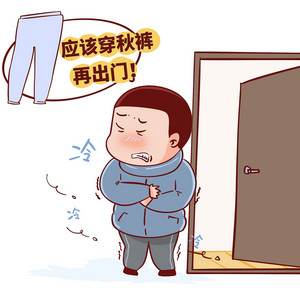
Thermal clothing promises to keep us warm in the cold but does it actually live up to the hype?
While many garments claim to trap heat and regulate temperature, the reality is far more nuanced.
Factors like the specific fabric, the garments construction, and even how well it fits you all influence its We'll discuss the clothing that's meant to keep you feeling warm and fuzzy, and also dig a little into the warm economy during these cold winter months.
After that, oh this is a spicy meatball.
Parents finding matches for their children on dating apps, well that can be a well intentioned, but often unwelcome intrusion into their children's personal lives.
But some parents here in China are doing just that.
We'll get all the juicy details on how parents are taking the lead in finding love for their kids.
We are live from Beijing, this is Roundtable, my name's Steve, and for today's show I'm joined by Nyo Hong Lin and Yu Shan.
First on the program.
Early forms of thermal wear likely involved animal skins and furs used for warmth, but of course we've come a long way since then.
Modern -day thermal clothing uses a combination of synthetic and natural fibers and high -tech fabrics, and the companies who produce these types of clothes, well they make lots of claims. keeps you warm in cold weather, wicks away moisture, temperature regulating, the list goes on and on, but here's the question.
Do these clothes really do everything they say they do?
We'll get to that question, and again, we'll talk about the warm economy as well.
Nghong Lin and Yuxian, good afternoon to you both.
Are you wrapped up in your thermal clothing today?
Oh, definitely. We've got all geared up.
It's actually not that cold in the studio for sure, but when it's outside, we were walking around the wind And also the low temperature.
Yeah, we've got, I think, at least for me, I have got a lot of relatively new equipment for this year and I cannot wait to share them.
It's not as cold in Beijing, I've heard. I've been told as it was last year, which I'm really thankful for but that's not to say that it's 25 degrees and sunny outside either.
Yuxuan, let's get into it a little bit.
We'll start with some numbers, shall we?
You want numbers? here it is, 20 million.
20 million watts. What is that?
So that's the total online search volume for warm clothing as of mid -December 2024.
So that's just proving how popular it is nowadays for the Chinese people to try to purchase something that will keep them warm.
And this info is, according to a report by Economic Daily, some of the products that It has the highest search volume, include thermal clothes, and down jackets, of course.
And also children's winter clothes and warm knee pads.
I got a pair for my dad.
Oh, keep going, I'm going to ask you about those.
I got a pair for myself for me.
And also a warm vest. I got plenty of those for myself as well.
And these are the top five keywords that people search and purchase the most as of now.
And also, online consumption data also shows that among various types of warm clothing, consumers who purchased thermal clothes accounted for the highest proportion at 17 .7 % this winter.
What are warm kneepads?
That is a really good question, because I was listening to all the keywords that are being searched that are being put into the search engine, because yes, 20 million is one thing, but the exact products that are being searched is another thing, because now you see the trends, especially among the young Chinese people who are almost natives for the e -commerce situation here in the country, they buy everything online.
So they search for the things they want to buy.
And you can see that it's almost like a supply side reform plus a demand side reform, because people want their clothes to be warm for short during winter days.
But they also want them to be fashionable.
They want them to suit their figures so they not look all puffy, and for the puffy ones, well I'm talking about the puffer jackets which are really, really warm and nice.
They also want it to be fashionable in its own way, they want it to be lighter, they want the material making those different types of including puffer jackets, wool coats, shearling jackets, woodies and sweater shirts, and the quoted and padded coats and thermal -based layers.
They want all these things to include a little bit of high -tech so that they can be better in all different fronts than the previous version.
And that is why these things are being searched, and these things are being definitely bought much, much more than previous years this year in China.
Thank you. What are warm knee pads?
Why are you avoiding my question?
No, you're not interested in that.
It's totally reasonable for Steve to try to figure out what that is, because I believe in South Korea or even in Japan or other parts of Asia, it's not really in their culture to keep your knee warm in cold weather.
I see South Korean people wearing pants like just shorts and slippers in winter.
We wear pants here in China too.
Outside. No one's walking around in shorts and slippers in the wintertime.
That's good to hear because here in China, and I believe in many other countries as well, we believe that as long as you keep your joints warm, it's going to be good for your general like overall health.
So knee pads are those very warm and thick if not cashmere made kind of just short wraps around your knee that you can just pull on like pulling on the legs of your trousers.
I've never seen those before.
Wrap your knees. Do they go inside your pants or outside?
Well, both! There are those thicker ones that can be bounded outside of your pants and those thinner ones that you just wear directly on your legs.
One more question, sorry, are they self -heating?
Are they battery -operated sometimes?
Yes, that's what I want to say!
Well actually, if for the thicker ones you can wear them if you are riding a bike or a motorcycle because the wind would definitely...
Directly to you... Exactly!
That's why you're wearing the thicker ones.
And so many people drive scooters even in the wintertime here in Beijing that that totally makes sense.
And when it comes to whether or not they're self -heating, actually some of them can be.
And it depends on whether or not they're hooked up with a battery or they're the one -time used, well single -use ones, just like the heating pad, pad that we can buy everywhere.
and they just customize those heating pads into the shape that can fit the knee area.
Perfect. So different types, very warm.
Lots of claims right, make you feel warm at temperatures as low as minus 40 degrees Celsius.
Some say they have high -tech materials like graphene, we need to find out what that is.
Others say they have the self heating function either through battery or otherwise but Youshan, are these claims true or do we need to be speculative when we see these written on the clothing tags?
I think we still need to remain skeptical, because all heat requires a heat source.
And also Wang Shudong, dean of Beijing Graphene Technology Research Institute, suggests that the human body in this case is the main heat source for thermal clothes unless the clothing itself has some sort of electric thermal conversion capabilities or has battery inside that can charge it for heating purposes, it is difficult to achieve the so -called self -heating.
Oh, so if we see a tag on clothing that says self -heating then we might want to research a little bit more about where it's getting that heat from.
Right, and also some self -heating function that's being promoted online these days may actually referred to maximizing the retention and utilization of human body heat.
So by self -heating you're literally heating it up yourself.
Yeah, so by self -heating they mean you!
You are doing the self -heating.
Well, I think this is a very interesting thing, because if you see them in advertisement and you want to do more research, definitely that's one way to go.
But I feel like it's more of a roundtable researcher's way to go for a standard, regular customer.
What they want to actually do is to compare whether or not this new material is warmer than the previous material they have found.
So if both, let's say, thermal underwears are the same weight, they're the same level of thinness, and one is definitely warmer than the other one, then they might be okay with this self -warming or self -heating claim.
What's graphene, by the way?
Well, graphene is actually a type of material.
It is a one -atom thick layer of carbon atoms arranged in a hexagonal lattice.
And it's like a fence kind of structure.
Yes, yes, yes. And the idea is that it is the building block that can, well, basically keep you warm in a certain way if it's blended in the material.
And one thing is that the most of the self -heating clothes on the market, besides the one that Yuxian has already described by maximizing the retention and utilization of human body.
It's the fiber that can absorb moisture to generate heat.
So technically speaking, it is generating heat.
It's just absorbing the water element in your body or from your body to generate heat, and that is why it's warmer, and like Steve said, graphene is one of the key element that are making that possible.
Oh, so graphene is this kind of super material that ultra thin, ultra lightweight, very strong, and it achieves great things when we're trying to keep ourselves warm during the winter time.
Graphene is expensive I guess and making clothes from graphene can be quite pricey, is that correct?
I think so, yeah because a lot of clothes made with it may cost tens of thousands of yuan according to online comments and also the price of Graphene thermal clothes sold on the market is just several hundreds yuan, I mean for usual common day -to -day thermal clothes it might charge just like dozens of yuan, if not below a hundred.
So there's, well the the graphene clothes, in essence, is that kind of fabric being used that's claiming to be not just thermal in a way that's self -heating, let's say, but also antibacterial, deodorizing, removing your body smell, and also UV protection, I think.
With all that labels on, that's also part of the reason why it's more relatively more expensive than other type of clothes.
Yeah I think the prices drop to a somewhat affordable level but still one of the fancier materials we can find in our wintertime clothing.
When we are purchasing our winter clothes what are some of the things that we need to be paying attention to?
I think it depends on the kind of winter clothes you're buying.
For example if you're buying the puffer jackets then you need to pay attention to the down content of the jacket if you really want it to be warm and some good ones have a really high level of down content yet it's still quite light which is another element you should be looking at and besides that no matter what type of thermal clothes you're looking for the warmer clothes you're looking for you have to think about the times of washing because actually yes all products have a lifespan yet according to relevant standards these thermal clothes should meet the moisture absorption and heat generation criteria only
within a certain number of washes.
So you need to ask your cells assistant whether or not you can wash them multiple times.
I often wonder if they really know the answer though if I ask them a question about that.
They might not know, but they will know you know stuff and they might give you a discount.
Yeah this is a really important point to make because I don't know, do you check the tags on your clothing.
Maybe this is just because I own basically jeans, t -shirts, shorts, and that's about it.
That's why I don't check the instructions on the tags about washing and things like that.
Do you do that with the majority of your clothing?
Oh, definitely. Especially with some more pricier ones.
They might include, or we've lived in some sort of fabric that demands certain washing conditions that does not say a long time, so getting more under.
Why not? Because I just, I don't.
I don't even think to do it.
I don't either. But my theory, and actually that is something I learned from young Chinese netizens out there because I check out some of their posts and they're saying, which I think is quite reasonable, that if the business owner has done something specifically to, let's say, research on the special material or making sure their product is better than others with a certain feature, then they will put them in the advertisement.
So I follow that. I would go search. Well, I didn't actually search for it, but it's more like when I buy thermal clothes, I would see advertisement like a special type of material, we call it in Chinese.
I think it's the kind of material involving the vertical fibers on the cross section of the Duorong, it can trap more air, it can preserve more heat with the same thickness, improving thermal performance by 17 % based on the business owner.
And it is warmer. So good enough for me.
I'm just imagining going into the, you know, some shop and some university student working part -time and I'm asking, yeah, can you tell me about the vertical fibers and the percent chance that they'll be like, what?
You don't know. think internet netizens nowadays, especially the young ones in China, they do do research. I think I've been being unfair saying that they don't, in the earlier conversations, they do research and they would even publish the comparison kind of notes on a lot of social media websites, giving you their feeling when they try different brands, when they try different material, and they share that on the internet, which leads to a fiercer competition among those researchers in these thermal clothes?
So when it comes to washing your clothes, if you're like me and you're not a label checker and you don't usually check for washing instructions for these types of clothes, these thermal clothes, you have to pay attention because certain materials can be washed more often.
For example, polyester blends, they're easier to take care of.
They can be washed more often than wool, for example.
Which if you have a wool coat or a wool sweater or something like that, it will last you a very long time But it's more difficult to take care of so therefore you really do have to pay attention to how to kind of maximize the Lifespan of your winter clothing.
Yes. And another thing is there are more and more innovative products out there Previously, I didn't use to wash my own puffer jackets.
I would send them to washing machines dry cleaners so that they find a way to wash it without destroying it because I tried once and it all stick together and they're not puffer anymore.
They're just, you know, two skeins not warm at all.
Yet this year, um, I researched a little bit and found a certain type of I think a product it's kind of like, um, the the washing, um, something you can add into the washing machine.
Okay. But it's it's exactly for the puffer jacket.
So the interior of your jacket, it doesn't kind of sink altogether at all?
You can just wash it like any normal clothes and just stick into the washer.
And when you take it out and you hang it up, it can just dry and going back to its normal state.
So when you're washing, maybe you want go on the e -shopping platforms to see maybe you've got a cheaper way to clean them?
Self -heating. We hear that a lot, right?
We've mentioned it a few times already in our chat today.
But there's a limit, Yushan, to self -heating clothing, meaning that it's not going to handle any temperature in any condition.
Yeah. I'm just about to add on that just now, because even though we pay, And as much as I do, there is still this limit to these self -heating fabrics.
Because standard thermal clothes are clearly marked that they are compliant with a moisture -absorbing and heat -generating needed clothing standard. And according to this standard, there are two indicators.
So the highest heat rise is greater than or equal to four degrees Celsius.
And also another points to the average temperature rise within 30 minutes is greater than or equal to three degrees Celsius.
So when the humidity is saturated, the moisture absorbing and the heat generating fabric will not be able to keep on providing any more heat.
So there's a maximum.
Yeah, basically you wear that for a relatively long time, you start to realize, okay, this is just a piece of fabric, so it's not going to help you.
Exactly. You try all that, and just to find out it's wearing off anyway.
But I don't know, because for example, if you want to wear it to outside area, from inside area, all of a sudden you need that extra heating hours a little bit so that when you are struck by the coldness from outside that in that 30 minutes you find yourself adjusting to it gradually, which still, you know, makes sense.
It does. I remember when I was a little boy, my grandmother used to threaten me for not being wrapped up warm enough when I would go outside and she would put about 35 layers of clothing on me.
And I've always wondered, the more clothes, the better.
Is that theory true, or is that theory not true?
I mean, the key to keeping warm by clothes is actually just having a certain thickness and enough air layers within you.
And in some cases, yes, indeed, that is true because the air layers referring to the gap between the clothes and the human body can just continuously get heat up with the body.
and also as the air is slowly heated.
At this point the air acts as the thermal insulation layer that's between you and whatever is covering your body.
So in this case, it is heating and it's helping that you have multiple layers on your body.
And I can tell who might not.
No no no no no, I totally agree with you from a scientific point of view, yet young Chinese consumers are not buying that theory.
They want the clothes to be thin, to be warm, to look good.
And that is why I think that incentivized the shop owners, there even researchers in the factories to come up with better clothes.
We have seen certain, well some young people, they stick warm patches all over their bodies.
So they do not really have to wear so many layers of clothes.
Are you talking about the hot packs?
I'm talking about the hot packs.
Those things are amazing.
Whoever invented those deserves a prize.
I know. And they are actually making them even better because previously those patches are quite warm, to the degree that if you stick it directly close to your skin, you might even get a burning, burning, hurt kind of problem, injury, yet nowadays they are transforming them into different types to start with, they have different shapes.
You can patch them on your body, you can You put them on your knee, you can even get one like a scarf on your neck, which makes your life feel much happier.
And also, they have invented those ones that are relatively not that high in temperature, making sure that you can wear them directly to your skin.
And one very important function for me myself is that I don't get so cold too much yet my hands are sometimes too cold, and my feet can be too cold.
With those kind of new product emerging in the Chinese market, I can actually get one and patch them on my hand or use them as a socket in my shoes for around eight hours during the day.
So I don't feel cold anymore.
It's amazing. Those things are amazing.
And by the way yeah, there is that science is true about having more layers and how the air is a layer of insulation.
but if that air layer gets too thick, then there's a significant temperature difference which can lead to what they call thermal convection in the airflow, then the loss of heat will actually be faster.
So too many layers can, there's a point where it starts to, on the graph where it starts to decrease rather than continuously increase.
Let's switch over quickly to the warm economy.
We're in the dead of winter right now.
hopefully it will be wrapping up soon but when we talk about the warm economy there's lots and lots and lots of heating devices out there yes on top of the ones that have already shared something I love so close to my heart the warm patches there are also heating carpets heating plush toys can you believe it?
Heating shawls making sure that you can get warm whenever you want wherever you want you're working in the office and you don't feel warm enough get a heating plush toy.
How cute is that? And on top of it, we also see, besides the traditional electric heaters, the electric blankets, the heating devices, there are many new ones consuming less energy, which is one thing that young consumers are thinking about.
They want the product to be sustainable, to be better to the, uh, to the, uh, planet.
My favorite warm economy product, you know what a dog bed typically looks like, right?
They're kind of big and fluffy and they look amazingly comfortable.
Have you seen the human -sized dog bed?
I have seen the human -sized dog beds and I've seen people making a human -sized dog bed in their homes.
Oh my goodness, they're amazing.
They're pretty expensive.
I was looking online and it was about 350 dollars, which is what?
2500 yuan, I think?
Which is not cheap but yet It looks so incredibly comfortable.
Yeah I'll forward you the short video I saw, allowing you, teaching you how to make one from your home.
You can make your own human sized dog bed.
Yes, these days on the internet they're just super talented.
There's an instructional video for almost everything.
You shine in in the warm economy, food, also, things like hot pot of course.
Of course I was just wondering in the nearby mall just yesterday, and I try to get hot pot myself, but just found out that it's one of the most crowded restaurant among the whole, you know, the foodies floor of the mall.
So basically hot pot, barbecue and also other winter specialty food have become popular choices for Chinese customers here as well.
I mean, definitely the go to hot pots enjoyed in the summertime too.
I think that's fair to say.
But when you go in the summertime, you're not going to see a crazy long line of people, or you might not, especially when you compare it to the wintertime.
Yohong Lin, do you have a favorite wintertime snack?
Warm economy food? I have a favorite warm economy activity that is spring, hot spring.
I think hot spring in a cold winter is something really nice.
And if you like the comparison, actually there were nearly 11 ,000 skiing related enterprises in 2024, and more than 1 ,800 newly added related enterprises in the first 11 months of 2024, meaning that you can have the comparison between the cold, cold winter and the hot, fun indoor area.
It is still cold outside.
Please do stay warm and please do stay with Roundtable.