A whole new season of Terrestrials is coming.
Radiolab's family -friendly show all about nature.
This season, we are back with a new batch of episodes where we come face -to -snout with some of the wildest, gnarliest creatures on this planet.
We discover music, magic, medicine, and a whole lot of fun.
Starting April 17, all on the Radiolab for Kids feed wherever you listen to podcasts.
Before we get started, here's a message for the adults who are listening.
Support for But Why is brought to you by Progressive Insurance.
Do you ever find yourself playing the budgeting game?
Well, with the Name Your Price tool from Progressive, you can find options that fit your budget and potentially lower your bills.
Try it at Progressive .com.
Progressive Casualty Insurance company and affiliates.
Price and coverage match limited by State law.
Not available in all States.
This is But Why, a podcast for curious kids from Vermont Public.
I'm Jayne Lindholm.
On this show, we take questions from kids just like you, and we find answers.
Sometimes, you send us questions about really big things, like how big is the sky, or what's the largest animal that's ever lived.
But today, we're going in the opposite direction, with some questions you've sent us about things that are really, really small.
Nope, even smaller than what you're probably thinking right now.
Go even smaller, EVEN SMALLER!
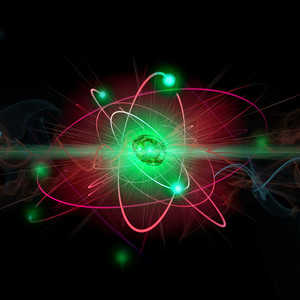
The things we're talking about today are too small to see, even with a microscope, but every living and nonliving thing on earth is made up of them.
We're going to learn about atoms. And the guest who's going to tell us about atoms is a guy named Ben Still.
I am a teacher, a scientist, and author.
I teach high school physics, but I am still at heart a particle physicist and I very much enjoy talking about physics and science in general to anyone that will listen to me.
Ben is the author of a book called Particle Physics Brick by Brick and another one called The Secret Life of the Periodic Table.
His latest book, How the Universe Works, will be released in September.
Atoms are the building blocks of the universe.
All matter is made of atoms. And while some of you might be hearing about atoms for the first time right now, we've actually already gotten a lot of questions about them.
my name is Noah and i'm five years old and i'm from Mobile Kentucky why is everything on Earth made out of atoms?
I'm gonna first of all go to the word why and it's very difficult when you're a physicist to be able to answer why questions because as a physicist and a scientist you your job is to construct models using the language of mathematics to be able to describe the universe and the experiments that you see and then make predictions about other aspects of the universe and then test whether those those are actually the way in which nature behaves.
So why everything is made of atoms isn't really a question that I would say science is able to answer because essentially we just find ourselves in a universe with atoms being made of atoms ourselves and essentially we are just seeking an understanding of nature and through the understanding of nature we build a model and as part of that model we have built the idea that there are these subdivisions of things in our universe and And an atom is one of those subdivisions.
So if you cut something apart, eventually you'll get down to these atoms. And the atoms are the individual units of molecules and materials that exist around us.
Atoms are the individual units of all the things that make us people, and the things or elements that make a chair a chair or a car a car or a tree a tree.
When we think of what humans are made of, we think about things like skin, and bones, and hair—and yes, water.
But if we get to the smallest fundamental elements of what makes us humans, we're made out of atoms of oxygen, carbon, hydrogen, nitrogen, calcium, and phosphorus, and a few other trace elements.
So if physicists don't ask why, we can still ask things like, how do we know that?
Or what makes us think that everything is made out of atoms?
Or even how do atoms work?
Ben said atoms are the building blocks of all the molecules and materials around us.
But if everything is made up of atoms, how can all the objects and living things on Earth be so different?
We can distinguish between different types of atoms because they have different properties.
but I think you're right there's no way of distinguishing say one atom of carbon from another atom of carbon and in fact they're entirely interchangeable between the wood in the chair that I'm sitting on and the carbon in the molecules in my body.
They're totally interchangeable and in a real sense there's no way of identifying one as being a part of me and only a part of me because there's no way of you know kind of if you like stamping an identity on those atoms. That I guess is good in a way because that means that obviously we can take in carbon atoms and we can use those to construct and build our bodies and grow but also it means that there's no real kind of uniqueness to necessarily the atoms that make you up, or me up, or the chair or the ground that we're sitting on, apart from the fact that there are different types of atoms with different
properties. And that leads to, in certain configurations, very special things, like a human body.
My name is Ari. My age is six.
I live in Seattle. My question is, why are atoms so small?
Ari is asking another why question, but Ari wants to know, why are atoms so small?
Maybe we just have to take the why off every question today.
Yeah, I mean, yeah, atoms just are small.
I guess, I guess it's always going to be the case that, you know, being such complex organisms as we are, it requires a lot of complexity to be built up from what is otherwise a rather simple building set, right?
There's only 118 elements that we've discovered so far on the periodic table of elements and we're only made of a tiny subset of those particular types of elements and those particular types of atoms. And so with with a limited kind of building set if you want to create something complex it's going to require each of those building blocks to be really small.
I mean if you think of so I'm a massive Lego fan and I've used Lego in some of my books And if you think of wanting to create a really complex Lego model, then essentially you go to the small Lego bricks and you have to have lots and lots of them to build up a rather complex thing.
And if you think about how complex life is and how complex humans are, it just means that those building blocks have to be so much smaller than we are for that level of complexity to exist. Ben mentioned the periodic table of elements.
When we talk about atoms, they fit into different types, depending on how many protons, neutrons, and electrons they have inside them.
Elements are specific and unique types of matter, and they can't be broken down into even smaller unique parts by any natural processes or chemical reactions.
So, there are 118 elements that humans have identified, and we put them in a chart called the periodic table.
So when we think about atoms we're usually thinking about the different kinds of atoms that are the different elements in the periodic table.
Let's get to those things I mentioned that are inside of atoms. My name is Luveenam.
I'm nine years old and I live in Austin, Texas, and I want to know what atoms are made of.
My name is Hamish. I live in Christchurch, New Zealand, and I am 8 years old.
Are atoms made of anything, and if so, what are they?
Well for a long time scientists certainly in the Western world thought that atoms were the smallest things that our universe was made from.
And everything around us was made from these indivisible kind of small spheres, small balls.
And actually the word atom comes from the Greek atmos, meaning uncuttable.
But at the turn of the 20th century, suddenly it was discovered that there were things that were smaller than the smallest known atom, which was hydrogen.
And these things were coming out of hot wires and they were called cathode rays.
And it was discovered that these smaller things were about 2 ,000 times lighter than a hydrogen atom, and they were discovered to be actually something called an electron.
And the electron is kind of what it says on the tin.
It is the particle of electricity.
It's the thing that moves through wires and provides electric current.
And so those electrons were discovered to exist and they were thought to be boiling out of atoms. And later it was discovered that there were other radiations coming out of atoms as well and those radiations were actually again fragments of other parts of the atom and they were used as probes to look inside and discover that not only were electrons inside but there was also a central region inside of an atom called a nucleus which contained most of the mass of the atom but also particles called protons, which has an opposite electric charge to the electron.
So the protons are what we say as positively electric charge, while the electrons are negatively electrically charged.
But also inside the nucleus were other particles which didn't have an electric charge, called neutrons.
So today, we understand that atoms are made up of those three things, protons, neutrons in the very centre of the atom in the nucleus, and then electrons in kind of wispy clouds around the outside.
There are even smaller things than protons which are themselves made of smaller particles.
The electron hasn't been seen to be made of anything smaller.
When you smash them together, they create quite clean kind of crashes, but when you smash protons together, what you see is you see a mess like smashing two grocery bags together and from the kind of the splatter of all mess, if it's done enough times you start to see patterns and those patterns showed particle physicists that essentially protons are actually made of three smaller particles which are called quarks.
Now it seems that quarks, like electrons, are kind of the smallest to which the universe goes and so we call them elementary particles but we only can say that they are the smallest things that exist considering the experiments that we've done, considering the kind of energies that we've got to and it might be that if we go to higher and higher energies we suddenly discover that there is smaller detail to the universe there are things that electrons and quarks are made from, there are lots of theories already out there which try to help us understand the universe in a deeper sense that actually
suggest and predict that there might be things that are smaller than the electron and the quarks as well.
But right now, experiment has shown us that our current understanding ends with electrons and quarks.
Hi, my name is Charlie, I'm seven years old and I live in Melbourne, Australia.
How can an atom be a liquid, solid and a gas?
Hello, my name is La1 and I'm six years old and I come from Korea.
You know that I have a question and is liquid made of atoms?
And I wonder I was just watching a video about atoms and it just said that everything in the universe is made of atoms so I just started to wonder, is liquid also made of atoms?
As we say everything really, in the Earth and in our Solar System is made of atoms And whether something is a liquid, a solid or a gas is not necessarily down directly to individual atoms But the way in which atoms interact with one another so it's to do with things like chemical bonds and The way in which these different atoms form molecules but also how those atoms and those molecules which are just Basically atoms connected together by sharing electrons and things like that how they interact with one another.
Hi, my name is Oliver and I am six years old.
I'm from Salt Lake City, Utah.
My question is, how many atoms are in the world?
It's very difficult to estimate, but if we if we think about what the Earth is made from so predominantly elements like iron, silicon, oxygen, and things like that.
and then we think of the mass of the earth, we can make an estimate.
And you get to something around 10 to the 50 atoms. That's one followed by 50 zeroes.
It's a huge, huge number.
Unimaginable, really.
So yeah, it's, yeah.
Again, my mind is blown when you start thinking of things in terms of atoms because a teaspoon full of a material can have such an unimaginable number of atoms in it.
Yeah, and considering that anything that we would use to compare to, like 75 elephants, or a million school buses, those are all made up of atoms. There's no number we could even conceive of, because whatever thing we try to compare it to is already made up of billions and billions and billions of atoms. Exactly.
Yeah. So when you're going from the smallest structure in the universe, anything you choose is obviously going to be huge in comparison.
Hi my name is Elizabeth I'm a very young 70 year old who wants to know what atoms and molecules look like?
That's a great question, they're too small to be seen with visible light because as we mentioned atoms are about 10 to the minus 10 meters in size so that's extremely small, much smaller than the wavelength of light so the way that we see things by the light scattering off and entering our eye won't work with an atom because light won't scatter off of atoms directly.
And so the way that we see atoms is not in the way that we see, but we look at atoms through the interactions that they have with other particles and other atoms. So for instance there is a machine known as a tunnelling electron microscope and a tunnelling electron microscope has an extremely thin point on it that scans over a material, and that thin point exchanges electrons with the material it's imaging and the amount of electrons that are exchanged tells you essentially how close you are to that material.
And it allows you to actually image the shape of individual atoms. And so atoms in terms of their shape really embody not anything outside of really the forces that they interact with the world.
So a single atom would look very, very spherical and ball -like simply because it is made of a number of charges that are symmetrical and so therefore will interact with the world in a symmetrical way and so, like a sphere.
And molecules will have certain other slightly different geometries depending upon those chemical bonds and how those atoms have fit together one -to -one because, again, those atoms in those chemical bonds will sometimes pull electrons towards them and sometimes have electrons pulled away from them which changes kind of the the shape that those atoms fit together.
So how we see them is not through the traditional sense, but instead we see them through the forces that they exert on other atoms. Coming up, if we can't see atoms how do we know they exist?
I'm Jane Lindholm, and this is But Why.
We're learning about atoms today with physicist Ben Still.
He's the author of several books, and he's a high school teacher.
Atoms are the building blocks of all the things that exist on Earth.
In fact, all the things that exist in our entire universe.
But how do we even know they exist if they're so small we can't see them?
I'm from Austin, Texas.
I'm ten years old, and my question is, how did scientists find atoms without being able to see them?
Amazing question. Essentially, the atoms were theoretical for a huge number of years.
So the ancient Greeks and Democrats thought that everything in the universe was made up of small units that were uncut.
And then in the early 19th century the idea was rediscovered and brought forward by John Dalton who thought, again, that each of the chemical elements that were understood at the time were made of different sized spheres and again the idea of atoms came about, but it was all theoretical, really, until 1905 and Einstein's Miracle Year, and one of his three papers that he published was on something called Brownian Motion.
Brownian motion was discovered many years before by a botanist, Robert Brown, who was commenting on the fact that little pollen grains seem to bounce around in a liquid when he observed them underneath the microscope and it seemed random.
Einstein was able to build a model of the universe with mathematics to explain this random motion and his mathematical model assumed that the little pollen grains were being bounced about by the invisible atoms and molecules within the liquid hitting those pollen grains, and he was able to put a mathematical model to this, and so it was really Einstein's mathematical model that provided the basis that the experimentalist Jean Perrin could then go and that that is how the universe indeed behaves, and that was the way in which we got our first real solid evidence that the universe that we live in is made
up from atoms. My name is Annabelle, I'm 9 years old from Palm Coast, Florida.
How do scientists see how many protons are in atoms?
The number of protons in an atom are always balanced by the number of electrons in an atom, and we know that because atoms are defined as being zero charged, that they're electrically neutral.
And so every proton in the nucleus is joined by a negatively charged electron orbiting around that nucleus.
And so it is through really the properties of the electrons that we can infer how many and protons are in the nucleus in most atoms. My name is Roman, and I live in Louisville, Kentucky.
I'm seven years old.
Why do two atoms technically never touch?
Hi, my name is Isabel.
I'm nine years old, and I live in Queensland, Australia.
And my question is, why do we feel lot of thing is when we have an atom -sized gap in between them.
Hello, my name is Levi and I'm nine years old.
Right now I live in Germany.
I heard that atoms don't touch each other.
If atoms don't touch, then how do we feel things?
The way that we deal with atoms and particles and everything at that level is actually to say that they don't have any volume or space.
They don't occupy any space at all.
They're in space have certain properties, like electric charge and mass and things like that, and it's those properties that we're actually interacting with.
So atoms are points in space, but they're always going to repel one another through the force of electromagnetism, and so they're never going to kind of touch so to speak because they're never going to exist in the same space.
But electromagnetism is only, and the repulsion of electric charges and things like that, is only one part of the story about keeping atoms apart.
In fact, when you're sat on a chair and again, you're feeling that force between you and the chair, yes, there is some of that repulsion because of electromagnetism, but there's also just properties of particles that also produce a force and that is the simple fact that no two particles, fundamental or more complex like atoms and molecules, can exist in the same space at the same time with the same energy.
And that's a quantum mechanical process called the exclusion principle.
And all particles from electrons upwards have that property built in so that you can't essentially have these particles exist in the same space.
and the way that nature acts to stop that is it has an additional repulsive force to keep them apart.
So, when you're trying to smush two atoms in towards each other, you've got two forms of repulsion from this exclusion principle but also from the electric charges repelling them as well, which means that no two atoms can exist in the same space, and so we effectively say they can't really touch. So it's the forces that keep them apart and the properties of particles that also push them apart from one another.
So if I'm rubbing my fingers together, I'm not feeling different atoms rubbing together, I'm feeling the forces, essentially.
Hi, my name is Ellen.
I'm 10 years old. I'm from Cambridge, Ontario, Canada, and my question is, how do atoms get colour?
Right, that's great.
So, again, atoms are so small they're smaller than the wavelength of visible light.
So atoms strictly themselves don't have a colour.
But they do emit coloured light, they do emit visible light.
So if we were thinking and seeing in the normal sense the way that we see colours, atoms wouldn't have a colour.
They're far too small to have colour because visible light wouldn't scatter off of them into our eyes and that's how we see colour around us.
But what happens inside of the atom is that the electrons that are around the nucleus can exist at different energies.
And what happens is you can excite those electrons by using electricity or heat and those electrons will jump up to a higher energy and then eventually they will fall back down and when those electrons fall back down they do emit light, and that light is actually very unique to every single, not only atom, but also every single kind of isotope as So each element on the periodic table emits certain colours or wavelengths of light, and the exact colours of light it emits is a unique identifier for that particular element.
In fact, that was the way in which most of the elements on the periodic table have been discovered, not through the chemistry and the way that they interact with other atoms, but actually through the light that they emit in something called spectroscopy.
So to summarize, atoms themselves don't have color, but they do have characteristic colors that they emit when excited.
My name is Luke, I am 8 years old and I live in Perth, Australia.
My question is, how are atoms made?
Maybe we shouldn't have saved this for last, Luke, because it's really the start of everything we've been talking about in this whole episode.
But that's okay, everything comes full circle in the end.
The widely accepted current theory is that all the matter in the universe, from our Earth to our Sun to all the stars and planets and distant galaxies, can be traced back to something called the Big Bang.
That's the moment 13 .8 billion years ago, when energy was suddenly transformed into matter.
But the universe at that moment was so hot, hotter than anything on Earth could exist at today.
It was 18 billion degrees Fahrenheit or 10 billion degrees Celsius, hotter than we can even imagine.
It took 380 ,000 years for the universe to cool down enough for atoms to come together and form.
Most of those early atoms were hydrogen and helium, and those two elements alone make up almost all the matter in our universe today.
Slowly, though, other atoms formed as well.
And new atoms are still being made through the life and death of distant stars.
As complex as everything seems in the universe around us, at the heart of it, through thinking of splitting up nature into its smallest indivisible parts, we've managed to create a model of our universe that is actually quite elegantly simple.
While the mathematics seems horrific initially, there's only a handful of things that make up pretty much everything in the universe around us.
And I think that that is quite amazing." Ben Still is the author of Particle Physics Brick by Brick, which explains physics using Legos and The Secret Life of the Periodic Table.
His new book, How the Universe Works, will be released in September, I can't wait.
Now, I find this stuff fascinating, but it's really hard to wrap my brain around it.
In addition to Ben's books, we have some links to more articles about atoms and the origin of the universe.
You can find them in our show notes and we'll put them in our newsletter as well.
Your adults can sign up for our newsletter on our website, butwhykids .org If you have a question you would like us to tackle in an episode, ask an adult to help you record it and then send it to us.
your adult can use a smartphone app like voice memos or voice recorder to capture you asking your question.
You should make sure you tell us your first name, where you live, and how old you are, and what your question is of course, and then your adult can email the file to questionsatbutwykids .org.
We love hearing your voices and learning about what's going on inside your brains.
Our show is produced by Sarah bake, Melody beaudet, and me, Jane lintholm.
Our video series producer is Joey Palumbo, our theme music is by Luke Reynolds, we make the show at Vermont Public and we're distributed by PRX.
We'll be back in two weeks with an all new episode, until then, stay curious.
From PRX