This BBC podcast is supported by ads outside the UK.
If journalism is the first draft of history, what happens if that draft is flawed?
In 1999, four Russian apartment buildings were bombed.
Hundreds killed, but even now we still don't know for sure who did it.
It's a mystery that sparked chilling theories.
I'm Helena Merriman and in a new BBC series I'm talking to the reporters who first covered this story.
What did they miss the first time?
The History Bureau, Putin and the apartment bombs.
Listen on BBC.com or wherever you get your podcasts.
All change at the Enchanted Kingdom.
I felt that there should be something built, some kind of an amusement enterprise built, where the parents and the children could have fun together.
That's Walt Disney, the original one with his vision decades ago.
What would he say about the corporate monster today?
Disney has fixed the streaming business.
You saw the great numbers.
Seven movie studios, parks in Europe, in the Middle East, in Japan, in Shanghai.
This is World Business Report from the BBC.
I'm Ed Butler, and today we're profiling the new appointee to lead the House of Mouse, as it's known.
What does it say about the current world of leisure and entertainment?
Also an Indian exporter, reflects on the latest deal with the US and how Walmart's become a trillion-dollar firm.
So let's start then with Josh DeMauro.
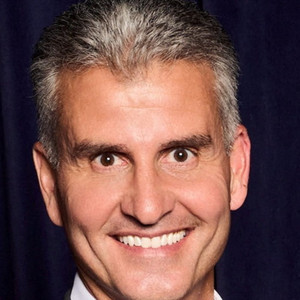
He's been in charge of Disney's theme parks for some years now, and he's just been named as the new boss of the entertainment giant.
The 54-year-old succeeds Bob Iger, who's been credited with shaping the modern Disney as we know it.
The BBC's Bissi Adebayo has been weighing up the appointment.
From castles and cruise ships to streaming screens and superheroes, Disney is entering a new chapter.
Succeeding Bob Iger, Josh Damaro becomes just the eighth CEO in Disney's more than 100-year history.
He comes from Disney's Experiences division, which controls the theme parks, cruises and consumer products, and this has become Disney's financial engine, generating around 40 of total revenue.
Now Disney is doubling down on that success, committing 60 billion to parks and experiences over the next decade.
But elsewhere, the picture is more mixed.
Disney Plus is facing stiff competition on the streaming world and traditional TV continues to decline.
So as DiMauro steps in next month, many will be watching how he navigates the tougher economics of streaming and media and keeping one of the world's most recognisable brands growing in an ever more competitive landscape.
Bitty Adebayo.
While the appointment ends years of succession uncertainty and places a veteran insider at the helm, Josh DeMauro has been running, as we mentioned, Disney's biggest profit engine, including the theme parks and the cruises.
And the Disney chairman, James Gorman, now says the thinking was like this behind this appointment.
There's a lot of focus on what did somebody do?
What did Josh do before this?
That's interesting, but it's not definitive.
What matters is what are they capable of doing?
Do they have the strategic mind, the resilience, the ability to innovate, the creative touch?
All of those things, team building, that's what you're looking for in a CEO.
So, yeah, we looked at the beginning.
I mean, it must have been well over 100 people on a list.
I personally talked to a number of individuals.
You know, I wanted to be able to say, and the board wanted to be able to say, that whoever got this job beat all comers.
James Gorman there.
Joining me to discuss this, we've got a longtime Disney investor, Ross Gerber.
He's president and CEO of Gerber Kawasaki Wealth Investment Management.
Hi, Ross.
Thank you for joining us.
This was always the favoured pick, wasn't it?
We've been talking about the likely succession.
Were you surprised how quickly it came?
Bob Iger stepping down so early in the year.
Yeah, it did.
But I think, with the divisive challenges that Disney faces in the political environment in America, that he couldn't wait to get out of there.
And he's done his duty and he certainly helped the shareholders of Disney re-fix the company from the error of JPEG.
So I think that's fine that he's leaving now.
But I still think Disney now still has the same – challenges they face as they navigate the future.
What are the biggest challenges that you're looking at now?
I think you mentioned this is what do we do with linear TV?
Because it's a constantly declining revenue source, even though it's profitable.
And we've seen the spinoffs now with like Comcast and we're seeing that same kind of idea with the Warner Brothers.
And I think Disney needs to do the same thing.
They need to spin off these linear TV networks.
Even though there's some synergy with them, they're just hurting the value of the business.
And then, at this point, it's been proven that the conglomerate of having all these sports assets, with these physical assets, is not increasing the multiple of the valuation of the company.
So I think it makes a lot of sense to spin off ESPN into its own company.
And I think that would be a great benefit to shareholders.
So You know, it's kind of what I've been saying.
It's time for Disney to start breaking up the pieces, because it's worse more than the whole.
Separate than together.
Right.
Much has been made, hasn't it, of Josh DeMauro's success at Parks and Cruises.
This is the profitable one.
This is the real money engine, isn't it, for behind Disney right now.
Three times the operating income.
I mean, do you think that all of that entertainment stuff has been slightly pushed into the background because of this appointment?
Yeah, yeah.
And I think that that's not an accurate description of Disney, in that that is true of the current period of time.
But one must not forget that Disney's roots is about entertainment and it's about, you know, creating great content that feeds all these parks and ships.
And that's way more important than the physical assets.
And so, you know, I fear that they're making a similar error by not promoting Dana Walden, who runs the entertainment you know, and hopefully she stays at the company.
I think she's becoming president and chief creative officers.
And she's is it almost like a kind of jewel helm?
I mean, is she going to be That's what it should be, I think.
Yeah.
And so, you know, that's the best bet.
If they can work together successfully, I think Disney's in good shape.
But if Dana leaves or is not happy and the content starts to struggle, because Iger was really great with talent and people love working for Iger.
If they can keep this going, I think Disney's in a pretty good shape and they're profitable.
But the streaming business is a great business and they need to lean into that too.
So I really think that Disney's in a good place to grow and do better, but I also think they have these challenges in front of them.
What do you think about the legacy of Bob Iger?
He's been a titan, hasn't he, at the helm of this company for so long.
He had the deals for Pixar, for Marvel, for Lucasfilm, these big things.
That kind of made Disney feel relevant again, didn't it?
At the turn of the century?
What now?
How do we look back on him?
Well, I think that's accurate.
Iger was one of the best CEOs of all time, just in general, and he ran Disney very well.
And he's created a great company.
So, you know, I've met him several times.
He's a wonderful guy, and I wish him the best and enjoying his yacht.
And he's more than earned his stripes at Disney, right?
So I think he's leaving Disney in good hands, and I think he's done his job.
A good long-term bet still for you as an investor?
Well, that's where it gets trickier.
So you know, I sold a little bit of Disney because I do think there's a lot of challenges they face.
And so I'm not out of Disney.
But you know with you.
Look at the valuation on Netflix, now that it's gone down so much it's.
It's a pretty compelling argument Netflix over Disney at this price.
So that's the way I look at it.
I think Netflix is the entertainment industry of the future and Disney being in a capital-intensive park business and ships and all that is still a good business, but it just doesn't get the same valuation as a Netflix.
Ross Gerber, thank you very much indeed.
George Conboy, I love your response to that.
Chairman of Brighton Securities based in Rochester, New York, our regular markets guest.
Do you agree?
Does Wall Street agree, that you know the card is marked for Disney because they're losing the streaming war?
Wall Street's going to set aside for a minute and watch and see if tomorrow can deliver the goods.
If you look at the price earnings multiple, the street doesn't expect much from Disney, except for that couple of years pop up in 20 through 22.
Most of the last 10 years, Disney has been a really stodgy investment.
So the street's going to wait and see until something's delivered on a quarterly basis.
George Conboy, thank you very much indeed.
The sound there of some fairly agitated-sounding workers at Bangladesh's main seaport.
They are today threatening to go on strike.
This over the government's plans to transfer one of the main container terminals there at the port to a UAE-based company.
Powerful labour unions at Chattogram say that they fear job losses under a foreign company.
And this is just days ahead of the country's general election.
It's the first general election since the ousting of the former prime minister in a public revolt.
I've been speaking about the unrest with Salman Saeed.
He's a freelance journalist based in Dhaka.
So Chittagong Pro is one of the main port where all the export and import takes place for Bangladesh.
As you know, Bangladesh is one of the largest exporter in garment sector over 38 billion export a year.
And it's like the second largest in the world.
So there's been a strike since last three, four days by their workers who are handling this port.
They're pretty much angry against the current government, who is trying to give away the port management to a foreign company for the first time in the history of Bangladesh.
All these years this port was handled by the country locally, like the Bangladesh authority would handle it.
And this is a UAE-based logistics company that is offering to take over.
Why would the workers be so concerned about them being in charge?
So the workers feel that this new extension of the port is already running by themselves.
The local workers are running it and it's running smoothly.
But the government says if they give it to a foreign company, it will get the most out of it.
The efficiency of this port management will increase and it will be good for the country.
On the other hand, the workers who are going on strike.
They're saying no, this is a national issue.
Why are the government rushing?
Because this is a government that is not elected by the government.
And the election is in next few days.
You know, we are having our national election in 12th of February.
So they said elected government shouldn't do this decision.
Is there a concern that there's some kind of shady deal going on here?
From the workers who are protesting.
They're saying we don't know what this government or these advisors are doing.
None of them are Bangladeshi citizens.
They're doing something against the national interest of the country.
And then they are saying that the advisors who are in charge of this port, who are making this deal.
They are forcing these workers representatives to sign the deal.
And they were not allowed to negotiate what they wanted to say in the capital Dhaka.
On the other hand, there's been a serious concern from the garment sectors or factory owners.
Like if this thing is not resolved immediately, then there will be a huge loss in the export market.
And also even there will be a big inflation in the import of food and other commodities, as we are having the month of Ramadan in a few weeks time.
So the prices of the commodities will also increase.
The journalist Salman Saeed, there with news of a major strike, potentially at Bangladesh's biggest port.
If journalism is the first draft of history, what happens if that draft is flawed?
In 1999, four Russian apartment buildings were bombed, hundreds killed.
But even now, we still don't know for sure who did it.
It's a mystery that sparked chilling theories.
I'm Helena Merriman and in a new BBC series I'm talking to the reporters who first covered this story.
What did they miss the first time?
The History Bureau, Putin and the apartment bombs.
Listen on BBC.com or wherever you get your podcasts.
You're with World Business Report from the BBC World Service.
Now the Mumbai stock market has risen sharply after President Trump announced on Monday that Washington would be lowering tariffs on Indian goods to just 18.
The 30 share index, the SENSEC, surged more than 2.5% in early trading. in Mumbai.
Well, for a more personal response to this trade deal, one which could affect hundreds of billions of dollars worth of international trade.
I'm joined by Rudra Chatterjee.
He's chairman of OBT, which is an Indian-based carpet and furniture maker which exports to the US.
I believe
Isn't that right, Rudra?
I mean, tell us what your business does, what it exports to the US.
So OBT manufactures and exports carpets and furniture to around the world, but mainly to the United States.
Yeah.
Carpets, furniture and tea, I believe.
That is correct.
So all three.
I mean, how much, how big a slice of your overall business is this export trade?
So tea is quite little, but carpet is majorly more than 50% to United States.
So the change that we've just heard, I mean this announcement there, is still fairly thin on detail, I think.
But not long ago we were looking at 50 tariffs, weren't we, on Indian goods entering the US market.
This must feel like quite a relief by comparison.
Yes, it is.
From August, we had a 50% tariff.
Depending on the product, there are many competing countries.
For example, in furniture, there's Vietnam, which has a 20% tariff.
And for carpets there are other countries, but the customers still worked with indian companies because there's design and collaboration and there's a long lead time.
But we could see that customers were getting concerned with higher prices because of the tariff.
What's it been like for you as a, as a businessman, in the last few months?
So it's been anxious.
These OBTs, a company that was started in 1920, has been in continuous production, and the US has been a major market.
So to see a sudden change, which, you know, we it's not easy to change the way of manufacturing.
It's a labor based industry.
Twenty thousand weavers work in the in OBT weaving carpets.
So I'm responsible to ensure that they have the jobs.
And it was a concern that if the business plummeted, you know, how would OBT react?
Did you have to lay anyone off?
No business actually didn't reduce during this period, as I felt that the you know you could see the anxiousness in the customers.
But because of the fact that carpets are usually ordered, you know, these are handmade carpets.
They take six months to weave.
So if you started weaving in August, it would just be, you know, it still wouldn't be over.
Hmm.
So it's a long period of time.
But I think it was the shock of, you know, India and US increasing trade over years to suddenly have the highest rate of tariff in the world was a shock to the entire business community and to the workers around India.
Who's been taking the hit then?
Has it been you as the manufacturer from India?
Or has it been the retailers, the import firms who are selling your goods into the US markets?
So there was a lot of discussion of making different kind of products, trying different price points.
You know, the businesses are, you know, these are long term customers that we are working with.
I mean, have you cut prices?
Have you cut prices because of the tariffs?
Yes, we had to reduce prices and we had to come up with different kind of products, because you know customers will not be able to pay something which is one and a half times the price.
You're in California right now.
What are your potential customers, your clients, the trading firms who import your goods?
What are they saying to you today?
Do you feel like you're out of the woods?
Do you feel like this is just another twist?
There's a relief, but what happens is, once you've had this kind of an experience, you'll never forget it.
And, you know, we would have to think of, you know, how do we make the business more resilient?
You know, it's difficult to do that, but we feel a certain amount of relief.
We still don't have any official customs notification.
It has been tweeted by the president of the United States and by the prime minister of India.
But once we know that this is at 18 and we understand from which date you know, I think that's a relief.
But you know, six months ago we never expected that we will have to deal with these kind of uncertainties.
Rudra Chatterjee of Abiti, an Indian-based carpet and furniture maker.
Thank you very much for your time.
Now, in the last few hours, the billionaire CEO of X and, of course, much else besides Elon Musk.
He has said that a raid on the company's office in Paris this morning was politically motivated.
Paris.
Prosecutors have been investigating X since January last year, but the latest raid looks like a new departure.
Our correspondent, Joe Tidy, has been looking at what this is all about.
It's very rare to see a social network that's run by a Western company being raided in a Western country.
But that's what we saw this morning in the streets of Paris.
They have said that it's part of this long running investigation they've been doing into the X platform and the inbuilt chatbot in X which is called Grok.
It started in January last year when politicians complained about some sort of algorithmic manipulation taking place.
Then it was expanded in the summer to include potential abuse against LGBT communities and also Holocaust denial, particularly from that, bot Grok.
And now it's expanded again, and we saw this raid this morning.
They said nothing about the previous allegations.
These are kind of new ones.
They've said that They've raided it because of complicity in possession or organised distribution of images of children of a pornographic nature, infringement of people's image rights with sexual deepfakes and fraudulent data extraction by an organised group.
The other thing that was interesting about the rap sheet is they've said they've accused the company of the administration of an illegal online platform which, of course, is very reminiscent of what they said about Telegram when they arrested the CEO of Telegram in 2024.
That's Joe Tidy.
The French prosecutor's office has also issued a voluntary summons asking Mr Musk and his former ex-chief executive, Linda Iaccarino, to answer questions to them in Paris in April.
We'll see what happens.
George Conboy is chairman of Brighton Securities.
We've already heard from him.
George, let's look at some of the other stories on the markets today.
The US House of Representatives has just approved a spending package to end a partial government shutdown.
I guess this was expected, but a relief to Wall Street?
I think so.
I don't think the street cares that much, because there have been so many partial shutdowns, full shutdowns and very little actually gets shut down.
A lot of other topics that were meatier today, I think.
Yeah.
Well, let's talk about one of those, Bitcoin.
It dropped to its lowest price since Donald Trump retook the money.
In fact, it dropped to its lowest price since 2024, early, late 2024, I think.
That's right.
Raising the gains registered by the digital asset since the election victory.
So, I mean, what's going on and has it hit the bottom yet?
What's going on likely is that other assets are looking more attractive.
Investors seem to have rotated out of some of your more aggressive sectors technology primarily, but also crypto.
We ignored, it seems, traditional value companies for a long time, and they're looking a lot more appealing.
Now, is the decline over?
Boy, I bet it isn't.
We've seen massive declines in Bitcoin.
You know, you look back to 2018, most of the year 2018, down by three quarters.
You go to the late 21 through when late 22 and it was down by 80 percent.
So we're down about 40 percent now.
And if history holds anything with Bitcoin, the leveraged buyers who may need to get out may drive those prices lower.
So be careful.
Yeah, be careful.
Who'd be a Bitcoin trader, I wonder?
You need nerves of steel.
Anthropic, billions of dollars were wiped off the value of media and financial companies, data companies today.
Now, this is all because of new AI tools and the way that they could be affecting a whole range of businesses, right?
Right, right.
So the thought was you know, people have invested billions of dollars in building these AI engines and hoping that they can do something more than draft a polite thank you letter.
And it looks like they're beginning to do that.
Some of the firms that got value wiped out today are involved in investment, research and other information gathering fields that AI may be able to do well and, if not completely replace, certainly reduce the margins and supplant some of.
So another industry to watch out.
George Conboy, thank you very much indeed for that.
The US retailer Walmart has achieved a first itself on the markets today.
It became the first ever retail store to be valued at $1 trillion.
Yes, that's $1,000 billion, putting it just into the top 10 of major US firms.
That's behind other household tech names like Amazon, Nvidia, Tesla, Apple, Microsoft and so on.
Joining me to discuss this milestone is Sarah Nassau.
She's the Wall Street Journal's retail correspondent.
Hi, Sarah.
Thank you for being with us.
Thanks for having me.
I guess this is just a gradual evolution.
Big companies slowly getting bigger.
But does it feel like a landmark?
It feels like a symbolic landmark.
Yes, yes.
It shows that, you know, Walmart has not slowly shrunk in the face of Amazon in a way.
I think a decade ago some people thought it might.
Is it surprising?
It's not surprising to me, because I cover the company and I watch it closely and have pre-wrote a story for this occasion.
But I think, again, with the benefit of hindsight, it makes sense.
If you were looking at the company a decade or even eight years ago, you might not think that they could get there.
A lot of people were talking, weren't they not that long ago, a few months ago, about tariffs and about how this was going to wipe out all kinds of firms you know, a big chunk of which did depend on a lot of imported goods.
Walmart was one of those names, wasn't it?
I mean, the fear was this was going to eat into retailers' profits and that companies like Walmart were making huge discounts on their imported products because they just couldn't face the thought of losing customers.
Yeah, overall tariffs have been much less of an issue than I think a lot of people would have thought when we were watching Trump's press conference with the board in April of last year.
And Walmart certainly fits into that.
I think tariffs have increased costs to some extent, but we haven't seen huge impact.
And they're offsetting a lot of it and eating it in some cases.
Right, eating it, but you'd think that would be eating into their own profit margins, right?
But Wall Street disagrees.
Well, it is, but they perhaps disagree.
But it's also – with the retailer in particular, their sales are going up.
They're taking market share.
It's enough to offset some of that impact.
Right, market share.
So does this simply imply then, that there is just ever greater consolidation taking place within groceries and the other key sectors that Walmart depends on?
I mean that basically struggling consumers and people in the middle and lower end of the US economy, I guess, are struggling a lot of them, aren't they?
With generally rising prices or elevated prices?
Yes.
They go, therefore, to the major discount brands like Walmart and others.
Yeah, we're in a situation now in US retail where we're seeing Amazon and Walmart two already massive retailers just vacuuming up market share.
And there's other success stories, but they're really growing and they're already quite big.
So it's impactful.
OK, Sarah Nassau of The Wall Street Journal, thank you very much indeed for your thoughts.
George Conway, you're still with us.
Did you look and sort of shake your head a little bit at Walmart's success and how it's passed this thing?
Since you know we were, we've just it's all been about tech, hasn't it on The Wall Street for the last few years.
A few years?
A few months?
Precisely.
We've been looking at tech stocks to be the billion-dollar companies not paying as much attention as Walmart, which just executes flawlessly in its core mission, got where it needed to go.
Big head-to-head competition with Amazon and Walmart's doing a very good job with bricks and mortar.
Nobody's better, so I guess it's no surprise.
Are you looking generally at the markets now, feeling optimistic about 2027?
I mean, we've been talking always about these AI bubbles bursting and developing.
That conversation seems to have died down a little.
It has.
But, you know, you're always going to have little mini recessions within sectors.
Right.
It won't necessarily be.
The whole market goes down, but this sector may trade off 20 percent, while something that's been ignored comes back up.
That's what's always been.
And I don't think human nature will change.
George Conboy there, Chairman of Brighton Securities based in Rochester, New York.
My thanks to you.
My thanks to all my guests and to you for listening.
This has been World Business Report from me and the rest of the team here in Salford.
Goodbye.
If journalism is the first draft of history, what happens if that draft is flawed?
In 1999, four Russian apartment buildings were bombed, hundreds killed.
But even now we still don't know for sure who did it.
It's a mystery that sparked chilling theories.
I'm Helena Merriman and in a new BBC series I'm talking to the reporters who first covered this story.
What did they miss the first time?
The History Bureau, Putin and the apartment bombs.
Listen on BBC.com or wherever you get your podcasts.