This summer on Planet Money Summer School, we're learning about political economy.
We're getting into the nitty -gritty of what government does with things like trade, taxes, immigration, and healthcare.
So politics and economics, which are taught separately, they shouldn't be separated at all.
I think you have to understand one to really appreciate the other.
So what is the right amount of government in our lives?
Tune into Planet Money Summer School from NPR, wherever you get your podcasts.
You're listening to Shortwave from NPR.
Hey, short wavers, Regina Barber here.
And Rachel Carlson.
With our bi -weekly science news roundup featuring the hosts of All Things Considered.
And today we have Mary Louise Kelly.
Hi, Mary Louise. Hi, I'm so glad to be back.
And I hear you've got some new research on why the ancestors of spiders may have originated in the oceans instead of land.
Yep. Plus how you can see snapshots of a star's whole life in the Orion and Taurus constellations.
And why the likelihood of having a male or female baby is much more complicated than a coin toss.
I have so many questions.
Can't wait. I mean, I hope we answer them on this episode of Shortwave, the science podcast from NPR.
This message comes from Memorial Sloan Kettering Cancer Center.
100 % of participants in a recent colorectal cancer trial saw their tumors completely disappear.
That breakthrough happened at Memorial Sloan Kettering Cancer Center, and it's giving new hope to people with cancer.
This MSK Giving Day, be part of the next groundbreaking discovery and help raise $1 million.
Donate at msk .org slash give, and your gift will be triple matched.
This message comes from NPR sponsor, U .S. Bank.
With U .S. Bank Business Essentials, you get more than just a bank.
you get a dedicated partner that provides you a powerful combo of checking and card payment processing with quick access to the money you've earned, proving that there is nothing as powerful as the power of us.
Visit usbank .com today to learn more.
Member FDIC. Copyright 2025 U .S. Bank.
So, Mary Louise, where would you like to start?
My skin is already crawling and hasn't stopped since you mentioned spiders, so let's start there.
Claire, what do they have to do with the use of the ocean?
Great question. So, based on the fossil record, researchers thought that the earliest spiders and scorpions existed around 450 million years ago on land.
But a new study in the journal Current Biology suggests arachnids may have actually originated much earlier in the ocean.
Okay. So, prehistoric ocean spiders.
My skin is definitely crawling.
I think we all are.
What are scientists thinking?
Why did they rethink this?
Yeah, it's pretty cool actually.
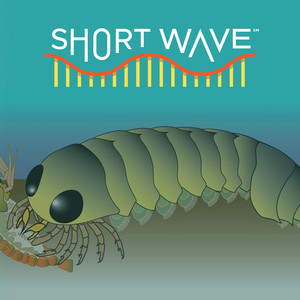
They looked at the brain and nervous system of a fossil from a now extinct marine arthropod.
It's called Mollisonia symmetrica.
And one of the study authors, Nicholas Strausfeld, told me that it lived during the Cambrian period.
That's around 500 million years ago or so when most life was still in the ocean.
And this fossil is about a centimeter and a half long.
They think that it probably had pincers by its mouth.
Yeah. On the outside, it doesn't look much like spiders, the ones we know today.
But when they reexamined this fossil, they found that its brain and nervous system had a similar structure to arachnids, which made them think that this might push back the origin story for things like spiders and scorpions.
Nicholas said that he thinks it's an early example of a modern spider brain with like organization that makes it easier to control movement like walking around and weaving webs.
And how is this new thinking landing with other scientists?
Because it sounds like a big shift. It would be a big shift. So I got in touch with an evolutionary biologist who didn't work on the study.
His name's Alejandro Izquierdo -Lopez.
And he told me in an email that Mollisonia is a really exceptional fossil and these findings are super cool.
But looking at things like brains and the nervous system tissue of fossils like this is a really complex process.
And it is possible that what seem like brains are other tissues.
shoes. Plus, he says this finding would raise a whole host of other questions about arachnid evolution.
But if these findings are supported with more research, that would make the Mollisonia the earliest arachnid ancestor and confirm that spiders do really come from the sea.
From sea spiders, maybe, to our next story, which has to do with the skies and the constellation Orion, which is one of two constellations I can actually find in the sky.
Big dipper Orion. So So I'm so glad we're on one of these.
Why are we talking about it?
Scientists want to study it to understand life, or at least stellar life, because basically all stars are born in clusters of hundreds or thousands of stars.
And an international team of astrophysicists studied open star clusters in Orion and its neighbor Taurus, and determined that these clusters, or groups of stars, seem to grow old following some basic rules.
This study used computer modeling to simulate how thousands of stars in these clusters might evolve and change over 800 million years.
And the simulations confirmed that these star groups in these constellations are indeed snapshots of different phases of a star cluster's life.
Here's Hossein Hakki, one of the authors of this paper.
It's like seeing photos of the same person as a baby, teenager, and elder.
Baby, teenager, and elder.
So fascinating to think of stars in that way.
Tell me more. more.
So they looked at three clusters of different ages.
So the baby cluster that they're talking about is the Orion Nebula.
It looks fuzzy because the stars are still like forming in the gas and dust. It's part of the sword that hangs from Orion's belt, if you remember like the three stars in the belt.
Yeah. And then the teenage star cluster is the Pleiades in Taurus.
It's more spread out than the Orion Nebula stars.
So, Mary Louise, looking at these three together, you can can see how these types of clusters evolve from bunched up fuzzy balls to big spread out groups of stars.
Although I'm wondering why they've only just been able to figure this out, like why scientists couldn't do this before these latest simulations.
So this hypothesis that these were snapshots of star cluster evolution, that already kind of existed.
But to have it correspond with simulations just happened because the computing power just wasn't there yet.
Until now, star Star cluster simulations were very simple.
The stars had minimal interaction with the dust and gas they formed from.
But in this study, they were able to, like, add that dynamic in and more accurately model, like, the relationship between stars over a long period of time.
The findings were published in the journal Monthly Notices of the Royal Astronomical Society.
All right. From maybe baby stars to human babies, our final topic.
And you were telling me about the odds of having a male or female child, which I always thought would be like 50 -50, coin toss.
Right. I mean, I also thought that.
But in big families with more than like three children, that may not be the case, according to reporting from our colleague Scott Newman.
Say more. What's going on?
Well, Harvard researcher Siwen Wong and her colleagues noticed something interesting among their own families and friends, which is that families with many children often have a string of male babies or like a string of female babies.
To the extent that we're wondering, this happens so frequent, whether it's simply by trends or is there any underlying biology explaining these sex clustering within families.
So to study this more, they turned to data that already existed.
It's something called the Nurses' Health Study.
It tracked over 100 ,000 pregnancies from 1956 to 2015.
And examining the birth records of more than 58 ,000 women, Si -Wen's team found a pattern.
In families with at least three children of the same sex, the next baby's sex tended to follow a weighted coin toss.
I love studies like this, by the way, that start with a researcher just being like, huh, there's this thing in my family.
Is this true everywhere?
Let's investigate. But it sounds like you're telling me, Rachel, each family may have a distinct tendency towards males or toward females.
Exactly. So in families with three male children, the probability of having another male child was 61%.
And in families with three female children, the probability of having another female child was 58%.
61 % and 58%. That's not 50 -50 or any.
We're close to it. Do they know why?
Well, one of the first things that stood out in the data were the mother's age at first birth.
Women who started their families at the age of 28 had a slightly higher chance of having families with all females or all males.
We also know that maternal age during the reproductive years is associated with several physiological changes, including shorter menstrual cycles and a lower vaginal pH.
So the age of the mom might influence the biological sex of the child.
And in speaking with NPR, Siwen noted that parents' ages are often similar to one another, and since the study focused on maternal data and didn't include paternal age or genetic information, the potential influence of fathers on these outcomes remains an open question for the researchers.
Okie dokie, cue up the next study on the daddies.
Yeah, absolutely. Mary Louise, it is always such a pleasure having you on.
Agreed. You should always come back.
I will indeed. Invitation accepted.
Thank you. Thank you.
You can hear more of Mary Louise Kelly on Consider This and Pierre's Afternoon podcast about what the news means for you.
This episode was produced by me, Rachel Carlson, and Jordan Marie Smith.
It was edited by Rebecca Ramirez, Christopher Intagliata, and William Troop.
Tyler Jones checked the facts.
Tiffany Vera Castro and Robert Rodriguez.
were the audio engineers.
I'm Regina Barber, and I'm Rachel Carlson.
Thanks so much for listening to Shortwave, the science podcast from NPR.
This message comes from Ritual.
What makes Ritual vitamins different?
Ritual vitamins are made with with bioavailable, clinically -studied key ingredients, and a patented nutrient delivery system that aims to help your body use the nutrients you're getting.
Ritual's essential multivitamins are made with you and your body in mind and backed by scientific research, filled with key ingredients as well as the essence of mint so you can enjoy taking your vitamins.
Get 25 % off your first purchase when you visit ritual .com slash NPR.
Federal funding for public media has been eliminated.
That means decades of bipartisan support for public radio and television is ending.
To be clear, NPR isn't going anywhere, but we do need your support.
Please give today to help keep rigorous, independent, and irreplaceable news coverage available to everybody, free of charge.
You can make your gift at donate .npr .org, and thank you.