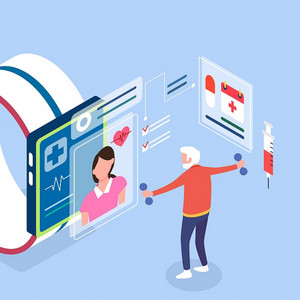
as China faces a rapidly aging population it presents significant societal challenges and to address this the concept of smart home care is gaining traction this involves utilizing technology to assist elderly individuals in living independently at home where do we stand now with China's over a 60 group
and how can these devices enhance the quality of life for those that use them.
After that, downtown traffic in a big city can cause a plethora of problems, and some cities aim to tackle these problems with what is called congestion pricing.
New York City is the latest to employ the strategy, and there is plenty to be gained from such a move, but at what cost to its citizens.
We are live from Beijing, this is Roundtable I'm Steve, and for today's show I'm joined by Niongg apologem and Lai Ming, first on the program.
As China's elderly population numbers continue to rise reaching an estimated 310 million individuals aged 60 and above by the end of 2024 accounting for 22 % of the total population, the question of how to ensure they live fulfilling, safe, and enjoyable lives has never been more pressing.
The future of elderly care may very well depend on technology.
While smart care products are experiencing significant growth, several challenges remain in ensuring that every elderly person can benefit from this digital revolution.
Let's explore how smart elderly care is transforming lives and what still needs to be done to make it truly accessible for everyone.
Yecallen and Liming, good afternoon to you both.
Where do we stand now?
In terms of the over 60 group here in China.
Well, as you mentioned, the group accounts for over 22 percent of the entire population and China is experiencing, relatively speaking, rapid population aging, meaning the proportion of elderly people is increasing significantly within a relatively shorter period of time.
The aging is primarily driven by two key factors, one would be the declining birth rate and than the other is increased life expectancy which is actually a good thing.
Yeah, exactly. Yes.
And here in China, we see that roughly 45 years ago, the life expectancy was around 68 years old.
And well by 2018, it had risen to 77 years old.
Which means actually, when it comes to elder population, we're talking about those who are above the age of 60 which are fully capable, can stay at home.
And some of them do not even need to, many of them, don't need to depend on their adult children.
And then after that stage, we enter a stage or the elder people might enter a stage that they need the help from their children or it may be from the social workers in the community or even when they need to do some body checkups, they need to go to the hospitals or different facilities.
And then the final stage would be a relatively rough stage for the elderly people that they lose the ability to take care of themselves so maybe at the final stage they need to stay in an institution or any kind of homes which in China we call it a three -phase elderly care method and that is basically
the elder care situation here.
310 million. That's almost the entire population of the U .S.
so it shows how big of a population that is and how big of an issue we might face going forward.
And the situation is further complicated by the fact that a lot of people are Moving they don't necessarily live where they are for instance young people like me I was born in southern China, but I work in Beijing which is north of China my both my parents They are above the age of 60.
They are being relatively good health conditions They can take care of themselves and when I think about myself when I try to make plans for them they don't necessarily comply.
I'm still biking my time to wait until such a time where they're not confident with taking care of themselves.
They're now all moving and make the calls, but it's a situation like this, parents and young adults, they're not necessarily living together and that further complicates things.
I think that group you're referring to and your parents is in that group, Elderly Empty Nesters.
This is from China Daily from October of 2024.
It's a group, the group, of elderly people who live by themselves or live with their spouses only.
And that group accounts for 59 .7%, almost 60 % of all the elderly people in China.
That was from 2021.
But that was up over 10 percentage points from the year 2010.
And again, we're looking at people over the age of 60, by the way, not 65 as some countries use that age to refer to.
So there's a large number of elderly people who live by themselves or with their spouse and not with other family members.
And that's why Smart Elderly Home Care is such a thriving industry right now.
So what does that look like exactly?
Oooh, it actually looks good.
Okay so, let's give it a little bit of a definition of the smart elderly care, it refers to providing real -time, fast, efficient, interconnected and intelligent elderly care services while reducing the costs of care, and on one hand it involves the application of advanced technology such as the internet
of things, artificial intelligence, big data, in various aspects of elderly care, on the other hand it entails innovation, in method, content, and model of traditional elderly care products and services.
So basically, smart elderly care is not merely the combination of advanced technologies and products, it also emphasizes delivering services that are more refined, intelligent, and diversified, and according to some research we've done and also some interviews I have personally done.
done, and I realize that if I am in my 60s, especially considering I'm only 30 something and by that time, the technology would be even advanced, I almost look forward to.
Yeah, my super haired years.
Imagine this in the morning, you do not wake yourself up.
You are waking up by a smart robot and the robot place, your favorite music that you didn't even still remember it surprises you with the music, it wakes you up and when you're waking up, the robot would remind you well it will first to tell you your blood pressure, it will tell you your health condition, and it
will remind you to have every nice warm cup of water that it has already prepared for you.
And then it tells you what you need to do for the day.
Maybe it's time to go shopping.
Maybe it's time to go to the community library to And the medication needs to be reduced off.
That's another thing.
I was just about to say, I watched a brief documentary on Alzheimer's and how technology was helping patients with Alzheimer's.
Particularly patients who might suffer from it when they live alone.
And that's one of the AI assistants or robot assistants tools is that, you know, when you have Alzheimer's, you may forget to take your medication at a particular time and the tool is there to help remind you of that.
Yeah, for those of you who are not elder people, you might not know that actually the medication is complicated.
It's not as easy as taking one pill a day.
It's like before the meal, after the meal, maybe one and a half for today and two pills for tomorrow because it needs to be adjusted and the adjustment can be sent from the doctor directly from your personal robot.
So you do not have to remember anything or make a schedule.
Your robot would remind you to have the medication when it is in time.
and after that, it reminds me to go to the 60 year -old version of me, by the way, to go to the community library to attend the singing class that reminded me to sign up four or two days ago.
Sounds like you have your retirement years all planned out, doesn't it?
It doesn't stop there.
In the afternoon when I was sitting on my couch watching TV for having an hour, my couch tells me that, you know, you've been sitting on me way too much.
You need to do a little bit of exercise and here is the gym that I have already booked for you in half an hour so you can do a little bit of preparation and go there.
And you turn the robot off.
Yes, I would do that.
But definitely, that could happen and it's happening for a lot of elder people already.
Just one more example on the care robots or companion robots, it's not just reminders.
I was watching a report from CBS News in the United States.
And it talked about the story of a woman who was from California.
She lived there for 35 years and then she had moved to New York and she said that she didn't really have any friends there her husband had passed away years ago and She had a companion robot that was basically a friend.
She said to the news reporter Oh, let me introduce you to my friend and it provides a number of different services one They can take a virtual trip together so the screen on the companion robot will put her picture on a beach somewhere and then screenshot that there's lots of different functions for these
but that's just one example, I mean care robots what else are we talking about?
Well food for the elderly, elderly food that refers to specialized products designed to cater to the nutritional and health needs of the elderly population sometimes it is an operating system or a just a an arrangement that works with perhaps a local canteen already here in China in some communities
we see stuff like the community cafeteria where the elderly and the young very young can go and have meals this is becoming a thing now and so maybe a smart system might remind you oh the canting is open now and today's menu is this and that and banana and stuff that's your favorite and then you'd just
go or if you don't feel like going or you are not in a position to move perhaps you can place an order for to have it to deliver to your door that could be something and remote monitoring.
Census in the home can monitor a seniors movements, sleep patterns.
And even defect falls.
And even detect falls, for instance, smarts beds or mask Ivans where someone gets out of bed at night and send alert to caregivers.
This is, I think the next step because already, I don't know that something like that already exists but what I do know is remote censoring or remote monitoring already exists in rural areas.
My parents -in -law they sometimes spent time in Beijing to help us with the kid.
However, they have their own parents, elderly parents to look after who is already in the 90s and who lives in the very remote parts, in the mountains, in fact alone and so what they do is they subscribe to a special kind service with the telecommunication service providers who would install cameras
around the house in the village and every day my parents -in -law they would turn on the application to check on their elderly parents to see how they're doing I mean is we are facing rapid aging and therefore we are probably going to experience shortage in the workforce so We can't afford to have every
elderly parents or every elderly people being taken care of by human beings, but technologies such as smart robots and remote monitoring might ease the burden somewhat.
There are examples from here in China as well about smart elderly care services, like a smart dining service, for example.
It's in Hangzhou, I think, where elderly residents can use a particular app to easily find nearby senior dining spots which is a really cool thing.
They're called AL City, and their dining halls, and they offer a range of discounts, which is great, 50 -80%, by the way, for seniors over 60 regardless of where they are living, and that makes it more inclusive and more convenient compared to perhaps traditional meal services tied to a local residence.
Yes. And if you combine that service with the service provided in a dining, elderly dining Hall in Shanghai, you would get a meal tray that is actually a monitor.
The tray contains a chip that can identify the food placed on it.
And at the checkout, the cashier reads the chip and it will immediately provide you a nutritional report.
Oh, wow! Yes, it's really cool, it includes calorie counts and the primary nutrients of the food thereby reducing the workload of service staff and healthcare workers to account for that and do the report.
So you get the data of your daily diet and you can give it to your nutrients.
Wow, that's amazing.
I don't know if you want that kind of nutritional information.
When you're going for a, for an unhealthy snack.
But I'm teasing. Of course, it's great to have I'm sure the tech companies and also meta experts might also want to have that data.
Think about it. A lifetime of data of what you've taken and the study into the dietary input and also the resulting effects on somebody's health might lead to very good findings going forward and this might help us form, or encourage us to form healthy living habits and therefore reducing the cost of medical
bills for generations to come.
There are lots of great examples that we just provided, but that's not to say that the industry doesn't come without its challenges.
So what are some of the difficulties facing smart elderly care?
Well, to start with, many older adults are fearful or hesitant to use new technologies.
We see over 50 % of non -internet users report fear or unfamiliarity with computers and the internet.
And this fear compounded by doubts about their ability to learn leads to resisting in using it.
And even if it's their children who are teaching them the exact technology they need, they still find it a little bit resistant.
But we've already got some, let's say, applications and new technologies to help them.
That is, instead of having them learning how to use these things, just train the technology like they're a human being.
And it is already happening.
In Beijing, we have a 65 -year -old citizen, Mr.
Wang, saying that for him, Because his children has adapted many of the facilities in this house where this elderly is friendly kind of services and that adaptation what he needs to do is to turn on the TV and to start with, he doesn't have to do anything.
Let's say the program him likes the program cater to elderly.
Let's say friendly content would immediately appear on the TV needs anything.
He just needs to talk to the TV like he's talking to a person so technically speaking he doesn't need to learn the technology.
Well, the thinking behind the design and development and installation Well, the thinking behind the design and development and installation on smart technologies in homes and in caregiving facilities must be rethought and revolutionizing.
I think to borrow the idea from whoever developed the iOS operating system, a user doesn't necessarily have to know how to code, It doesn't have to know what how one particular application works in order to make use of the technology just in the same way as a regular driver doesn't need to know how
the engine works in order for him or her to drive a car.
So there's a lot that we can do to streamline and improve the interface.
Nailedly, people doesn't necessarily have to know how to tinker with the software or the hardware within his or her own homes in order to give commands to the smart system?
You don't have to know how the engine works, but you do have to know where the key goes, right?
So, there is at least a little bit of interaction necessary and even something as simple as talking to your smart TV, that can be intimidating, right?
We can't paint all the elderly people with a paint brush saying everybody should know this or maybe doesn't know this.
Particularly perhaps in rural communities as well, where access to that kind of technology might not be as accessible as it would be in big cities like Shanghai or Beijing.
Access shouldn't be a problem.
I mean internet access shouldn't be a problem because the internet penetration rate here in this country is much higher as compared to let's say even the first world country.
More than 99 .8 % actually.
And the smartphone ownership rate is also stunning.
So I would rather worry about the psychology behind, or the thinking behind elderly people's reluctance to use smart technology.
When I was young and cynical I would tend to question decisions such as relying on a robot to take care of my everyday needs.
No fall only on with that confidence on machines?
Anyone would prefer to talk with real human beings?
When we make customer service calls and our immediate thinking is let me talk to a human being a specialist.
We quits with the automatic response kind of thing.
But going I think for the younger generation already, like Christine Newhorning, she is in her thirties, and I'm confident when I reach the age of 60, I might be willing to to use that technology.
It is arising from a deeper understanding about the technology and a deeper trust given the rate at which artificial intelligence and its developing, given the rate at which we are already using them in our daily life, I have confidence that going forward, a new generation of elderly people might have less
of a problem than what we are already having.
That's true. But that's for the next generation, isn't it?
The current generation of elderly people didn't grow up with smart phones, didn't grow up with touch screens.
So you're right. Maybe access to the technology was the wrong choice of words.
Maybe I should have phrased it like this.
having an, having an adequate support system available in case, there should be issues that arise with the usage of, of the technology.
I think that could be a very helpful to all having guidance in place to support this.
And families and communities sometimes perhaps forget that there might be a general lack of knowledge about that type of thing.
So having that support there and easily accessible could really help.
I could tell the short form in knowing something is obviously important but knowing what to do to follow up is also important.
So with the smart device I know that an elderly folks has has fallen in his or her own bathroom but what is to do with that knowledge?
Are there medical teams that don't stand by 24 hours a day to do something about it and so the whole, the whole system needs to be That is a very important point.
I was about to say that now a lot of the gadgets and a lot of the services are, relatively speaking, isolated by themselves.
Like Laning said, if we're talking about an ideal future community for elderly to live in, then not only do we need to install all the intelligent gadgets in their homes.
The gadgets need to be in service or in the web, in the same web or system with the kind of services that's provided by the health care institutions in the city, it needs to be linked to for example emergency response system in the city and if one button is pushed because someone fell off then the entire
city should be moving to pick that person to the hospital.
And the other issue I think we should stress is that also it comes with the mentality or psychology of elderly folks.
My grandpa who passed away last year lived in his apartment building for his entire life.
He didn't do anything about it.
The last time I went to his home when he passed away I could recognize the same decoration, the same arrangement as I lived through more than two decades ago when I was a little kid.
So oftentimes elderly folks don't want any change in their lives and also there is also the mentality of trying to save money to to avoid spending money or anything to do housing improvement.
And we know that at this rate smart technologies can be more expensive, a smart light turn on automatically can be more expensive than a regular light.
So it might go it It might be a tough battle to convince elderly folks to do and introduce such improvements in their homes.
Or convince them that they need them because they might be resistant as well.
So now we know what products are available.
We agree what services should be provided to be there for support.
What about the future?
Where are we headed with Smarter Elderly Care?
Well the elderly care market in China actually well, part of the broader silver economy has been growing rapidly and it is expected to continue expanding.
And also currently there are over 350 universities nationwide offering programs in intelligent health and elderly care services and management, including both undergraduate vocational colleges, a lot of different schools.
And as before, the number of graduates is estimated that over 4000 institutions across universities across all these countries provide these programs which means that more and more talents are getting into the field than they can provide services like not only the services but also do research in inventing more
services and products that we cannot even imagine.
There's a rise to in things like digital entertainment, where we're seeing elderly people becoming more engaged.
And I think This is, this is perhaps addressing the problem that we were worried about.
Is this going to be overwhelming?
But apparently not elderly people, like I said, engaging in digital entertainment.
There are growing numbers using the internet for activities like watching short form videos and live streaming and playing games online and shopping.
And that trend is driven by the wider availability of digital content and platforms, particularly those offering easy to use feature features.
for older users. So, maybe we shouldn't be as worried.
You know, maybe that's our stereotype.
We are a little bit younger, so we make this assumption, oh, the elderly don't know how to use a smartphone.
They're probably even better at it than some of us are.
That would be fair to say too, I think.
Well, it is a growing industry that we know.
And I think the wonderful thing is that the government is very aware, obviously, of the rising numbers in aging citizens, And they're doing things to help make sure that they can live their best life if you will