These are my personal opinions always seek a professional when you're making choices about your mental health and well -being.
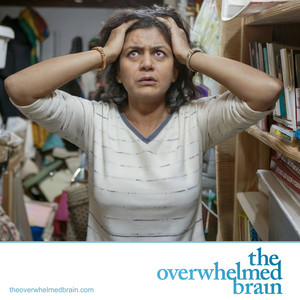
Let's declutter. Let's get the clutter and disorganization out of our brains out of our lives and do something about this confusion that we create for ourselves And this really stems from somebody that wrote to me and said I I need help on building walls of clutter electronic or physical They said I have a lot of websites.
I have tons of bookmarks I have zillions of email addresses and lots of crap in storage It's awful.
I screamed for help on how to reboot and how to focus on the essentials and and yeah, I hear that.
In fact, one of the first things that comes to mind, for me, because I've always considered myself an organized person until I met an organized person, my wife, who was much more organized and really dislikes my organizational skills.
When she's looking for stuff on my computer, she has no idea what folder I would put it in and my hierarchy and my categorization, and I know it pretty well, but the problem is I pick up other systems. And what I mean by that, and maybe you can relate, is that sometimes we have a system to organize our life, and then instead of following that system every time, we create another system.
For example, my taxes.
I have a folder but it's under the finances and general folder that I put on my computer but I also have the paper form the paper version of my taxes in a file drawer and I filed it under T for taxes and then the year and that made sense to me but sometimes I'll get something in an email that says this is your 1099 or your W something and I don't know what to do with it do I put in the tax folder do I put it in the business folder that's the it's associated with that business you know if it comes from a or if it's about a business that I've worked with and they are sending me a tax form do I put
it in the tax folder do I put it in the business names folder and so I haven't necessarily been perfectly organized and then like I said sometimes we can pick up a different system okay I'm used to putting taxes in T but this time I'll put it in F for finances.
It's a different system and why am i talking about this well, i've never talked about this before this confusion and clutter that we can create in our lives and i wanted to share something or a couple things that have helped me that maybe they'll help you if you're in the same boat.
One of the things is especially electronically is i found an app and this is not a sponsored ad I promise, but I did find an app that works for me.
I tried apps if you're familiar with it like Evernote.
I've tried OneNote from Microsoft. I've tried a few other things, and then I accidentally stumbled upon something one day when I was making checks for my business and this is kind of a funny story.
I sent out for checks.
This is probably so boring to some people, but I'm going to share it anyway this may drop flat and nobody likes it but I'm going to share this anyway I sent out for checks and I got them back and on the envelope it said my business name the O brain not the overwhelmed brain the O brain and I thought that's so strange I mean it was better than the one I got last time, which just said the overwhelmed bra because they couldn't fit the letters.
So they took that off and they just shortened the word overwhelmed because my business name is the overwhelmed brain LLC.
So I get these checks and fortunately the checks were right, but the address said that probably because of some limitation where they only had a limited amount of characters they can put on the envelope.
So I opened it up, got my checks and then I decided what is this, if I look up the o -brain what am I gonna find, because I wanted to look it up like what if I got somebody else's checks or what if this is another company name.
So I looked up the O -brain and I didn't find that and it might be there now but years ago I didn't find it but I did see something pop up that said the brain and I thought what's that and I looked and it was an app and again this is not a sponsored spot but I want to tell you about it because it has changed my life and it was something that allowed me to store things electronically that worked the brain works which was very hard to find so I looked them up the brain I downloaded the app they have a free version that's fully functional and I started putting things in it and the more I used it the more
I loved it and that's all I'm going to talk to you about this because they're not paying for this spot they don't even know I'm talking about them but I wanted to share that with you in case you are in any sort of electronic clutter, not that the The Brain app will work for you.
Some apps are out there that may work better, but that's the one I found that works for me.
My wife loves OneNote.
She uses it religiously.
It is fantastic for her.
I use OneNote for my podcast and for other things, but the brain is where I store everything.
That app is now something I use because of one very specific thing it does, and this is why it works like my brain, maybe your brain too, but one very specific thing it does is when you categorize something it allows you to put in the hierarchy in the way your brain would associate things.
For example, if I had an area for taxes I can choose to put it under finances and the business name and something else.
And so has all these links and associations, that works the way my brain does.
And that's what I wanted to share with you as far as electronically.
That is one of the things I use electronically to help organize every thought that I have. I have all these things that come across my desk all the time financially.
Other things like articles that I've read or recreational stuff the the hobbies that i have things that i work on everything to do in my life i couldn't organize with a folder structure as easily as i could in this app and so that's why i started using the app that is their free promo for the brain app you can find it online and you may or may not like it my wife she doesn't like it my wife does not like this app because that's not how her brain works.
It's sort of how all of our brain works, but that's not how she organizes things.
And so she prefers OneNote with the pages and the folders, and OneNote's fantastic, too.
I can't believe I'm talking about this on this show, but I wanna share things that make your life better.
I believe that it's important to share things that make life more organized, more efficient, more stress free.
That's something I used to emphasize on this show all the time.
How do you get more stress -free?
How do you get out of overwhelm?
I believe you have to have a system.
That is one of my system.
It has been a huge help.
It does everything I needed to do and OneNote does, Microsoft OneNote, does everything that Asha needs for her.
So there's one aspect of organizing my life electronically.
I'm not necessarily saying go get that app I'm saying find an app that works for you, even to organize your life outside of the computer.
Find an app that works for you.
When you find something that works the way your brain thinks you feel it, you know it, and it feels really good and then you always have a place to come back to, to find what you need.
And that is so important.
when you have a system that works for you keep using that system.
What got me over and over again was I would always try something new well that app doesn't work very well or this system doesn't work very well so here's what here's what I'm gonna do next I'm gonna try this new system then of course when you do that now you have these multiple systems that add to the clutter now this This person also asked me about physical clutter.
And I can relate. I have physical clutter, I have a little wood workshop downstairs that I do, woodwork and things like that.
Nothing fancy. I just have to build stuff every now and then.
But I have collected a few things over the years that are now taking up space.
I have a table that I work on and now those things are on the table.
And things that are taking up space.
And I have not taken the time to go down and organize that, sell it off, give it away, throw it away.
It's just sitting there and so my big issue has been about actually taking the time from what I'm doing even right now and organizing that because something else is always a priority and that's even worse when you house.
We own a house and we have to take care of everything ourselves and we have the space to do it.
And you know you collect things.
Fortunately we're minimalists for the most part.
But there are still things in the way.
There's stuff and I want to get rid of that stuff.
And talking about it now is putting it into my awareness, which is something I suggest. Talking about it, bringing it into your awareness, and then making a commitment not to pile anything on top of it, and then making the commitment to schedule time to do something about it, even if it's just one thing.
I I believe in the one thing rule.
If I can accomplish one thing, if I can get rid of one thing, or move one thing, or build that shelf so I can finally get it off the floor.
I got something I'm thinking about right now if I can just move in that direction and do that one thing then I can feel a sense of accomplishment and then I can move forward so that's one of my recommendations I am not a physical clutter expert by any means In fact I'm pretty much the opposite.
But that is my advice for any type of physical overwhelm or physical clutter is just committing to one thing.
There's a few holes in the house and I keep getting this message on my screen.
This is another app that I use.
What's it called? It's called Notezilla.
I love this little app because it writes a sticky note that you can pop up on your screen to remind you later.
So again this is not promotional I'm just telling you how I run my life how I do things.
I sit at my desk all day long and sometimes I just need a quick reminder.
I hit my my shortcut on my keyboard it brings up a sticky note I write it and I hit another shortcut which asks me for the date and time to pop up on my screen and it's wonderful.
It's a wonderful little system that I use and it is helping me stay organized as well.
So I have this... my point is I have this sticky note that pops up once a day that says, hey, you still have holes in the house to fix.
I have some woodpeckers that come and like to chew on the house.
They peck at it and they make these holes and so I have to fix them until we get some other siding.
So I have this sticky note that comes up that says fix these holes and then I know I can't get to it in the moment so I just say snooze for a day and it pops up the next day then snooze for a day and it pops up the next day.
Wonderful little app.
So this is very similar to something that I talked about a long time ago about valuing your partner's values.
It's not very similar but it's close to what I was talking about then which is when you have somebody in your life that values things that you may not value.
It's important to understand how valuable those things are to the person so that you know not to cross any lines that might be there or say something that might be cold -hearted unintentionally, it's important for you to know what they value.
And the example, it was a person that wrote in and said I always forget to lock the door and my girlfriend gets mad at me every time because we don't live in the safest area.
It's okay, but she has some trauma from some past thing and I forget to lock the door when I leave. It just slips my mind and I told this.
I think it was a guy.
I told this guy that you need a system that reminds you to do it.
Either put a sticky note on the door that says lock so you don't forget or whatever whatever it takes.
Put it on your alarm you know put a note in your car.
So when you get in your car you see it and then you go back and lock the door because it's important to her and it's that you find it important enough to do that for her.
Otherwise, you are dissolving love and connection.
See, I'm moving from the apps now to some personal stuff, some relational stuff, but that is so important in a relationship is to value what another person values.
So that's why I brought that up is a little sticky note thing that I was talking about.
And it helps to create a system that you can follow, that you know you'll follow.
That could just be a reminder note that is right above, in this example, right above the doorknob that says lock.
Oh yeah, I got a lock.
It's like when we bring our own bags to the grocery store and we come up and unpack those bags in the house.
And now we have these bags that I gotta put back in my vehicle and instead of going all the way back down I just put them in the doorknob now what usually happens is we forget the bags even though they're on the doorknob but it's a reminder and oh yeah there they are I'll grab them so that is a system you have to find the system that works for you when you find it don't add any more systems you just use that system until it doesn't work I put system on top of system and then I didn't know which one to follow, where to go and where to look because I would use different systems. It's like putting
away something in my little workshop.
If I put something away, I ask myself am I going to remember that I put it here?
Will I remember that I put this thing here and I ask myself if I were to go to look for it where would I look and that's where I put it and it typically works like that for me but I'm still trying to organize that stuff so that's why I say I'm not the best at giving you advice on physical clutter but I do like to follow the one thing rule I'm gonna do one thing even if it's part of one thing I'm gonna do it and that keeps me organized and it keeps me out of overwhelm and I make sure not to pile on top because once you pile on top of that one thing like oh I bought this wood to build a bookshelf
and then I bought some more wood for something else now I have two things going on and of course that's just gonna get cluttered it's gonna be disorganized at least the way I do it Speaking of organizing our lives, finding the right people to be around is part of the bigger picture of making life easier.
Do you make the sometimes hard decision to get away from those red flag people?
Are you looking for the green flag people?
That's what I try to do.
But what if we focused more on looking for those green flags in friends and partners?
Our sponsor today BetterHelp can help you identify those green flags and embody that positive energy yourself.
BetterHelp is fully online making therapy affordable and convenient.
You can access a diverse network of over 30 ,000 credentialed therapists with a wide range of specialties and you can easily switch therapists anytime at no extra cost. Whether you're dating, married, building friendships, or just working on yourself, it's time to form relationships that love you back.
Discover your relationship green flags with Better Help.
Visit www .BetterHelp .com forward slash brain and get 10 % off your first month.
That's www .BetterHelp, h -e -l -p, .com forward slash brain.
Check them out today.
Now, one last thing, and this has helped me greatly with minimizing and organizing and just playing, getting rid of stuff.
Sometimes we think we have to sell it.
Like, it's worth something, so I better sell it.
And then we never get to it, and it just sits there.
One thing I've learned to do is either, a, take it to a thrift store or a Goodwill.
That's where we go, we go to Goodwill.
And just drop it off, and there's also, if you live in a house and you have a driveway, you can put something at the end of and say, free.
that's what I do too and I know this is basic stuff but I learned that I was so attached to things I needed to sell it I needed to get my money's worth that's how I used to feel I have this thing and it's worth $100 and I I need to get that money back and letting that go has eased up my life has made my life so much more manageable and so much easier to deal with and I've got a few things downstairs right now that I'm just gonna put at the end of the driveway, put the free sign on, somebody's gonna come along and say, yes I want that.
There's so much stuff in the world anyway, why not just give it away?
it's gonna come back to you eventually.
You'll see something on the side of the road, you'll find something really cheap at a thrift store, or maybe you'll buy something because you made room for it and because you have that room you can get that perfect thing you've been wanting whatever and I know this like for me it all stems from that day in Arizona that my car broke down and I lost all my stuff I became a minimalist after that day I didn't want to have a lot of stuff because I realized the more stuff I have the more worried I am about it the more stress I have about it.
That's changed over the years.
Now I feel less worried about my stuff, but it's because I don't mind giving it up.
I don't mind letting it go.
And when you're able to let go of your attachments, your life changes.
I always believe that if I'm wearing a jacket one day and somebody comes along and says, I really love that jacket.
Wow, where do I get that jacket?" I would probably take it off and give it to the person because they clearly find it more valuable than I do.
You know, if that's the case.
If I really loved my jacket, I'm not gonna give it away because I love my jacket.
But that's how I feel.
I feel like if somebody really wants something that they value and I don't put a price tag on it.
I can let it go. I don't sit there thinking well you can have this but it's gonna cost you.
It just depends on what it is.
But letting go of attachments to stuff is another way to release the clutter, to organize your mind, to organize your place of residence, to organize your life.
It's like that day I went through all my pictures.
I had 600 pictures, you know with the old cameras that made pictures, not the digital stuff and I went through each and every one and I asked myself, does this make me feel bad?
Does it make me feel neutral?
Does it make me feel good?
And I just went with the feeling and when I looked at the picture, if it made me feel bad I threw it out, and that was hard because these are pictures and you can't get a copy anymore unless somebody also has a copy but if you have the only copy of a picture and you throw it out, I don't know about you, but that was very hard to get on board with.
But once I did, I got rid of the pictures that made me feel bad, you know, as somebody in there that was toxic or it was an event that I didn't want to remember, I was thinking, who cares?
Get rid of it. And I haven't missed a single one.
I think about some of the picture—I can't even remember the pictures I threw out, but I haven't missed anything.
I kept the ones that made me feel good.
I ended up scanning them so that I can have them digitally, and I don't have them all still, but I still have those pictures.
And it's just a wonderful feeling knowing that I could let go of all these things.
That they don't have to be something that I hold on to forever.
I think we have the notion that we're supposed to hold on to things forever and Sometimes it's nice if it makes you feel good, but it can build up and it can pile up Then what I?
Remember my mom I've told the story before but my mom when I was a teenager gave me a stereo system dual cassette Lloyd's I think was the brand name and I had a turntable and I played with it all the time And then I moved and I took it with me and then She was so proud of it She was proud that she got me a gift that I loved and when I moved I took it with me Like I said, and I I didn't see her anymore because I was a thousand miles away from her now and she asked me How is that stereo?
I said home. I got rid of it.
I sold it or something and she said you did She was hurt.
I Said yeah, I you know, I didn't need it anymore or I have something else now.
She said oh, I felt so bad.
I just disappointed my mom, she got me this gift and now I'm telling her I don't have it anymore.
And so I told her, I said, mom, did you expect me to keep it forever?
And I heard this long silence and she said no, I guess not.
I mean, I never really thought about it.
I just thought you'd have it all that, I don't know.
And she had to think about that for a while.
And I tell you what it changed her.
It changed her feeling about giving gifts in a good way because after that, anytime she gave me a gift, she truly genuinely said, it's okay if you don't like it.
It's okay if you want to get rid of it, if you want to sell it, I don't care.
And it wasn't like sarcastic or anything like that.
It wasn't like a dig.
She truly meant it and it helped her let go of an attachment to someone else's attachment to what she gave them.
It was a huge difference in her approach and the way she gives and the way she receives because she also felt that she needed to keep things forever.
And so when I gave her something, a gift of some She had no problem either keeping it or getting rid of it, because it was hers to do with whatever she wished.
And that, again, changed our lives.
We were no longer attached to the gifts that we were giving someone.
We just felt good about the act itself.
And whatever they did with the gift that we gave, it was their choice.
it was freeing it was freeing for my mom to be able to let go of things and for her to let go of what I did with the things that she gave me and it was a really nice new arrangement a new understanding with a new understanding of how gift -giving worked how attachments worked and were we putting expectations and obligations on another person, when it wasn't really, I'm gonna say, our right to do that?
Like, if I give you a gift and then I ask you about that gift years later and you say, oh, I sold it, should I be crushed that you did that?
Or should I be happy that you felt like you could do whatever you want with that gift?
gift. And I understand there are some exceptions here.
There are some special gifts that we go out of our way, or we make or whatever, and it's a special thing.
But there's some golden lessons as value in what I'm talking about here.
And with my mom, after I told her, do you expect me to keep everything that you give me?
That's I think that's how I said it.
Do you expect me to keep everything you give me forever?
And she really thought about it and she's wise and she said, no, I guess not.
I never really thought about it.
And after that, we had a great understanding, and that's how she is today.
And that mindset brought value to both of our lives.
It takes away expectation or feelings of guilt or obligation that we don't need to carry around.
It's a very healthy perspective.
And again, I know there are exceptions, but when you can give with no strings attached, very, very similar to how I look at apologies.
Apologies should be no strings attached and no expectation.
When you say I'm so sorry, you should not say in my opinion, you should not say, do you forgive me?
Because they need to process it in their own way and come to you to say, you know, okay, I forgive you or not, or maybe Maybe they'll never forgive you, but they get past it and it's OK still because they've gotten past it.
And that's how I look at apologies.
That's how I look at anything that you give to someone.
When you apologize to someone for something that you did, something that you maybe didn't mean or maybe you did mean, but now you're apologizing, it should be a gift. It should be a no strings attached gift. I am so sorry.
I'll never do that again.
and I feel so bad that I did that, I am truly sorry.
And that's where it should leave, instead of please forgive me, please, will you please forgive me?
Because if they're not ready, you don't want to force them into being ready.
They have to get to that point themselves.
So that's how I do apologies.
That's how I teach it, if you wanna look at it that way here, then some people may agree with it, some people may not, but I think it's a healthier approach than placing an expectation on someone to forgive you, especially because now they're on the spot.
Now you've got pressure on them.
Please forgive me, please.
If they want to, they will.
I think we need to empower people with the choice to do that.
That's really the arrangement that I had with my mom.
She's empowering me to do with whatever I want with the gift that she gives.
The same with her. I'm empowering her to do whatever she wants with the gift that I give her.
Same thing with I love you.
I love you. When I say that to Asha, my wife.
I love you. She may or may not say it back.
That's my gift, I want to give her that gift. She doesn't have to say it back because I'm expressing myself to her.
If she wants to express that because she feels like saying it, then she says it back, but she doesn't always.
and I'll admit the very beginning of our relationship that was a challenge because I was so used to hearing it back and I realized I said it sometimes, most of the time, to hear it back and she told me one day sometimes I just don't feel like saying it and again that struck me kind of hard because I wasn't used to that and then I thought about it and I realized I guess there are times I don't feel like saying it too hmm what does that mean that means that sometimes we're in a different mind space we have different emotions going on there could be a number of things going on in our mind and our
heart we could be angry and we don't want to say I love you too so sometimes that's what happens in our relationship.
I'll say it, she'll say it.
Sometimes we reciprocate, sometimes we don't, and it took a while to get used to, but now that I understand it and where it comes from, and why I used to do it, at least 80 % of the time, to hear it back, I realized that that string is attached.
Those aren't necessarily unconditional words, are they?
This is only my opinion.
I don't know how you feel about it, but When I say, I love you, I would hope that those were unconditional words to show the person how I feel about them, instead of an expectation to receive the same words back.
It's always nice. I'll admit it's always nice to get them back.
But when I don't, am I secure enough in this relationship to understand that they love me anyway and it doesn't have to happen.
It doesn't have to be the words because sometimes it's not words.
sometimes it's a touch, it's a look, sometimes it's looking at a relationship that you're in and telling yourself they've been with me for the last X number of months or years and they haven't left. So that says something, doesn't it?
That's how I see this relationship, I mean, I've been with her for 11 years now, is at this recording.
And I see it as of all the people that she could be with, she chooses me every day it's mind -blowing it it just it's mind -boggling but she chooses me and that is a special feeling so sometimes we have these people in our lives that mean something to us and I see it as a healthier approach to see all transactions all interactions as gifts and not with expectations, not with obligations.
It doesn't always work but it is nice to see it that way because it is part of letting go of the attachments type of thing and yes this this all has to do with everything I've talked about today because it is all about distressing and organizing and decluttering and getting into a better space inside your head inside your heart so that you can move forward without so much on your mind?
I mean sometimes we carry these dysfunctions with us in our lives, and we think that this is how it's gonna be, and I'll always be upset about this, or I'll always be stressed about this.
Talk about decluttering.
Sometimes we just had to declutter the thoughts we're carrying around with us.
Like, I'll never get over that thing that happened.
How can we work through that?
How can we process it?
How can we look forward instead of constantly looking in the rear view mirror wondering how to get past something, and I know that's a much deeper subject.
I've talked about that in different episodes, and sometimes we have to approach things in our own way, in our own time, we have to heal.
But that is another thing in my life that I like to look at, is what am I carrying around with me?
What am I moving forward with that keeps stopping me from enjoying life.
Am I still jealous about this one person or am I still upset that so and so did this to me.
Am I still whatever?
I just don't want to carry that stuff with me.
So that's what I do.
I think about what I'm holding on to and what is stopping me from enjoying life.
If I have a thought and I want to act on that thought, but I stop myself because of some sort of fear or some sort of negativity, I ask myself, what's this about?
What's going on right now?
Why is this thing that I'm carrying around stopping me from doing what I want to do in my life?
I don't want that to happen anymore.
So I'm gonna address it, I'm gonna reflect on it, I'm gonna work on it, I'm going to get help if I need to Just to clear up the path forward. I want to clear that path So there are no more obstacles stopping me from getting what I want in life Sounds selfish.
It sounds like I'm working off of ego, but really that's what we're doing, right?
We're trying to get what we want in life Some of us want love and connection some of us want stuff some of us want money Some of us want a house.
Some of us want to go back to living in an apartment because it's a lot of work to take care of a house.
I know this, I had to learn this the hard way.
It's still a lot of work to take care of house, but to me it's worth it.
I like it. Thanks for joining me today.
I hope this helps somebody out there.
This is a very different show than I normally do.
I gave away brand names and talk to about software and it is part of living our lives in this new world that we're living in with all this technology and AI and we still have to deal with our own stuff but can we make our lives a little bit easier even though we have this stuff that we still have to work through and why not utilize the tools and systems that are out there today so that we can start clearing the obstacles to getting what we want in life and feeling how we want in life.
Again, thanks for joining me today.
I appreciate you listening to another episode of the Overwhelmed Brain.
I want to thank somebody that wrote to me and said, Hey, you know, the audio in your podcast is really low on my system, so can you please fix it?
And so Ken, thank you so much because him and I went back and forth and he shared some information with me, and I realized after 11 years that the system that I was using wasn't set up exactly right.
It wasn't set up the way that a lot of other podcasts are set up.
I just went with it every day.
I used that system until I found out that that system doesn't work, or at least doesn't work as good as it could.
So thank you, Kat, I appreciate you writing to me and letting me know that.
Hopefully going forward the podcast will be brighter and louder.
You'll have to tell me if they're not Because they go out there and I don't always know everyone's experience Listening so I am appreciative that Ken wrote to me and told me that I also want to thank the people that donate and Give to this show the patrons.
I am very grateful to them They are valuable to me and they find value in this show and choose to give back and that just warms my heart Thank you patrons.
Thank you everyone that gives to the show.
If you find value in this show and you'd like to give back, head over to moretob .com and there are options to do that over there.
And there's another podcast I create called, Love and Abuse and it's about how to navigate the difficult relationship.
And we're talking about emotional abuse and control and manipulation and probably some behaviors that you may not know are abusive, but they are.
You may want to check that out if you're dealing with any of that over at loveandabuse .com, and if you know you're the difficult one and maybe you're doing the emotionally abusive behavior, head over to healedbeing .com.
If you want to work on that, if you want to change that, I have built a comprehensive program that walks you through basically creating the best relationship possible and showing up as the best version of yourself and telling you what consists of abusive behavior.
I really look at it as the perfect formula for being the best partner you can and building the best relationship you can.
That's over at HealedBeing .com.
And with that, always keep your mind open because that's how you make the best decisions.
And be firm in your decisions and actions so that you can create the life you want.
always take steps to grow and evolve you are powerful beyond measure and above all and this is something I absolutely know to be true about you you are amazing