
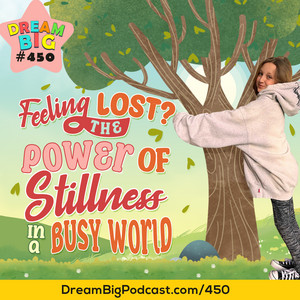
[The Power of Stillness: Why Doing Nothing is the Best Strategy When You Feel Overwhelmed]-[DB 450: Feeling Lost? The Power of Stillness in a Busy World]
📋 Summary
The Power of Stillness: Navigating Life’s Overwhelm
In episode 450 of the Dream Big Podcast, host Sophia Cartman offers a profound counter-intuitive strategy for managing the chaos of daily life. Drawing a parallel between physical survival in the wilderness and emotional resilience, Cartman explains why the most effective response to feeling "lost" is not to take frantic action, but to embrace stillness.
The "Hug a Tree" Philosophy
Cartman introduces a survival expert rule: if you are lost in the woods, the best thing to do is to "hug a tree and stay still." The logic is simple yet vital—when you panic and start running, you become harder to find and further removed from safety. By staying calm and stationary, you allow yourself to be found.
She argues that this same principle applies when we are "lost in our feelings." Whether it is the pressure of school, social anxiety, or the feeling that "everything's happening all at once," our natural instinct is to "fix it, run, cry, yell, or hide." Cartman contends that this reactive behavior often exacerbates our internal distress.
Embracing the Practice of "Hugging Your Heart"
Sharing her personal experience of balancing a demanding rehearsal schedule for The Music Man alongside school and life responsibilities, Cartman explains how she manages overwhelm. Instead of rushing to fill her free moments, she practices what she calls "hugging my heart." This involves intentional pauses: lying on the floor, closing her eyes, or sitting in silence to let "stillness wrap around me like a blanket."
She emphasizes that this is not an act of giving up, but rather a method of "coming back to ourselves." When we cease the cycle of constant doing, we create the space necessary to hear our own voices and identify our true needs. In her words, "stillness calms our nervous system and help us feel our emotions without getting swept away."
Three Practical Steps to Find Stillness
To help listeners implement this philosophy, Cartman provides three actionable strategies for when life feels overwhelming:
- The Heart-Hand Connection: Place a hand on your heart and take three deep breaths while repeating affirmations like, "I am safe. I am loved. I am okay."
- Intentional Silence: Find a quiet space, remove distractions like phones, and simply exist in the stillness for a few minutes.
- Vocalizing Feelings: Speak your emotions out loud to someone you trust. This act stops the "running away" from feelings and helps one feel more "grounded, like a tree deep in the earth."
Conclusion: Learning How to Be
Cartman concludes by reminding listeners that they do not need to have all the answers immediately. The journey of personal growth is not just about taking "massive action" to turn dreams into reality; it is also about knowing when to pause. By choosing to "hug your heart" and listen rather than panic, you discover that you are never truly lost when you can "find your breath."
Ultimately, the podcast serves as a gentle reminder that productivity does not have to come at the expense of mental well-being. By stopping the frantic search for solutions and learning "how to be," we can navigate life’s challenges with greater clarity and grace.
Deep Learning with ListenLeap


