This episode is brought to you by Tegus, where we're changing the game in investment research.
Step away from outdated, inefficient methods and into the future with our platform, proudly hosting over 100,000 transcripts with over 25,000 transcripts added just this year alone.
What sets Tegus apart? It's not just the sheer volume, it's the unmatched speed at which our library expands, consistently outstripping competitors.
Our platform grows eight times faster and adds twice as much monthly content as our competitors, putting us at the forefront of the industry.
Our collection is investor-led, ensuring unparalleled quality and giving you access to questions and topics investors care most about.
Plus, with 75% of private market transcripts available exclusively on Tegus, we offer insights you can't find elsewhere.
Forget the traditional way of doing things.
With Tegus, you have the most comprehensive, insightful and rapidly growing transcript library at your fingertips.
See the difference that a vast, quality-driven transcript library makes.
Unlock your free trial at Tegus.com slash Patrick.
Hello and welcome, everyone.
I'm Patrick O'Shaughnessy, and this is Invest Like the Best.
This show is an open-ended exploration of markets, ideas, stories and strategies that will help you better invest both your time and your money.
Invest Like the Best is part of the Colossus family of podcasts, and you can access all our podcasts, including edited transcripts, show notes, and other resources to keep learning at joincolossus.com.
Patrick O'Shaughnessy is the CEO of O'Shaughnessy Asset Management.
All opinions expressed by Patrick and podcast guests are solely their own opinions and do not reflect the opinion of O'Shaughnessy Asset Management.
This podcast is for informational purposes only and should not be relied upon as a basis for investment decisions.
Clients of O'Shaughnessy Asset Management may maintain positions in the securities discussed in this podcast.
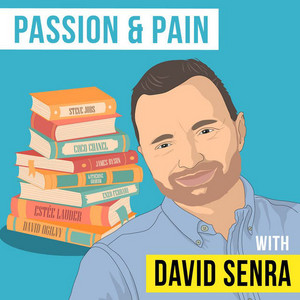
My guest today is David Senra.
David has studied history's great founders and entrepreneurs in more depth than anyone I've ever met, and I'd wager more than anyone else alive.
In this conversation, we cover many of the most common themes he's discovered studying hundreds of entrepreneurs like Estee Lauder, John Rockefeller, Anzo Ferrari, and Edwin Land.
I found this to be one of the most energizing conversations I've had in a long time and one I'll return to often.
David Senra I've been in love with reading longer than I even have a memory.
A few years ago, unfortunately my mother died of breast cancer at a young age.
And as she was dying, because my parents had like a tumultuous relationship at the beginning of my life, she's really the only one that has any kind of recollection of how it was as a child.
So unfortunately, when she died, all those memories died with her.
She said, the way you are now, you were from the time that you could talk.
She's like, you would read anything you could get your hands on.
Even if we didn't have books in the house, you'd read the back of CO boxes.
She said something where she's like, we didn't have a lot of money, but what I would do is take you to the bookstore.
And God bless bookstores where even to this day, you can go in there.
And even if you don't buy anything, you just sit on the floor and you can read.
And that's like one of my only memories from childhood.
Her taking me to the bookstore and just letting me read.
And even before I could read one of my favorite books when I was a real young kid was Where's Waldo?
That's like even reading.
Let's just sit there trying to find the guy with the striped hat.
So it's just the only hobby that I've had my entire life.
There's a ton of hobbies that I picked up, ton of interest, ton of sports, all these kinds of things where I'll get really intense, do it for a long time, and then drop it.
I have two modes, zero or 100 readings and I like that.
And I just reread because the founder of Visa, D-Hawk just passed away.
And what I loved about his book is he was the exact same way.
He grew up in a tiny house on the edge of the Rocky Mountains, had no plumbing, no electricity, no money.
They barely had food, but he had books.
His neighbors just said, there's something wrong with that D-Hawk boy.
He'll read anything. See, when I read a biography, it's like I'm not reading biographies casually.
I'm not like, oh, okay, I put myself in the story.
To me, great biography is like a movie for your mind, except instead of being over for two and a half hours, it's going to last like 15, 20 hours.
We were just talking before recording that I read a thousand page biography on Enzo Ferrari, one of history's greatest obsessives.
You put yourself in that story.
You're like, what is it like being a young Enzo Ferrari?
His father passes away unexpectedly.
You're 18 years old. Your father, you love more than anything passes away.
Your brother serving in World War II gets killed.
Your father's business collapses because of your father's death.
Now you're left as an 18 year old man trying to support your mother with no skills, no education, no anything.
That's where the idea is.
And then when you study some Enzo Ferrari, it's like, oh, that is why the guy worked 16 hours a day, seven days a week for 60 years, and did it until he died because of that pressure.
One of the greatest stories in that book, you didn't even think it was going to start his own car company.
It was just amazing. The big car company of the day in Italy was Fiat.
He goes to try to get a job.
And at the time, there's a huge glut.
This is after World War I.
And all these veterans are looking for jobs, so they get precedence over him.
So he feels deflated. He had traveled from his small Italian town thinking he's going to get a job because he's obsessed with car racing because his dad, he's taken to the races at nine years old.
There's just so many things where you can't understand why they make the decision they do in business unless you understand who they were and what happened to him early on in life.
What happened was he goes and gets a job, he gets rejected.
He goes to a park bench in the middle of the snow and is crying.
It's a very vivid scene in the biography.
And what is insane is 40 years later, after Fiat buys half a Ferrari, he goes back to that bench that authorizes it together.
He's like, there was a missing piece of my life, a problem that I hadn't solved that ate away from me, that caused me to have this excessive drive and dedication and obsession to my business.
And now that circle is complete.
And he goes and sits on that exact same bench.
The idea of understanding what happened to someone before they were 18 was the topic of a conversation I just had with one of the partners at Sequoia telling me a story about Mike Moritz, Sir Mike Moritz, a very famous investor who asks that question of just about everyone, thinking that someone's motivation tends to be rooted in their life of childhood, maybe up
until 14, not even 18. Before I start getting into your obsession with biographies, you mentioned your mom already.
What is that for you? If we were to zoom in on your time pre-14, what's rooted in your own history that's made you this complete obsessive about studying history as great entrepreneurs and founders?
I think there's a lot of examples in these books.
Sometimes you learn what to do by seeing it done incorrectly.
If I had to guess, and I don't even like thinking about this stuff, both sides of my family, they did the best they could, but my parents didn't even graduate high school, much less college.
I'm the first person in my family who graduated high school, first person in graduate college, first male in my family not to go to prison in three generations.
Wow. Both sides of my family, unfortunately, are filled with examples of what not to do.
Usually it has to do with abusing children, sexual abuse, physical abuse, abandoning their kids.
I'd never met an intelligent person in like extended family.
My immediate family did as best they could.
My dad's so alive, I still have a relationship with them.
It is what it is. As you get older and then I have my own kids, you start thinking like all the stuff that you're mad at them about.
Imagine if you had their parents.
One person in the family, I'm thinking of like my grandmother and my dad's side, it's just like an evil person.
And then my grandfather and my mom's side, they destroy everything in their wake.
My own guess is why I was obsessed with books and stuff like that is I was looking for the right answers because, oh, I saw some wrong answers.
Oh, I don't want to be that person.
One of my favorite things Warren Buffett said, I've read his shareholder letters, I've read a bunch of biographies on him, then went and studied all the people he talks about in his shareholder letters.
So I have like 15 episodes.
He says, hey, go study this person, they're really smart.
And I'll go and track them down and then find out who they admire.
But one of the best things he ever said, he's like, one of the best things that ever happened to me is like, pick the right heroes.
I think that is extremely important.
So that is the role that books play for me.
It's just like, I don't have access to these people.
I don't have mentors. I don't have anybody.
When you think about what biography is, you're getting to know somebody and they become mentors in historical context.
This is why Charlie Munger has such great advice and why he's read hundreds of biographies is like, I make friends with the eminent debt, because if you learn the ideas they have and the personality behind that idea, it's actually going to stick.
I suppose it's like just a list of, hey, there's 10 good business ideas.
But if you actually understand like why they did the way they did, why did they think about that?
Why were they obsessed like that?
Why did they want to avoid other things?
I've had publishers for books reach out to me, some of them had been subscribers to the podcast, like you should write a book.
And I was like, I can't simplify over four years.
I'm up to like 270 books over 100,000 pages, over 10,000 hours.
If you look at what founders is right now, it's like around 400 hours of audio.
That's about as short as I can get it.
There's no book that I know of that's 400 hours long.
I've been married. I've been with my wife for like 15 years.
And even recently, she's like, I've never heard that story before.
How is that possible? I've talked to you every day for almost two decades.
I don't know. I just try to focus on the future as much as possible.
Everybody has weird unresolved things in their past.
And what I really like, the best feedback I've got on founders, the podcast, is people find it comforting.
The vast majority of people are not born in great circumstances.
This is not new at all. It's not unique.
It's the vast majority of human history have had to be born into and survive and thrive in imperfect situations.
So when you hear that over and over and over again, and they worked their way through it, found a way out, it's like hugely inspiring.
Do you remember the first time you sort of connected with someone that you were reading about through this lens of a positive role model?
Was there one that stands out in memory as the first in the category of biography?
I have a series of heroes and almost all the heroes have come through the podcast and the research I've done.
Usually they're heroes and what they did, they got to the top of the profession.
They had a lot of good ideas.
They're very admirable.
They're wicked smart. They don't give up.
They have extremely high pain tolerance, but they're all imperfect human beings.
And that is kind of like the cautionary tale, their overall theme of founders where I get a lot of feedback too.
Like, I'm glad you're not idolizing these people.
They're people. Everybody's an imperfect human being.
So I'll take bits and pieces from people.
The only person out of every single person that I've studied on the podcast that I consider my blueprint for, like, I want that.
I want their life in totalities at Thorpe because history's greatest entrepreneurs, how'd they get there?
They're going to over optimize their work to the detriment of everything.
Their health, in many cases, they die earlier than they have to.
They are terrible fathers.
They're terrible husbands.
I don't want to do that. They have no friends.
They're crazy people. Like, I keep bringing up Enzo Ferrari.
Somebody I greatly admire from a work perspective, worked seven days a week, 12 to 16 hours a day, 60 years till he died.
He was a terrible husband.
He was a good father. His son, Dino, actually dies early from, I think, muscular dystrophy when he was like 20.
But he had no friends, never traveled, wouldn't leave his town, wouldn't get on an airplane, wouldn't even get on an elevator.
So I look at it like, how can I be obsessive about the work I do, want to make sure it's the highest quality it could possibly be, but not be terrible in all these other domains?
If there was an entrepreneur that could only read one of the books that I've read so far for founders, it would be this book called Against the Odds, an autobiography of James Dyson.
James Dyson now is 75. He just recently wrote another autobiography.
That biography is good.
It's not comparable to him coming off of 14 years of intense struggle.
He's writing the book. Once he gets over that hump, at the time, Dyson has one product.
It's just the cyclone vacuum.
It's in one market. It's just in England.
It's the fastest growing vacuum company in history.
It's doing like a couple of 100 million a year.
He owns 100% of it. But what makes that book so great is it's all the clients.
It's my dad dies young, which is a really sad story in there.
I had to learn how to raise myself from being 11 years old.
He starts a bunch of businesses, get screwed over by different partners.
But from the time he rips apart that Hoover vacuum, it's like, why does the vacuum cleaner have bag that breaks all the time?
This doesn't make sense.
To the point that he has a working prototype from his own design that he owns 100% of is 14 years of intense struggle, 5127 prototypes.
What I do is I'm going to reread that book for every 100 episodes.
I did it on episode 200. I think I did it in episode 25.
300 will be that book again.
400 will be that book again.
Because it's just the reminder that's where most people are interested.
When you read a biography, everybody wants to know the beginning.
There's always a part of the biography after they're super rich and famous and they're donating a bunch of money and I'm glad they're doing all that.
That's fundamentally not interesting.
How many people can relate to that?
But everybody can relate to, hey, I have a dream.
This is what I want my life to be.
Life is going to throw up all these barriers.
So how do I navigate that maze to actually get to where I'm going?
Everybody can relate to that.
So you've read nearly 300 of these things.
Some of you've reread multiple times.
I wish people could see on video like the crazy notes and highlights you take in all these things.
It's hard to imagine there's a person alive that is reading and studying biographies and trying to piece together the lessons as intricately as you are, especially within a subcategory, which is founders.
Not just business founders, but people that start things.
And I understand that you can't compress down what you've done, the body of work, to much smaller than it is.
But I thought we could take today's conversation as an opportunity to just touch on a couple of the ideas that you and I have talked about as we've just discussed the body of your work.
One of them is this, I guess the word is obsession.
There seems to be as a through line through so many of these people, some initial, whether it's a vacuum cleaner or makeup or cameras or whatever the thing is, some obsession takes root in the people that you've studied and creates this motivation, this dogged motivation to just keep going through thick and thin.
Maybe you can just talk a little bit about that word obsession.
How often you see that characteristic, whether or not you think it's the key characteristic in the people that you've studied in terms of why they did what they did?
Robert Leonard Every single book.
It's also the very high bar because think about that.
To make it onto Founders Podcasts, you got to live a life so remarkable that somebody wrote a book about it.
The tiniest of tiny subset of people, and they're all extreme people because I find freaks and crazy people and misfits and rebels fascinating, which is frustrating to me because there's like four passions in my life, entrepreneurship, reading, history and podcasts.
So Founder sits at the middle of that.
And for the life of me, I don't understand why so many business lectures, business books, business writing is boring.
You have the most fascinating subject on the planet, and then you have the most fascinating personality types.
Think about how crazy you have to be.
You're like, hey, this thing doesn't exist.
I want it to exist, and I'm going to will it into existence, and I'm willing to do everything possible to make sure this thing succeeds.
That is a crazy person. That is a tiny percentage of any of the people alive and the people that have lived forever.
But like I could scroll through and I was doing that earlier.
One thing I do is I don't only just make the podcast, I don't just read the book once, I take excessive amounts of highlights, and then I store all my highlights in this app called ReadWise, and I reread my highlights every day because I don't want to forget the lessons.
There's a limited amount of stuff that you're actually going to remember.
So I also go through my episode list, and I do that frequently.
And I can't think of anybody that's not completely obsessed with what they're doing.
A perfect example of this is not only is it one of the craziest stories in entrepreneurship history, but it's also one of the most fun books to read.
It's called The Fish that Ate the Whale.
It's this guy named Samza Murray.
A ton of entrepreneurs and investors I know all know this book.
So I just recently reread it and it's just like, okay, why is Samza Murray?
This guy is super rich. At the time, he's got the second largest banana company in the world, and he's working in the fields in Honduras, and he's with his machete, and he's whacking away, and he's crossing Honduras on a mule.
The entire length of Honduras looking for an advantage for his company while his competitors are sitting in an office building in Boston.
And we know how the story ends.
He kicks their ass, because of course he is.
But it's like, why is that guy so obsessed?
From the time he was 18, till he discovers what he called ripes, which is like a banana that other banana companies would just throw away because you only have like three or four days, maybe five days before it rots and it's useless.
So there's a line in the books, it's great.
He made a calculation based off arrogance that he could be fast where others were slow.
Why is an 18-year-old penniless, Russian immigrant in Alabama think that he can be faster and he sees an opportunity that a giant company called United Fruit, which is one of the first truly international American companies, why on earth does he think they're super rich?
They have all the assets in the world.
They had the largest private navy in the world.
And this guy's like, oh, I see an opportunity you don't see.
And it's because of this obsession.
And as he starts there, masters that, then he starts moving up.
Then he goes, okay, I'll buy regular bananas.
Okay, once I mastered that, now I will start buying my own chips.
Then I'll go to Central America, United Fruits in Guatemala.
I'll go next door. I'll go to Honduras and I'll start doing that.
And that's the entire story.
So I don't think there's anybody who's going to write a biography of that is not obsessed.
I do think cancer question, that is a fundamental trait.
And in my personal opinion, it makes life worth living if you have that obsession.
I could not live without an obsession.
People are like, oh, founders of podcasts, founders of business, yeah, but it's an obsession first.
It's an obsession disguised as a podcast and a business.
Is the thing underneath obsession mostly curiosity?
Because the topic of obsession for these people is all different.
The Dyson one's a perfect example.
It's hard to imagine getting excited about vacuum cleaner.
But he did. There's some reason behind the obsession each time.
What is usually behind that?
Is it just a basic system setting of curiosity in the person?
And how do you think people listening should apply this obsessive lesson to their own lives?
Do you think it's too general to say that everyone should keep working until they've become obsessed with something?
I do think it's too general.
I don't think most people will ever find it.
The reason I'm so obsessed with just studying people that got to the top of their profession is because one third of your life is going to be spent working.
Half of your conscious life, half of the time you're not asleep, is going to be spent working.
For a certain personality type, to not excel at that, not to be really good at that, means that life is not going to be an enjoyable experience for me.
If I had to guess, which comes up a lot, I think there's some kind of deep rooted fight against a sense of inferiority that is underneath it.
It's interesting. This comes up a lot.
There's a line in the Francis Ford Coppola biography that I read because I really love reading biographies of filmmakers.
That's the closest analogy to what I'm trying to do with podcasting.
I read their words. I'm like, that's how I think about podcasting.
That's fascinating. And there's a line in the Francis Ford Coppola biography where embedded in the story of the son is the story of the father.
And his dad was this guy.
He wanted to be a musician, never made it, was super bitter.
So he raised Francis Ford Coppola and they would just talk shit.
His dad would just talk shit about anybody that was successful.
And Francis is like, well, I don't want to be the person criticizing the successful person.
I want to be the successful person.
And Coppola at the beginning of his career, look at the track record he did in the 70s.
The decade of his 20s is like one genius move after another.
Movies that people so much to this day.
And he had this fanatical obsession with learning everything about filmmaking, working every single hour.
He'd fall asleep while editing films.
And I think a lot of that came from like, how we started the conversation.
Like some people have say, Hey, I want to be like that guy.
Other people have, I don't want to be like that guy.
And those are equally powerful motivators.
I think of like Sam Walton.
I just reread his fantastic autobiography.
Everybody knows about that.
But rereading it over and over again, you see different things.
And then rereading in between the first time I read it and the second time I read it, I read like 200 other biographies, a bunch of mirrors.
So the words had didn't change, but I change.
So the meaning changes.
There's a time in that way before he started Walmart, he's obsessed with retail, right?
His little five and dime store is really successful.
The guy that owns the building that he's renting from sees that and screws over Sam.
And he's like, Oh, I'm not going to renew your lease.
And they're in a tiny town, population of 5,000 people.
So it's not like you go across the street and open another one.
So what he did is just took Sam's business from him, copied it, changed the name and put it in the same location.
There is a scene in that book I've never forgotten, where Sam is in his attorney's office trying to see if there's anything to do for it.
And his attorney's going to lease is like, No, you made a mistake.
You didn't know any better you're a young entrepreneur, but you didn't get the protections that should have been in the lease agreement.
And Sam is sitting there and he's clenching and unclenching his fists.
And he's clenching and he's unclenching his fists and he's clenching his unclenching his fists.
He's like, I'm not whipped.
I found this town. I found this store.
I made the store success.
I'll do it again. And he just picks up.
He's like, I'm not going to look back at this.
I won't make that mistake again.
Goes to the next town, does it again, then does it again, again.
And then two or three iterations after that, he stumbles on Walmart.
So there's like that thing where it's just like, I have this drive.
And then he talks about the book unhappy life.
His parents had a crappy relationship, whatever it is that a kid experiences.
I don't know if Sam could actually articulate it because he's writing the book as he knows he's dying from cancer.
But that drove him to just be obsessive.
And he's like, I didn't like spending any time at the house.
So I went out, I went to school, I worked as much as I could.
And I was in every single club and accumulated every single skills that I have.
He had this weird drive.
You either have it or you don't.
My life is really interesting.
And it's because of the podcast.
What's like half my day is spent reading, having one side of conversations with history's greatest entrepreneurs, which is what reading a biography and autobiography is.
I get all these interesting ideas, see how they did life.
And then the other half is I get to talk to a bunch of founders that listen to founders.
And then that becomes a huge friend group.
And I get to talk to all these really smart and interesting people.
And I can't think of one person that needs somebody else to motivate them.
There's something inside of them.
That's why they're doing what they're doing.
To be an investor, to be an entrepreneur, it doesn't work if you can't trust your own judgment.
So what kind of person who's willing to take that risk?
I know a ton of entrepreneurs that could even make more money if they went to go work for like Google or something like that.
They'd rather make less money in their own business than work for somebody else.
But there is something bizarre that I don't think you can explain.
All you can do is notice it and other people and then seek those people out.
Like, oh, I'm not weird.
There's a ton of people just like me.
Robert Leonard It brings to mind one of the things I was most excited to talk to you about, which is this classic nature and nurture debate in people.
But it's the idea versus execution debate or the inspiration, perspiration debate.
Famously, Edison said 1% inspiration, 99% perspiration.
And maybe that's true in time.
But what I found more recently is good ideas matter a lot.
If you don't have a good idea, all the perspiration in the world probably doesn't matter.
I saw an interesting idea somewhere recently, which was like a lot of people can run a McDonald's franchise.
Not a lot of people can create a new McDonald's.
And I'm curious what you're reading of all these great entrepreneurs and founders, where it's led you in this debate of inspiration versus perspiration and sort of how you would assign what matters more or most.
Obviously, they both matter.
But I would love to just hear you riff on these two twin concepts.
Robert Leonard So there's two guys I discovered through the podcast.
One's Claude Shannon through Jimmy Soni's fantastic book, a mind of play, and another guy called Alfred Lee Loomis.
There was a biographium called Tuxedo Park.
And what Shannon and Loomis had in common is they wouldn't argue their ideas.
I think a lot of entrepreneurs in general, they spend time on Twitter arguing about should we be remote or should we be this or should we raise money or should we do that?
It's like, who gives a fuck?
You have an idea and don't let anybody get in your way until it's done.
And if that's inspiration or perspiration or whatever the case is, the idea obviously matters because I think the largest predictor of business success is the market that you're operating in.
This is all over war. Buffett shareholder letters.
It's in this book that I have right here about Henry Clay Frick, Andrew Carnegie's partner and one of the greatest entrepreneurs ever lived.
He benefited from the fact that he was monopolizing the Coke industry, Coke, not being Coca-Cola or cocaine, but Coke is this ingredient needed to make steel and iron.
And he was at the right place in the right market.
He was in Western Pennsylvania at the exact time he needed to be.
And guess what? You take that dude that's smart, that's disciplined, and you put him in a market that's decreasing, you let him run Berkshire Hathaway, the original textile in the 60s.
It's going to go right into the ground just like you could be a smart and it's hard working.
It doesn't matter. I think more of the idea, I think more of like the market is way more important.
One of the things I'm so excited about why I'm obsessed and mean you share this obsession is just like podcasting is like a miracle to me.
We were talking about the importance of understanding why is this guy so freaking obsessed?
Why is he working seven days a week on this?
This is psychopathic behavior.
It's because of the way I look at podcasting.
I don't look at it as a means to an end.
Podcasting is the printing press for the spoken word, the revolution that Gutenberg unleashed when he invented the printing press may have taken 40, 50 years, 60 years, 100 years to gain steam, even goes faster now.
But that is exactly what podcasting is.
Everybody's like, oh, we have too many podcasts.
That's like saying you have too many movies.
We have too many books. Like that's ridiculous.
We have too many bad of anything.
But there's always room when it comes to media or anything that people consume for good things to grow and prosper.
And to me, when I look at where do I want to spend all my time?
Is there something I'm obsessed with that I'll think about even when I'm not working?
And then also, is it a growing market?
You're telling me today we've reached the peak of how many people are going to listen to podcasts?
That's absurd. That's absurd.
And not only will more people find your podcast and my podcast now, there's people that I haven't even been born that are going to be listening to episodes.
I don't want to dismiss is that idea or execution is like, you need both.
I'm sure there are some markets where they're going to pull the product out of you no matter what.
And if you're the only one in that market, then that market is going to be satisfied.
But I can't think of anybody that I've read a biography about that's just like, I stumbled into a good idea and I didn't have to execute relentlessly and over and over and over again for a long period of time.
That's another thing too, where I'm only interested in people that do things for a long period of time.
There is a subset of people that can start a great business or be a great investor for two years, five years, 10 years.
I'm interested in people that you started the conversation saying about Edwin Land and Estee Lauder.
Okay, two obsessives. They both had good ideas and relentless execution.
Estee Lauder had to wait 20 years.
She got completely obsessed with the idea of beauty, didn't have the opportunity to start her company because she was a stay home mom, so she was 40.
The reason I say, listen, man, you guys should be reading Estee Lauder's autobiography is because it is my belief that if you were able to bring her back from the dead and let her start a company today, she'd be kicking most entrepreneurs ass up and down the court.
Edwin Land too, Edwin Land started working on what would become Poisonary Boonies like 19 and worked on it till he's 70.
He had the third most patents in American history behind Edison and I forgot the other person.
Who the hell works on something from 19 to 70?
That's incredible. But what about the people underneath these leaders?
I probably listened to 50 episodes or something of founders.
If I had to summarize, one of the interesting lessons is the dramatic importance of the individual, which I think runs a little counter to maybe how a lot of people wish the world was where it was more communal and Steve Jobs was going to emerge if Steve Jobs particularly wasn't him or I think the great individual theory or thesis a lot of people don't like.
But as I listened to a lot of your episodes and these stories, it strikes me that the person matters a lot.
And I'm curious what you've learned about the layer of leadership underneath the founders and if there's any common stories, themes, traits that you've sussed out there.
I want to start with a quote because you just nailed it and I'm an Edwin Land fanboy.
I am on a mission because I meet a ton of smart people who don't even know who he is.
So maybe people listening to this don't know that he was Steve Jobs before Steve Jobs.
Steve Jobs met him when he was in his 20s.
Edwin was like seven years old and Steve came over from the meeting saying meeting Edwin Land was like visiting a shrine.
These ideas that you've undoubtedly heard from Steve Jobs did not originate with him.
He literally took them from Edwin Land.
The idea of building a technology company at the intersection of technology and liberal arts, that's not Steve.
That was on every single presentation that he made on Apple.
He got that idea from Edwin Land.
He literally talked about them over and over and he said, this is my hero.
And Steve also had this deep historical knowledge, which all these founders definitely have, all of them.
I have not come across a founder that was not curious about what the great people before them did.
I actually made a 30 minute in-between episode.
It's called Steve Jobs and his heroes.
And I break down 39 podcasts on either Steve Jobs or the people that he talked about influencing him.
Even when he was young, he was like his 20s and he could tell you how he felt the invention of the Macintosh was similar to like Alexander Graham Bell's invention of the telephone.
It's like, how the hell do you know that at that age?
That's remarkable. But Edwin said that there's no such thing as group originality or group creativity.
He goes, I do believe wholeheartedly in the individual capacity for greatness.
And he says, originality are attributes of a single mind, not a group.
What happens is even if you have a bunch of co-founders, there's usually one.
A lot of these people are co-founders.
You could say 1A, 1B, whatever the case is, but it's always singular.
It's never like a joint thing.
And what's good is they find people that can play the role of the second or third.
It's not like, hey, I want to be the smartest person in a company.
They all obsessed. This is in Warren Buffett, David Olguvy, Enzo Ferrari, Steve Jobs.
They only surround themselves with A players.
There's a great book called In the Company of Giants.
It's on the floor next to me right now.
What's fascinating about that is it's two Stanford MBA students in 1997 go and interview all these technology founders.
If you think about the growth of technology industry from 97 until now, they were clearly ahead of time.
And what's fascinating is Steve Jobs, Young Steve Jobs, he just came back to Apple, sits for the interview.
They start the interview like, hey, startup founder doesn't have that much time to recruit.
And I forgot the exact terminology, but he cuts them off.
He's like, I disagree completely.
Recruiting talent is the most important job as a founder.
Think about the first 10 people in your company.
Every individual is 10% of the company.
You don't transition from a startup, a nascent idea to a super successful company that creates a great product.
If you fuck up that part, that was his point that he was making there.
And he knows that because this is the crazy thing.
So you mentioned Mike Moritz earlier.
Mike Moritz wrote this fantastic book, The Little Kingdom.
I read the updated version called The Return to the Little Kingdom.
And what's fascinating about that is that's way before Mike was an investor, it's like the first, I think, six years of the history of Apple.
And when the book ends, the Apple Tuesday was doing really well.
Steve Jobs is still at the company, but we don't know how the story is going to end.
So then I would read that book.
And then what you need to jump into right after that, there's another book called Steve Jobs and the Next Big Thing.
I think it was written by Randall Strauss.
That book is about the 13 years between he left Apple and then he returned.
I call it Bizarro Steve Jobs, because it's a gifted, intelligent entrepreneur making every wrong decision in the book.
That book ends in 97. He gives us an interview.
Think about this, how crazy this is.
He starts next. One of his first 10 hires and next is an interior designer for the office.
What the hell is happening here?
You're reading that book and you're like, I know Steve Jobs is smart.
I know he's talented. How the hell did he do this?
We talked a little bit about ego before we started recording where it's like, it's very prone to let your ego get the best of you.
People admire you because the work, what happens is like, you usually isolate yourself, you'll work really hard, you'll do a lot of work.
That work draws the attention of other people because it adds value to their life.
And then suddenly over time, you confuse it's like, oh, they don't like the work.
They like me. And then I could just show up without having to do the work and everything will be fine.
And that next, he just showed up.
He's like, I'm Steve Jobs.
Ego is such an interesting one.
That lesson is fascinating, confusing people liking the work for liking you.
I've never heard it phrased that way and that is so damn interesting.
Where else do you see ego rear its head good or bad?
It strikes me that ego is like a negative connotation.
You don't want to have an ego, but you do want to be confident.
You do want to be charismatic.
You do want to be a good salesperson.
Some of the things that how ego people might be good at.
What other things have you learned about ego?
That phrasing is so helpful.
I actually don't think that you build a great company with a giant ego.
I don't think that exists.
Sam Walton has a good idea about that.
He's like, listen, your ego should use to drive you, but you should not be on public display.
And he's like, I hire people at Walmart with big egos that know how to hide it because there is some weird thing where it drives you.
What's the problem is when you make it apparent that you think that you're better than everybody else in almost every story, you have a young entrepreneur that needs some help.
They're usually helped by people that are older, have a lot more access to resources.
So think about how people are funding private companies now.
You have super smart and determined founders, a lot of potential.
Who knows what a person like that is going to be in 10 or 20 years, but they need assistance, whether it's they need resources, they need personnel, they need money.
What I realized this morning is there's this guy named Thomas Mellon.
And Thomas Mellon is one of the most important people in American business history because he's the patriarch of the Mellon family dynasty.
What he did is he made a lot of money before and after the American Civil War.
He's like, maybe 50 years old, super rich, owns a bunch of banks and stuff like that.
He comes across a 21 year old Henry Clay Frick.
Henry Clay Frick shows a lot of potential at this time, but Mellon can't possibly know yet.
40 years in the future, Frick is going to be considered one of the best entrepreneurs ever do it.
So much so that Andrew Carnegie sees him as like any of this guy on my team.
And then they have a falling out.
There's a fantastic book called Meet You in Hell.
I recommend everybody reads if you want to learn about Andrew Carnegie and Frick.
It's about what Frick told them.
They had a falling out. Later when Andrew is about to die, he sends a letter to Frick.
It's like, hey, let's reconcile.
We're living in the same city.
We're living a few blocks away.
Let's get together. And he writes back, he's like, I'll meet you in hell.
What was fascinating is Mellon sees Frick.
Frick is at the very beginning of building this Koch Empire that's eventually going to be acquired by Carnegie's company.
And Mellon sees him. He's like, oh, this is another me.
This is me when I was younger.
He approves along. Then Frick takes that money immediately deploys it, starts scaling up because it's like, hey, I got an opportunity.
I need to do this as fast as possible.
Goes back to Mellon. I think he borrowed like $1,000.
I mean, this is 1800. So it's a lot more money than $1,000 saying.
So he borrowed $1,000, goes back almost immediately, says, give me $10,000.
Mellon's like, yo, what the hell are you doing, kid?
So he sends one of his partners, he says, go check out this Frick guy.
He seems to have potential to me, but I need to make sure this guy's not full of crap.
So Mellon's partner goes and shadows Frick.
And he writes back to Mellon.
And he's like, the guy works in the Koch plants all day long, studies his books at night, knows his business down to the ground, makes a loan.
And that is the first hand up that he gets that causes him to build a monopoly in his industry.
There was no one B to Frick's Koch empire.
It was clearly him. What was fascinating is like, I didn't put this together the first time I read that book, because I probably read 150 books, 150 biographies since I read it the first time.
But I had just recently been rereading books on John D.
Rockefeller. And this guy named J.
Gold pops up in Rockefeller's biography, every single one, which is really weird.
Everybody's read Titan, the most famous biography, John D.
Rockefeller. What I did is I went in the bibliography of Titan, found a book that the author, Ron Chernow, used his research and ordered it.
It's a very old book. It's like 40 something years old.
It's very hard to find. I read that book and I'm like, wait, this is a biography of Rockefeller.
And this is an entire chapter based on J.
Gold. What the hell is happening here?
And then you see when people would ask, Rockefeller is probably the most famous entrepreneur in history.
And they asked him, like, who's the best businessman you know?
And he said, without hesitation, J.
Gold, without hesitation, then you have Cornelius Vanderbilt.
This is another thing we should talk about is how all these people wind up knowing each other.
There is something to be like talking to other A players.
And then you have Cornelius Vanderbilt, who's the richest person in America at the time, 40 or 50 years older than J.
Gold. And he's like, J. Gold's the smartest person in America.
So I was like, okay, what the hell happened?
So the author actually sent me the book, a biography of J.
Gold came out like 15 years ago.
And he's called like Dark Genius of Wall Street or something like that.
These are formidable people saying this is the one.
You got to pay attention to that.
Why is that happening? So I'm reading J.
Gold's biography, same situation.
He's like 20 years old, 21, needs a leg up, meets this older, more successful businessman.
But where Mellon did is like, I'm successful, but he didn't even know his ego getting away.
He's like, I want to be this guy's partner.
His success does not threaten me at all.
The difference in J. Gold's life is J.
Gold's points of taking on older partners, kind of exotic prat, I think is his name, I'm going off memory here.
So I might get his name wrong.
But that guy was super rich, owned a ton of land in the Northeast at the time, owned 30 different factories that would produce leather goods.
And all the different factories would have different partners.
So he winds up doing a partnership.
Jay winds up doing some surveying work for him on some of his land.
And Zadak's like, oh, this guy's smart, I'll partner with him.
I'll put up the money, I'll give you the expertise, and then you run with it.
Well, Jay Gold is a straight up genius, way smarter than Oliver B.
And he runs with it. He'll hit you up for advice and money, but eventually he's like, oh, I got this, I can figure it out.
He's coming up with ideas.
The crazy thing about Jay is this guy's been in the leather business for 40 years.
I'm coming up with ideas that he doesn't see that threatens Zadak's ego.
How do I know it's Zadak's ego?
Because the guy was so rich, he started his own bank, printed his own currency.
Guess whose face he put on his currency?
His face. You know Mount Rushmore?
In this town, there's like a big granite wall or a big rock formation.
So, you know, Mount Rushmore, you got all the presidents on there.
He hired somebody to carve his own face.
Think about how he had to be.
I want people to come through my town and see my giant head hovering above everybody.
They started partnering.
He didn't like that Jay stopped asking him for advice.
He thought his success and Jay was managing his leather factory, they call him tanneries, better than his other partners.
He didn't like that he felt threatened.
So, he tried to maneuver and he said, hey, we're going to end the partnership.
You have to either buy me out for $60,000, which is the money I put in, or I buy you out for 10, which is with the money you put in.
He did that because he's like, this guy doesn't have 60 grand.
Didn't know that Jay has a brain.
He knew this was coming and he had secretly set up financing and he was waiting for that to happen.
Rockefeller's exact same story for his first partners in the oil industry.
He had older partners to try to screw him and he says a great line.
He's like, why they were talking so loud, my mind was running.
What happens? Okay, I'm hitting this provision in our contract.
You have to come up with 60 grand, Jay's like, here it is.
And he takes off and running.
You had the opportunity to partner with one of the greatest entrepreneurs ever do it and you fumbled it because of ego.
Adam So, Jay, what's your opinion on this?
Jay, I think you're going to be a great partner in the oil industry.
I think you're going to be a great partner in the oil industry.
I think you're going to be a great partner in the oil industry.
I think you're going to be a great partner in the oil industry.
I think you're going to be a great partner in the oil industry.
I think you're going to be a great partner in the oil industry.
I think you're going to be a great partner in the oil industry.
I think you're going to be a great partner in the oil industry.
Jay, there probably is, especially people that try to sell and overpromise in some domain.
That's like Henry Kaiser, who was as famous in his day as Elon is today.
There is not in the history of entrepreneurship an equivalent to Cornelius Vanderbilt.
I read two books on him. If you said, okay, David, who alive today reminds you most of Cornelius Vanderbilt, I would say Vladimir Putin.
Vanderbilt have nation level wealth.
If you could have turned his entire fortune liquid at the day he died, he would have controlled one out of every $20 in circulation.
The reason I say he's not like anybody else and yet he breaks the law is there's a fantastic book I did a podcast on.
It's called Tycoon's War.
There was this other guy, I think his name is William Wallace.
This is like three years ago, so I'm going off memory.
William Wallace was interesting because at the time he was 18, he had graduated law school, medical school, taught himself a bunch of different languages, really smart dude, winds up taking over different parts of Mexico, which was very common at the time.
He was a military adventurer.
He winds up taking over, I think, Nicaragua.
This is the time where Cornelius is doing the transition from just having steamboats and he's getting into railroads, but this is Gold Rush.
People are paying to be transported from the East Coast to the United States to get to California for the Gold Rush.
Vanderbilt makes a ton of money because he's one of the rare people that has steam ships, railroads, and then boats to cut through South America and then he'll pitch on a mule and then he'll pick you up on the other side.
He had basically from A to Z.
He cut down travel time by six months, so substantial value.
Some of his ships were stationed in Nicaragua and William said, hey, I overthrew the government.
I am now the president of Nicaragua, so these are my ships.
Vanderbilt tried to have them killed.
That's not hyperbolic.
That is legitimate. He hired mercenaries to go get them.
He petitioned the Secretary of State of both the United States and Britain.
He's like, I'm not going to sue you.
I'm going to kill you the way they thought.
You could argue that some in history's greatest entrepreneurs, they might have been more ambitious.
I'm not saying go out and overthrow governments, but they did.
Sam Zemuri, efficient A to well, he did that.
That's legitimate. He funded a coup because you tried to take away his banana property.
I'm not saying these are good people.
I'm just saying that they just looked at it like a problem.
How we would be like, oh, I can't do anything.
I guess my stuff is gone.
Oh, he has my ships. What can I do?
I'll try to go to diplomatic channels.
Cornelius is like, I'll just send guys with guns.
Go try to steal something from poop.
What do you think is going to happen to you?
It's funny to think about some of these examples in contrast to like Genghis Khan or Alexander the Great or some of the great conquerors through history, where probably there's some similar threads to pull on in both eras, but in the modern era, especially now, like Elon, everything he says, you hear about four seconds later, the feedback loop is so much tighter.
So there's probably less room for shenanigans.
Maybe, maybe not. As you think about the role of constant learning in the stories of entrepreneurs, there was a Michael Jordan quote you sent me, which was something like, successful people listen and those that don't listen don't survive or something like that.
And that's Michael Jordan.
I mean, I think maybe the greatest athlete of all time.
Talk about the role of constant learning.
This relates back to ego too.
I think ego would maybe cause you to stop learning because you think you know it all or something.
You've mentioned several times people study the history of their industry, people are listening, they're learning, say a bit more about the common trait of listening and curiosity and perennial learning.
Not only is Michael Jordan probably the greatest basketball player I've ever lived, you can make the argument that he was better at his job than anybody else has been as good at their job in history.
Reading his biography changed my life.
And I was a Michael Jordan family when I was a kid.
I don't have time to watch basketball now.
I'm busy, but like, I'm actually standing on it right now.
I record all my podcasts standing up because I try to bring energy every day.
But like my foot is on Michael Jordan to life.
It's like a 694 page biography of Michael Jordan.
What blew my mind about that is every single person, way before he even made his college team, till the time he was a professional basketball, they all said the same thing.
This dude was like a sponge.
There's a great quote that Nick Saban said.
And he said that average players want to be left alone, good players want to be coached, and great players want to be told the truth.
Michael had a giant ego and giant drive, but he would run up to the coach and tell me what I need to get better at.
So the reason I say that book changed my life is this idea of practice.
How many people want to get to NBA?
A ton. Millions. How many get 400 maybe?
How many people get to the dream team in Barcelona in 92, which might be the greatest basketball team of all time?
15 people? A subset of a subset of a subset.
So Michael's tired. He'd been playing nonstop back to back.
He's like, man, I really want to take some time off.
I don't want to spend my summer at the Olympics, but I'm going to go.
He goes, I want to see their practice habits.
We're all the best of the best.
What am I doing that's different than what they're doing?
So what happened was he goes, he watched the way they practice compared to the way he practiced.
And the main theme of Jordan's book is I believe in practice.
I would rather miss a game than miss practice.
That's insane. He said something that gives me chills to this day.
He goes, I watched their practice habits.
And he goes, they're deceiving themselves about what the game requires.
Best of the best. Tons of people on there.
But when he was done, no one had more championships than he did.
So I was like, damn, that's crazy.
This guy's at the top of the top winning championships, MVP, scoring awards, all starting.
And he's still working harder than anybody else.
That line, successful people listen, those who don't listen, don't survive long, is from that biography.
And he's like, listen, I don't have that big of an ego that I can't learn from other people.
All of history's great entrepreneurs like that.
I just talked about Edward Land.
Think about how crazy it is.
That dude to get started, he made his money in cameras and lighting.
So to understand cameras, you have to understand lighting.
How did he understand lighting?
He went to the New York Public Library and read every single book on lighting they had.
He invented instant photography.
Before Edwin Land, you took a picture, you sent it to Kodak and you got it back like two weeks later.
After Edwin Land, you press a button and you have it then.
That's insane, dude. And what did he do?
He didn't say, look what I've done.
He goes and he hires Ansel Adams, who he thought was a fantastic photographer.
And he says, he's like, my aim is to produce the most picture perfect making process.
And you have shit in your brain that can help me achieve that.
They're learning machines.
They're like, okay, where there's a book, where's the podcast, where it's grabbing person.
They're like, hey, that person has information I need.
I want to see if I can talk to them.
You mentioned Edward Land.
There's this great quote that I think ties in here, which is something like, anything worth doing is worth doing to excess.
Again, what I like when you send me stuff is when it's at odds with common wisdom, everything in moderation or something like that.
Talk about that excessiveness.
And what I'm really interested in is hard work.
It seems as though one of the modern things is to have a more balance, more freedom, more flexibility.
I think if you look at all these biographies and everything I've listened to from you, that is definitely not the case for these people.
And again, like you've said, we're not suggesting these people are the ones to emulate just that they're ones that have created extraordinary outcomes.
But talking about this, everything worth doing is worth doing to excess.
How you think about hard work, even though you're working your ass off to create founders, what do you think about excessiveness and hard work?
The full line is what Edward Land says is like, there's something they don't teach you at Harvard Business School.
If anything's worth doing, it's worth doing to excess.
I put together maxims because you're going to remember that.
Successful people listen to those who don't listen, don't survive long.
They'll stick in your brain and you'll understand the idea behind that.
And this is as old as humans.
They've been talking in maxims in common sense and homilies forever.
Think about why song lyrics are so sticky because it's like an idea condensed down.
One of my favorite ones and it's the main theme of the history of entrepreneurship.
It's why if you look at my phone on my phone, my lock screen is a picture of Ernest Shackleton, the famous poll explorer who looks like hell, got a huge beard covered in ice, looks like he's about to die.
And his family motto was buy endurance, we conquer.
Which is why I told you earlier, I'm only interested in people that do things for a long time because at every single step, these people are presented with opportunities to quit and they don't.
So he's like, I don't have to be the smartest.
I don't have to be the best.
I don't have to be the talented.
And this is where I believe in myself.
I don't have to be the best.
I don't have to be the smartest.
I don't have to be the most talented.
I just have to outlast you.
And I'm not giving up. I've had a bunch of people offer like partner up or buy the podcast or whatever.
And they're like, Hey, you're going at an extreme pace, which I really don't feel like I am because I just read.
There's no trick here. I pick up a book and stare at it.
And I do that for a few hours every day, seven days a week, 365 days a year.
My daughter's like, why are you reading?
It's your birthday. Why are you reading?
It's Christmas because I'd like to read.
And if you do something for three or four or five hours every day that most people don't do, you're going to develop a value for other people in the world.
And that's all a business is the best description of a business I've ever heard came from Richard Branson.
He's like, all businesses, it's an idea or service that makes somebody else's life better.
If you make other people's lives better, you'll capture that value in return.
So I don't find many of these people are modern.
I'm going to read this quote that I have saved on my phone.
It's hilarious. It's by Bill Gurley.
It's called Running Down a Dream, How to Survive and Thrive in a Job You Love.
But in that, he profiles five people that do exactly what Michael Jordan does, that did exactly what Edwin Land does.
He profiles Bob Dylan, the musician Bobby Knight, the coach Danny Meyer, the restaurateur, Sam Hinky and Katrina Lake.
What Bill Gurley did in an hour, he breaks down what are all the traits or what are their approaches to work that is similar?
What does an entrepreneur have to do with a musician?
A lot. What does a restaurateur have to do with a basketball coach?
A lot. It's the same ideas applied to different domains.
None of the people described are modern.
That's why in an hour, Bill just breaks this down perfectly.
It's insane. I just finished reading Bob Dylan's autobiography, which is a book that Bill Gurley read.
That dude literally discovers folk music, finds out who does folk music the best, listens every hour of his day that he's not playing.
Bill's term for this is professional research, which I think is exactly what Founders is.
How do you get better at your job when you're not working?
It's all the learning, the constant practice.
That's professional research under one umbrella.
Bob Dylan engages in professional research, listening to every single record he can get his hand on, making friends with people that have hard to find records, and then he discovers Woody Guthrie and he's like, I got to go find him.
Where is he? I'm in Minneapolis.
I have no money. My clothes are tattered, but I have a guitar and a dream.
I'll go out to the side of the road and stick my thumb out, and I will hitchhike to New York City with $10 and a guitar case to find him.
That's exactly what he did.
To answer your question, there's a quote I have on my phone.
I've had this quote since 2017.
I'm not a fan of moderation.
I'm attracted to extremes.
What do you want your life experience to be?
Do you want to be exceptional?
Do you want to push the boundaries of your capabilities?
Do you want to walk around in a fog, butting up against your potential, but never actually realizing it?
Then knock yourself out.
Be moderate. I'm not interested in that.
So I can't do the podcast less than I do.
All I can do is say, hey, this thing, this obsession of mine, will overtake my life because I've seen enough stories where it can ruin my life.
So I have boundaries. I have a balance every day.
The only thing I figured out is because I'm an obsessive person.
Obviously, you are, a ton of people are that are listening to this as well.
So what I realized is like, okay, instead of working like a ton of hours, five days a week, I'll just spread everything out and have a balance seven days a week.
This is Ed Thorpe. I literally just read his book, took his blueprint, like, oh, I'll just do that.
Ed Thorpe says, every hour you spend in fitness is one less day in the hospital.
First thing I do is wake up in the morning and I do an hour of some kind of physical activity, whatever you like to do.
Then I work. I spend time with my kids.
I spend time with my wife and I talk to friends.
Maybe have an hour or two, something that's fun, but really work is my hobby.
And that's the advantage I have over other people.
Somebody listening might say, hey, I'm going to do a podcast on the history of entrepreneurship.
Go ahead. You should. It's not like a zero-sum game, but I'm only going to do this.
I'm not going to start a fund.
I'm not going to start another business.
I'm only going to do this.
And a lot of this is where it's comforting to me where I can give you a list of people that have studied.
Daniel Ludwig. What a crazy book I read.
It's called The Invisible Billionaire.
Book is very hard to find.
This guy was the richest person in the world and no one knew who he was.
And he competed with like Aristotle and Asses.
Everybody knew who on Asses was.
He's married to Jacqueline Kennedy and shit like that.
This guy, his work was his hobby.
Edwin Land, work was his hobby.
Henry Ford, Enzo Furry, Estee Lauder, Henry Kaiser, David Olguvy, Warren Buffett, Sam Zemuri, Alfred Nobel, Joseph Pulitzer, Coco Chanel, Sam Brumpton.
I can go down the list. You just have an advantage because you love it.
There's a guy named Larry Miller.
He was the richest entrepreneur in Utah.
He owned the Utah Jazz. He owned like 90 different fucking businesses, owned like a 30,000 square foot house on the hill.
And he's writing his autobiography as he is dying.
And he's saying, my life is a cautionary tale.
Every hour, every minute I was awake and this comes from childhood trauma.
His mom called the cops on him, sent him to juvenile hall, kicked him out.
He had this weird and excessive drive, just probably like some weird sense of inferiority, right?
And he's overcoming. I worked every hour of the day.
I don't know my wife. I didn't know my kids.
Now I'm dying. I'm kind of getting to know my grandkids, but he was excessively obese.
And the entire book is not like, Hey, look how successful I am.
Might be a billionaire, whatever it is.
It's like, don't do this.
I screwed up. Think about this guy's unlimited resources.
And he gets to the end of his life.
He's like, if I could do it all over again, I would have worked less.
I would have took care of my health.
I would have spent time with my family and I would have had fun.
I never had fun in life. That is terrifying to me.
That should scare the hell out of everybody.
Anybody that's obsessive that, again, worked with his hobby too, if you don't have guardrails, it's dangerous.
And what's crazy is he dies.
So he's working with a co-writer and he dies before the book is done.
The last chapter is his wife talking to the co-author.
And she goes, I miss Larry, but it's not like he was here when he was alive.
If you think about the role of a soul of a business, I think you sent me this interesting quote from Sidney Harmon, where founders serve as guardians of the soul of a business.
How do you think about the soul of your business?
The business is you in many ways.
But if it were to have an independent soul, I want to talk about this concept more generally too, but I want to start with you.
Describe the soul of founders.
What does it stand for? I'm not a good example of that because it's an obsession that just happens to be a podcast and podcasts just happen to be businesses.
I feel like I'm like the Jiro dreams of sushi of the podcast world, where it's just like, you have a massive audience.
You have people around you.
You have a movement. The way I think about it is like, I read this great book called Masters of Doom, which is obviously about the video game Doom.
There's John Romero and John Carmack.
And John Carmack said something in what caused the rift of their partnership.
He's like, Romero wants an empire.
I just want to make great games.
Somebody hit on this. Founders is like a handmade product.
And I was like, thank you.
Because that's what I think about.
It's a handmade product at scale because of the miracle of podcasting.
I can do everything myself.
I don't have anybody helping me.
I edit it. And I also don't have a script.
I just read books and then I just have a conversation just like I would if we were at dinner.
Just like Jiro dreams of sushi.
Every other podcast I talk to, they're all super smart.
They're like, dude, you're crazy.
You've told me like, why the hell are you editing your own thing?
Why are you doing this? And it's because like, I have to, I don't even have a choice.
So I'm actually talking to a founder later on today, who's really sharp.
And I met him through the podcast and like, I don't want to say who he is, but although he's really well known, he's got a theory about this.
And again, I like talking to smart people that think I'm doing it wrong, which I love.
I don't take offense to it at all.
But he's like, you're crazy.
The soul is just me. It's like a person that is a business.
So the reason I think that's the best description of a founder that I've ever heard, it's not the same thing as like managing a company that's been around for 50 years that somebody else started, maybe the founder's been dead for a long time.
I really do think that's the role of the founder.
Sydney Harmon worked on his company for what, 50 years?
You might know his name because anytime you get in like a luxury car, Harmon Kardon, that's the guy who started that company.
So he goes, the role of the founder is the guardian of the company's soul.
And all these books, there is a decision you can make to compromise on the quality of your product, or take a shortcut, or do something you would never dare do it.
I just read the biography of the guy that started in and out.
Compared to his contemporaries, to McDonald's and Carl's Jr.
and all this explosion of fast food that was happening at that time in American history, not financially successful, no, not nearly.
He only had 17 stores when he died, but he was obsessed with quality.
Everybody else is saying, hey, I'm going to use frozen beef.
He's like, I'm going to buy my own cows.
I'm going to add salads and all this other stuff to my menu.
He goes, I'm not changing my menu at all.
It's that intense love.
There's a cult. Anybody knows this, go fly to LA and try to go to in and out.
Good luck. I was just in LA two months ago.
Try to go in and out twice because I read the book.
I'm not waiting in LA. There's a cult around in and out because the expression of the founder's soul is manifest in the product.
People that have in and out tattoos, how many people have McDonald's tattoos?
So this is also people like, hey, what's your goal?
Like, do you want to make the biggest podcast in the world?
No, I want to make the best podcast in the history of entrepreneurship in the world.
That doesn't mean that it will have more downloads than anybody else.
I'm fine with that. That's not my goal.
Just like if you study, now obviously Apple being dominant, they have a huge market share and device and everything, but it wasn't like that.
The vast majority of Apple, when they grew their cult following, it was like, what, 2% of the market, 5% of the market?
Microsoft was killing everything.
IBM destroyed everything.
The important thing is, what do you want to build?
Some people, I talked to founders and they say, hey, I want to make an Enzo Ferrari level of craftsmanship on their product, Ferrari is being handmade.
And some people take the Ford route.
Ford and Ferrari existed at the same time.
Ford tried to buy Ferrari.
There's a great line in the movie, Ford versus Ferrari.
The guy that's playing Leigh Iacoco is like, hey, we should be thinking like Ferrari.
He's a Ford executive at the time.
And there's hugely egotistical dismissive guys like, we spend more on toilet paper than they spend on their whole production.
And he's like, yeah, but when you think of victory, you don't think of Ford.
You think of Ferrari. So you have to decide.
There's nothing wrong with it.
I talked to a ton of founders like, hey, usually when they want to go big, it's like, I want to make a billion dollars or it's like a number attached to the business.
It's become like the founder whisperer.
I have these conversations, people are just like, hey, I just want to talk to the shit I'm going through with you.
And if there's anything that's in your brain that you've seen in these books, let me know.
And a lot of these conversations will start my goals to be X.
I want to make a $10 billion company.
I was like, okay, I always start with the same question.
Who are your entrepreneurial heroes?
Everybody copies somebody, dude, you're a human.
I always have a maxim I say on the podcast that the mind is a powerful place, what you feed it affects you in a powerful way.
I'm very careful what I let into my mind.
So I'll have these conversations and they'll start listing off all these people that influence the way they think about entrepreneurship.
And I was like, go read a book on him.
Did Steve Jobs ever say, hey, I want to make a $100 million company?
That was never in discussion.
He said, I want to make insanely great products.
And then I want to get really good at marketing because I want everybody in the world to have an Apple device.
And the way to do that is to get really good at marketing.
It's very easy to confuse yourself.
And that's why if you're confused as the founder and you're the guardian of the company's soul, the reason I admire Steve Jobs so much, I've never come across another person that thought clearer than he did.
If you could copy one thing about Steve Jobs, what do you want right now?
I want his clarity of thought.
It's insane. Like, how much mental computation for decade after decade did that guy have to go through to clarify his thinking like that?
You know exactly what is important to him.
There's a great book by Ken Cosienda called Creative Selection.
He demoed to Steve Jobs, said the same thing.
He goes, listen, Steve was at the center of all circles in Apple.
He was like the Oracle of Delphi.
But the difference between Steve and the Oracle of Delphi was when you asked the Oracle of Delphi a question, you get back some kind of riddle.
You have no idea what the hell is going on.
When you get feedback from Steve, there is no ambiguity.
You know exactly what Steve wants to do.
And that's it. He's like, there's no like, oh, I'm confused.
The quote that comes to mind when I think of the founder's guardian of the company's soul is actually a quote about Steve Jobs.
It's in one of the books I read about him.
And he says he made and remade Apple in his own image.
Apple is Steve Jobs with 10,000 lives.
That gives me goosebumps because that's exactly what a founder should be doing.
It's impossible to build a company to spend all your life energy on it and not have it imbibe with your personality, with your ethics.
Everything that you think about your business and your life is going to seep into it, the good and the bad parts.
You remind me of a conversation I had with Tony Shue who started DoorDash.
Tony is a very mild mannered, very humble, almost quiet person, which is why this quote from him stands out in my memories so strongly, which is I asked him something about culture.
Like, how do you think about constructing the culture of a company?
His answer is basically like, I think a culture of a company should be like 80 or 90%, just the personality of the founder.
And that's it. It should be the extreme characteristics of the personality of the founder.
Because if you try to make it generic, nothing stands out.
There's no progress. And Ursa dominates.
I think that's basically what you're saying.
These stories are fundamentally the stories of individuals replicating themselves in some interesting way, like you mentioned with jobs.
And the marketing thing is such an interesting angle that I don't think you and I have ever really talked about because so much of the time we think about the products.
And that's mostly what we've talked about, the phone, the Polaroid, the airplane, the whatever.
And we don't think about as much the story in the marketing.
What have you learned about all of these people as it relates to marketing?
Did they all tend to be good at it?
Was it just the means to an end for them?
What have you learned about how these people distributed or got the word out about their products over time?
I'm a collector of maxims and aphorisms.
And I think my favorite one might be actions, express priority.
I don't look at what you say, I just look at what you do.
They're marketing geniuses, all of them.
What do you call a person that's gifted at customer acquisition or distribution?
A founder. There's a ton of people that have great products and no one knows about.
So you've failed that aspect of it.
I've read a book called Insanely Simple, which is written by one of the guys that worked at the ad agency that Apple used.
And he compares and contrasts in the book.
Dell's approach to marketing when he worked for them and Apple's.
And he's like, Steve told you with his actions that marketing was important.
And how do you do that? Every Wednesday, we had a three hour meeting.
And this is like maybe post-ipod before iPhone, somewhere in there.
But after they were already having a lot more success when he came back.
And he goes, we had a three hour meeting.
And Steve would review every single marketing ad, every single thing.
There was not a fucking billboard that was going to go up until Steve said that was okay.
And the reason it's important is because there's a lot of people that preach in their companies.
Marketing is important.
And it's just words. Steve showed with his actions.
And then you have Enzo Ferrari is just on top of mine because I read three biographies of him.
And I just read all of my highlights again yesterday.
But he was a marketing genius too, because he's winning Le Mans.
That's how he jumpstarted his company.
And because of Ferrari since for victory, you have all these rich Americans flying to Italy and they'd want to meet Enzo Ferrari is very mysterious.
He wouldn't let you see his eyes.
He'd wear sunglasses in every meeting.
He did that on purpose. He thought they were like the windows of the soul and he didn't want you reading his soul.
And what do you do is his employees would catch him giving a tour of this rich guy.
And the guy's like, oh my God, Enzo, these cars are fantastic.
I must have one. And he goes, I appreciate that.
I'll see what I can do. I might be able to get you one, you know, maybe six months, maybe 12 months or now.
And then the guy would leave and the employee would go up and like, Enzo, we have a parking lot full of unsold Ferraris.
He's like a Ferrari has to be desired.
He knew it. It's very similar to that fantastic podcast you just did with Rolex with Ben Clymer.
You see that same idea with a purposely limit production or don't even tell you how much they're making.
There is a secrecy element to it.
Edwin Land, same thing.
When you we think of like how much Steve Jobs would practice for his presentations, he got that from Edwin Land.
Edwin Land would do all kinds of crazy stuff way before he invented a camera.
He invented polarization.
So one of his main inventions was when you were driving at night, you would be blinded by the oncoming headlights of the other car.
So he has that film they put over it.
He was trying to sell it to a bunch of other car companies.
And there's a story in one of his biographies where he rents a hotel room.
He figures out where the sun is going to be at what specific time, which hotel room that he needs to get that has a window that faces it.
He puts like a fishbowl there.
And then he invites the people he's trying to sell in.
And then at the perfect time, it shows the light emanating through the windows of the fishbowl with and without the polarization.
And that's how he sold them.
So it's like that thought process.
Walt Disney, fantastic, fantastic book ends up worrying Walt Disney have one thing in common, both their first companies with bankrupt.
July people don't know Walt Disney.
Everybody's like, Oh, one of the best founders ever, how could he not be right?
Everybody thinks he was a cartoonist.
Yes, he invented animation first successful full length animation movie.
But if you ask Walt Disney, what is he most proud of?
He's most proud of two things.
One, starting his company and keeping control of it because he lost control of his first company.
And two, Disneyland did not mention animation.
When he was dying, he's in the hospital dying, his brother's partner Roy, they're looking in the ceiling of his hospital room, and they're going over the plans for Epcot.
He never got to see it because he was dying.
This is very common Coco Chanel's I think they work to the day they die and so for a day they die, there's no retirement.
So I can be retirement from James Dyson, wasn't retirement for C jobs.
What Walt Disney was getting at is also the amusement park.
It's like, Hey, why are you making an amusement park?
What people don't understand that back then is amusement parks were seen as low life stuff.
They were like dirty, full scam artists only like a circus kind of thing.
So Walt Disney says something was genius.
They're like, why are you building an amusement park?
They're dirty, low class places.
He was exactly mine won't be.
And the way I frame that in my mind is their mediocrity is my opportunity.
There is not a great amusement park.
I will be the first. He's like, Okay, I need to raise money to fund Disneyland.
He borrowed against his house, borrowed against his life insurance.
He was crazy. He didn't give a shit about money.
He should have been way more wealthy than he was.
He packaged the financing and the marketing together.
So he's like, ABC, I'll do this weekly show.
I'll be the one hosting it founders, guardian of the company, Sol, they would show some things from his animation.
But then they would also show, Hey, this is what we're doing in the park.
Essentially like a weekly ad that people were watching willingly.
As a result, he gets money from that he gets perfect marketing and advertising for that, maybe the best ever.
And ABC puts up a large percentage of the money needed to make the park.
And what happens as a result of people watching this, it was one of the highest rated shows on television for a year.
The day he opens the park, it's the biggest traffic jam in Orange County history.
So it's not just I'm going to make the very best product.
He considered an amusement park like a cast.
It's just a physical movie.
I'm building a physical movie.
So I'm going to make the very best amusement park ever.
And it's going to have the very best marketing.
Robert Leonard It sounds like a common theme in all these stories is process as art by revealing the process behind the product because they're so obsessed with that.
That is a common marketing story.
Is that right? Do you see that over and over?
David Ogreby I read more about the cheerholder letters.
And to me, it's like, how many people have studied more founders and more businesses than Warren?
He says in there, David Ogreby is a genius.
I'm like, who's David Ogreby?
This is years ago. And I find David Ogreby, and he's now one of my personal heroes.
I read five books on him.
And what did he do? He did exactly what every single other history's good entrepreneurs did.
Figured out what was the best shit that happened before I was alive?
Hey, those are good ideas.
Human nature doesn't change.
Let's use them. So David Ogreby winds up in the very last chapter of Ogreby and advertising.
He talks about the six people, the six advertising giants that came before him, that he studied.
If they were alive, he befriended.
That's another thing Bill Gurley talked.
It's important. It's like going out and actually meeting these people if you can.
And then he would just take all these ideas and build on.
His point was, there's no such thing as a business that is boring.
It's only boring advertising.
And he says, listen, it's boring to you because you do it every day.
But if you explain to the customer the process, they'll find it interesting.
So he did this for explaining the brewery process for one of the beer accounts he had.
The person that owned the beer company was like, I don't want to do this.
Every other brewery does it this way too.
He goes, yeah, but we're the only one telling the story.
So he spends three weeks or three months, can't remember, researching the hell out of Rolls Royce, talking to the engineers, reading all the material.
He wants to read a 50 page document.
There's one line in it that says the loudest thing in the car at 50 miles an hour was the clock inside.
And he used that as a tagline and then put a couple thousand words of copy.
Walt Disney 2. Maybe the best if you want to call it a media company, like I can't think of another company that has the assets that Disney has.
And it started with a huge fight with Roy Disney, who is the brother, the business aspect of that, and Walt Disney.
They were having this fight in one of their books where it's just like, how much is this going to cost?
And Walt says, we're innovating.
I'll tell you when I'm done.
To go into the process behind it, that book, Disneyland, goes into it.
And your point is like almost like opening the kimono.
He shared with the entire country all the work and effort and detail that went into it.
I shopped at Trader Joe's for a long time.
It's a weird place. Interesting.
I liked it. Okay. Reading the biography of the guy that started it, you have to understand why they're doing what they're doing.
The example I would use is when I talk about sometimes on the podcast, because people are like, it sounds like you have really good recall or like you can remember this stuff.
You must have a really good memory.
Absolutely not. The way I make the podcast, I read the book, make the highlight.
That's the first time I read the highlight.
The book is done. The night before I record, usually record in the morning.
The night before, I'll reread all the highlights.
That's the second time I've read the highlights now.
I record the podcast. That is the third time I've read the highlights.
I edit the podcast. That is the fourth time I've heard the highlights.
And then the fifth time is I have to take pictures with the ReadWise app and literally input them physically.
One by one, usually takes hours to do this.
That's the fifth time. People knowing that, when they feel comfortable pressing play, when they listen to founders, because like, first of all, this dude, every single episode, he's got to read an entire book to prepare.
That's kind of crazy. And then second of all, he's not just reading casually doing it once.
He's read these words five times.
And then I'll reference them in future episodes.
And the only reason I'm able to reference them in future episodes is because I did that five times.
So if there's any part of your product that seems banal or ordinary to you, I promise you, no one is thinking about your business as much as you.
The favorite business of mine in the world, you think about it less than probably five minutes a week.
Nobody is thinking about it like you.
So you have shit in your brain that is interesting to customers.
And then you could package that up and use that as marketing to get more customers.
One of the lines that stands out from listening to all your stuff, I think, is the Kinkos founder who said his exit, and then you've adopted it, that his exit strategy is death.
Like, if I think about summing up what we've talked about so far, it would sort of be find your obsession and then make your exit strategy death.
Like, your exit strategy is not make a billion dollars or $10 billion or whatever.
It's this just lifelong pursuit of your life's work, right?
I'd love to apply that now to you and podcast.
So my suspicion is like you've suggested other entrepreneurs have done, you've studied the history of this industry.
Who are your idols in entrepreneurship?
I'm specifically curious about podcasting as a business, given that's what you're doing.
But what have you learned about podcasting and why it's so exciting as a business?
You've mentioned a little bit about Gutenberg Press for audio or for the spoken word.
But if you apply Bill Gurley's kind of Bob Dylan, trained a New York concept of podcasting to yourself, what comes up?
I have a unique advantage that Bob didn't have.
There's barriers to entry.
Almost all the people that are examples like that, there's barriers to entry.
Somebody that has to sign you.
There's somebody that has to hire you if you're like Bobby Knight.
What I like about podcasting is it's completely permissionless.
If I think about like what is the skill set that I have is I can lock myself in a room with a book, a ton of espresso and a microphone.
And I'm going to come out every five to seven days with an audio recording that is going to help you at your job.
The thing I like about it is it's all work and no work about work.
I just talked about this in, I think it was a DHawk podcast, but it pops up over and over again that so many of them get disillusioned with the business of business.
And a lot of them wish they could go back to when it was just a small team.
They weren't public yet.
They knew everybody's name.
They were actually doing some of the work themselves.
Humans are terrible predictors of what they actually want.
So you can say, okay, I'm doing the work now, but I can't wait so I can hire a team to do it.
Then scale that up. And then I find myself, 15 years later, running this giant multinational public corporation is like, Oh, I don't like this anymore.
Think about this. I just read Amazon Unbound.
Jeff Bezos is one of my heroes.
One of the best, obviously, to ever do it.
That's not really saying anything.
I like the everything store more than I like Amazon Unbound.
But Amazon Unbound, you get to the end and one of the notes I wrote in the margins, think about it.
Being the CEO of Amazon is not fun.
Because if it was fun, he would do it.
What you really root for is, obviously, you can't stay at the very beginning.
The guys got knee pads on.
He's taken the books to UPS himself.
You don't want to stay in that case.
But one thing is I was obsessed with podcasts way before I even had one.
So as a byproduct of that, me and you were talking about this the other day where people can give you bad advice on podcasts.
And there was a piece of advice that I heard and I was like, Oh, that person that said that doesn't like podcasts.
Because if that person loved podcasts, there's no fucking way that would come out of their mouth.
No way. So that is why my podcast is designed the way it is, which is like, listen, I'm doing as much as I can.
I just want a way to be me at scale.
I don't want to read from a script.
I don't want to have to put on an act because if I want to do this for 40 years or till I die or whatever it is, you can't fake who you are.
When people talk to you or people talk to me, what do they say?
Oh, man, I listen to you so much.
I feel I know you. You do.
You cannot listen to me for 400 hours.
Those are my podcasts. And like, I have some weird other personality.
It's so funny because I meet a lot of people from the show and I'll have dinner with them.
They all say variations of, Oh, this is like getting a private podcast.
This is literally how I want it to be.
I'm just meeting up with a friend every week and saying, I read some cool shit this week.
Here's some stuff you might want to know.
You might find it helpful.
As far as heroes in the podcast and domain, I feel the best podcaster to ever live is Dan Carlin, a parkour history.
The reason I have a single person show is because of Dan.
I've not only bought his back catalog over and over again, but I just listened to his podcast over and over again.
For a long time, now I'm reading lately, I spend a lot of audiobooks, but almost every night I'd fall asleep to his voice.
The fact is he inspired me to go the extra effort.
One thing I didn't want to do.
I didn't want to do two podcasts a month or a year like he does.
Like I get sad if I don't record every week.
I legitimate gets that what I like about Dan is he'll be like, 30 books, and then he'll do an episode.
So I was like, all right, well, if he's reading 30 books for every episode he does two a year, that's 60 books.
I'll just read them every five to seven days and then just release them as they come.
I have a personal preference with podcasts where Dan in his early days, he did these multiple part series, which is really cool, but they're like an hour and a half.
Now they're multiple per series in like five hours.
I get lost. I don't enjoy it as much.
I still love them, but I'm like, I don't like five hour long podcasts.
Let me update it again. I don't like really long chapters and books.
It's the same thing. Like give me a break, dude.
If you just want to pure entertainment, somebody who affected me was Bill Burr's Monday morning podcast, which is as low tech as you could possibly get.
Most people are at least people like you and I are using podcasts to learn.
But what I liked about his is like he's been doing it every year for over a decade.
He shows up every week. I don't listen as religiously as I used to, but I don't think he's skipping any weeks.
And he just sits up and he talks directly to you for an hour.
And he might be talking about his life and all this other stuff, but it's perfect.
Because if you really think about it, what I don't like and why I think you see podcasts that have bigger audiences than like cable news, because it's all fake humans desire authenticity.
The words that are coming out of my mouth are not coming from words that somebody else wrote on a teleprompter.
This is some fake shit. If a friend talked to you like that, you'd get up from the dinner table and walk away like, what's wrong with this guy?
You're sweating. You got caked up makeup.
Like why are you wearing makeup?
I think humans crave authenticity.
And the reason I'm so bullish on podcasting as a business is because the village storyteller is as old as language.
But the village is not just 10 people around a campfire.
The campfire is 7 billion people.
The reason why I'm so bullish on founders is I think it'll take me to really interesting prices, assuming I don't quit, which I don't plan on.
You're wasting your time.
You'll never achieve scale.
Go start like an enterprise software business.
You'll make a lot more money.
So I just spent my life chasing money doing something I hate.
Great advice. Thank you very much.
And it's just like, why won't I reach scale?
They're like, oh, because what's the biggest podcast?
Maybe the biggest podcast has like 10 or 15 million people.
I was like, yeah, but now they do.
How many people are interested in business?
How many people are interested in entrepreneurship?
And the way I think about it, how many people are connected to the internet, speak English, and are interested in entrepreneurship?
There's like 150 million business owners around the world, something like that.
Somebody out there has better numbers than I do.
But last time I looked, it was like that.
I don't think this is like some small niche, dude.
I got a freaking email yesterday and I love this shit.
This is why I'm so obsessed with it.
It's because you never know what they're going to do with the work you put out there.
This dude listened to my podcast.
I did like three or four podcasts on Jeff Bezos.
He's like, dude, listen to your podcast.
Help me get a job as an engineer on Amazon.
And then he emails me. He's like, I love your podcast.
I wrote this software. And now he's analyzing all the books and writing out a software program to map out the connections for us.
And he's going to like make it available for everybody.
What do you think are the, if any, major aspects of the people that you've studied that we haven't talked about yet?
I feel like we've talked about people's obsession, their endurance, the dark sides maybe of some of these lives, the role of marketing, the role of the team.
We've talked about a lot, the role of the market.
Are there any other major things that you find yourself constantly like pointing out a segment in a book and saying, here it is again?
We may have not talked about the most important.
And that's the best maxim in the history of entrepreneurship was said by the founder four seasons, that excellence is the capacity to take pain.
Anybody trying to do something difficult, how many people want to do like a great achievement with their lives?
Every single living person that has ever lived, no one's like, oh, I don't want to do anything.
I'm here and I'll just die.
No, they have ideas they may never pursue.
They may have the courage, they may attempt, they may fail.
Think about like the difficulty that he had to do of trying to make not only just a hotel chain, but at the time the best hotel chain in the world.
And all the struggle they had to get to in his autobiography, his wife would wake up in the middle of the night, see him like staring at the middle of the ceiling, just rack with guilt.
Anybody that's ever done anything difficult, whether it's a company, anything knows the euphoria and terror.
It's the entrepreneurial emotional roller coaster.
And the reason that I think it's so important to talk about is because it is supposed to be hard.
There's not a book they're going to pick up where the guy's like, our woman, hey, I have this idea.
I started it. Everything went great.
And the end of the book, it doesn't happen.
And so what's fascinating to me is I never know what books are going to resonate with me either.
What I really try to tell people is like, there were so many times where like, no one gives a shit about founders.
This isn't going to work.
I'm trying to grow a podcast that doesn't have interviews.
I don't have social media and I'm introverted as hell.
And then you have to make a commitment, like a podcast, it's like choosing a friend.
I'm asking you to spend an hour, hour and a half with me.
It's not like a 30 second TikTok, dude.
This is a high bar here. And so many times, like, man, I'll just give up.
And a lot of what pushes me is these stories like, oh, okay, this is normal.
When James Dyson says in his autobiography that there's many nights in his 14 years that he came in, he had two mortgages in his house.
He spent the whole day trying to build a prototype.
It blew up in his face. It didn't work.
At the end of that book, the reason it's so important, it's against the odds and autobiography of James Dyson.
It's hard to find, but if you can get a copy, order it.
And he says, listen, it's easy for me to celebrate my doggedness now.
I made $300 million last year, but I'd be lying to you if there wasn't times where I went inside my house, had my wife look at me in the face like I'm a failure and I'd cry myself to sleep.
And I got up and did it again anyways, because excellence is the capacity to take pain.
I apply this to like, I don't really feel like working out right now.
I don't feel like doing cardio.
I don't give a shit, David, about how you feel.
How you feel is irrelevant.
That's an idea I got from Henry Ford.
You read his autobiography, he goes, I feel sorry for these, I think he calls them soft and flabby men that can only do great work when they feel like it.
That was one of the first episodes of founders I ever did.
There was like 200 people listening at that point.
I read the quote and I go, so essentially Henry Ford is saying, fuck your feelings.
That line for some reason resonated because I didn't even know people were listening to this.
And what Henry Ford's point was, listen, a business exists to serve other people.
So how you feel, there's going to be days where you get out of bed and you cannot wait to get to work.
And that's great. And there's going to be days where you don't want to go to work.
And that is irrelevant.
Because the business is not about you.
The business does not exist for your pleasure.
The business exists to serve other people.
What's surprising to me is in a read wise app, I can segment books by author, once the last time I read it, what's fascinating is I segmented it by what book is my highlight of the most was shocked what it was.
It was the autobiography of Ed Katmell, Creativity Inc, which is the founder of Pixar.
One thing that is in that book that I think is the perfect illustration of this idea that excellence is the capacity to take pain and that it is supposed to be hard.
I just heard Stanley drunken Miller, he talked about it's the exact same phenomenon.
I think he said he was working for George Soros.
I don't know, I might have this wrong, which is kind of crazy.
And he's like, lost a bunch of money.
He just went away for a while.
He's like, I can't do this anymore.
I'm not good at it. I'm an idiot, completely depressed.
He's like, I just got to go away.
The difference between Stanley and a million other investors and entrepreneurs is like, a million other people did that they went away and they never came back.
But he overcame. He's like, I'm in pain.
I'm going to keep going forward.
So there is a filmmaker that works for Pixar that put this beautifully and he used the metaphor of doing anything difficult.
But for your and I purposes of building a company.
And he says, if you're sailing across the ocean, and your goal is to avoid weather and waves, then why the hell are you so you have to embrace the sailing means that you can't control the elements.
And there's going to be good days and there's going to be bad days.
And whatever comes, you deal with it because your goal is to eventually get to the other side.
You will not be able to control exactly how you get across.
That is the game you decided to be in, which is exactly what Henry Ford was telling us.
Then don't run a company, dude.
That is the game you've decided to be in.
If your goal is to make it easier and simple, don't get in the fucking boat.
Maybe we'll call this episode passion and pain.
Those seem to be the two themes of people's obsessiveness, willingness to devote themselves to something, but also then to endure a ton of hardship and pain.
I think it's a good place to leave it.
I think you also know my traditional closing question for people.
What is the kindest thing that anyone's ever done for you?
The kindest thing anybody's ever done for me happened a few decades before I was born.
My grandfather on my dad's side was living in Cuba.
He was just 38 years old.
He had a wife and a newborn baby when the Cuban revolution happened and Castro took power.
He didn't understand the language, had no money and no education, and yet took the gigantic risk and the complete correct choice at that time in his life to flee Cuba, to go to America, to give his family a better chance and a better opportunity.
That one decision changed the entire trajectory of my life.
None of my interests that I happened to be naturally born into, the passions that chose me that I did not choose, would make a lick of difference if I grew up in Castro's Cuba as opposed to America.
As somebody that studies dead people for a living, it really resonates how our decisions not only affect our loved ones now and our family now and our friends now, but they reverberate through the generations.
If you think about it not as the context of what's going to happen in your life this year or next year, but what the decisions you're making will affect people that aren't even born yet, you'll make your decisions differently.
It's a wonderful closing thought.
I guess I'll close by just saying what I've said elsewhere, which is I find your show to be almost like a meditation app for entrepreneurs where the open meditation app to get re-centered.
I find something similar in that word comforting, which you mentioned earlier is definitely there for me too, of like, oh, wow, there's lots of people who are nuts about whatever it is that they're doing.
It's comforting certainly for me, but also I think for tons of people that listen to your show to just be constantly reminded of the agony, the ecstasy, the journey of building something or creating something.
It's like nothing else that I've encountered for this specific function.
So I'm just such a huge fan.
I've so enjoyed talking to you over the last several months, getting to know you and listening, and I've so enjoyed this conversation today.
Thanks for your time. I appreciate the support.
You've been amazing, dude, and I really do appreciate it.
And I thank you very much.
I put a lot of my life energy into it.
And to have somebody, you especially, say that you get value out of it.
I don't take that for granted by any means.
If you enjoyed this episode, check out joincolossus.com.
There you'll find every episode of this podcast complete with transcripts, show notes, and resources to keep learning.
You can also sign out for our newsletter Colossus Weekly, where we condense episodes to the big ideas, quotations, and more, as well as share the best content we find on the internet every week.