
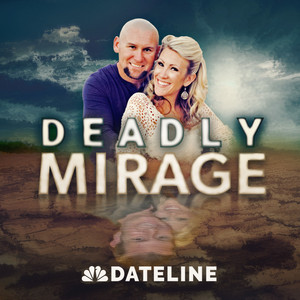
[Deadly Mirage: Unmasking the Secrets Behind a Desert Homicide]-[Dateline presents: Deadly Mirage]
📋 Summary
Deadly Mirage: A Descent into Dark Secrets and Moral Decay
The Grisly Discovery
The podcast Deadly Mirage, hosted by Dateline’s Josh Mankiewicz, opens with a chilling and visceral depiction of a crime scene in 2014. The narrative sets a haunting stage: a man discovered on a service shop floor with a "dime-sized hole in his chin" and a "pool of blood slowly congealing on the concrete floor." The atmosphere is thick with "silence" and "disorder," punctuated only by the distant sounds of diesel rigs on the highway. This brutal tableau, marked by "scarlet stained" clothing and "broken fluorescent glass," serves as the catalyst for a complex investigation into a life cut short.
More Than a Murder Mystery
While the podcast centers on the 2014 homicide, Mankiewicz emphasizes that this is "about much more." The story delves into the "long shadows cast by old sins," evolving from what initially sounds like a "Playboy Channel fantasy" into a harrowing reality filled with "real complications." The narrative arc explores the "pairings of flawed souls" and the "unholy alliances that spiraled out of control." It is a multi-faceted examination of human nature, touching upon themes of "sex, religion," and the facade of the "seemingly perfect, beautiful family" that hides dark, underlying secrets.
The Illusion of Divine Justification
The most disturbing aspect of the case, as teased in the preview, is the perpetrators' twisted rationalization for their actions. The podcast reveals that those involved claimed, "This murder was God's work." This recurring refrain—"They were doing God's work"—highlights the chilling intersection of "faith and faithlessness" and the "thrill of moral escapism" that can lead individuals to commit unthinkable atrocities under the guise of piety.
A Collision of Perspectives
Deadly Mirage distinguishes itself through its diverse range of testimonies. Listeners are introduced to a spectrum of voices:
- The Devoted: Those who genuinely loved the victim, with one individual recalling, "He became my best buddy, like everybody else's."
- The Detractors: Those who harbored deep resentment, including one person who admitted to a "frank disgust for him" that made them "very dismissive of his life."
- The Investigators: The podcast follows the journey of a "newly minted homicide detective" who faced the daunting task of solving the case. As the detective notes, "That was the first homicide that I had arrived to and was assigned as the lead detective," underscoring the immense pressure and significance of this "big first case."
Conclusion
By weaving together these disparate threads of love, hatred, faith, and duty, Deadly Mirage promises to be an intricate exploration of a singular event that shattered a community. It is a cautionary tale about how secrets can fester and how moral justifications can be weaponized to devastating effect. As Mankiewicz invites listeners to search for the full series, it becomes clear that the "mirage" in the title refers not just to the desert setting, but to the deceptive appearances that masked a brutal, reality-altering crime.

Deep Learning with ListenLeap


