
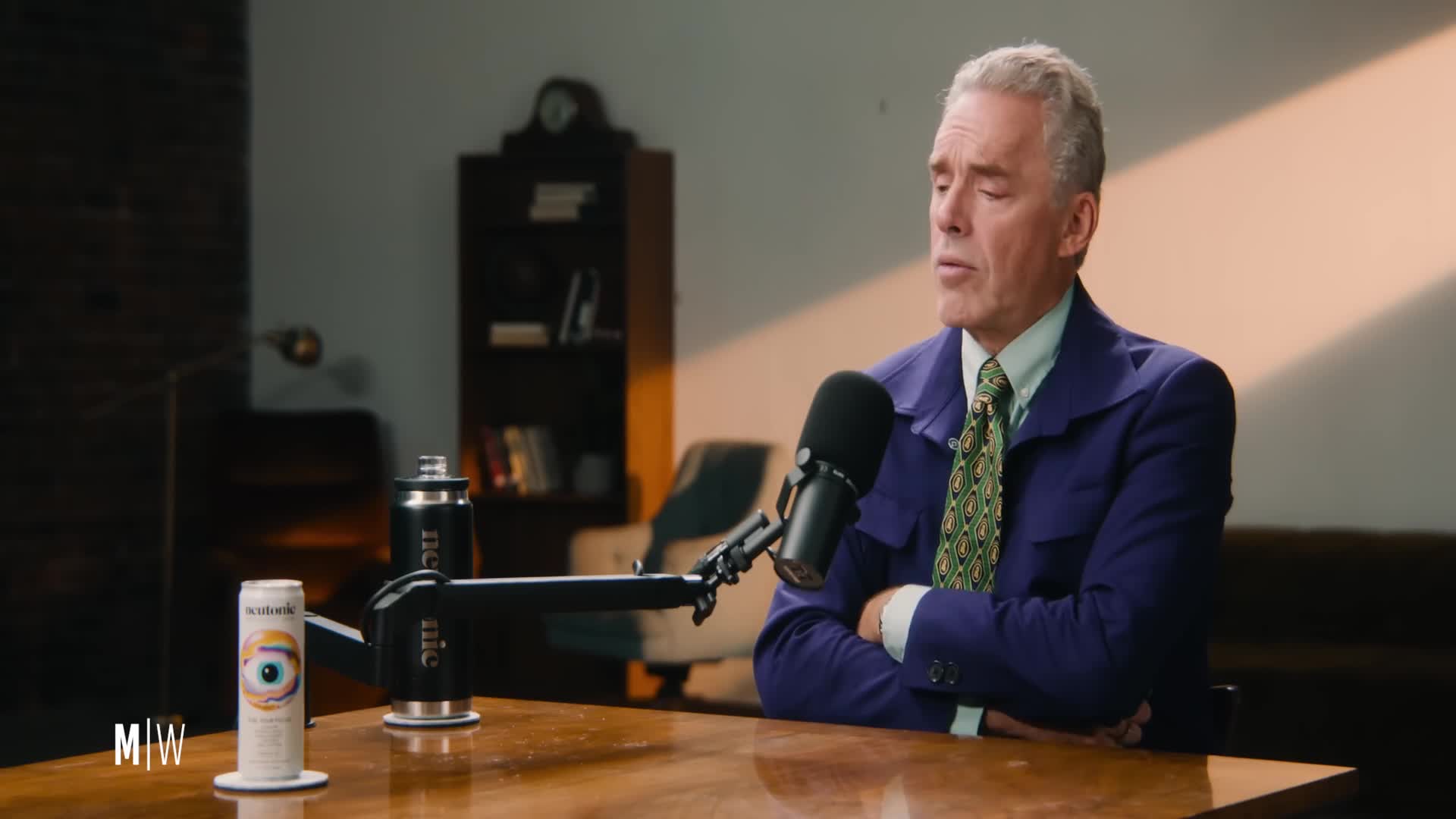
[The Price of Genius: Creativity, Conscientiousness, and the Internal Storm]-[The Dark Side Of Extreme Intelligence - Jordan Peterson]
📋 Summary
The Burden of Brilliance: Unpacking the Psychology of Genius
In a recent discussion, the internal experience of individuals like Elon Musk was brought to the forefront, challenging the common public perception that being a high-level genius is an enviable state. The central thesis of this discourse is that the cognitive architecture required for extreme creative output often comes with a profound psychological cost—a state described as a "storm" within the mind.
The Mechanism of Creativity: Verbal Fluency vs. Vocabulary
A critical distinction is made between vocabulary—the breadth of words one understands—and verbal fluency, which is the ability to deploy those words rapidly. Research suggests a powerful correlation between high verbal fluency and lifetime creative achievement.
To illustrate this, the podcast introduces a "simple verbal fluency test": writing down as many words as possible starting with a specific letter within a constrained time frame. While an average person might produce 12 words, a high-functioning creative mind can produce upwards of 150. These individuals operate at what is termed a "hypomanic rate," where thoughts move at a velocity five times faster than the average person. This is not merely a sign of intelligence; it is a relentless, non-stop mental process.
The Fine Line Between Genius and Pathology
This "hypomanic" state sits precariously close to the edge of genuine pathology: mania. The transition from hypomania to mania is described as the point where things "go immediately to hell." A manic individual is characterized by a thousand fragmented plans, lacking the stability to execute them, often leading to impulsive and destructive behavior. The podcast notes that figures like Elon Musk or rapid-fire thinkers like Ben Shapiro exist on this edge. Their internal landscape is a constant barrage of thought that requires significant effort to manage or "shut off."
The Role of Hyper-Conscientiousness
What separates a potentially chaotic creative mind from a world-changing innovator like Musk is the presence of hyper-conscientiousness. The discussion highlights that while many people are creative, few possess the rare combination of being "hyper-creative but also hyper-conscientious."
- The Stabilizing Force: Conscientiousness acts as an executive function that "wrangles" diffuse creative energy. It allows an individual to focus their intensity onto a single project, building it from the ground up—understanding it "at every single level"—before moving on.
- Statistical Rarity: Since there is no inherent correlation between creativity and conscientiousness, the emergence of someone who ranks in the top tier of both traits is statistically rare—perhaps "one person in a hundred million."
The Hidden Price of Success
Ultimately, the podcast argues that the "price that people pay to be the person that you admire" is rarely understood by the public. The baggage associated with such a high-octane mind includes the inability to find peace or silence.
For the speaker, this internal pressure was so intense that he resorted to physical extremes, such as "lifting heavy enough weights" or using alcohol, simply to "shut it down" and find a moment of relief from the non-stop flow of thought. The "storm" that drives these individuals to build rockets and reshape industries is the same force that makes their day-to-day internal existence incredibly taxing. To be a genius is not merely to possess talent; it is to navigate a mind that never stops, requiring a monumental level of discipline and executive control just to remain functional.
Deep Learning with ListenLeap


