Brought to you by the Capital One Venture X card. If you love to travel, Capital One has a rewards credit card that's perfect for you.
With Venture X, earn unlimited double miles on everything you buy and turn all of your purchases into extraordinary travel.
And you get premium benefits at a collection of luxury hotels when you book through Capital One Travel.
Plus, you'll get access to over 1 ,000 airport lounges worldwide.
Capital One. What's in your wallet?
Terms apply. See CapitalOne .com for details.
From The New York Times, I'm Michael Barbaro.
This is The Daily. After rolling back a slew of regulations aimed at reversing climate change and pulling funding for the scientists who monitor it, the Trump administration is now taking its boldest action yet.
it's eliminating the scientific finding at the heart of the government's ability to fight climate change in the first place.
Today, my colleague, Lisa Friedman, on the history of that finding, what it did, and what happens once it's gone.
now. It's Thursday, July 31st. Well, thank you to Aaron.
It's great to be here with all of you for what is a very big deal.
It's It's a very big announcement.
If finalized, today's announcement would amount to the largest deregulatory action in the history of the United States.
Lisa, just to start, I wonder if you can set the scene for us of this news conference that occurred just a couple of days ago.
Sure. Sure. On Tuesday, Lee Zeldin, the EPA administrator, traveled to Indianapolis to a truck dealership to make what he called one of the most significant acts of deregulation in American history.
And what this was, was the beginning of a plan to roll back something called the endangerment finding.
Which I have to confess, I've never heard of.
Many people haven't.
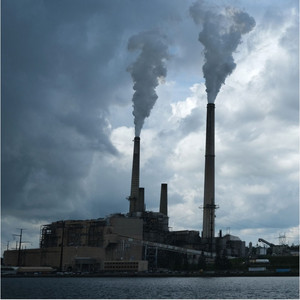
But the endangerment finding is the legal and scientific basis for regulating greenhouse gases in the United States from automobiles, from power plants, from oil and gas wells and more.
We are going to have a public comment period, one that has not taken place on the endangerment finding over the course of the last decade and a half.
And how did we get here?
Back in 2007, the Supreme Court ruled in a case called Massachusetts versus EPA that greenhouse gases, carbon dioxide, methane, others are pollutants and that the EPA can regulate them if they pose a danger to human health and welfare.
And so the Obama administration, when it came in in 2008, said about, to answer that question, does climate change indeed endanger human health in America?
And how do they do that?
They compiled a report of more than 200 pages looking at the wealth of evidence.
And, you know, taking you back to that time, 2008, the IPCC, the Intergovernmental Panel on Climate Change, the UN's top scientific body, had just recently established the most comprehensive set of information to that date on establishing that climate change is caused by human activities and the dangers that it poses.
It went through that.
It went through findings that U .S. scientists under the Bush administration had compiled about the threats of climate change.
Everything from the way that increased and more intense wildfires and the smoke from wildfires affects human health to the increases in regional ozone pollution that are exacerbated by climate change.
Mm -hmm. And based on this evidence, the Obama administration determined, pretty conclusively, that climate change and the emissions that are furthering climate change cause a danger to human health and welfare.
Got it. So that's why it's called— The Endangerment Finding.
The Endangerment Finding, because they put together a finding of endangerment from greenhouse emissions.
Precisely. Okay. And what is the reaction to the Obama administration compiling and writing this 200 -page report?
report? There's initially a tremendous amount of pushback.
The fossil fuel industry is deeply concerned.
The Chamber of Commerce is deeply concerned.
There are worries that the federal government will start regulating emissions from Dunkin' Donuts and small businesses and churches and synagogues.
And where is it going to stop?
Anyone who puts anything into the air.
Exactly. Exactly. And there were efforts to block and to overturn the endangerment finding, and those failed in court.
But pretty soon, this finding that greenhouse gases pose a danger to Americans becomes the official position of the U .S. government when it comes to climate change.
And you had said that the finding is foundational to regulation.
So, what kind of regulations spin out of this endangerment finding once the Obama people have compiled it, gotten it through the courts, and basically made it official?
So, the things that flow from the endangerment finding were some of the first and most important climate regulations that the United States ever had.
Today, we're here to announce America's Clean Power Plan.
Folks might have heard of the Clean Power Plan.
A plan two years in the making, and the single most important step America has ever taken in the fight against global climate change.
That was an effort to reduce emissions from the utility sector, from power plants in the United States, reducing methane from leaks from oil and gas wells, restrictions on automobile automobile tailpipe emissions.
These are all things that the EPA was able to do because of the endangerment finding and initially under the Obama administration started to do in a big way.
And as I recall, these were very sweeping regulations.
The Daily had just started to come out and we were talking to people in the coal industry, for example, about how this regulation was going to, over time, end the coal -powered electric plant industry.
That's absolutely right.
But even though some of these regulations faced setbacks in the courts, the fundamental ability to regulate that retained because of the endangerment finding.
So fast forward just a short time.
The global discourse on climate change has really, really shifted.
And today, the world has officially crossed the threshold for the Paris agreement to take effect.
The Obama administration is actively working toward a global agreement, which by 2015 would become the Paris Agreement on Climate Change.
And if we follow through on the commitments that this Paris Agreement embodies, history may well judge it as a turning point for our planet.
The oil industry in Washington, the American Petroleum Institute, acknowledged climate change and put itself on record as embracing solutions like a price on carbon.
Right. There seemed to be in this moment when it came to climate change, a loose alignment of scientific consensus, government regulation and industry acceptance, even if it was grudging acceptance.
It was really a high point for people who acknowledge the urgency of climate change and wanted to see the world move towards solutions.
Then Trump is elected and he immediately takes aim at any number of Obama era energy and climate efforts.
He issues an executive order to review and they ultimately weaken the clean power plan.
He's looking at methane regulations, auto emission regulations.
And there is a lot of talk about whether he will repeal the endangerment finding.
And how seriously does the president consider doing that?
Well, it didn't happen.
And we and others reported that the EPA at that time made the decision that it was not a legal fight that it felt it could win.
And it wasn't a science fight that they felt they could win.
Interestingly, and I think this dynamic still holds, the business community that back in 2009 had been so worried about the endangerment finding, by 2016 had really lost an appetite for fighting it.
We talked at the time to the Chamber of Commerce, to other large business trade groups, and pretty much all of them at the time said, well, no, this is settled now.
We don't like regulations.
We'd like changes to some of these regulations.
But this underlying foundation for acknowledging the dangers of climate change.
They're okay with that?
They were okay with it.
So this furthers the idea that the endangerment finding is really here to stay.
Yeah, embedded. Until it wasn't.
Until it wasn't. We'll be right back.
My name is Abdi Latif Dahir.
here. I'm the East Africa correspondent at the New York Times.
Speaking to someone in their own local language opens up a level of honesty and transparency that would not be present when I speak to somebody in English.
When I come into someone's home and greet them in Somali or Swahili, you know, like Habari or Habari Zainu, it brings you into the room.
I understand the culture you're coming from and I'm speaking to you in the language that you understand.
That level of familiarity.
I use that to really get deeper into what's going on.
What I'm trying to do is help our readers understand what's happening here in East Africa and see how it plays a role in the bigger picture.
New York Times subscribers keep our journalists reporting from across the map to help you understand the issues shaping our world.
If you would like to subscribe, you can do that at nytimes .com slash subscribe.
Lisa, before President Trump returns to office this year and targets this endangerment finding, in the middle of his two terms, of course, we have President Biden, who it seems worth briefly mentioning, makes regulating climate change a very big priority and gets a lot done on that front.
Absolutely. The Biden administration really made addressing climate change a signature part of its work over the four years, and it strengthened many of the Obama rules.
It put forward very aggressive automobile emissions rules that were designed to transition the nation away from gas -powered cars and toward electric vehicles.
Right. A huge change.
Huge. It imposed very strict regulations on coal -fired power plants and new gas plants, new strict regulations on methane emissions.
All of these things were happening because of the endangerment finding.
I think in the four years of the Biden administration, the endangerment finding didn't come up in any overt way.
But all of these regulations were fundamentally made possible because of this finding.
Right. And so the Biden presidency feels like a reinforcement of this idea that the overall arc of where the United States is going is this journey toward regulating emissions and trying to use the government to reduce them.
I mean, clearly Trump broke from that, but Biden brings it back.
And the sense is this is directionally still where the country's at. Exactly.
Because, you know, through the course of Obama, Trump and Biden, as much as the first Trump administration promoted fossil fuels, weakened regulations, they never attacked this fundamental understanding, which, like you said, has really become by this stage kind of embedded that climate change is real.
It's driven by human activity.
It is causing threats to the planet.
And those threats are endangering human life and welfare.
So talk about how the second Trump presidency settles on a strategy of trying to de -embed the endangerment finding.
The second Trump administration is a whole new ballgame.
Throughout the 2024 campaign, Trump himself had been much more aggressive in attacking not just regulations, but climate change science.
He joked that climate change, that, you know, sea level rise means that people have a little bit more beachfront property.
He made it very clear that there would be no debate over pulling out of the Paris Agreement.
That was going to be a first -day activity, and it was.
Right, because he had pulled out in his first term, Biden put us back in, and he's like, I'm going to pull us out again.
Exactly. So, you know, when it came to something like the endangerment finding, Trump didn't talk about the endangerment finding on the campaign trail.
But on his first day in office, he signed an executive order ordering the EPA administrator to make a recommendation about the legality and applicability of the endangerment finding.
In other words, he makes very clear that he has this in his sights.
Precisely. And what happens next?
So what happens next is behind closed doors, right?
The EPA does not offer really any visibility into their process.
EPA career staff that had created the endangerment finding in the first place were pretty much shut out of the process.
It was never announced or really very clear who exactly was working on this.
but um about a week ago we reported the first details of the plan you're being modest you you broke this story thank you we reported that the epa indeed planned to repeal the endangerment finding and was building a case to do that well lisa you had said that courts kept rejecting challenges to the endangerment finding when obama first made it official so So when the Trump people decide that they're going to get rid of it, what legal basis do they have for getting rid of this?
This is undoubtedly going to get challenged.
But the EPA is making a series of arguments and alternative arguments.
You know, what one legal scholar described to me as throwing a bunch of spaghetti to see what sticks with a court.
One of its arguments is that air pollution is local.
And they argue that the EPA doesn't have the authority to regulate in response to global climate change.
Hmm. So his argument is basically that climate change is an international phenomenon that creates dangers that are not from any one location.
Therefore, the U .S. can't regulate just the local sources of it.
Exactly. Another argument it's making is that the cost of regulation should be part of the endangerment finding.
Right? Then when making the finding, EPA should not just look at the cost to human health, but also things like how do high regulatory costs impact consumers?
Does it deny them consumer choice?
Does it worsen their public health by keeping older cars on the road?
That's a new argument that we hadn't seen an EPA make before.
One other thing they argue is that even if the endangerment finding stayed in place, they're saying that the EPA shouldn't set standards on greenhouse gas emissions because no matter what technology we apply, we can't make a dent in the problem of global climate change.
Putting aside those legal arguments, I'm curious why in your reporting you have found that the White House has decided to go after a finding that, as you have explained very clearly in this conversation, the industry doesn't really want anymore.
You've made clear that they have moved on.
They have accepted a lot of the scientific consensus around climate change and adjusted their business plans accordingly.
So, if you really pin the Trump people down, why are they doing this?
Is it to satisfy the hardest right thinkers on climate?
Is it something else?
To a large extent, this is about satisfying a constituency.
Repealing the endangerment finding has been the holy grail of a lot of groups that deny climate change.
And so what Trump is doing in moving to repeal this is really satisfying a request to pull root and stem the ability to regulate climate change from the government.
And, of course, this isn't happening in a vacuum.
It's part of a larger push by the second Trump administration to change what the EPA is, who works there, what it does.
Can you briefly put rescinding the endangerment finding into that larger context?
As significant as repealing the endangerment finding is, and it is very significant, it's part of a larger story that we see right now.
This administration is taking away science to study climate change and the impacts.
It is eliminating programs that help Americans prepare for and build resilience to climate change.
So at every level, there is an effort to remove climate change from the federal government.
It feels, upon reflection, like getting rid of the endangerment finding bookends two very different moments in the climate change conversation in the United States.
When it was created back in the Obama presidency, and now that it's coming down, when it was created, the country had reached this growing consensus about the importance of taking on climate change, industry, government, public opinion.
But now, and I wonder what you think about this, it feels like the overall mood is different.
And that includes public opinion.
And it includes Democrats setting aside climate change as a major priority.
Are we basically seeing in this bookend moment a country that's just not as urgently invested in climate change?
I think part of that is really accurate.
Clearly, the country is increasingly divided on both climate change and the solutions to climate change, right?
We've seen support for wind and solar, for example, drop among Republicans.
But I also don't think that we're seeing a walk back by either activists or lawmakers from addressing climate change.
Everything that they had fought for is under attack.
And there is no doubt that, you know, this movement is is on its back heels and trying to figure out what a new way forward would be.
But I think you still see, you know, that the majority of Americans, you know, and the Pew polls and others show this acknowledge climate change are concerned about climate change and want the government to take some kind of action that there is a lot of dispute about what?
Well, just to end here, in the same way that the endangerment finding codified a trajectory and an outlook on climate change when it was created that was definitely in the direction of regulating emissions and fighting climate change, I'm curious, as one of our leading climate reporters, what you think it's being rescinded and removed will codify next?
I think when the dust clears on this legal fight, and there will be a big legal fight after the repeal of the endangerment is finalized, I think the question is going to come back to Congress.
The reason we have had all of this whiplash with regulations in the first place is because there is no law explicitly mandating the reduction of carbon emissions in the atmosphere.
And so that's the question that I think is going to be at the forefront.
not which executive actions stay or get removed and toggle back and forth, but whether the legislative branch ever decides that this is something that it wants to tackle.
Because that's how it actually becomes permanent.
Yeah, it's worth remembering that Obama, whose administration created the endangerment finding, he wanted Congress to be the one to act on climate change.
When Congress failed to pass a big climate law, at the time it was called Cap and Trade, he gave a speech where he said, you know, if Congress doesn't act, I will.
So it's been regulatory whiplash from Democrat and Republican presidents ever since.
Well, speaking of whiplash, is there a world where a future president brings the endangerment finding back in another case of whiplash?
It's a big question.
it. And depending on how a court rules once this is challenged, yes, in theory, a future president could restore the endangerment finding.
But it would take a lot of time.
It would take a long time to rebuild the scientific record, the legal record. And it would take even more time to turn that into a regulation to actually start to reduce emissions.
So the reality is, I mean, it's easier to kill the endangerment finding than it is to build it back up.
Elisa, thank you very much. We appreciate it.
Thanks so much. We'll be right back.
would have thought to turn to a news app for.
This app is essential.
The New York Times app.
All of the times, all in one place.
Download it now at nytimes .com slash app.
Here's what else you need to know today.
On Wednesday, the Federal Reserve defied President Trump by keeping the interest rate at its current level, but faced a highly unusual level of dissent from its governing board. Two members of the board publicly disagreed with the decision, something that has not happened in more than 20 years.
Both dissenting governors were appointed by President Trump, who has repeatedly demanded that the Fed lower interest rates and has mocked Fed Chairman Jay Powell for failing to do so.
And former Vice President Kamala Harris Harris said that she will not run for governor of California next year, ending months of speculation about whether or not she would enter the race.
Harris had been exploring a run for the state's top office since losing the presidential race against Donald Trump last fall, but friends said that she has left open the possibility of running for president for a third time in 2028.
Today's episode was produced by Sydney Harper, Carlos Prieto, and Asta Chaturvedi.
It was edited by Lexi Diao and Chris Haxell, contains original music by Dan Powell, Alishaba Etube, and Pat McCusker, and was engineered by Alyssa Moxley.
Our theme music is by Jim Brunberg and Ben Lanthorpe of Wonderly.
That's it for The Daily.
I'm Michael LeBar. See you tomorrow.
Your home is an active investment, not a passive one.
And with Rocket Mortgage, you can put your home equity to work right away.
When you unlock your home equity, you unlock new doors for your family, renovations, extensions, even buying your next property.
Get started today with smarter tools and guidance from real mortgage experts.
Find out how at RocketMortgage .com.
Rocket Mortgage LLC.
Licensed in 50 states.
NMLSconsumeraccess .org.
3030.