Hey there, it's Tamara Keith, I cover the White House.
I know this is hard to believe, but one day the election will be over.
Then, the winner gets a lot more powerful.
It's my job to report on what they do with that power.
That's public accountability, but it's not possible without public support.
So please support our work.
Sign up for NPR Plus.
Go to plus .npr .org.
You're listening to LifeKit from NPR.
Hey everybody, it's Mary Al.
Next time you're at the supermarket, pick up some packaged foods and look over the ingredient list.
You'll start to notice a lot of the same things, high levels of salt and fat, added sugars, added colorings, added flavorings, hydrolyzed protein, isolates, high fructose corn, syrup, bulking agents like maltodextrin, for instance.
These are all sort of the types of ingredients you'd see in an ultra -processed food, carrageenan, you know, those kinds of things.
That's Maria Godoy, a health correspondent at NPR.
She's been reporting on the health effects of ultra -processed, industrially -made foods.
These are foods that are made with ingredients derived from foods and then you reassemble them to create a product that's tasty, cheap, convenient, and shelf -stable, which means they last a long time.
They tend to have a lot of additives, like the ones we mentioned earlier.
You might find things like emulsifiers and stabilizers, and these are ingredients used to improve the texture of the foods and make them taste better, which also can help make them harder to resist, so we tend to overeat them.
Most of what we eat in America today is ultra -processed.
There was a recent study that put it at 73 % of the U .S.
food supplies ultra -processed.
There's other research suggesting it's 57 % of what most adults eat, and it's like 67 % of what kids eat, so it really is everywhere.
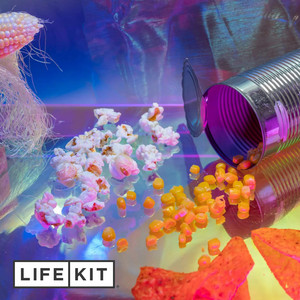
On this episode of Life Kit, we talk about how to recognize ultra -processed foods, why you might want to eat less of them, and how to actually do that.
Wait, wait, don't tell me.
Fresh air up first.
NPR News Now, Planet Money, Ted Radio Hour, Thru Line, the NPR Politics Podcast, Code Switch, Embedded Books We Love, Wild Card, are just some of the podcasts you can enjoy sponsor free with NPR+.
Get all sorts of perks across more than 20 podcasts with the bundle option.
Learn more at plus .npr .org.
Darien, why have so many people fallen out of love with dating apps?
That is such a question of the moment, and I posed it to the CEO of Henge for Love Week on The Indicator.
That's a week -long investigation into the business side of romance.
Find us on your favorite podcast app, The Indicator from Planet Money.
It's Love Week! We love you.
As Election Day approaches, NPR's Consider This Podcast is zooming in on six states that could determine who wins the White House, Georgia, Nevada, Wisconsin, Michigan, Arizona, and Pennsylvania.
We'll ask voters in these swing states what matters to them and which way they want the country to go.
Follow along with new episodes this week on the Consider This Podcast from NPR.
Adrienne, do you feel that nip in the air, the smell of pumpkin spice wafting from your local coffee shop?
Yeah, the overwhelming urge to suddenly watch holiday rom -coms?
Yes, with all of these warm and fuzzies on the brain, it is the perfect time to explore the economic side of romance on The Indicator.
We've got a week of episodes recalling Love Week.
Subscribe wherever you get podcasts.
Okay, so if you're at the grocery store and you're trying to figure out, like, does this food item in quotation marks fall into the category of ultra -processed?
What should you look for?
Look at the ingredient list.
That's something that I do all the time now since I started this reporting.
Reading the ingredient list is the most important thing to do.
And you can ignore the health claims on packages because a lot of packaged foods will say something like, oh, it's good for you or high in this or that, but it's the ingredient list you really have to pay attention to.
And so if you see a long list of ingredients and includes items you really don't recognize, you wouldn't find them in your home kitchen, that's usually a telltale sign that that's an ultra -processed food.
Okay, what does the research tell us about the health risks of these kinds of ultra -processed foods?
There is a lot of research linking overconsumption of ultra -processed foods to poor health outcomes.
So they see an increased risk of things like type 2 diabetes, obesity, hypertension, dying from cardiovascular disease.
In fact, there's research showing that eating too much ultra -processed foods increases your risk of dying prematurely from all causes.
And the evidence is pretty strong and consistent for all of those risks.
Do they know the reason?
That's a good question.
And one of the reasons is obvious that these foods tend to have a lot of added salt, sugar, and fat.
But there are some concerns that maybe there's something more and like what is driving us to overeat them.
Like there's a researcher named Kevin Hall at NIH who did this really fascinating landmark study back in 2019 where he recruited 20 healthy adults to live full -time at NIH for a month.
And then he randomly assigned them to either eat an ultra -processed food diet for two weeks or a minimally processed diet for two weeks.
And then after the end of the two -week period he switched them.
And he actually didn't expect to see much of a difference because the diets were matched for all the major nutrients like salt, sugar, fat, fiber, protein.
Essentially people were offered way more food than they needed to maintain their weight.
And they were told they could eat as much or as little as they wanted.
But what actually happened was that when they were on the ultra -processed diet they actually gained two pounds on average and they ate an average of 500 calories more a day.
And then when they went on the unprocessed diet they lost weight and ate less.
So it's unclear if it's something about the processing itself that is driving some of these health outcomes, certainly the overeating outcome.
A lot of researchers I spoke with say there's a signal there that needs to be explored but certainly we do know we have hard evidence that too much salt, sugar, and fat is not good for our health.
So for that reason alone it's worth cutting back.
Okay so if you do want to cut back on the amount of ultra -processed foods that you're eating, I mean where do you start?
Because it seems like if it's such a big part of the food supply you're not going to avoid it entirely, most likely.
Do we know if some ultra -processed foods are better or worse than others?
Well okay too much salt, sugar, and fat is no good for you like regardless of whether it's ultra -processed or you made it in your home kitchen right?
So that's that's one thing.
But when we're talking about packaged foods there is some evidence like they're not all equally bad for you.
For instance I spoke with a researcher whose evidence has found that women who ate ultra -processed yogurt, so it was technically ultra -processed because it had added sugars, it was linked to a lower risk of colon cancer.
So I mean that's interesting.
And also you know a lot of researchers I spoke with say like you don't want to vilify things like packaged breads.
Most packaged breads are technically ultra -processed but if you're looking at a whole grain bread and by whole grain I mean like that should be like the top ingredient.
They tend to be a good source of dietary fiber for a lot of people and most Americans don't get enough dietary fiber and so they say like you don't want to steer people away from eating whole grain breads like that and it's certainly a better choice than white.
But you want to look at the ingredient list always I think and even if it's ultra -processed look for things that are lower in sugar and that have some protein that have fiber maybe have no added sugars.
So it's a level of processing.
Right yeah it seems like some of those ingredients that you mentioned particularly sugar hides in most packaged foods.
They'll just add it no matter what.
Even if you're like this doesn't seem like the kind of thing that needs sugar in it.
No that's such a good point.
Yeah once you start reading ingredient list you're like wait what's that doing in that?
Like I went shopping a couple of weeks ago with a researcher and I picked up a package of tortilla and it had sugar as like the third ingredient tortilla chips.
I'm like why do you need sugar in tortilla chips?
It really is in a lot of places and salt too.
We get too much salt in our diet as most Americans do and that's because it's used in a lot of ultra -processed foods and packaged breads are actually a known offender here.
Like there's a lot of sodium hiding in there so you want to you want to check that nutrition panel as well.
What if there are some ultra -processed foods that you just really enjoy.
You know you love your tortilla chips or whatever.
Are there healthier alternatives?
Yeah I mean for instance if you like salty, crunchy snacks which you know are really kind of what beckoned to me around three o 'clock in the afternoon.
Think about nuts which are a good source of protein and fiber and healthy fats.
I mean you know if they're salted at least you're getting some good value for them right.
Nuts are part of a balanced nutritious diet or if you love breakfast cereals a lot of people do instead of something that's really sugary and has a lot of added colorings you know look for something that has some protein and fiber and fewer ingredients.
You can still make healthy choices in this category or yogurts.
Yogurts have nutritional value but look for something with low or no added sugar and maybe instead of having sugar you just throw some berries in there to sweeten it.
There are ways to make healthier choices even if that yogurt comes in a package or if you just can't stomach unsweetened yogurt at least look for something that's like high protein like a Greek option and again fewer ingredients the better.
Yeah it seems like one thing that people do instead of for instance buying a salad dressing that's already totally mixed and made is to make their own at home get the ingredients maybe it's like olive oil and vinegar and then you add as much salt as you want or you can also make a creamy or salad dressing
but just make it on your own.
Yeah absolutely I mean most researchers will tell you yeah cooking more from scratch is going to be a better option not everybody has the time or means to do that but yes if you could that is something we could all do more of and you don't have to cook every day cook once and eat several times just
make a double batch or triple batch and you can eat something throughout the week it doesn't have to be that onerous I'm big on leftovers at my house but the other thing is just focus on things that you know you should be eating more of like fruits and vegetables and it doesn't have to be super expensive
because for instance frozen fruit and vegetables there's a lot of research showing that it's just as nutritious as fresh and it's often a lot cheaper and has the added bonus that once you just use what you need and then put the rest back in the freezer right you're good to go again.
Are there ways to take items that are packaged or canned or processed in some way and make them a bit healthier to to alter them in some way to get rid of some of the additives?
Yes for some items for instance if you're buying canned beans and they have added sodium really easy trick is to dump those beans into a colander and then let them drain for two minutes then you rinse them out with running tap water for 10 seconds and then let them drain for another two minutes and that can get
rid of a whole lot of the excess sodium but like if you're talking about a packaged food those long lists of ingredients are baked in so you can't really take that food and make it not ultra processed but what you can do is make better choices processing of foods exists on a spectrum so you can look
for sort of less processed options there's actually a really cool database that researchers at Northeastern created it's called TrueFood .Tech and you can look up a lot of food brands and it'll tell you how processed it is they created this like zero which is not processed to 100 scale which is very
ultra processed for foods and so you look up your brand and it'll tell you if your tortillas are a 1 or like a 94 on the spectrum so it will also suggest less processed alternatives so that is one thing you can do and that's a prototype but it's kind of fun to play with and it's sort of eye -opening.
Oh my god I'm excited to look at it but I also shudder to think I feel like it's if you could do that and be like oh my god everything I eat is ultra processed like I mean you know you don't have to be perfect just be conscious of what you're eating and aim to fill your diet mostly with fruits and vegetables
and lean meats and dairy like that should be the basis of your healthy diet and then try to eat things that are packaged less frequently but some of the best advice I got was from Christopher Gardner he's a nutrition researcher at Stanford University and he says he likes to embrace the philosophy of one
of his favorite chefs which he calls the 80 -20 rule and basically the idea is 80 % of the time try to make thoughtful choices and pay attention to what you eat but 20 % of the time just go off the rails because food is joy food is an important part of life and you shouldn't just like deprive yourself
altogether but you don't have to be perfect you know.
Yeah getting a little wild 20 % of the time yeah exactly food gone wild so eat your salad eat your fish and then if you really want that like stabilizer lud and ice cream for dessert go for it but just maybe not every night.
Thank you so much Maria these tips are great.
Oh it's my pleasure thanks for having me.
For more Life Kit check out our other episodes we have one on how to meal prep and another on how to stop wasting so much food you can find those at npr .org slash life kit and if you love life kit and want even more subscribe to our newsletter at npr .org slash life kit newsletter also have you signed
up for life kit plus yet becoming a subscriber to life kit plus means you're supporting the work we do here at npr subscribers also get to listen to the show without any sponsor breaks.
To find out more head over to plus dot npr .org slash life kit and to everyone who's already subscribed thank you.
This episode of life kit was produced by Thomas Lew.
Our visuals editor is Bec Harlan and our digital editor is Malika Green.
Meghan Kane is our supervising editor and Beth Donovan is our executive producer.
Our production team also includes Claire Marie Schneider, Margaret Serino and Sylvie Douglas.
Engineering support comes from Josh Newell, Stu Rushfield and Stacey Abbott.
I'm Mary El Segara.
Thanks for listening.
Hey there it's Ian and Mike and on the how to do everything podcast from the team at Wait Wait Don't Tell Me we will answer any question you have no matter how ridiculous.
Like maybe you want to get a haircut in space and you're not sure how.
Astronaut Frank Rubio has had a haircut in space.
We plan for everything right and so it's not a pretty haircut for sure but it's functional.
Listen to the how to do everything podcast from npr.
Wait Wait Don't Tell Me fresh air up first.
NPR news now planet money 10 radio hours through line the NPR politics podcast code switch embedded books we love wild card are just some of the podcasts you can enjoy sponsor free with NPR plus get all sorts of perks across more than 20 podcasts with the bundle option learn more at plus dot npr dot org.
All this month shortwave is serving up tricks and treats from ghost wolf DNA and the science of death to the relationship between anxiety and horror movies with a slate of Halloween episodes to get you in the spirit this October subscribe to shortwave the science podcast from NPR.