What does it mean to be black in America?
An NPR's Black Stories Black Truths,
a collection of stories as varied, nuanced, and dynamic as the black experience.
You'll hear, it means everything.
Search NPR Black Stories Black Truths wherever you get your podcasts.
You're listening to Life Kit.
From NPR.
Hey everybody, it's Mary L.
I'm just popping in for a minute here.
Because today you're going to hear from our friends over at NPR Science Podcast Shortwave.
They did this great episode recently about shots, the kind you get at the doctor's office.
They're scary for a lot of people, especially for kids.
But there are things your doctor's office can do and things you can ask for to make it easier.
Here's the episode.
Hey short waivers, I'm Tom Drizbach.
Now, normally I'm an investigative reporter here at NPR News digging into secrets and things
no one knows about.
But today I'm here to talk about something almost all of us have gone through at one point
in our lives.
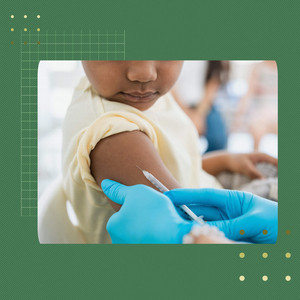
Going to the doctor's office and getting your shots.
Now for a lot of folks, it's not a big problem.
You know what the nurses sometimes say.
It's like a little pinch and you're done.
And for little kids, do they even remember the pain anyway?
Well Stefan Friedrichsdorf says, uh, yeah, he remembers.
Stefan grew up in Germany and he remembers this one time when he was nine years old.
He had to go to the doctor for an infected nail.
Two surgeons were holding me down and I was screaming at the top of my head when the
one surgeon sat to the other.
Do you think he can feel any pain?
And the guy said no.
And may they burn and hell?
That happened more than 40 years ago, but that traumatic doctor's visit has really stuck
with him.
Now Stefan Friedrichsdorf is a doctor himself and he's a professor of pediatrics.
He also leads a palliative care team with a nurse manager and child life specialist
at UCSF Benioff Children's Hospitals where they are trying to prevent what they call
needless pain from shots.
Now growing up, I definitely had this fear.
And when we recently asked if you did too, we heard from a lot of short waivers.
I have a terrible fear of needles.
I'm infamous for being heard in the lobby screaming by my brothers.
When talking about my needle phobia almost had me pass out behind the wheel.
This has gotten in the way of my ability to get gender confirming surgeries.
This has resulted in 20 years of not going to the dentist.
A lot of people get this fear of needles when they're young.
Little kids especially get a lot of shots in the first couple years of life and if you've
ever had to take your kid to get their shots, you probably know how tough it can be.
And it's not just a matter of being scared.
That fear can make it really hard to get treatments that have to be injected or get blood
drawings or on various tests or get vaccines to protect you from diseases.
And Stefan Friedrichsdorf says that is a serious problem for public health.
I have personally taken care of five children who died of measles, who were not vaccinated.
Clearly, children, teenagers, young adults and adults are choosing to forego medical care,
but choosing to forego health care and that increases their mobility, the risk of becoming
sick and increases their mortality, the risk of dying.
But there are doctors and researchers working on a plan to make it better.
Today on the show, making the doctor's office less painful and less scary for kids so that
as adults, we can take better care of ourselves and each other.
You're listening to shortwave from NPR.
Support for this podcast and the following message come from Wise, the app that makes
managing your money in different currencies easy.
With Wise, you can send and spend money internationally at the mid-market exchange rate.
No guesswork and no hidden fees.
Learn more about how Wise could work for you at Wise.com.
What does it mean to be Black in America?
An NPR's Black Stories Black Truths, a collection of stories that's varied, nuanced and dynamic
as Black experiences, you'll hear.
It means everything.
Search NPR Black Stories Black Truths wherever you get your podcasts.
This is my voice.
I can tell you a lot about me and I'm not changing it for anyone.
In NPR's Black Stories Black Truths, you'll find a collection of NPR episodes centered
on Black experiences.
Search NPR Black Stories Black Truths wherever you get your podcasts.
In this country, some truths aren't self-evident.
In NPR's Black Stories Black Truths, a collection of stories as wide-ranging and real as the people
who tell them, we celebrate the Black experience for all its soul and richness.
Search NPR Black Stories Black Truths wherever you get podcasts.
Hey we are back in talking with Dr. Stefan Friedrichsdorf about how to prevent kids from having
to go through needless pain from needles.
When he told me a group of researchers over the last decade have helped come up with a
step-by-step plan.
We found that if you can offer five things to every child, every time, everywhere, whether
it's in children's hospital, in a doctor's office, and whether this is in high income
countries in the United States or in low income countries, like in the Philippines, where
we are replicating this as well, then you can pretty much completely eradicate or at least
significantly decrease the pain and anxiety caused by needles.
Let's go through those things one by one if we could.
What is the first step to dealing with this problem?
The single most important thing, the number one thing, is to apply numbing cream.
Topical anesthesia, which you can buy over the counter in any drug store, is called Forebous
and Lydicin Cream is available for a few dollars.
And that is something which should be offered to any child.
And how do you apply it before you get a shot?
So you basically put a pea-sized drop on the skin, so you have to check in with your
clinician, whether it's a vaccination or a blood draw, where exactly to put this, and
then you apply some dressing.
And it needs to be offered at least 30 minutes, and then can we take off before the needle
procedure, whether it's a lapdraw of vaccination or the insertion of an intravenous cannula?
Wow, okay.
And how effective is it?
Can you not feel the needle going at all, or is it still just sort of like a little mild
pinch, or what does it feel like?
So pain is a funny thing.
Tom, if I come over right now into your office and I hit you as hard as I can on your leg
and ask you, Tom, what's your pain number, 3 and 0 and 10?
You say, you know, that's probably an eight out of 10.
That's a hard hit.
Wow.
That is a hard hit because I just gave you a bruise.
And because your brain is interpreting this painful procedure, me hitting you as a threat,
and therefore it's going to be very painful.
Now let's say that you and I play soccer or we play American football or dance ballet
or whatever it is, and I accidentally run into you and I give you the same bruise, you
may not even notice that.
Interesting.
So the kicker is, and this is what sometimes people who criticize the numbing cream and
say, well, it's not deep enough, the needle, it just goes much deeper, it's the expectation
whether or not it's going to hurt.
Interesting.
So it almost seems like the numbing cream serves, well, I guess if you're old enough to understand
what's happening, you can understand, oh, this is going to make the process better and
that actually does make the process better even if it doesn't eliminate the pain totally.
I mean, I had a lap draw two days ago.
I did put numbing cream on and I did not feel anything.
Okay, well, let's go through two through five of your protocol then and the protocol you
and other researchers have developed.
What are those steps?
So step two is do never, ever, ever, ever hold down a chart.
So back in the old days, we were taught in medical school, in nursing school that the
best way to do vaccination on lap draw is to hold down children and we now know this
is completely utterly and wrong.
And we actually asked children, what does it feel like when we hold you down for a painful
procedure, they tell us that they feel ashamed, humiliated, powerless and reporting having
lost the right to control to his own body.
So we now are using what we call comfort position.
So for different ages, this is of course very different.
So small babies younger than six months, we would use some swaddling.
And for older children, we always recommend for them to sit and upright and give them
a choice.
So toddlers very likely want to sit on their parents or their care give us lap.
But under no circumstances should we ever pin down a child, we strain them because clearly
this increases the anxiety as you and I remember when we were children.
And three.
Three is age appropriately stretch.
For little babies, there may be sort of like like little spinning tools and blowing bubbles
is absolutely awesome.
So we have the light of King Cream, the positioning, don't restrain kids, you have the distraction,
what's next.
So the next two are different for different ages.
So for babies younger than 12 months, we should always always always either have a sucrose,
sugar water or breastfeeding.
Okay.
And what is the last step?
So for older children, meaning when they're able to talk to us, it is really important
that we change the memory.
And it's very important how they remember how the procedure went.
So we have to think about whatever we're doing before, the meaner poke, viewing and
after.
So before we don't want to use negative words, we don't call it shots or needles or pain
or hurt, but rather we ease it.
Is it okay if we're going to do something, you're going to be bothered for just a very
brief moment.
The story we tell ourselves about how something happened, it's important to frame that story
in a more positive way, rather than focusing only on the pain.
Correct.
It's a very self-fulfitting prophecy.
And then during the interaction, we don't say count to three.
I mean, that's like the worst thing to do.
Why is that?
Why is that so bad?
If I'm standing in front of you and I'm going to hit you and give you a bruise and I
say, okay, I'm going to do this when I count to three that doubles the impact.
The anticipation.
Correct.
And then after, and this is the most important thing, this is the kicker, we want to change
the memory.
Immediately afterwards, after the procedure, we say, all done, I'd like you to choose a
sticker from the goody box.
Yeah, I'd like you to drink a sip of water and then reframe the pain.
We basically say something like, I'm so proud of you.
You did so well.
Now when you talk to other people in medicine about these five steps that you have helped
to develop, what do they think?
Do you encounter much skepticism from other physicians or nurses who are giving a lot
of these shots?
This is something child life specialists have been doing for 20 years.
So they are our biggest supporters in implementing this.
When we ask our own staff and we have done this, we often find something like, you know,
this is not a priority.
Interesting.
And when we dig deeper and actually ask, so why is this not a priority?
Half of our colleagues are telling us, it's just not a big deal.
It's just like pin them down, it's a one second pain and then it's done.
And they don't anticipate how much fear the child has afterwards.
And I was just saying it's like, yes, it's a problem, but there's nothing we can do about
it.
Because you have to actually get the numbing cream on 13 minutes before.
I was going to say, I could imagine a lot of doctors offices say, well, that's another
step in a already very busy schedule.
How are we going to fit that in?
Right.
And that is the thing.
This is actually said, okay, you may offer this that parents or parents may put this on
at home.
Or you can actually say, okay, let's put the cream in one year checked in and often realistically
it does take 30 minutes until the child sees the needle.
So we actually found that it's not only easily doable.
It actually did save time.
Because if you don't need five adults to hold down a child for a blood draw or for vaccination,
you can actually see many more happier children in a shorter time.
So it makes your life better.
It's much more effective.
And it's a win-win-win for children and the stuff.
So it sounds like, you know, given that getting shots, getting blood draws are such a key part
of keeping your own health, your child's health, and the public health protected.
This is really important to find ways to make it a less stressful, less fear-filled experience.
But it sounds like there might need to be a little bit of a culture change in certain parts
of medicine in order to make that happen for people to take it seriously on a broad level.
That is correct.
At the Benny of Children's Hospital, Cien, Oakland, San Francisco, we are now rolling
this out system wide and going from unit to unit and actually implementing the numbing
cream, the sugar water or breastfeeding, the not holding children down and praising and
giving children choices.
But that's certainly something which a hospital leadership needs to embrace because we have
so many competing priorities in healthcare that despite the fact that if you ask a child,
what is the number one fear?
What is the number one worry is pain?
Yeah.
Well, Dr. Friedrich's daughter, thank you so much for your time and for all your insights.
Really appreciate it.
Thank you so much for having me on the show, Tom.
A lot of it.
Now before we head out, a big thank you to our colleague, April Dombaski at Member Station
KQED and KFF Health News who reported this story for NPR's appropriately named Shots
Blog.
Also a quick shout out to our shortwave Plus listeners.
We appreciate you.
We also thank you for being a subscriber.
Shortwave Plus helps support our show.
And if you're a regular listener, we'd love for you to join so you can enjoy the show
without sponsor interruptions.
You can find out more at plus.npr.org slash shortwave.
This episode was produced by Margaret Serino and edited by our showrunner Rebecca Ramirez.
Rebecca also checked the facts.
Quacy Lee was the audio engineer.
And special thanks to you, our listeners, for taking time to email us your personal stories
about being afraid of needles for the story.
I'm Tom Drizbach.
Thanks for listening to shortwave from NPR.
If you've never donated to the NPR network before, that's okay.
The NPR is available to everyone for free.
But we do rely on listener support from those who are able to give.
So join the community of supporters for public media giving days.
Coming up on May 1st and 2nd.
Please give at donate.npr.org.
And thank you.
With NPR Plus, there's more to hear.
Like extended interviews with some of the experts we talk to at Planet Money and the Indicator.
It's a mistake for economists to only think about economic efficiency when considering
policies because you'll actually wind up with a worse outcome.
And with NPR Plus, you help keep NPR going.
Learn more at plus.npr.org.
Taylor Swift has dropped a new album.
She is the biggest pop star in the world and everything she does makes news.
I gasped.
I was like, oh my god, I've been there and you can identify with it.
For a breakdown of Taylor Swift and her new album, The Tortured Poets Department, listen
to the Pop Culture Happy Hour podcast from NPR.