
[Exploring Cuba: A Journey Through History, Culture, and Life]-[Cuba... Squiz the World]
📋 Summary
An In-Depth Look at the Republic of Cuba
Cuba is a nation defined by its unique geography, complex political history, and vibrant cultural identity. Located where the Caribbean Sea, the Atlantic Ocean, and the Gulf of Mexico converge, the island nation has long been a subject of global fascination.
Geography and Economy
Cuba consists of a long, skinny main island stretching 1,200km in length, with a population of 11 million people. Its geography is divided between mountainous regions and flat plains, the latter of which have historically made the country a powerhouse in agriculture. Throughout the first half of the 20th century, Cuba was the "world's biggest exporter of sugar," a testament to its fertile landscape. Beyond sugar, the country is also famous for its tobacco production, which fuels its world-famous cigar industry. While these cigars are a significant source of revenue, it is worth noting that they carry health risks, as they have "been proven to cause cancer."
The Political Landscape
Since the 1959 revolution led by Fidel Castro, Cuba has functioned as a "Unitary Marxist Leninist one-party socialist republic." This system centralizes control, meaning the government owns and regulates almost every aspect of national life. The podcast highlights significant concerns regarding civil liberties, noting that elections are not democratic as "only one party is allowed." Furthermore, access to information, including the internet, is strictly controlled, and the country ranks among the worst globally for "press freedom," preventing journalists from writing anything "critical of the government."
Education and Linguistic Heritage
Cuba’s constitution mandates that healthcare and education are "basic human rights," resulting in high literacy rates. Education is compulsory from age six, and students are required to wear uniforms. A curious detail about the school system is the government's restriction on supplies, allowing students to purchase only "one uniform a year." This leads to logistical challenges for families, often requiring relatives abroad to send replacements.
Culturally, Cuba maintains a distinct linguistic flair. While Spanish is the official language, local dialect is unique. For example, instead of the standard "amigo," Cubans use the term "asere" to refer to a friend, and use "qué bola" instead of "cómo estás" to ask how someone is doing. These phrases serve as a unique marker of Cuban identity.
Cultural Icons: Cars and Music
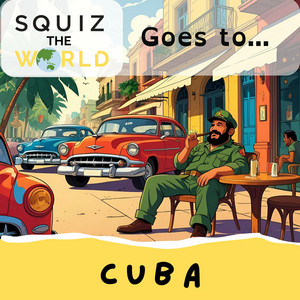
Walking through Havana feels like visiting a "classic car show" due to the prevalence of 70- to 80-year-old American vehicles. These cars have remained operational for decades because, following the revolution, it became difficult to import new vehicles, turning the local population into "expert mechanics."
Music is equally central to the Cuban experience, particularly the style known as son cubano (literally "Cuban sound"). This genre serves as the foundation for many Latin music forms, including salsa. Its global resurgence was cemented in 1996 by the "Buena Vista Social Club," an album that brought together legendary musicians from the pre-revolution era, effectively reviving a genre that had nearly faded from public life.
Culinary Traditions
The national dish of Cuba, ropa vieja, embodies the country's resourcefulness. A slow-cooked beef stew, its name translates to "old clothes." Legend suggests the name arose from a poor man who, having nothing to feed his family, shredded his own clothes, which miraculously transformed into meat—though a more practical explanation is that he traded his old clothes for food. Regardless of its origin, the dish remains a staple of the Cuban culinary experience.
In summary, Cuba is a nation of contradictions: a place with a challenging political environment and limited resources, yet one that possesses a rich history, resilient people, and a cultural legacy that continues to influence the world.
Deep Learning with ListenLeap


