Discussion keeps the world turning.
This is Roundtable.
China's credit blacklist is a legal web meant to catch those who can pay their debts, but won't.
How do you get someone to repay what they owe, without ruining their chance to start over?
And imagine this. You fire up an app, suggest a new bus route to get you to work faster.
Others vote Yes and Boom.
Your custom ride shows up in three days.
In Shanghai, this is now a reality.
Is the future of public transportation here in Shanghai and all these cities that implement this app.
Coming to you live from Beijing, this is Roundtable.
I'm He Yang. For today's program, I'm joined by Yu Shen and Steve Hatherly in the studio.
First, on today's show.
China's credit blacklist was created to rein in individuals who deliberately avoid repaying their debts.
These are cases where the court has determined the person has the means to pay but refuses often by concealing assets or evading enforcement.
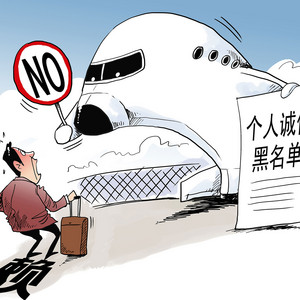
Once blacklisted, individuals face a range of restrictions such as being barred from flights and high -speed trains and imposing limits on luxury spending.
The system is designed to uphold legal accountability, though its broader social and technological reach continues to raise concerns.
Under what circumstances is a person placed on China's credit blacklist?
Well that's a very big idea first of all let's just unveil what it is to be called a blacklist so the blacklist we're we're talking about right now is officially known as the list of dishonest persons subject to enforcement as coined by China law info which is an online legal information service established by Peking University.
According to the website of the Beijing Municipal Committee of Political and Legal Affairs, a person can be added to China's credit blacklist following a court ruling, typically in civil cases involving debt disputes, especially when they have the means to comply with a court's order, but choose not to.
So there's a willingly refusal behind it.
They're choosing not to pay their debt.
And in addition, if a person fails to fulfill obligations determined by an effective legal document and is found to be involved in any of the following situations, they can also be placed on the black list. So first of all, they obstruct or resist enforcement by means such as fabricating evidence, using violence or making threats against it or, second, they can be invading enforcement through false litigation, false arbitration or by concealing or transferring assets.
And third, they might be violating the asset disclosure system as well.
And fourth, they could be violating consumption restriction orders so they are spending more than they should and last but not least there's the unjustifiably refusing to comply with an enforcement of settlement agreement so all of these will define a person whether or not they need it or should be on the black yeah those are the things the things that you just mentioned that's what determines whether you get yourself on that blacklist or whether you stay off of that blacklist. And when a court in China decides someone isn't paying their debts, it doesn't just take their word for it.
The court looks deeper following the law, and that includes checking their income assets such as property or bank accounts and even their lifestyle.
If someone claims that they can't pay, but is seen living well or moving money around to hide assets, the court can declare they have the ability to pay but refuse to.
And this is when the person gets put on the credit blacklist, a public list of so called dishonest defaulters, and in Chinese we have this rather colloquial and definitely a bit shameful term, lau lai.
And this is meant to pressure them into paying up and stop them from dodging their responsibilities.
What would that term translate to in English?
Is there a term? Dishonest defaulters.
Oh, okay. Yeah. Or more colloquial known as dead beats in a way.
Oh, dead beat. Yeah.
Okay. Yeah, I can understand the negative feelings towards that term because they exist in English as well.
Yeah. So what happens when or once a person is on the list?
Yeah. Let's go over some of the things.
Again, so we learned before how you can find yourself on that list, but hopefully not, hopefully not, of course.
But if you do end up on that list, here's what it means.
One, you'll have travel restrictions.
So you'll be banned from purchasing plane tickets, high speed train tickets and from staying in high end hotels.
You'll also be prohibited from spending on luxury items such as high end real estate or cars.
I think golf clubs even fall into that category as well.
Limited access to loans, financial products, credit cards.
You may be disqualified from taking senior positions in companies or government related jobs, so that's a big step too, right?
This could affect your career.
Also personal information, your name, your ID number, your case number.
All of that information is publicly displayed on court websites or other places that can publicly checked.
That information is available for everyone to see.
And then in some localities, blacklisted individuals, kids, may be restricted from attending private schools or prestigious public schools.
Now, if your reaction to the information that I just shared with you is, oh my gosh, that's really harsh.
Yes, it is harsh. And I think the idea is, it's supposed to be harsh.
This is interesting though.
Yes, it is harsh. But yeah, you can't send your kid to an expensive private school.
In China, private schools are usually very expensive.
So your kids can still go to a regular school.
And it's not like you're wearing a scarlet letter on your face that everybody will see.
Oh, this person committed adultery.
That was back in history, right?
Or something really bad did this person do?
I understand, yes, those around this person or who's doing, have business dealings with this person will know that, oh, this person is dishonest but...
I understand what you're saying but that public, having your personal information publicly displayed on court websites could be viewed as the SCARLET letter?
Yeah, I see that. But how do you get someone who the court deems has the ability to pay?
And don't forget, you've got creditors out there who lent money to this person, and it could be a huge amount.
And that creditor is left there holding the bag, and I need my money back.
Why is this person not paying me when this person is deemed by court, Ken?
So, I mean, in Canada or the US or elsewhere, if you end up in that situation, let's just try to feel what the creditor is feeling now.
How do you get this person to pay?
Yeah, exactly. And that's why, again, going back to the measures that we just mentioned, I mean, these are strict, right?
They're really, really strict, but that's the idea behind it, is to, number one, I think, use those measures as a deterrent so that people don't end up on the list. But number two, almost not a threat, I don't want to use the word threat, but just a reminder to people, these are the rules that you need to follow and if you don't follow the rules, then this is potentially what could happen to you.
Yeah, and on top of that, by pulsing in public of, you know, these people, they are being dishonest and being proved that they refuse to return the money.
I think that's a way of telling or sending an alert to other potential business dealers with this individual's company or say chains of business that, yeah, he's got this tendency.
He refused to pay previously, so be careful.
See, like we've read a lot on this topic.
And then I think initially I kind of shared that first knee -jerk reaction, oh this is really really hard for people.
But then when you read more into it I think, and also being familiar with the Chinese society, I think I sort of just accepted it.
But as we're just chatting about this, Steve, I wonder if there might be some kind of just difference in understanding of what social impact or this kind of, some say it's a level of public shaming is its impact on people and would you think this is just a little bit too far or can you like try to be objective and not to understand and tell me what you feel well why don't we go over some of the reasons behind some of these measures and maybe we can find an answer about how we feel in So one of the reasons behind these measures is to ensure that civil court rulings are taken seriously and that they're
actually executed. And also, again, going back to the deterrent idea, it's to deter dishonest behavior and to build a culture of creditworthiness in society.
There's also the idea of ensuring that those who are owed money can receive repayment in a timely manner.
And, like you said Hu -Young, you're talking about, you know, credit institutions that have voluntarily offered money to individuals in some way, shape or form, credit somehow, and then they've defaulted on that and they haven't received their payment back.
So the idea is that if you are owed money, then you deserve to get that money back.
And also just the idea of, of ensuring lawful behaviors.
So by trying behavior or connecting behavior to social and financial consequences, very serious consequences, then the system incentivizes proper behavior and good conduct.
So when we take those concepts into consideration, I think it's quite easy to argue that maybe it's not that harsh, right?
if we, in a vacuum, if we only consider those concepts behind why those measures are put in place, then I think it's fair to make an argument that those measures are adequate, if that's the right word. And by giving certain quote unquote punishment to people that are proven to be dishonest, there's also this whole system that can be seen as a layer of protection to those that are honest. And the system has been proven to be effective in many ways, as well.
That's according to the 2022 Work Report delivered by the Supreme People's Court to the National People's Congress that courts across the country accepted about 9 .5 million enforcement cases and concluded about 8 .6 million of them in 2021 with a total of 1 .9 trillion yuan, or roughly 268 billion U .S. dollars successfully enforced.
And through the court's compulsory enforcement measures, millions of families resumed normal life and work, and millions of businesses returned to regular production and operation.
So these all demonstrate that despite the harshness on the people being put on the list, there is indeed effective enforcement and measurements that can be taken legally as a way to crucially safeguard for achieving a social fairness and justice, and yeah, just give general protection to people that are honest. Yeah and that figure is quite striking.
8 .6 million cases, so I'm sort of assuming that it's 8 .6 million dishonest defaulters who had to go through this.
And once a person is on this blacklist, is there an expiry date?
Well, that's the good news is that it's not forever.
So the court deletes the dishonest person's information from the credit blacklist within three working days.
And that's pretty quick, right?
So the person subject to this enforcement, if they have fulfilled the obligations determined by the effective legal proceedings or the legal document, or the court has completed the enforcement, within three working days they're removed from the list. The parties also, if they've reached and fully performed a settlement agreement, that's another way to get yourself off of the list. There's other ways, as well.
The applicant for enforcement, they submit a written request for the removal of the dishonest information and the court can approve that after they review it.
And then after the enforcement procedure is concluded the court they can search for the enforcers assets through the online enforcement system more than twice and if they find no assets available for enforcement and the applicant or other parties have not provided valid asset clues then the court has lawfully ruled to suspend enforcement due to a trial supervision procedure or a bankruptcy process.
The court can also lawfully rule not to enforce the case, and the court also can lawfully rule to terminate the enforcement process.
So these are the ways that you get yourself off of the list. Right, and this is a system that has been implemented for more than a decade now.
I still remember all the buzz when the credit system, this blacklist credit system, was rolled out initially.
and now we're seeing that there's further discussion about it.
We're seeing that there is public discourse on you know the pros and cons of having a system like this, whether it's too harsh or is it not enough, and I think it's interesting to look at both sides, because now we're seeing there are some examples of people saying that actually this could mean it's very difficult for a person to start over again but also, you know, the supporters can easily say then pay up the debt and regain your freedom.
So could you guys look at both sides and tell us your assessment?
Yeah there are huge debate over whether this whole system should be a one -size -fits -all management approach on every case.
Or is there just a bit of differentiation of policies on special cases, or cases where it's hard to decide?
Because one of the biggest challenges in implementing this whole credit blacklist system lies in how you can distinguish between those who can pay but refuse to, and those who actually cannot pay.
They're totally just there and they cannot afford any more payment because they themselves are already, you know, at the point where they don't have anything.
So here is the current situation in China.
So China's official enforcement disclosure web website showed that as of May 16th, around 8 .6 million people across the country were listed on the blacklist. And most of them were blacklisted for having the ability to fulfill their obligations but refusing to do so.
So that is proven in 2017 as well, where one Shanghai District Court listed 87 % of its blacklisted cases under this category that they are capable but they are refusing to pay back.
And also there is a judge named Geng Zhengchun who is from the city of Dalian of Northeast China's Liaoning province, so he did a study in 2024, noting that this percentage consistently stays between 80 % to 90 % nationwide, so we're calculating, like, such a huge portion of people being determined as dishonest, but in the meantime, it's hard to tell if they are truly dishonest people or they are just broken to a point that they can't pay back.
Yeah you said a few minutes ago Hee Young those numbers that we talked about so nine and a half million enforcement cases right so you said oh that leads me to believe that there are nine and a half million dishonest it is eight and six million individuals eight point six million individuals that leads me to believe you said that there are eight six 8 .6 million dishonest people and dishonest defaulters.
But I think this quote from a lawyer, his name, Wong Chow in a quote from Southern Weekly, surmises that, this is a quote, being an enforceee is different from being a dishonest enforceee.
The latter implies a willful refusal, but in practice, most enforceees are treated as if they are willfully refusing.
And once people are listed, they will find it difficult to make more money to pay the and debt's causing a vicious cycle.
So yeah, if you're being dishonest and you're evading, well obviously, you know, being subject to these harsh consequences is fair.
You could argue that, no problem.
But if you find yourself in a situation, let's just paint a picture.
Let's say that you're a single parent and you're living paycheck to paycheck, doing your best to support your kids, and all of a sudden you lose your job and you've got debt and bills to pay and suddenly you can't, You just can't, you just can't.
Well, that doesn't make you a dishonest person.
You were trying your best to live your best life taking care of your responsibilities but due to unforeseen circumstances that were beyond your control you suddenly could find yourself in this situation.
So if somehow you were deemed willfully refusing when in fact you weren't, then that would not be fair, would it?
But if the court follows very strict rules and criteria in determining whether it's a well fully refusing case or not, because they look at all the things I listed earlier on, it's not like they just decide randomly, you belong to this list. So I think there's also that aspect of things and then you give a very persuading example.
And then there are other examples of people who've come out, you know, as their personal anecdotes have caught people's attention, such as, let's say somebody, there are a few examples of these, how do people get in debt?
Sometimes it's when they start their business.
So entrepreneurs. And then when they unfortunately could not keep the business afloat and they end up owing the bank or some creditors a lot of money, millions, and then they really just do not have any way to pay back and then well, what do you do?
The criticism towards the blacklist system list is basically saying then, well, can't allow people redemption, at least give them a way to make money to be able to get out of this dire situation.
And there's another possible solution route that is maybe declare personal bankruptcy, which is not something that we have here in China as a national nationwide implementation of a system.
So Do you think that's a viable way out?
Well, so far, I think China is still kind of exploring this new territory of filing for personal bankruptcy.
As far as I know, there hasn't been a national level implementation, but rather starting from one city which is in Shenzhen.
So previously, China only had bankruptcy laws for business with no personal bankruptcy legislation, but in March 2021, city of Shenzhen became the pioneering city where there's this personal bankruptcy legislation with relevant regulations coming into effect.
So what it means for filing personal bankruptcy is that it can, in a way, save those honest but unfortunate people who cannot pay back.
So this whole personal bankruptcy system, it typically refers to this legal process where if an individual is clearly unable to repay their debts, they may apply to the court that I am bankrupt.
The court then can appoint a professional institution to liquidate their assets and distribute the proceeds fairly among all creditors.
After a set period of restricted high consumption known as the observation period, any remaining unpaid debts are legally discharged so it's more or less, as far as I know, close to how it's worked in in Western countries.
I looked it up. Canada doesn't have a blacklist system, America doesn't have a blacklist system, I looked up the UK as well, they don't either.
In Canada we have a credit score system and you can apply for personal bankruptcy and that has to be administered by a licensed bankruptcy and insolvency trustee that makes sure that both the debtor and the creditors are following the law set out by the Bankruptcy and Insolvency Act of Canada also called the BIA In all cases a debtor has this is what you need to do You have to disclose all your assets to the bankruptcy trustee You have to give all your credit cards to the trustee You have to report your income and expenses each month You have to provide tax returns and insurance policies or any
other documents requested by the trustee, and then you have to go.
I thought this was interesting too, I didn't know this.
You have to attend credit counseling as part of the process, which may sound a little silly, but I actually think it's quite a smart idea.
So in the end, what the goal is is to be discharged from the bankruptcy, and what that means is that You're no longer required to pay the disclosed debts and your creditors can no longer attempt to collect.
And most people are automatically discharged from a first bankruptcy and the unsecured debts in nine months.
Hold on. So, if you are a creditor, think about this.
Let's say, okay, Steve, you're the creditor, I'm the debtor.
So, you lent me a million dollars and for some reason I couldn't pay you back and then I could only pay you $1 back and then you're like oh I'm taking huyana court and yep touch wood yeah apparently you know I'm in this really bad situation and I declare bank personal bankruptcy touch wood this doesn't happen in real life and then I okay I go to classes I do XYZ and then I don't need to pay you back anything.
Does personal bankruptcy risk getting away people from debts and that should be paid?
Well I think you could make an argument again on both sides but it's not like people are out there wanting to declare personal bankruptcy.
This doesn't come with a laundry list of benefits for your life.
Sorry to interrupted in Canada, I was curious if there were travel restrictions as well.
We talked about the airplane restrictions and high -speed rail restrictions here in China.
There aren't any travel restrictions, both domestically and internationally in Canada, actually, if you file for personal bankruptcy, but you do have to let your trustee know, your creditor know where you're going, how it's being paid for.
So it has to be a very detailed plan, but again, back to your point, I mean, yeah, It's a tricky system, but it's not like everybody's out there going, well, I know I'm filing for bankruptcy today.
It's going to be a wonderful afternoon.
It's not like that.
People don't want to do it.
Yeah, and for the city of Shenzhen, what is important for them is to really identify whether the person is truly honest, yet unfortunate, and that they're actually bankrupt.
And this falls into many different criterias that these people need to meet in order to file for personal bankruptcy.
First of all is the timely filing for bankruptcy.
So the debtors must apply for bankruptcy promptly upon becoming insolvent, unable to pay their debt and do it immediately.
Otherwise if you delay filing, it can harm creditors and indicate dishonesty.
Secondly, it's about prohibition against malicious asset depletion, so debtors must avoid excessive consumption, reckless borrowing, or deliberately worsening their financial situation.
Like you said, Steve, buying yourself a huge house, or, of course not, expanding a large sum of money, and then declare bankruptcy that's not allowed. I think back to your point, you know, well, how is that system fair?
You know, if I loan you a lot of money and you just say, oh, well, hey, I'm not going to pay it back, I'm gonna declare personal bankruptcy, then I'm stuck, right?
But I think the idea behind the system is to offer people a second chance.
And of course, there will be people who will try to take advantage of that system, but there are also people who will try to be honest with the system.
and I think if you don't give people that opportunity, then it's almost like back to that quote from the lawyer.
It just becomes a vicious cycle.
And how are you supposed to dig yourself out of that hole if you're not given an opportunity to do so?
That's such a powerful point and I'm almost sold.
But also I think it's important to look at, you know, this is a complicated world, right?
The reasoning behind why some critics argued the credit blacklist system doesn't go far enough could be blacklisted debtors still have relatively normal lives in China they may lose access to luxury consumption or fast public transportation options but they can still take the slow train and they're still walking free so it's a civil case and they've already ignored court rulings and restrictions have not have been too forced to repayment and hiding assets or shifting money under others names and that's still common a loophole the system struggles to close so when we talk about the law this is a very
complicated matter because it applies on everyone and we understand that every case could be different and often there could be a sordid or sad story behind it and then what do you call fairness out of a system like that?
I think it is really an indeed complex issue to decide and China's credit blacklist is an important tool for enforcing court judgments and promoting financial trust. But some argue it's still not powerful enough to fully hold debt evaders accountable.
As the system continues to develop, ongoing efforts to refine its design and implementation will be essential to balancing enforcement objectives and fostering a just and creditworthy society.
Coming up during the second half of the show your commute your rules Shanghai's crowd -designed buses are changing city travel fast with over 220 routes launched we discuss but really how useful is it.
Stick around everybody we'll be back after this break.