
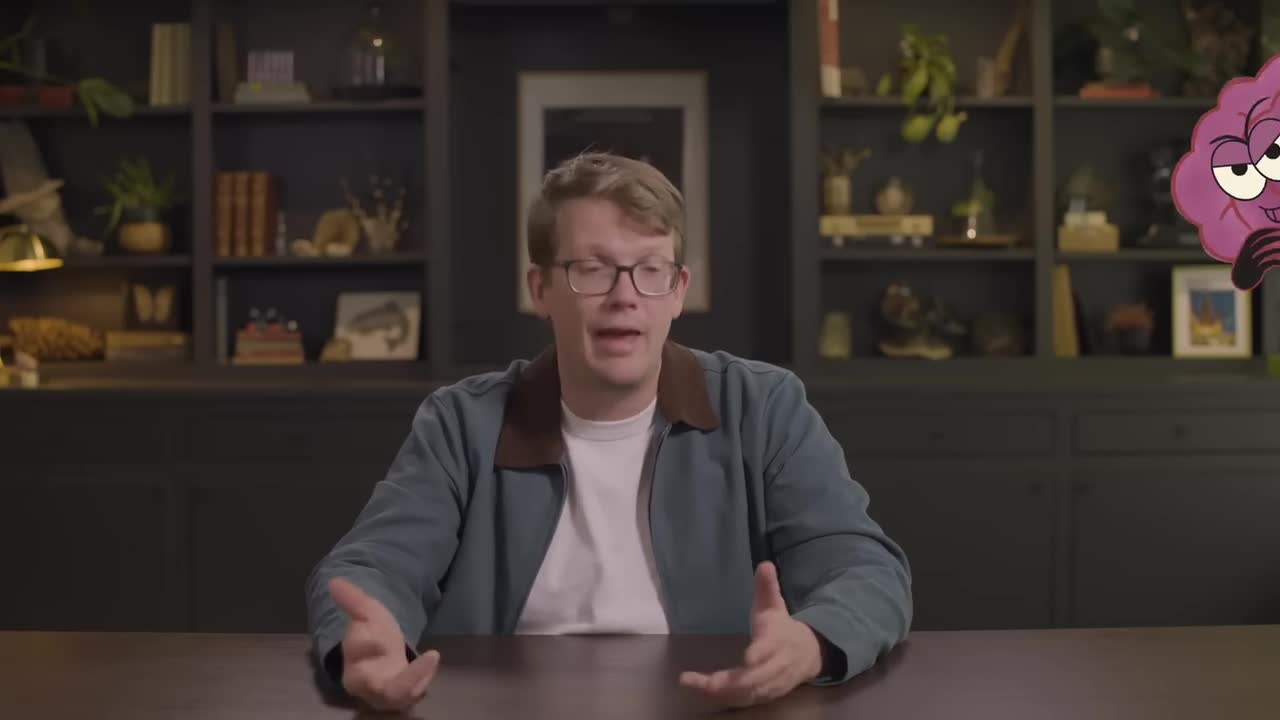
[Navigating the Information Age: An Introduction to Scientific Thinking]-[Crash Course Scientific Thinking Preview]
📋 Summary
The Necessity of Scientific Literacy in the Modern World
In an era where we are constantly "bombarded by news stories about science," the ability to distinguish between credible evidence and misleading information has become a vital skill. Science is not merely a subject confined to school textbooks; it is a pervasive force that shapes our understanding of nutrition, climate change, and global events. As Hank Green, a veteran science communicator and co-founder of Complexly, points out, science is "one of the coolest things our species has going for it," yet the sheer volume of information we encounter daily makes it incredibly difficult to "make sense of it."
The Challenge of Cognitive Bias
One of the most significant barriers to objective understanding is our own biology. Green emphasizes that "our own brains are hardwired to deceive us." We are all susceptible to "cognitive biases" that, if left unchecked, cloud our judgment and hinder our ability to determine if a claim is truly "supported by evidence." These biases often leave us vulnerable to "click-baity headlines" and agendas that prioritize engagement over accuracy. To combat this, we must adopt a more deliberate approach to processing information.
Science as a Dynamic Process
Science should not be viewed as a static set of facts, but rather as a "unique way of uncovering knowledge that's dynamic, communal, and self-correcting." When we engage in "thinking scientifically," we are better equipped to "push past biases" and move closer to what Green describes as the "elusive capital-T truth." By understanding that science is a process of constant refinement and community review, we can appreciate how our collective knowledge of the world "grows and changes over time."
What to Expect from Crash Course Scientific Thinking
This new series aims to equip viewers with the tools necessary to become "savvy consumers of science information." Over the course of seven episodes, the program will "pull back the curtain on peer review," a cornerstone of scientific integrity, and "take a magnifying glass to scientific sources." By unpacking complex concepts such as "consensus" and exploring the history of "scientific experiments, processes and discoveries," the series intends to provide a roadmap for critical thinking.
Ultimately, the goal is to help viewers "sift through information wherever it comes from." Whether you are evaluating a claim from a science textbook, a social media feed, or a viral video on TikTok, developing these foundational principles will allow you to "inch ourselves closer to a nuanced, shared scientific understanding of the world." By fostering a deeper appreciation for the scientific method, we can navigate the modern information landscape with greater confidence and skepticism, ensuring that we remain informed participants in our society.
Deep Learning with ListenLeap


