This is Roundtable.
You're listening to Steve Niu Honglin and Yushan today and coming up in the next part of the show.
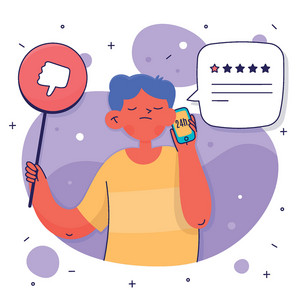
Here in China, a customer complained on social media that the food quality at a barbecue restaurant was subpar and that eating there once caused them a health problem.
The restaurant owner sued him in a local court.
The restaurant won.
So, what exactly are the boundaries of giving bad reviews online?
This is going to be very useful information for all us reviewers out there.
After that, have you heard of the little toys that are meant to increase your focus and stop you from doing those bad little habits that you have like scratching the skin next to your fingernails?
That is my worst one.
Is there anyone else that actually does that?
Well, these little toys have become quite the thing here in China.
But there's an important question.
Do they work?
Our podcast listeners can find us at Roundtable China on Apple Podcasts.
And don't forget, we love hearing your voice.
We say it to you every single day.
So send us a voice note to this location, roundtablepodcast at qq.com.
Once again, roundtablepodcast at qq.com.
And now...
A social media post criticizing a barbecue restaurant in the city of Dalian here in China has backfired on the customer, resulting in an unexpected legal defeat.
The incident began when a patron publicly complained about the establishment's food quality, alleging that a meal there led to a severe case of acute gastroenteritis, presumably from food poisoning.
Rather than ignoring the critique or addressing it privately with the customer, the restaurant's owner took matters into their own hands.
They took the significant step of filing a lawsuit against the customer for defamation.
The local court in Liaoning Province recently handed down its verdict.
They sided with the business.
The ruling found that the customer's online statements were an infringement, determining they had damaged the restaurant's reputation.
And the consequence?
The court had ordered the individual to pay 5,000 yuan in compensation.
That's about $700 for the economic losses suffered by the restaurant.
It sounds like a drama that you would watch on TV, doesn't it?
But this was a real court case with a real judge and real lawyers and a real result.
So there's a lot to learn here about what is allowed and what is not allowed here in China in terms of making complaints online with your reviews.
And we're going to compare that to the United States in a little while.
But let's get into the case.
Why did the court rule against the consumer, against the customer?
So I was looking into this.
I was so confused at first.
But a recent report by Beijing Youth Daily explains that the barbecue restaurant believes that the diagnosis provided by the customer was three days after eating or dining at that barbecue restaurant.
And it cannot prove that the problem was actually caused by the fact that they ate.
They dined in the restaurant.
And also, there are way better methods to deal with this issue.
If say, the customer believes that he or she experienced vomiting and diarrhea after consuming at the restaurant, then you can totally report it to the restaurant in the first place or file a complaint with the market supervision department, instead of just making false statements or exaggerated comments online and especially on social media nowadays.
To have people judge or criticize on the restaurant in the first place, the restaurant was saying okay look, you made your post three days after you ate here.
There's no way that you can know whether you got sick from our food or from something else that you consumed during that three-day period, or maybe before, who knows?
Also, we don't like the way you dealt with this.
You could have come to us.
You could have gone to a market supervision department, but you decided to go online and try to damage our reputation.
Exactly.
That's how the pictures are painted here.
And the court obviously supported the restaurants claim because the content posted by the customer was untrue in the first place and had a real impact on the restaurant's reputation.
So it's really difficult to prove in the meantime that the acute digestion issue was really caused by eating in a barbecue restaurant.
And I think that is the major problem, right as a, let's say, consumer.
If i want to take it to the internet, i can.
I can say that's the worst food i have ever tried really salty.
I hate it.
I think the taste is weird and when i was eating there i saw a little fly flying around me and i hated it.
And the decoration is so bad i don't think it's in line with my aesthetics.
I can say all that And any social media post I want, but I cannot say it gives me food poison if I do not have proof.
And I think that is the major issue.
So when we talk about, well, the shop owner is not happy with the way he dealt with it.
I don't think that is why the court would rule with the shop owner.
The major point is still that you put proof. information that is untrue on public well nowadays online platforms is definitely a public area and that defamation is not okay I want to come back to that point you said a lot of things there About your post, you know, it was too salty.
I hated that food.
I want to come back to something else that you said there in just a sec, But first let's get to the law.
What?
What does the law exactly say here in China?
So, here in China, the interpretation of the Supreme People's Court on several issues concerning the trial of say reputation, rights and cases.
Yeah, they state that consumers who criticize or comment on the product quality or service quality of producers, operators or sellers, whatever they, should not be deemed to have infringed upon the reputation rights of others.
And for those who take the opportunity to deframe or damage the reputation of the latter should be deemed to have infringed upon their reputation rights.
So That's exactly how it's done here in the case.
The consumer is on the side to be blamed, where the restaurant side is kind of protected due to the defamatory action from the consumer.
Legal talk is so long and complicated, isn't it?
I'm trying to make it as easy as possible.
No, no, no.
I'm not criticizing you.
I'm criticizing just law around the world.
Don't criticize law.
The language, the language.
Sure.
What what you said there was if you have an opinion about the product, that is OK.
If you say something that could damage the reputation of the business owner, that is not OK.
That is the long and short of it.
As long as you have proof.
Yeah.
Yeah.
And that's the key.
Right.
Because if you take a look at the post this person made on there, I think it's not even as so-called public as we thought, because what he did was to post the critics of the restaurant in there.
I think it's the campus website showcasing that his opinion to his fellow peers who are the major consumer of the eatery.
What he said is that the quality of the food is so bad, I ate it once and it gave me diarrhea.
See, he drew the direct link.
He drew that conclusion.
And that's such an easy conclusion to make.
And it's such an easy mistake to make.
For a customer.
Because anyone who has ever gotten sick from food poisoning of any kind, your brain automatically draws a conclusion.
Oh, it must have been this place.
And I am curious if his post, instead of saying I ate there once and it gave me diarrhea, if he says I ate there exactly 12 o'clock that day and three days later I am suffering from it.
Maybe that is okay.
Maybe the specific language could very much make a difference, right?
Because where did you say he posted?
He posted in an online community.
Of his campus.
And the restaurants on the campus?
The restaurants near the campus.
Yeah, see, there's the problem, right?
So you're spreading that word online to a customer base that lives next door.
Right.
So there's there's the big issue.
Right.
So this is all about valid criticisms versus false or harmful claims.
Yeah.
The wording is really example.
If you said it's too fatty for me or as you said, it was too salty for me.
I didn't like that.
Well, that's an opinion.
I didn't like that.
But going back to what you were going to post about before.
Yeah.
What did I say wrong?
You said, I saw a pest running around.
I saw a bug running around.
I'm not sure if that would be okay to post.
Because if you can't back up a claim like that, saying I saw bugs in this restaurant, that could also damage the reputation of the restaurant.
If you can't back that up.
Because...
The difference between fact and opinion is you're saying how you feel about something versus something that happened.
So I need a picture.
You would need to post proof that you actually saw bugs in there.
Otherwise...
You, Miss Niu Honglin, could find yourself in the people's court.
And you know what, Steve, you are being very meticulous when it comes to posting.
And that is also the attitude of a lot of Chinese netizens nowadays.
We see these kind of reviews with see this kind of credit so much these days because and thanks to the Internet, to the technology, people are now being more and more rational when they see different types of reviews of different shops.
We are getting better and better in knowing the difference between an opinion and effect.
And also when it comes to side with the shop owner or the customers.
People are also being more reasonable.
I mentioned before I'll tell you how it goes in the United States.
It's almost exactly the same, as a matter of fact.
The First Amendment and the Consumer Review Fairness Act, or the CRFA of 2016, protect consumers who post honest negative reviews based on their actual experience.
And a review is generally protected under this act if...
It's a statement of opinion.
For example, the food was terrible, the food was salty, the service was too slow.
Or if it was factually accurate, then you're safe reporting on true facts, even if they are negative, if you can provide proof.
If you say I found a hair in my soup and you show a picture of a hair in your soup, that is protected.
That review is protected under that Consumer Review Fairness Act.
However, this is when a review becomes defamation in America.
A restaurant owner can pursue legal action against you, and this is particularly liable for written reviews if it's a false statement of fact.
For example, this restaurant gave me food poisoning exactly the same, which is exactly what happened in this situation.
You cannot do that.
So let's give some tips then, because i think when we have a bad experience at a restaurant, one of the first things a lot of people want to do is go straight to the internet, straight to their socials, and post about it.
So what are some legally safe ways for customers to to do this?
Go straight to the restaurant.
I tried it once.
It's not even a because of the food is not clean or anything, it's just because it's too salty.
I went to the restaurant and they say i'll give you the refund of that dish because you don't like it.
So i think the first step is to not to assume that the other party is a bad guy.
Maybe you want to work together to improve the quality of the restaurant.
That would be my first tip.
And even though the even if the restaurant turn out to be a bad guy, then there are other ways too.
You can totally file a complaint through legitimate channels such as the local market supervision departments or call the 12315 hotline with relevant evidence and just having the authorities.
One, two, three, one, five hotline.
That's the number here in China where you need to report on say, dissatisfaction on say, food safety ordering.
And only through this way can people's rights be protected more efficiently, I'll say.
And there are supervisions over these restaurants and you don't need sometimes to to report everything on social media as a way of declaring this issue.
But if you are really that angry and if you are that unsatisfied with the service roundtablechinaqqcom, send us an email and tell us about it.
And remember to also send some pictures if you want to prove your point or prove your experience.
All right.
Case closed.
Coming up, there's... That's very vibration-y, isn't it?
There's a new toy craze in China.
But it's not the plushies you might expect.
These ones are meant to make you concentrate better.
Stick around.
Want to hear about current events in China from different perspectives?
Then tune in to Roundtable, where East meets West and understanding is the goal.
You're listening to Roundtable.
I'm Steve today with Niu Honglin and Yushan.
All right.
So here's the deal.
These tiny colorful toys are popping up in libraries.
They're popping up in dorm rooms and they're popping up all over the country.
And these little toys they promise to help you focus while you study or while you work.
All for less than a cup of milk tea.
They're really, really affordable.
But there's a big question here.
Do they actually really work or are they just a cute way to deal with your stress?
So let's talk about the toys in general, Yushan.
What are they?
Some are sensory stones while others are just magnetic balls.
I don't even know what this is.
Tangle, twisty toys.
Oh, I know, I know.
What are they?
It's kind of like a lot of joints linked together so they can be twisted into different forms.
It's a long rope.
The end of the rope and the top of the rope are tied together, but you can twist them into different shapes as you want because so many joints are linked together.
I realize i'm not explaining it as clear as i thought, but you can play with it.
I think you are these.
You know sensory stones, magnetic balls, tangled twisty toys, i think you said they're called.
These are all little things that you put in your hands and you just kind of fidget with it.
Fidget around with it, right?
I saw on one of our colleagues' desks there's just one button of a keyboard, of the ESC.
The escape button.
The escape button, and it's just one button.
Every time you feel your pressure, just press that ESC.
And just doing that, it somehow gives you this psychological feeling that you are doing something.
Yeah, I'm doing something.
I'm escaping.
I'm getting distracted.
I'm ESC-ing out of the scenario.
So yeah, it's just what people do nowadays.
Students love it too because they're kind of cheap.
They just cost less than 10 yuan, which is around $1 per toy.
So yeah, a lot of students use it as study buddies during say, exam season, when they're preparing for an exam.
So do they actually work?
That's the question, right?
Because this is kind of how they are marketed to help you reduce your stress or to increase your focus.
So is there something there or is this just clever marketing?
If we just look at the comments or feedbacks from the people who bought it, some would say it really helps.
I use it to pick at my nails before I grab my phone and it works.
Others say that it actually makes me feel more distracted after I used it.
So yeah, there are all kinds of feedback.
In practice, these toys might give you just a little boost, let's say, but not because of brain chemistry, but more because they just keep your hands occupied so that you can grab your phone, where you can do other things with your hands.
I think the way to see whether or not you're the target audience is to see in your daily life.
Do you have little habits like this?
Do you play with your pen?
I mentioned it before.
This is really bad.
I don't know if it's a nervous habit or just a habit.
But I will pick, I will use my index finger, right?
And I will pick, which is next to my thumb.
I will pick at the skin next to the fingernail on my thumb.
I sometimes do that too.
Do you?
Yeah, sometimes.
Okay, that's good.
I mean, it's not good.
That's the idea.
But at least I'm not alone.
If you have little habits like that for example, I play with my pen all the time, when I'm thinking, when I'm reading.
She's doing it right now.
I'm doing it right now.
And that's the thing.
For me, it's not because I'm anxious or I just really need to do it.
Sometimes it's only because it relaxes me a little bit.
And if you have that, you might be a target audience of such gadgets.
For me, it's more like just rubbing something soft.
Like it can be on my shirt or on my t-shirt or something, just rubbing something.
But there is a psychological reason behind it, where people just do things with their fingers to feel distracted, because it's Really less about the toy itself but more about what it represents.
It's just a little hope, let's say, or a little distraction, a little confidence boost while you're under stress a lot of the time.
What's a confidence boost?
I don't buy it.
How do I put this?
The toy or the habit?
The habit of just playing with whatever toy.
I think I know what you mean.
It's like...
It's like if you give a baby a blanket or a soother, they can suck on that.
It calms them down.
Something like that.
Psychologically, you feel like, There's something I can press.
There's the ESC button I'm pressing right now.
I can do something.
I have another theory.
I think it's because what you're doing is just not enough.
You're too smart.
You need to do something else because you just have too much brain power to do a little more.
Only doesn't need confidence boost.
She's got all the confidence boost in the world.
That's my theory.
I think for different people, definitely there are different habits.
And it's a good thing that on the market, we can always find something that suits our needs.
I have a question for you.
When you were a baby seriously, when you were a baby, did your mom or dad or grandma or whatever rock you back and forth like in a rocking chair?
I guess.
I'm wondering, because when I was a kid, I had my own rocking chair ever since I was a baby.
And I can't stand sitting still.
I'm constantly moving somehow.
Getting a haircut for me is torture because I have to sit in a chair.
On an airplane, I go crazy because I just have to sit in a chair.
So I'm wondering... If it's for me, if I'm ADHD instead of being too smart.
Who said I'm ADHD?
That was good.
I never got diagnosed, but I should.
Yeah.
So I guess you know if you want to buy one of these things, the advice would be just don't expect too much from it.
If you enjoy playing with it fun you know but don't expect it to change your life maybe.
And also, if you're buying it for your kid, make sure the material is healthy enough, because if your kid plays with it all the time, then definitely if um, you want to make sure it's up to standard, and ultimately there's no toy that can replace just a good night's sleep or just a calm mind.
Case closed No ADHD for Steve.
All right.
Oh, haircut.
It drives me crazy.
All right.
We'll leave it there, shall we?
That'll do it for today's roundtable.
Thank you to Niu Honglin.
Thank you to you, Sean.
Thank you to you, as always, for sharing your time with us.
My name is Steve, and we ask you to please come back again next time.