Discussion keeps the world turning.
This is Roundtable.
You're listening to Roundtable with myself, Hyung Young.
I'm joined by Steve Hatherly and Yushan.
Coming up in the West, potatoes are the comfort food King mashed fried or baked.
But in China, they've always played second fiddle to rice and noodles.
Now that could be changing.
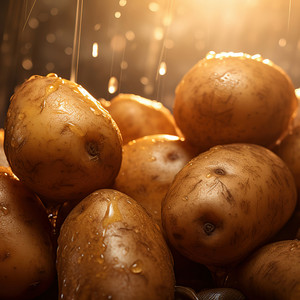
Welcome, Potato Rice, a starch -savvy innovation that looks like rice, cooks like rice, but is made entirely from potato.
Could this grainy newcomer become the next staple on Chinese foods?
Let's compare palates, preferences, and what it means for the future of food.
And did you know most chewing gum is made with plastic?
We're peeling back the layers on what's really in that chew and what it means for your health and the planet.
Our podcast listeners can find us at Roundtable China on Apple Podcasts.
Got a question that's keeping you curious from social issues to tech and everything in between?
Let us take a stab at it.
Email us at Roundtable Podcast at qq .com.
Now let's switch gears.
In potato loving countries, the spud is king mashed, baked, roasted or turned into golden fries.
But here in China, it's grains of that reign supreme.
We've long been loyal to our staples, rice and wheat, steamed, boiled, pan fried, or kneaded into noodles and buns.
They've filled generations of bowls and bellies.
But what happens when the humble potato tries to sneak into the rice bowl?
Not as a side, but as the main act.
Enter potato rice, tou -dou mi.
Yes, rice made from potatoes.
Could this high protein fiber rich newcomer change the way we think about staple foods?
Let's take a look at China's first ever potato rice production line and find out what is potato rice exactly?
I love it when you say spud is king, Cleo.
It sounds so rhyming in a way.
So here in China we see that spud is not necessarily the king but is being transferred to something very new.
Recently, with the launch of China's first potato rice production line at a processing facility in Xiaojia county in southwest China's Yunnan province, potato rice has officially entered the market and is now available for sale.
This guy Wu Qi, who is the head of the research team for this particular production line, and he's from the Chinese Academy of He mentioned in an interview that this is not only China's first production line that transfers fresh potatoes into dried rice, but also the first of its kind in the world.
So this technology didn't exist before, and it was developed entirely newly by then.
Yeah, it's pretty cool, right?
Right. The factory began operations in November, so a few months ago, and they're expected to produce about a thousand metric tons of potato rice annually.
And they launched nationwide.
The product is out there now.
It's available for purchase.
They started that in March of this year.
Just a quick note, we call it potato rice.
It's not rice, rice.
It's just potato being trimmed and shaped into rice grains shape.
But it's not rice, but it's still potato.
It's just - So it's more potato than rice?
Yeah, it's more potato than rice.
It's a granular food product made from fresh potatoes with a shape and size similar to regular rice grains.
There you go, that's the definition.
Well said. but also apparently they've added new bits and ingredients to it as well as, okay, I have to say, I was confused at first as well.
At first I thought, oh, are they planting some completely new specie?
And I'm kind of worried about that.
Some hybrid potato.
And then I realized, oh, it's not that few.
Okay, so it's not that, but then is it as simple as just cutting potato into little rice bits?
No. It's not that either, but I'm getting closer to it.
There's some science involved, they use advanced polymer physical chemistry techniques with the core technology being starch chain recombination and I don't understand the science fully behind it as well.
But they can control conditions like temperature and humidity and through all of those controlled aspects, then fresh potatoes.
As we know them, they're transformed into these rice -shaped grains.
And they're pretty much the basic size of a grain of rice, right?
It's kind of cool how they do it.
They use high temperature extrusion and granulation and low temperature drying, and then they reshape the molecular structure of the potato starch itself, and then they improve the taste and texture.
They add things like buckwheat flour or a corn meal.
And then they do the processing.
That's all added during the processing.
And then boom, there you go, potato rice on your plate.
Thank you for the chemistry class.
You're welcome. That sounds very detailed.
And well, we talk about potato being made into rice, but during that whole process, the nutrition level is also elevated as well because as far as it's reported, the potato rice retain over 90 % of the natural nutrients found in potatoes.
And comparing with regular rice, it actually contains 27 % more protein while having less fat and carbohydrates.
It also provides dietary fiber for better satiety and resulting in a post -meal blood sugar spike that's about one fifth that of regular rice.
Gosh, I want it! I want to try it for post -workout meals and stuff like that.
It's got more fiber, it's got more sodium, it's got more potassium than white rice as well.
And here's another added benefit, as we do our best to impress you with potato rice today.
The storage is a lot more friendly.
Fresh potatoes, we know this, they spoil really easily and they'll start to grow those, I don't know what those are.
Sprouts. Yeah, little arms or whatever coming out.
You're not supposed to eat it once it gets to that condition, right?
Well, I have in the past And you're still alive and kicking, so it should be okay.
You just rip those things out.
I've never studied in detail whether that's okay or not.
But anyway, we know that, right?
You can't keep fresh potatoes for very long, but potato rice, it's pretty shelf stable and that addresses the storage challenge of using potatoes as a staple food.
Things that are required to keep potatoes fresh like ventilation, and constant temperature and humidity, things like that, not necessary with potato rice.
That's a big plus. Indeed.
And when we look at who or which group of people that this particular product is targeting, actually, it primarily aimed at middle aged and elderly individuals, just people with, say, chronic disease or diabetes and health conscious consumers, like me.
It also helps cultivate the habit of eating whole grains, especially among younger children.
So, yeah, it's there for various benefits so far.
I think gym -goers would like this as well because of the higher protein content.
And also the cooking process is easier, right?
I was reading you don't have to wash it like you do rice.
It also cooks faster than your typical rice does.
So, as a post -workout snack, this might actually be a pretty good choice.
Yeah, as long as it's easy to cook, it's gonna save my day.
Yeah, exactly. It's interesting you mentioned you don't need to wash it.
To me, I just feel like I have to wash everything.
Even if it's been labeled as you don't need to wash it.
I still need to wash it.
I think you probably can.
I don't see any rules against that.
So it's okay if I wash it.
I guess so, I don't know.
It's not gonna melt in water, let's say.
Okay, good to know.
And why was this product of potato rice developed in the first place?
Well, first of all, the potato rice, it supports the national strategy, eases pressure on arable land and also enhance food security as well.
Because according to China's 2025, number one central document, that's a blueprint for agricultural sector reform.
It highlights the need to build a diversified food supply system.
So the development of potato rice aligns with China's national strategy that's established in 2015, which designated potatoes as the country's fourth major staple food, staple crop, excuse me, following rice, wheat, and corn.
We were just having this chat before the show that Chinese people, we eat a lot of rice, and either it's in the southern area or in the north, perhaps more down south than in But generally speaking, rice is a more approachable and easier to say perceived staple food for most Chinese people.
Yeah we had an interesting chat about potatoes before the show, which is a weird thing to say.
But I said, as we were walking to the studio, I said, well, if you're going to eat potato rice then why not just eat a potato?
And what was your response to that, Huiyang?
What was my response?
Well, you said potatoes in China it's not the same as in the West. And you said for example, mashed potatoes, that's just not a thing here, right?
And you said that people view a potato in the Chinese diet as something similar to like a tomato or lettuce or something like that.
So putting it in rice form might make the average consumer feel, I don't know if more comfortable is the right way to say it, but make them feel like they're not eating a potato maybe.
So Guo Huaquan actually agreed with you on that, he is a professor at Yuen An Agricultural University and he said that developing potato -based staple foods such as steamed buns, noodles, and rice aligns with Chinese dietary habits as well.
So maybe in the future we'll see potato buns?
Yeah, by the way I was really into our potato conversation by the way apparently you so I have the memory of a gold fish, I apologize.
Yeah, but it is interesting, if you were talking to my dad, he would never think about having the potato, let's say maybe in the rice cooker, or just have it as a staple food.
It can only exist sliced up as the doser, so that's the dish.
Pan -fried or something like that?
Yeah, sort of stir fried, and then it's a dish.
which it's not the staple food.
Cause that would be committing a sin to him.
You know, one other thing that the potato rice is bringing to people in China that is to boosting the income and create new jobs for the local farmers who grow potatoes.
Because for the local region, the County of the production line, they actually launch and commercialization of the potato rice production.
And that's not only boosting income for potato farmers and creating new jobs, but also support rural revitalization through industry's development.
We see rural revitalization being carried out in so many different forms through local embroidery, of local ethnic group style, and this is sort of the first kind that combines technology with local agricultural status and create new products out of it.
So it's estimated that 2 .5 tons of fresh potatoes are needed in order to produce one ton of potato rice, with the output value more than 10 times higher than that of raw potatoes.
So people are actually making benefits in transforming something as simple as potato into this product called potato rice.
And currently, the Yunnan Potato Rice Production line is expected to produce 1000 tons annually, consuming around 2 ,500 tons of potatoes per year, and that's bringing, say, a lot of opportunities for local people as well.
Yeah, and if you're wondering why that particular region, Huayiunan, they produce one out of every 10 potatoes in the country.
It comes from that area.
That part of China has the weather that allows for year -round fresh potatoes.
And so therefore, it's just an ideal location to introduce a product like potato rice or potato rice production technology.
It makes sense that it comes from United.
Mm, yeah. That P word just keeps on popping up on the show.
It's really funny that, well, actually, when we think of our staple foods, rice is usually the go -to, or wheat, and that can be made into noodles, dumplings, buns, all kinds of stuff.
But, I mean, these are established, trusted food sources.
And what you guys just said was amazing, but don't you think it's a little bit of a tough sell when it's quite expensive, in comparison to regular rice and wheat and all that stuff?
Yes, you're right. It is relatively expensive.
It's brand new on the market, right?
So what you're going to pay is about 17 yuan per 500 grams or 30 yuan per kilogram.
And that's much higher than regular rice, which will cost about two to three yuan per kilogram, so it is a lot, a lot, a lot more expensive.
There's a reason for that high cost. It's because of the raw material requirement, as you mentioned, you shun two and a half tons of fresh potatoes are needed to make a ton of potato rice so that's the reason for it but you make a valid point I think when you say okay it's fine higher protein values and blah blah blah this is why it's good.
You can store it more comfortably than your average potato but you have to convince consumers to buy it and eat it and that might be a tough Well and also rice.
Regular rice can be stored for a long time, for a whole year.
Although it's advised that you don't leave it after the next year because it's not going to taste as nice.
So you know what's the potato rice competing with?
Is it the potato or the rice or?
What do you see as the future for it?
On top of all the advantages and of course the high price as well, I would hope to see that maybe in the future there is more policy coming out in order to support such production lines so that it can run on a long -term viability.
The policy support from all streams of its production, from reducing production costs to optimizing profits distribution across the supply chain.
That all matters for not only the people who are producing this some potato rise, but also people who are interested in investing a bit more on just to see what it does and maybe in the future, expand that into a bigger market so that it can officially become part of our staple food on a daily basis, hopefully.
So, that would be my outlook.
Yeah, I think they'll continue with their R &D, right, with their research and development, try to bring down that cost a little bit, maybe improve the taste a little bit as well.
I don't know anyone who's tasted it yet.
I know someone who's ordered it.
Oh yeah. And this is kind of what I expect is that oftentimes when a new product comes out on the market, you get that initial spike because people wanna try it and see what it's like.
Then what happens after that spike is where we get the real picture of how the product will actually do.
So I guess we'll wait and see.
Yeah, and actually, right before the show, Steve, we did have that conversation.
And I remember something you said is relevant here.
That is, you kind of said that rice, although that's the most popular staple food in this country, it is not packed with protein.
It's actually got its severe downsize in that sense.
So if the promoters of potato rice can really flag that.
Yeah, the health benefits.
Yeah. Your regular rice is not as healthy as this one for sure.
And it's not that nutritious either.
And that's something to be noted.
But also, I think our dietary habits run deep.
So maybe both can develop.
It doesn't have to be a zero -sum game kind of thing.
Coming up next, did you know chewing gum is basically plastic?
You might never want to chew it again after listening to today's show stay tuned Looking for passion How about fiery debate want to hear about current events in China from different?
Perspectives then tune in to Roundtable where east meets west and understanding is the goal You're listening to Roundtable with myself, Hi young I'm joined by Steve Hatherly and you can Chewing gum, often enjoyed for its breath -threshing qualities and satisfying chew, might seem like a simple treat.
Many reach for a stick after a meal or to combat boredom, perhaps unaware that the very elasticity they enjoy often comes from a synthetic rubber base, a type of plastic.
While gum offers benefits such as stimulating saliva production, which can aid digestion and protect tooth enamel and may even improve concentration for some.
The hidden presence of plastics in this everyday indulgence raises questions about its long -term effects and environmental impact, aspects that often go unconsidered by the casual chewer.
So I know gum is manufactured but what is in it?
You're right. Today's gum is a blend of synthetic and natural ingredients, and if a packet lists gum base as an ingredient, then that gum most likely contains synthetic polymers.
And synthetic polymers are just long chains of small man -made building blocks.
Those are called monomers.
They stick together and they create materials with different properties like plastic that's bendy or strong, or maybe even rubber that stretches.
So the FDA, they allow gum base to contain any of dozens as a matter of fact, of food grade materials, substances that are either safe for human consumption or at least safe to be in contact with food.
But many are these substances that most people I think would never think to put in their mouths.
I'm talking about something like polyethylene.
That's the most common type of plastic you'll find that in plastic bags.
You'll find that in milk jugs Or how about this polyvinyl acetate?
That's a plastic that's also found in glue Yeah, there's also a type of rubber that's commonly used in car tires According to Gwendoline Graf Gwendoline is a confectionery consultant the typical gum base contains two to four types of synthetic plastics or rubbers and Even when you're chewing, there's a clue.
So for example, polyvinyl acetate.
That strengthens the bubble film.
So if you blow a bubble with your gum and that bubble starts to get holes in it and deflate, then that's usually an indicator that it doesn't have polyvinyl acetate.
Conversely, if you can blow a big bubble with your gum, you're probably blowing out the polyvinyl acetate.
You know that's one of the children's favorite games, especially among my generation when we were in primary school whose bubble was bigger." But it's fine because we're not ingesting it, correct?
No. So this is a study done from the UK.
And the researchers put gum to the test. And chewing gum has been linked to microplastic ingestion.
So what they did was, in a lab, one person chewed commercially available gum for about four minutes and that person produced saliva samples every 30 seconds and then a final mouth rinse with some clean water, all of which they combined into one single sample.
In another experiment saliva samples were collected over a period of time, over 20 minutes, to look at the release rate of microplastics from each piece of gum.
Then, the researchers measured the number of microplastics present in each saliva sample and this is what they found.
They measured an average of 100 microplastics per gram of gum.
Some individual gum pieces released as many as 600 microplastics per gram.
Your typical piece of gum, that will weigh about 2 to 6 grams, meaning that a large piece of gum could release up to 3 ,000 plastic particles.
And are you saying that if we don't rinse our mouths and spit it out, then we basically swallow all those microplastic bits?
You're ingesting it.
But the research on gum chewing and microplastics is still limited.
And those examples that I gave, that's just the result of one study, right?
But gum chewing has also been connected with higher urine levels of plastic softening chemicals.
Those are known as endocrine disruptors.
Those are natural or man -made chemicals that can interfere with the body's endocrine system.
So the research on gum chewing in microplastics, it's limited as I mentioned, but it's kind of assumed that it can't be good for us.
That being said, though, scientists, they're still learning about the health impacts of microplastic ingestion.
And by the way, it's not just chewing gum.
there's all kinds of different foods and packaging and contamination during the manufacturing process or because plants and animals those ones that we eat they absorb and ingest microplastics themselves and that's why they've found microplastics in human livers and kidneys and brains and lungs and intestines and placentas and breast milk even but how we absorb it, how we disperse it how we excrete those ingested plastics it's not very well studied yet.
I mean this reminds me of a video I watched previously that's an interview from a radio a podcast host and I think a chemistry professor of sort she said something like rubber spatula should be avoided at all cost too not only the coated cooking pan but also rubber spatula that's melting at an unnoticeable speed on your very much heated pan, only that you can't see it, there are films of rubber melting in your food if you cook with it.
And that makes sense, too, because as you just mentioned, Steve, the typical gum base contain two to four types of synthetic plastic or rubber, so I don't want to eat rubber, so no gums guys.
But again it's not just gum.
A 2024 study showed that 90 % of animal and vegetable protein samples tested positive for microplastics.
And if you're worried about this I mean gum is a pretty easy thing to avoid I think right?
But to be fair again scientists estimate that humans consume tens of thousands of microplastics every year through foods or drinks or plastic packaging or coatings somehow through the production or the manufacturing progress it's just now it seems we have to add gum to the list. Yeah, you can skip the gum but plastic still finds a way in through your Did you guys mention salt and stuff?
Yeah, your your rice bowl that your organic tea or of sorts and Microplastics aren't just floating in oceans anymore.
They're sitting on our plates.
So how do we stop eating when We didn't even order Don't eat anything anymore except for potato rice Well, I guess go reusable, read the fine print, and demand better.
Because knowing is just the beginning.
And that brings us to the end of today's show.
Thank you so much Steve Hatherly and Yu Shen for joining the discussion.
I'm Ha Young - we'll see you next time.