Hello and welcome to the NVIDIA AI Podcast.
I'm your host, Noah Kravitz. If you've done anything online in the realm of customer service recently, where's my order?
Why'd you overcharge me? I didn't order cheese on this burger, but you delivered me a cheeseburger anyway, that kind of thing.
You've probably used a chat service, and if so, you've probably dealt with a chat bot for at least part of your conversation.
Lots is handled these days through online chat.
And a lot of those systems use a chat bot, an automated system often powered by AI, to at least triage your request to get you to the right human, if not actually solve it for you without a human in the loop at all.
All of this chatting leads us to something called conversational AI, which is better explained today by our guest than by me, but you probably have an idea of where we're going with this.
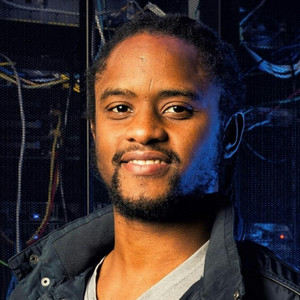
Jason Mars is a man of many hats. He's a professor of computer science at the University of Michigan.
He's the author of a bestselling book called Breaking Bots, and he's the CEO of a number of companies.
Perhaps the most relevant to today's conversation are Clink.
C-L-I-N-Q, and his newest one, Zero Shot Bot.
Jason is here to talk to us about conversational AI, about zero-shot learning, and probably a whole bunch of other stuff we'll get into.
So let's get into it. Jason, thanks so much for taking the time to come on the NVIDIA AI podcast.
It's my absolute pleasure. Great to be here.
So let's start at the top. What is conversational AI?
I'm sure I got some of the details wrong.
Might've led the listeners astray a bit in our intro.
So why don't you clarify for us? Yeah, it's a conversation AI is a means at which you can interact with technology fundamentally and often it's kind of reasoned about in the market as a new kind of user interface to get things done.
But fundamentally, the way we have envisioned this technology is as intelligence itself. before we had electricity or even technology as we know it today, When you thought of intelligence, when you needed to learn how to do something new, you You would, in caveman times, you'd go down to the other cave and you say, hey, my spear is not cutting it. can you help me?
You're the best beer maker in the tribe.
Like, could you help me? So that's intelligent as we know it.
We've wanted that kind of experience with with technology.
You can see it in the sci-fi films. You can see it as a deep desire.
And for the first time we actually have the technologies that can allow us to create the first real manifestations of that.
So the word conversational here, does that refer to speech and language and natural language processing and all that kind of stuff, or is it broader?
Yeah, so I think what we want is to use what we've evolved as our means for communicating with one another, but with artificial intelligence, right?
And so it is natural language processing.
It is linguistics. It's intelligence that can understand what we say to it and then speak back to us.
But it's a lot more than that, really, because you need these experiences to be able to think to be able to do things for you and to be able to have intelligences that go beyond just the natural language processing, natural language generation.
And so one special thing about conversational AI is it encompasses a much broader range scope than say something like image recognition or being able to recognize a face.
That's one problem and you get it right or wrong.
You send an image of the face to a deep learning model and you get an answer as to whose face it is.
But when you're interacting with an AI, you need that AI to keep up with you, to remember what you're saying, to understand the logical process. implications of multiple turns of a conversation.
And so it's a very big problem. You'd want this intelligence to know about the world in general, to be able to reference an unexpected level of world experience in engaging with you.
And that's what makes us good at conversations as humans, right?
And so it's a very broad scope and it's a very... hard problem.
And I think that's why it's particularly interesting.
And it's very unsolved. in the experiences that we have today.
So I'd like to get into some of your work, whether present day today or in the recent past, what's the best way to get to that should we talk about zero shot bot should we talk about clink should we go abstract and talk about yeah yeah I mean, I think the evolution of coming from an academic background, right? coming as a computer scientist and engaging this problem and thinking about how we can move the world forward on this challenge.
You can kind of start with perspectives from the science background inspiration to start companies around this technology and then the learnings that come from both industry and academia into currently the thesis as to what needs to happen moving forward.
All right. So I'm going to say, let's start with Clink.
Tell us a little bit about Clink, what the company does, how it got started.
You don't have to go deep into it, but kind of how it relates to conversational analytics.
Yeah. So I'm not currently working on Clink, right?
So currently I'm working on Jiseki, which is a technology that underlies zero-shot bot and other AI technologies, but In the lab, right?
So after starting as a professor, I mean, I've gotten into the field because of a deep desire to tinker and innovate the next generation of things.
And so we were working in the lab for a number of years and we're publishing tons of papers on what the future of technology should actually be.
What are the solutions to the to the problems that are holding us back.
One of the biggest areas is to reason about all of the queries And all of our interactions with technology having artificial intelligence on its critical path.
And what that means is the way... the way the world is moving, we've decided or we've discovered that Deep learning is a pathway for us to realize higher levels of AI in practice.
And when you have deep learning on the critical path of how we engage with technology, how do you build the right kinds of models and systems for that world.
So we were working on this problem. And on that journey, it became very clear that that there's a stagnation in the market there.
I mean, Siri was launched in 2010. So that's 12 years ago.
And we all have an expectation of what that experience was like.
And when it comes to a deep understanding of and artificial intelligence, most will agree we haven't seen a major uptick in the quality of these experiences at large in 12 years, which is strange, right?
Right. Because When you look at the academic sphere and you've got Thousands of papers being published a year on new technologies, new kinds of approaches to solve some of these holy grail problems.
So there's a gap. There's a gap between what we're experiencing and what the science might be able to produce.
And so the first company, in Conversational AI that I've created, Clink, was a company that took a very different approach to... the deployed AI platforms than what was kind of conceived previously, right?
We really, we put deep learning integral to the entire journey of the conversation.
At the time, many of the systems in market would use grammars and these systems that were inspired by computational linguistics.
So identify the nouns, verbs, and adjectives in the sentence, do synonym recognition to find the synonyms, etc.
Right. But that's not how our brains work, right?
My seven-year-old learned how to speak fluent English, but he still doesn't know what a noun is or a verb.
Right. Right, right. And so if you were to build an end-to-end system that never relies on parts of speech... or synonyms, can you achieve a more resilient AI where you can speak to it in messy ways?
So we created a technology that harnessed that principle.
And we also created a methodology for how you train such AI in a way that The market was able to build, I mean, our clients, the largest banks in the world with millions and millions of users were able to build experiences that go well beyond what you would experience with your Siri or Alexa at the time.
And is that... Not to interrupt you, but is that primarily due to your approach to the problem, getting away from the whole...
I don't know, sort of chunking it up, as you said, by this is a noun, this is a verb, this is a synonym.
And you had a different approach that whatever it was worked better.
Right. So we wrote about 30 patents around this and published a number of papers in the company around a holistic system that relied entirely on deep learning principles and designed in such a way on such principles that we were able to achieve success. much better experiences downstream for end users.
And so that was awesome. In just the span of three years, we...
We grew the company To 120 people, we raised about $60 million.
And we actually had millions of users talking to our AI in the markets.
So that was a great success. But one of the biggest challenges comes from learnings that came both from understanding what was possible in academia.
And then combining that with what the journey is for real businesses to build conversational ad experiences.
And it became clear that It takes 12 to 18 months in practice.
If you're using traditional AI training approaches, for these companies to build experiences that were okay or good.
Okay. And this journey of 12 to 18 months is riddled with pitfalls.
And if you get the data wrong, if your data gets dirty, If you try to expand the capability of the experience and you add new data, how does that conflict with prior data and how it's shaped, that laborious journey is where a lot of folks get tripped up.
And it's actually the reason a lot of these experiences are not good, right?
Because you can bind yourself up on that journey if you don't get the data right and the models right.
And you need a high level of expertise that you can't readily... get as a Barclays or a US bank, right?
And so that led to At the same time, it was becoming clear to the market that a new kind of learning we call zero-shot learning has the potential to reduce the need to train, right?
So that entire 12 to 18 month process can be obviated if you were to leverage good zero-shot learning approaches for a certain scope of problem.
And so what made this really popular was a technology called GPT-3.
I mean, it wasn't the first time zero-shot learning was conceived, but it was an articulation of that fundamental principle and the merits of that and how you can build really, really good models that you don't have to train and can do new tasks without seeing new data.
That really whetted the appetite. Can you explain for the listeners, zero-shot learning, few-shot learning, what does that mean?
Yeah, so zero-shot learning means that you have a neural network model and it's trained generally on lots of data.
So a concrete example is you take a model that has a self-supervised task.
And that just means you take a model you let it read the internet, let's say, right?
You give it the entire internet and you let your model read the internet, then that model... may be able to learn so many things about the world that you can deploy it and say, okay, now I want you to take the SAT.
Go. Oh, now I want you to write me a program.
Write me a program that looks like Facebook, that works.
So you can kind of give it these new tasks that aren't that aren't related to the job of reading the internet.
And then the model can perform those tasks without training.
Right. So that's zero-shot learning. One-shot learning means you give it one example, For instance, for the SAT kind of analogy, you give it one page of the SAT and solutions and say, now solve these 500 SAT tests.
Right, right, right. So that'll be like a one shot kind of case.
And a few shot case would be you give it multiple pages, a few examples, and I'd say go solve it.
And this is after it's done the self-supervised task, which is, and this is a simplification, of course, but which is read the internet, right?
Right. Every time you say read the internet, I'm just imagining whatever your example is, the output is a meme.
Like you're like, yeah, read the internet and create Facebook.
And I'm like, oh, it's a meme. It's that's, that's all you're getting back ever.
Exactly. Well, that's because I have a 12-year-old.
Yeah. It's actually very interesting. I mean, And it really evolved from the swath of work that was focused on transfer learning, which is training these models generally and then training it just a little bit more for a particular task.
The innovation was, actually, you don't even have to train it a little bit more.
Just give it the new task. I mean, actually, if you do this the right way, it actually can work.
Or just give it one example and it can actually work.
And so that's kind of the evolution, right?
So Burke, was really the thing that popularized transfer learning.
It's a particular neural network model called BERT.
And then GPT-3 is what popularized in the market zero-shock lurking.
Right. Now there's all kinds of ideations as to how you can do different things to achieve it for various tasks and so forth.
But it's fascinating, right? Because with these kinds of technologies, you have to be incredibly careful, right?
Because... Everyone is familiar with the Microsoft Tay debacle.
Yes. And if you're not, I'll just say really briefly, this was a neural network AI device that they unleashed on Twitter and said, oh, go learn from tweets.
That's a first mistake right there is unleashing anything on Twitter.
And I speak from that's not a diss at Twitter.
That's me. My own experiences. Yeah. Exactly.
So this particular AI on Twitter learned and within a day or two became one of the most bigoted and offensive things And Microsoft had to pull it down immediately and apologize, right?
And we see that as well in GPT-3. There are these really, really breathtaking examples and breathtaking in the somewhat of a horrifying way, examples of asking this model after it read the internet, a question about a particular race or gender,
And then it just spews out all of this really...
And so these models are only, the analogy I always give is if you have a kid and you release the kid out into the world without supervision, Let's see. go learn and just do your own thing and then we'll see what kind of person you become.
That's incredibly risky. So you have to guide and mentor your kids as they grow.
And it's the same when we use these self-supervised models right so so how do you how do you guide and mentor a zero-shot bot Yeah, well, it's a lot like... So there's the zero-shot bot product, right?
So we could talk about that. Yeah, I'm sorry.
It's such a catchy name that I just used it.
We could talk about that. Yeah. But in general, zero-shot learning...
It's in the data, right? So it's a lot like your kid.
If you don't want your kid to be exposed to, I don't know, alcohol and drugs or something.
Right. then you limit the exposure to that experience.
And the analogy applies directly to these kinds of models, these neural network models that learn entirely from data.
You basically make sure that you don't expose the model to the data to learn from the data that is intrinsically unsavory, right?
And so- it's a similar kind of process as the... If you wanted to do this in a way... you know, that is effective and it has guarantees.
You just, you make sure the data is curated properly.
Yes. Right. And so, In a real sense, something like zero-shot bot, another way you can do it is you can limit the scope of outputs and so this one doesn't apply as it doesn't it doesn't apply as well with like the example of human kids, I guess the best way you could apply it is say, okay, well, if your kid learned a bunch of bad stuff, you can...
Thank you. you can essentially only put the kid in a place where all of the options are only good options.
I don't know. You could either save the planet or clean the oil spill or that.
And there's actually no other option. This is another way.
You can do this with models, right? You can take a model that perhaps you didn't do the laborious thing of curating the data exactly to make sure there's no bad stuff.
And have the model only used in selecting from... a set of options that you know are good.
And so in the case of ZeroShot Bot, which is a technology I've been working on a loan side, phenomenal partners that I'm very big fortunate to grow in a beautiful relationship with.
Like, with this particular technology...
The bot selects answers. It's trained in a self-supervised general way with large data sets about the world and the way you specify its tasks or its use case, like what the chatbot can say to folks is by giving it answers, right?
So you have this limited scope of things that you can say, but The learnings that you gain from that self-supervised task allows you to link the questions you hear to the right answer.
So there's a fixed set of answers, but you can listen to anything someone says.
So it limits, like your bot won't say, won't generate bad stuff itself, it'll only select from a limited set of good stuff that you're given.
Got it, got it, okay. So many ways to go with this.
So you mentioned you're working on ZeroShot Bot, and then you're also, and forgive me, the name's eluding me right now, your other company that's got the technology underpinning what zero-shot bots do.
Yeah, Jiseki. Jiseki, right, thank you. Is this also a zero-shot bot or both of them also in the banking space?
Or what areas are you working on? So the beautiful thing about ZeroShot Bot is what makes it ZeroShot is that it applies to any space you design for, right?
Sure. So there's no training. So typically when you build a chatbot with more traditional techniques, you have to curate many, many examples of how people might ask questions or what people might say turn to turn For every ter of the conversation, you collect a data set and then you give the experience that data set and you train it You give it the data to understand every possible thing someone might say to you.
So that's traditional. So that goes away completely with zero shot bots.
So you don't have to train it how to understand people.
All you do is give it the landscape of answers.
And then it automatically is a chatbot in that space.
So that's very powerful, but especially when it works well, which is, what we've been able to accomplish, right?
And so the technology that's underpinning it is an ecosystem I call Jiseki.
And Jiseki is really... a new conceptualization of a computational model and programming language that lends itself to the kind of AI problems.
It generalizes beyond that. Right. It's really an ecosystem that allows you to build any kind of software.
But it creates a new set of abstractions that allow you to solve new kinds of AI problems.
And so... ZeroShot Bot is built entirely on this ecosystem.
And this ecosystem is completely open source.
Okay, cool. And anyone can... can build products on it.
I'm actually teaching a class next month to 100 high school age students in the Caribbean around how to build their own AI products.
Oh, very cool. With Chisaki. I'm actually also considering open sourcing the implementation of Zeroshop bot, the Jaseki implementation of Zeroshop bot, but we'll see.
We'll see if that makes sense. All right, we'll check in with you in a few months on that.
Yeah, totally. Yeah, but it's been an interesting journey, right?
And just watching the build. the build-out clinks technology stack and watching the inflexibility you run into when you make design decisions. and how monolithic these ecosystems become, It led to a number of insights around how we should be building these systems that lent itself to the construction of Jiseki as a stack.
I mean, I may be way off base here, but listening to you makes me think of these thoughts around building AI systems that can write. software themselves, right?
Learning from what they're doing and then applying that to build something different or build something better.
And when you're talking about concepts like on the ZeroShot bot websites, build your own bot in a day, no coding required, easy peasy.
I think it actually says easy peasy on there, right?
See, I'm telling you, you got these clever names.
They stick in my head. But that whole notion, I mean, is that where this stuff is headed when we're talking about The old system was inflexible and it required you to make decisions in the new system. it's not quite doing it all itself, but it sounds like we're on that path.
No, you're absolutely right. Creating complexity is really the creates the viscosity of innovation.
And Across the board, I mean, that's a recurring theme, as you're pointing out, that second exists because It's a lot like, if you think of the original programming languages, right?
The first way we programmed computers was using assembly language.
Right. And Once we, when we designed programming languages that raise the level of abstraction, we were able to write much more complex, much more sophisticated programs easier.
And that actually is the journey of, it's one of the key tenants of computer science is once you raise the level of abstraction, and you allow people to articulate the solutions to their problems without dealing with the complexities of what's going on in the machine,
Or in the case of Jisaki, what's going on with the thousands of machines that your AI is running on?
You make that invisible and you just let them articulate their solutions.
And then you get more innovation. It's the same theme we see with zero shot buy.
Zero shot bot removes the complexity, that 12 to 18 months complexity to get your bot to understand one new thing. and makes that instantaneous so people can build more sophisticated experiences faster. and they can innovate faster.
And so that's one of the most powerful things about this technology.
We have real folks that I'm incredibly proud of, like Alternate eSource.
There's about two dozen customers. that have production conversational experiences, user facing today, that were built in a week's time.
For which the first version was built in a week's time, which is insane.
Yeah. One company, Elton and Adisho, they...
They launched, they built their bot in the first week, their first conversational AI based on zero-shot bot.
And in the second week, they made their first sale without a human in the loop.
This is a company that has a very technical line of products, right?
It's an IOT company. hardware technology company.
Okay. it's impossible to make a sale without explaining what the product could do and whether it's compatible with this, yada, yada, yada.
And, With the conversational AI that they deployed, there was a self-serve capability that was created where people can make buy decisions without having to have a human to ask those questions to.
So... So we're seeing that this is allowing for rapid innovation.
That's a two-week journey as opposed to an 18-month journey. which is what we would often see with the prior technology.
Our guest is Jason Mars. Jason is a professor of computer science at the University of Michigan.
He's also the author of Breaking Bots, a bestselling book about all the stuff we've been talking about.
And he's the CEO... of a number of companies.
We're talking about ZeroShot Bot. We talked about Clink, but not Clink anymore.
And also Jiseki, of course, underlying the tech we're talking about.
I want to go back in time a little bit. We've got a couple minutes left here and ask you about your own background and I'm curious about – and this is something that's come up recently with a few guests, this kind of having one foot in academic waters and one foot in –
What's the word? Entrepreneurial waters.
Thank you. And kind of what that experience is like these days.
But before that, I'm going to go back a little bit further How did you get into all this stuff?
How'd you wind up in computer science at U of M?
What's your journey been like? Yeah, no, I come from a very unlikely background.
So I was born in Jamaica. I grew up in Guyana.
So I came to the U.S. when I was eight from the Caribbean.
And... I was always tinkering and I was always very, very curious.
And I started fixing my computer so I could play video games like Doom and Quake, right?
And I would break the computer And then I realized you could change the rules of the game and I got obsessed.
And so I learned to program in C++ at 14, 15.
And I actually created some of my first I actually launched some of my first programs at that age, built in C++ that generated a of levels for Quake.
And you can call it an artificial intelligence that built levels for Quake.
And so I was very, very just excited about computer science.
When I was in college, I discovered that there was an There was a world where you can tinker and create and innovate and be rewarded for it.
And it's in the academic research sphere.
I had a really wonderful professor Dr. Larry Lugosilpa, who inspired me to do research.
And I was blown away by that prospect. And so But I've always cared about creating things that would change the world and impact and benefit people and push the needle on what was possible for from a technology standpoint.
And so the entire journey, I would always ponder, well, What is the technologies that I'm creating that I should really invest in energy into affecting the world with.
And so the AI, the AI challenge, right? We have this stagnation with artificial intelligence is fascinating.
And so I've just really enjoyed being on this journey to have an impact there.
But yeah, that's kind of how I... And so you've been, how long have you been teaching?
So it's probably like eight years now. Okay.
Like as a professor, yeah. No, no, wait, I started in 2012.
So it's 10 years. So I just, I just aged you by two years.
That's what you get for coming on the podcast.
And so have you been doing entrepreneurial things that whole time?
Pretty much, right? About three years into my professorship is when I started productizing and commercializing.
Right. And so on that whole journey, I've been very active.
If I've got this right, Clink grew out of research that you did at U of M, right?
And then what you're doing now. And so you're able to keep both streams going.
It sounds like As opposed to however long ago, and we were talking off air before we started recording that.
Different universities, different institutions have different policies.
Everybody's trying to figure out how to navigate.
We were joking that it used to be – I mean, it still is, but it used to be students in comp sci programs were getting – pluck to go work at the whatever, Silicon Valley companies of the world.
And that's still happening, obviously, but now it sounds like universities are having to figure out how do we keep a guy like Jason on staff and contributing and happy when we know that he also has 15,000 companies he's doing and all of that.
I mean, is it tricky to navigate? Is it just kind of how things are?
Yes. Well, you see, the world is changing, right?
So there was some very established... modus operandi of universities in a non-software world, right?
So basically... If you had professors in material science, they discovered a new kind of material that Is 10x stronger and 10x lighter than the next material?
There were established processes. That IP would belong to the university. when there are established processes as to how you could commercialize an IP and you can start companies, but then you license the IP from the universe certain kinds of deals.
And so for pharmaceuticals, for these tangible products like new materials and so forth.
It was very... Clear and obvious. When it comes to computer science, though, and just the nature of how IP works, a lot of academicians open source what they do in the lab.
And so IP is much more of free-flowing. At the same time, that's one thing that universities have to grapple with.
They want their professors to be free to innovate.
The software world cares deeply about open source and they're just doing that.
So it's very hard to monetize that IP as directly.
At the same time, The software technology and technology and tech is really... an ecosystem of much, much innovation and many startups and many companies.
And folks are doing very well when they start companies and so forth.
A lot of professors, the economies are kind of tipped.
If you go work, if you're a professor at a top university and you go work at Google, you'll make about five or six times as much as you make as a professor.
Okay. If you're a professor and you start a company.
There's numerous billionaires, professors at Stanford and all the top universities, right?
There's a number of billionaires. So, So what do the universities do?
Well, we're seeing that many, many innovators that are professors will create something You usually get some leave or a sabbatical that you can go and pursue commercializing it freely.
And then... you usually have to come back, right?
It's like, okay, you got that time off. You still got to come back and do your stuff.
But the process would be like, well, my company kind of took off. you're forcing me to choose.
So I get about to choose a company. So they were losing talent.
Right. And so now there's a lot of re-understanding how you can support your faculty in doing that kind of innovation.
And it's good for the university, right?
Because universities really care about impact.
You know what I mean? And so they want their faculty to do... Go off and do these things, yeah.
Change the world. And to change the world.
And so... It's creating this new kind of thing to grapple with and evolve. a new issue to kind of re-understand that dynamic.
To loop it back. But stay on that topic of evolution and evolving.
Conversational AI. Let's end on this kind of future-looking note.
Where's the industry headed or the technology, however you want to frame it?
Where do you think conversational AI is going to be in five years?
And even to throw this kind of high-level abstraction question on top of it, what impact do you think that's going to have on the world?
Yeah, well, this is a funny thing, right?
Because conversationally I... You can call it that many have thought of it as a hype cycle. right?
It has endured, right? Like this is a hype cycle that continues to endure.
In 2010, That's really when this kind of AI revolution in markets started, and it's 12 years later.
It's not like 3D televisions. Or I would even say virtual reality or augmented reality, right?
There's been some kind of cooling off there.
I'm stuck at CES 2007 or something staring at 3D TVs.
Sorry. Exactly. I remember 3D TVs. It's like everybody was like, this is the new way we're going to watch TV.
And you can't find them anymore. So that's a hype cycle.
Right. Now, AI, I would argue, is a deep desire of the human condition. right?
And we know that it's a possibility. We know that the science is there.
So there's still a thirst in humanity for it.
And so that causes it to endure. I believe that innovation is coming.
For the first time, we're starting to see the machine learning, the deep learning community create companies that think about the end user, that think about how you can fill voids with good product sense.
How do you fill voids in people's lives?
And so, So I think we're going to see more of that, where if you start from what an AI model looks how it works and what it can do, that's actually the wrong way to place a start to change the world.
If you start with what is the maximal pain points of the human condition?
And what are opportunities to bring genuine delight to human beings?
And then think about how you can solve that, whether it be AI or not.
That's actually how you're going to see the most of the best innovations with AI.
You really have to start at the crux of problems and work backwards as opposed to start with the technology.
Sage advice. Let's end there. Jason, this has been awesome.
I'm going to ask you for folks who want to find out more about you and your work where to go, but I will start. by recommending the TED Talk, the U of M TED Talk you did.
It's about 15, 16 minutes long. It's a nice...
Nice chunk of time to get to see you on stage because we've got dynamic personality, but also to understand, you know, a little more, um, little more grounded, little more walking through sort of an experience, what this stuff is all about.
So start there. Where else can people go online to learn more about your work?
Yeah, yeah. JasonMars.org is a good place, a good place to start.
And to learn about Jaseki, there's Jaseki.org.
How do you spell that? J-A-S... E-C-I, Jaz Saki.
You'll find it. And then there's the book Breaking Bots, which really catalogs how to disrupt with deep learning technology and conversational AI.
Excellent. Well, this has been great. I've learned a bunch and also just hearing the way that you think about this stuff and talking about it in...
Not abstractions in the like, I don't know what this guy's talking about kind of sense, but thinking about really that higher... higher level of why are we doing this and starting from that is great to hear.
So thank you for coming on. Oh, pleasure.
Thanks for having me. Thank you.