

[Mastering Professional Communication: A Role-Play Approach to English Fluency]-[Conversation ROLE-PLAY Speaking English]
📋 Summary
Mastering Professional Communication: A Role-Play Approach to English Fluency
Introduction to Conversational Practice
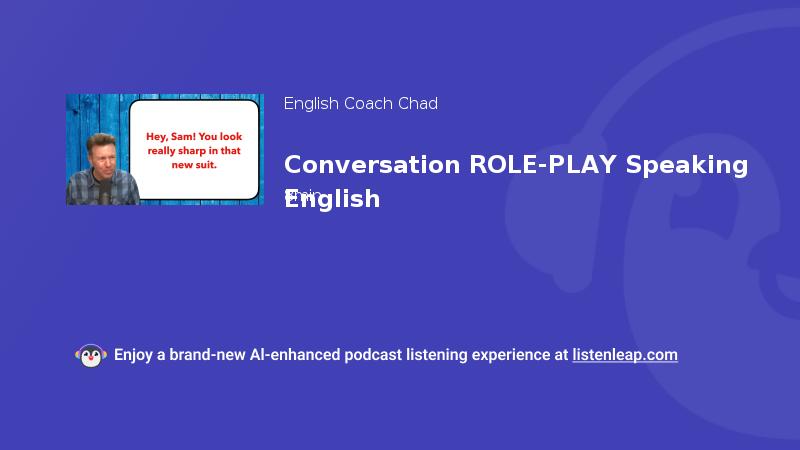
This podcast episode serves as an interactive language learning session, focusing on improving listening and speaking skills through structured role-play. The hosts, Mia and Sam, guide the listener through a natural conversation centered on professional appearance and social etiquette, emphasizing the importance of repetition and active participation.
The Power of First Impressions: "Clothes Make the Man"
The core of the conversation revolves around the idiomatic expression, "clothes make the man." When Sam asks what this means, Mia explains that "the way we dress can really influence how other people see us." This segment highlights how personal presentation is synonymous with perception. By dressing well, one can "make a good impression," which is a crucial skill in high-stakes scenarios such as "job interviews or formal events." The dialogue underscores that looking "professional" is not just about vanity, but about how one is perceived by others in a competitive environment.
Linguistic Nuances and Phrasing
Beyond the thematic content, the episode delves into the mechanics of natural English speech. The hosts break down specific phrases to help learners sound more like native speakers:
- Reduction and Linking: Mia points out how the phrase "let me know" often sounds like "let-me-know" in natural speech. This type of phonetic reduction is essential for fluid communication.
- Concise Responses: The phrase "will do" is introduced as a natural, idiomatic way to say "I will do that." Learning these short, punchy responses helps the learner maintain the flow of conversation without sounding overly formal or robotic.
The Role-Play Strategy: Building Confidence
The second half of the podcast focuses on active application. By switching roles—alternating between the "red text" and "blue text"—the listeners are encouraged to engage with the material rather than passively consuming it. The hosts emphasize that this practice is a "good workout" for the brain. The goal is to move beyond mere vocabulary memorization and toward internalizing the rhythm and emotional context of the language.
Conclusion: The Path to Fluency
The session concludes with an encouraging reminder that language learning is a journey. The host notes that the listener should "keep moving forward, one step at a time," emphasizing that consistency leads to improvement. By practicing these professional scenarios, learners can build the confidence necessary to handle real-world interactions where making a positive impression is paramount. The episode serves as a testament to the idea that with focused repetition and context-driven practice, one can become "better and better" at English communication.
Deep Learning with ListenLeap


