Discussion keeps the worldturning.
This isRoundtable. You're listening to a special edition ofRoundtable.
I'm HeYang. The audiodrama, Echoes ofKool-Aang, aired onRoundtable, has enthralled our listeners in recentmonths.
Curious about the new stories ofKool-Aang, written by the youngergeneration?
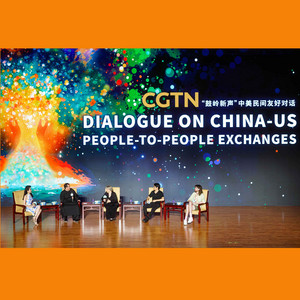
Next, the live event fromKool-Aang, located in FujoCity, FujenProvince, in the south-eastern part ofChina, the sentry-old friendship between Chinese and American communities in Kool-Aang has blossomedanew, celebrating people to people exchanges between China and theUS.
Heyeveryone, my name is JasonSmith.
You can call me ShangguanZia-1.
I'm Li Toyuan fromCGTN, China Global TelevisionNetwork.
The bond withKool-Aang,2024, China US YouthFestival, has attracted the largest group of American youth to visit China this year and is a great opportunity for young people from both countries to get to know one another and to build friendship on thatunderstanding.
That'sright, and President XiJinping, in his congratulatoryletter, expressed his hope that we could see more in-depth exchanges between youth from China and the UnitedStates.
So in thatspirit, we would like to hold a friendly people-to-people dialogue and have a discussion among Kool-Aang'sfriends, oldernew.
Sonow, please welcome our distinguishedguests.
We have HuangYaya, the band director and music instructor at the Jazz Academy of Jazz at the Lincoln CenterShanghai.
And please also welcome Isaac FelixGray, student from the Yenching Academy of Peaking University to represent a younger generation of Americans who has built a bond with China and Chinesepeople.
Andfinally, Ellen McKinnis has agreed to join us and she is the lead researcher at the Kool-Aang Tourism and Culture and co-founder of Kool-Aang'sfriends.
So, we have quite a line uptoday.
Let's begin the conversation with the word that we can all relateto.
Why don't I start with Miss McKinnisfirst?
So you have a very special bond withChina,right?
You have worked and lived in China foryears.
So what is the word Kool-Aang meant toyou?
Kool-Aang is where ishome, where my husband spent his first months ofbabyhood.
He wasn't veryold, one month toone, threemonths.
Justbored. And how long has he lived there inKool-Aang?
He didn't live that long inKool-Aang, but his family did buy a house and they named it the Isle ofSky, orSky, after the island that his family came from inScotland.
So they just brought Scotland toKool-Aang.
Interesting. What aboutyou,Isaac?
When did you first learn the story ofKool-Aang?
And what was it like for you after learning thestory?
I actually didn't know about Kool-Aang until about three weeks ago when I was invited to comehere.
But sincethen, I think after learning thestory, I've recognized that it represents an opportunity to transform some of China's cultural heritage into an opportunity for China-USdialogue.
And I think that's veryinteresting.
Yeah, that'sright. Kool-Aang posed such a special place in a lot of people'shearts.
But before1992, for a lot ofpeople, even for people living here inChina, this is not a well-knownplace, not as well-known as othermegacities,right?
But then everything changed in1992.
What aboutyou, HuangYe?
What has Kool-Aang been toyou?
Youknow, it's my first time inFuzhou.
So I did some research of this place and thisretreat.
It's actually like a 19th century four missionaries came here first to discover some retreats for them to have fun and to enjoy the Western culture and Chinese traditionalculture.
So I heard that there is a lot of Western villas and also Chinese traditionalbeauties.
So I'm hoping to see maybe the next fewdays.
So you started comingback, MissMcKinnis, yearsago,yes?
Well,actually, we came back in 2015 forthe...
I came here in 2015 for the firsttime.
What is yourimpression?
Was it aboutfamily? Was it about going to anothercountry?
How did you relate to your first trip toChina?
China was1988.Oh,OK. So were you looking for Kool-Aang in 1988 or are you just coming to China forfun?
No, we just came to China in1988.
We came looking for my husband'sroots, which were inFuzhou.
He was born in Fuzhou and we went to visit thehospital.
We went to visit where his parentstaught.
And then we went searching forKool-Aang.
For hishouse, the old family house onKool-Aang.
So when you foundKool-Aang, what was thatlike?
It wasamazing. But when wecame, we really wanted to see thehouse.
And we couldn't findit.
So how did you exactly findit?
Well, after years ofresearch, seven years ofresearch, we finally had a Kool-Aang friend who kind of knew the way the mountains went from which angle he lived there his wholelife.
And he looked at one of our old pictures and his dad looked at one of our old pictures andsaid,oh, I think it's overthere.
They'rethere, overthere.
And so they went and they found the valley and they found the view out to theocean.
And they found the foundation of ourhouse.
Wow.Yeah. Is it beenrebuilt?
It hasn't beenrebuilt.
I thought it's better just to put a little bitthere, amarker, and saysky.
Oh,yeah, I'msure. That'sfantastic.
SoIsaac, when was your first trip toChina?
My first trip to China was in either March or April of 2012 when my middle school did an exchange with Beijing June 1st MiddleSchool.
And so I was only there for aweek, but we stayed in the dorms of Beijing June 1st MiddleSchool.
And so was this your first trip outside of thestates?
Imean, if you countCanada,like, I think outside of thestates, thenno.
So how were you11, 12 yearsold?
I was in eighthgrade.13.
13? So what was that experience like foryou?
At the time it was kind of ashock.
I was a very pickykid, and I remember being really thankful that there was white rice witheverything.
Now Ilike, I am not a pickyperson.
However, the time Iwas.
And I remember the side ofeverything, the scale ofeverything.
I remember them taking us to the bird'snest, being astounded by the bird'snest.
I remember the watercube.
That wasamazing. And seeing how I'd beenreused, I remember just the sizeof, Imean, I'm from a city of 1.3 millionpeople, which is barely anything in Chinesestandards.
Imean, Hidingalone, Ithink, has like 4 million people init.
So it was really shocking to the size ofit, the scale ofit.
So kind of the same question foryou,Huangye.
Was that the first time you went to the UnitedStates?
And what was yourimpression?
Kind ofsimilar. I went to a United States when I was around fifthgrade.
There was a like summertrip, only for twoweeks.
How did you see itfrom, youknow, a Chinese perspective isdifferent?
Like,well, it's similar because I moved to New York and New York is similar to where I wasborn.
So it'sXinjiang, it was a city I wasborn.
So I knew how I built in skyscrapers and a lot of peoplecrowded,stinky.
So when I went to NewYork, it'slike,hmm,similar.
But in a differentway. I love the emberishment of cultures in NewYork.
Yeah, so you can see all kinds ofpeople, or different jobs and different speciesraces.
There are a lot of similaritiesactually.
And when you take a closer look at the two countries and there arepeople, and speaking ofthat,Isaac, what are the things that you like the most about the Chinesepeople?
Are there any qualities you find interesting or compared to people from where you'refrom?
One of the things that I find reallyinteresting.
So I used to work in SanFrancisco,Chinatown, which is one of the oldest Chinatowns inAmerican, one of the largest concentrations of Chinese people outside of China in theworld.
And at thetime, one of the things that is really apparent there and here is how much of a social life elderly peoplehave, especially contrastedwith,like, kind of like whiteAmericans.
A lot of times we send our grandparents off tohomes.
And I was really impressed everywhere going inChina, how much like vitality and how much fun the old people here seem to behaving.
And this is not just limited to old peopletoo.
I really think that I think many Chinese cities like to claimlike,oh, we hear especially like our slow pace ofliving.
And I think the fact that so many Chinese cities all independently saylike,oh, we like our slow pace of living the most speaks to the factthat.
I think that Chinese people have a really good sense of like enjoying their leisuretime, really like a nice long afternoon drinking tea and stuff likethat.
I think that's something very special aboutChina.
They'reinteresting. And what about youMs.
McKinnis? In youreye, what are Chinese peoplelike?
I think Chinese people are very much aware of all the people aroundthem.
And I lovethat, even when you write anenvelope, you start withChina.
And then the American equivalent would be thestate, thecity, the street address and aname.
Imean, that's the Chineseway.
So it's not aboutyou. It's about your whole larger group all the way up to including thenation.
And I thinkthat's, I like that way ofthinking.
It's communalspirit.Also, family is reallycentral.
Yes, you Chinesepeople.
The respect forelders, respect for theirancestors.
It's a core value for the Chinesepeople.
Yes. And I think that's verywise.
Imean, if it's just all about you and what you want todo, then you've missed all therest.
Yeah. And another thing I findinteresting, speaking of the differences between Chinese people and Americans as the way they communicate with eachother, the communicationstyle, I find veryinteresting.
Chinese people tend to value indirectcommunications.
They value harmony and tend to avoidconflict.
Whereas I find Americans they value clarity and openness a little bitmore.
So they would prefer directcommunication.
Anything that you find interesting while you were working there in NewYork, pointing at likethis?
Yeah, I think New York people were very strict and alsodirect, like we justsaid.
And they were pointedout, anything that they find interesting ornot, like out ofline.
So they were speaking to you plainly and asked you for your advicesometimes,yeah.
So I think it's different way ofthinking.
So when I came back toChina, I adapt to this environment very quickly because I think that's the natural way ofpeople.
So we talkmore, we get to know each othermore, then just directly pointing outthings.
Yeah.Hong,yeah. Since you lived in the UnitedStates, you livethere,actually, you'reUS.
Haven't had mylife. So I guess my questionis, how do you envision Americans and Chinese people getting to know one another betteron, youknow, a massive culturallevel?
What kinds of initiatives would you want to see to help us facilitate morecommunication?
I think that's veryball-crash.
Because I was thinking on the roadhere, because I live in Shanghai most of thetime.
And Shanghai people is veryinternational.
Theyembrace, like NewYork, they embrace a lot of different nationalities andpeople.
But in the rest ofChina, like the countryside or like othercities, I wasthinking, I was looking at thevideo, theysaid, people take pictures ofyou, if you're aforeigner.
I think justmore, I was a moreexchange, a culture exchange like this will help the US and China to get to know each otherbetter.
Andalso, somethinghere, sending people to China together toknow, to theUS, to get to know their culture is a very good way to doit.
Yeah. One foryou,Isaac, in terms of people to peopleexchanges, what kinds of people to people exchanges would facilitate the best communication between our twonations?
Well, Imean, Iagree, ofcourse, withHuangya, that this is this kind of thing is very importantto...
I also think that more kind of higherlevel, higheducation, academic exchange is important aswell.
Because I think right now the situation is a bit unequal in the sense that there are so many Chinese students that you know study in America and then comeback.
But very few Americans take advantage of like the educational opportunities that there are inChina.
Imean, Peking Universityis, they recently just got ranked like 14th best university in theworld.
And I think that opportunities like that would really stand like American students would really stand to benefit from those opportunities aswell.
Well, MissMcKinnis, I kind of have the samequestion, but you've already sort of achieved it because you buy this example that your family hasset, you've already sort of set the tone for creating and facilitating people to peopleexchanges.
But you have other ways in which you think that our two nations can get to know each otherbetter.
Ido. Because every child in the US studies China when they're young and I think it would be good to have some very informative and fun videos on things that primary school children like so that they're automaticallyaware,oh, we don't havethat.
Kids over there dothat.
That's reallycool. Like raising the silkworms or playing withcrickets.
Imean, there's almost 2,000 year old cricket culture inChina.
Did you knowthat? I've been here for 12years, soyeah.
Did you knowthat? 2,000 yearsold.
There'spoetry. There'smusic.
There's all kinds ofthings.
It'sfascinating. So we need to get our youngest interested aswell.
It's a greatanswer.Yeah.
What about the things that you guys think that people here in China and Americans that can worktogether?
Forexample,Hoya, you're a musicianyourself.
Have you ever collaborated with Americanmusicians?
Yeah. Most of the musicians that collaborated are American because jazz music is forAmerica.
So I practically grew up there and also understand the jazz scene and also classicalscene, like some of the popscene.
So a lot of people there arelike, they love music and they play music but forfun.
But here we study music because we consider it a job orcareer.
Musician is acareer. But there in theUS, it's a fun way todo.
You likemusic. You listen tomusic.
You pick up aninstrument.
You play when you'resad, you play when you'refun.
So these fun ways to learnmusic, but here is more like ajob.
Yeah.Interesting. What aboutyou,Isaac?
Anything that you feellike, youngpeople, younger generation from China and the United States could worktogether?
I think that infrastructure and environmental protection are probably the two biggest and most relevantones.
I have always been consistently impressed by the infrastructure inChina, the convenience ofeverything.
And I also think that China has the necessary capacity to develop more greenenergy.
All this kind ofthing, I think this is veryimportant.
And I think that we cannot treat global warming as a goal to be attained in like a competitivespirit.
It would be very bad for both Chinese people and the US people and everyone else in theworld.
But I think that that is something that we can definitely work together on because America does have some of the best climate scientists in theworld.
And I think China has some of the best infrastructure development in theworld.
Well,definitely, sustainable practices and fighting climate change with the United States and trying to be in global leader in cleanenergy.
There's alot,definitely, we could work ontogether.
What are your thoughts onthis,Ms.
Pakennis? I was just sitting here enjoying theanswers.
Youknow, I've been thinking primarily about people topeople, friendship and the importance ofthat.
So I think I do think that understanding each other and having these relationships is one of the most important things you cando.
There are other things to lots ofthem.
Let's do themall.Actually, that's a really wonderfulidea.
Youknow, this is centered on youth and most of the people here are reallyyoung.
A lot of the speakers have been my age orolder.
So I really hope one kind of wondering what people hope that the youth are taking away and what they're going to be able toaccomplish.
So when you see all of these young people fromChina, from the UnitedStates,here, youknow, hundreds ofthem, what's your hope that they're going to take away from the story ofKuleon?
Well, you can always point someone in adirection.
And if you just watch movies of war and crash bang and cars burning up and that's adirection, then I hope fromthis, youknow, people will consider maybe not even just the stories of the people onKuleon, an interculturalmix.
But they'll even think about their ownfamilies.
And the wonderful examples ofpeople, maybe not your ownfamily, maybe it's yourneighbor.
But the people who inspireyou, they'll be inspired to do something good for theworld.
And that will be what you're looking down the pathat.
And it doesn't have to be a bigthing.
It can just be a littlething.
Infact, it could just be asmile.
But, youknow, that's what Ihope.
Thatpeople, not just youngpeople, can hear the story andthink,wow, youknow, there's something I coulddo.
Then the world getsbetter.
HuangYe, your story is kind of like Kuleon in away, only inreverse.
The Chinese person migrating to the UnitedStates, now you're settled downthere.
So when you hear thestory, you're relating the story historically a moment togo.
Soclearly, you know the storywell.
Do you see yourself in thatstory, kind of also settling down somewhere else and being a bridge likethat?
Yes.Well, because originally I'm a foreign exchangestudent,actually.
So a lot of people like me go to the US and study a board and try to absorb their knowledge and comeback.
Like I'm one of them who cameback.
Like I want to bring the best of the jazz music in general to here and to share my knowledge with mycolleagues, my friends andmusicians.
So I think that's a good way of doing like the storyhere.
Going back to different culture and absorb the own culture which I was bornwith.
So I like the mixture ofboth.
The fusion ofboth. AndIsaac, you mentioned you the first time you came to China was when you were a youngteen.
You're in middleschool, but you're here againnow.
How many times have you comehere?
This is my secondtime. So do yousee, are you inspired by this story of Americans coming here more than a century ago and settling down inChina?
Does this make you want to come back to China or does that make you want to visit othercountries?
Does it make you want to share in othercultures?
It makes you want to go to more places in China to be quitehonest.
Where would yougo? I'mcurious.
I really want to go to JoeJai-Gol.
A place inChina.Oh, on the mostbeautiful, have you everbeen?
Where? Youshould, JoeJai-Gol, instead of Trumpprovince.
Not.Oh, on the most beautiful places in theworld.
You got togo.Yeah. Sofinally, I would like to have all of yourshare.
So the aspect that you like about each other's country and itspeople.
What are the things that you like the most about China and the Chinesepeople?
I like thevegetables. I feel very sad in America because we have such limitedvegetables.
I'm sohappy. I've been back and have been eating all this food and I've probably gained 10 pounds in what he's going todo.
But I love the Chinesepeople.
I love being part of agroup.
I love not having to stand there on my own like a goodindividual.
I love having friends with at myback.
And I spent 30 very happy yearshere.
30years. 30years,yeah.
It's like your secondhome.
Oh,yeah. I spent most of my adult working lifehere,36,65.
That'sincredible. Your family was alsohere, I wouldimagine.
Yes, my daughters grew uphere.
Their names are Ijong andIwa.
There arecelebrities.
They arecelebrities. Ladies andgentlemen.
I think most of the people from my generation would knowthem.
Theywould,yeah, they have appeared on Spring FestivalGallup,right?
Yes. With theCCTV.Yes, they were on differentprograms.
And Charlotte stayedbehind.
Iwa was here as ahost. Sometimes it'sCCTV.
Wow. BeijingTV.Yeah.Wow, quite an amazingjourney.
And I taughtEnglish. What was itrun?
She wongingyou. She wongingyou.
Yeah. I think a lot of people learning English would know thisface.
What a fun ridehere.Yeah, so we talked about culturaldifferences, which I think is one of the most importantthings.
If you understandthat, then you're verycomfortable.
Forexample, if someone's embarrassed inChina, they mightlaugh.
If a child fallsdown, hurts theirknee, the grannies will laugh to get them to standup.
He may think if he's aforeigner, the grannies are laughing athim.
So you have these little teeny things that can have misunderstoodcues.
And you have to learn aboutthem.
So it's veryimportant.
Yeah, and I mustsay, I agree withyou.
I love Chinesefood, the culinary traditionshere.
One of the best things aboutChina, about youIsaac, things that you like the most about this country and itspeople.
One of the things that has really impressed me about China and that I've grown to love about it is the incredible diversityhere.
I think inAmerica,oftentimes, our view of China has been extremely limited inmedia.
And what we see in China isoften, or what people think aboutChina.
People's perceptions of China is deeply influencedby, youknow, signophobic newsmedia.
And I think that when you comehere, you can see for yourself that China is not amonolith.
It'snot, youknow, a place of where everyone has the same opinion or where everyone talks and eats the same way or where everyone follows the sameroutine.
It's in very diversecountry.
And every city I've been tohas, youknow, had a differentvibe, a different kind of feeling toit.
And I really appreciate about thatChina.
And I think this is also one of the key similarities between China and theUS.
Because both of our countriesare, youknow, on the service people think they're ratherhegemonic.
But I think actually they're very diverse when you look at it kind of at a more granularlevel.
What about you HuangYe, things that you like the most aboutAmerica?
Samething,diversity.
I think that is a globalworld, so we travel to each other's countries and share our knowledge and to embrace their new technology and also likeculture.
So I think that's a great thing about staying in some places inAmerica.
They embrace a lot of technologies and the best of the best came to US tostudy.
And sometimes they come back and share knowledge with the world and with theircountry, the homecountry.
So by doingthat, the world isbetter.
Yeah. One thing I love about the most about America is there's a cultural acceptance of failure as a step towardsuccess.
And that reallyencourages, youknow, resilient orexperiment.
And that kind of foster a very supportive entrepreneurialecosystem.
And youknow, I really like the start of culture overthere.
That wraps up today's roundtable.
I'm HaYoung. Don't forget to check us out on Apple Podcast at Round TableChina.