The unmissable news stories of the day.
This is the beijing hour, examining the events that impact and shape china and the rest of the world.
This is the beijing hour one hour of news and information brought to you every weekday.
Now here's your host.
Hello with you on this friday november, the 21st 2025.
You're listening to the beijing hour coming to you live from the chinese capital.
On today's program, China stresses the full political documents as the cornerstone of relations with Japan.
Chinese Premier Li Qian is in South Africa to attend the G20 summit.
Ukraine says it has received a new US peace plan, but Moscow denies any dialogue with Washington.
In business.
China's commerce minister has met the US ambassador, calling for expanding areas of cooperation.
In sports, updates of China's 15th National Games.
In culture and entertainment, global interest in learning Chinese is still on the rise.
Now checking today's top stories.
China says it firmly opposes Japanese Prime Minister Sino Takahashi's erroneous remarks about the Taiwan region and hints at the possibility of forceful intervention.
China's foreign ministry urged Japan to retract the statement and fulfill its commitments with action.
A Chinese spokesperson stressed abiding by the four political documents that govern bilateral ties if Japan wants to develop mutually beneficial relations with China and create stable ties.
Tokyo's stock market has fallen for several consecutive sessions, losing over 2000 points as of Wednesday, with retail, tourism and China-related companies taking the biggest hit.
The country's bond market is also under pressure.
Long-term yields have climbed to their highest levels in more than a decade, and the yen has weakened again, hovering around the mid-150s against the US dollar.
Analysts warn that Takayoshi's comments risk a crisis for Japan, given the extent of economic ties with China.
China remains Japan's largest trading partner, with annual trade reaching over US$300 billion.
The tourism sector is especially vulnerable.
At major department stores.
Chinese shoppers account for well over half of all tax-free sales, and Chinese visitors make up roughly one-third of total travel spending in Japan.
Hokkaido, one of Japan's most popular tourist destinations for Chinese people, is seeing cancellations in hotel and travel group bookings.
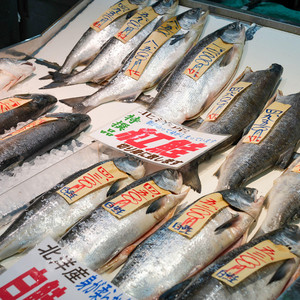
Officials and businesses in the aquaculture industry have also expressed concern over the impact.
The concerns of practitioners and producers in the aquaculture industry, as well as Hokkaido residents, are growing day by day.
Given people's unease and concerns, we believe the government needs to take measures to address this.
Everything was originally moving forward, but now it's been shut out.
Things turned out this way because of the remarks from Prime Minister Takahichi.
Before the export ban, the Chinese market accounted for 20% of our total exports.
To be honest, we no longer dare to expect to return to that scale.
China notified Japan about the suspension of seafood imports, citing Tokyo's failure in providing required documents.
China's foreign ministry also said, given the Chinese people's outrage at the Japanese prime minister's remarks, their aquatic products won't be marketable, even if they're exported.
For more insights.
I earlier spoke with Yao Shujie, Chang Kong, professor of economics and deputy director of the Department of Social Sciences Chongqing University.
We are seeing Japan's right-wing politicians significantly toughen their rhetoric on the Taiwan question at a time when the country is facing weakening growth, falling consumption, shrinking export and severe pressure on key industries like autos.
So to what extent do you think Japan's domestic economic difficulties are pushing some politicians to externalise blame and escalate cross-strait issues for political gain?
The comment by Taikachi this time is really touching the bottom line of the Chinese-Taiwan trade issues.
I think the Japanese has been suffering for many, many years, since the 1990s, due to various issues, partly because of the lack of technological progress and also the aging population and also the relatively dominant decline of the Japanese economy in Southeast Asia.
The difficulty in Japan is probably due to the ever-rising dominance of China as the regional power, not only economically but also militarily.
China has shown steady economic growth and also the rapid development of the military capability.
This may appear to some loiters in Japan that China has become a major.
You know constraint on Japan to get whatever it likes.
So this is why Kaitachi has this comment about Taiwan to agitate the Chinese side.
The national integration is inevitable in the Chinese side.
But if Japan wants to lie with Taiwan, then there will be a fairly difficult situation for Japan in the coming years.
After China advised its citizens not to travel to Japan.
Some analysts estimate that Japan could lose around US14 billion annually from a potential tourism boycott.
As Tokyo refuses to retract the remarks, how do you assess the broader economic and diplomatic consequences Japan might face if this standoff continues?
Yeah, if the Japanese continue to agitated the Chinese particularly touching the bottom line, the red line of the Taiwan issue.
I think the Chinese will become more and more aggressive in terms of penalizing the lightest situation in Japan.
International tourism and also export of Japanese seafood into the Chinese market.
All these kinds of penalties would trigger tremendous damage to the Japanese economy.
Without resolving the political dispute issues, then these kinds of conflict will continue and tighten up for the coming months.
That was Professor Yao Shujie at Chongqing University.
Anxiety and anger are growing among people in Japan who say Prime Minister Takahashi has undermined the country's commitment to pursue peace and opposed World War II order with her words on Taiwan.
They also oppose the government's push to amend the pacifist constitution.
We feel very insecure.
I think Japan is repeating the same mistake.
80 years ago, Japan did something irreparable to Asian countries.
That is something we must learn from history.
Today's politicians must also remember this.
I think it is Takahichi who destroyed this foundation.
This must stop.
We need to have this idea in our heart that Japan definitely does not want to go to war.
Article 9 of the Constitution has always protected Japan and will do that in the future.
Any attempt to change its direction is absolutely not allowed.
I think Takahichi has no idea about the situation at all.
During her tenure as a member of parliament, she has been making problematic remarks all along.
She is really not suitable for the position as prime minister.
Even though we are so committed to peace.
It has been messed up because of the government's rash remarks.
The normal operation of Japan has also been disrupted.
Meanwhile, Japanese media and experts have expressed concern that deteriorating relations with China as a result of Takeuchi's statements will result in a drop in Japan's fourth quarter GDP.
A Russian foreign ministry spokesperson has again slammed the Japanese Prime Minister's Taiwan-related remarks.
Maria Zakharova said, Japan has still not come to terms with the results of World War II, 80 years after its defeat in the World Anti-Fascist War.
At present, all of Japan's actions clearly indicate that the country has embarked on a path of accelerated remilitarization.
On the question of historical awareness, Japan has shown no sign of remorse for the actions committed by its predecessors.
Of particular concern recently is Prime Minister Sanae Takeuchi's decision to establish a National Intelligence Bureau, a comprehensive intelligence body which, according to current assessments, will be tasked with countering foreign espionage.
What is striking however, is that the structure of this new agency fully replicates a similar institution created by Japanese militarism in 1940, when the Second World War had already entered a phase of full escalation, and the consequences of those policies are well known to all.
The spokesperson warned that if Japan does not wish to repeat the mistakes of World War II, it should abide by the peace clauses of its own constitution.
Former Chilean Ambassador to China, Houhi Haine, says the Japanese leader's comments are bringing more trouble to an already turbulent world.
In some ways are quite daring, some would say irresponsible, in the sense that they change people, the established policy of Japan.
No Japanese Prime Minister had until now said what she said in terms of Japan's reaction to conflict situation in Taiwan.
It does not help a situation that in Asia, in East Asia in particular, and the world more generally, is quite troubled at this point.
There are many problems in the world there are.
Wars, there are famines, there are, you know, all sorts of countries with financial problems.
We have natural disasters.
So this coming out of the blue adds another variable into an already very disturbing and troubled international situation.
Meanwhile, international scholars say Takaichi's insinuations are destabilizing and a revival of militaristic thinking.
South African economist Ismail Lagardian and Delga Publications founder Aymeric Monville, warn that the remarks constitute blatant interference in China's internal affairs and risk undermining peace and stability across Asia-Pacific.
The Japanese statement is rather pernicious, if I may say so.
It's reflected in China's Japan's return to militarization.
We must remember that Japan was a highly militarized society during the Second World War and the Chinese remember the invasion, Japan's invasion of China.
The Southeast Asians remember that.
So they're trying to provoke nationalist sentiments within the country through Prime Minister Takashi who is –, quite frankly, a right-wing demagogue.
And so they're whipping up a lot of nationalist anger.
We in the world, we know what a militarily powerful Japan meant for the Second World War.
And so there's a shift in Japanese domestic society towards an ethno-nationalist, a nationalist and militarist society, and we should all be concerned about that.
Takaichi's remarks, to some extent, seek to challenge today's international order.
They appear aimed at resurrecting Japan's militarism and expansionism.
Those were voices from the international community opposing Japanese statements regarding the Taiwan region.
Japan has been dealing with diplomatic rows with regional countries a month into Sinai-Takaichi's premiership.
Her rhetoric on territorial and military issues has particularly alarmed China, South Korea and Russia.
Feng Yilei walks us through the international controversies.
Since assuming office, Japanese Prime Minister Sanae Takahashi has ignited diplomatic tensions with its neighbors China, the Republic of Korea, Russia and beyond.
The most severe backlash has come from China, of course.
Despite protests, she refused to retract the statement, arguing her views are consistent with the Japanese government's position.
Japanese relations with the Republic of Korea also took a sharp downturn.
Prime Minister Takahashi recently claimed that the Dokdo Islet, which Japan calls Takashima, are Japanese territory under history and international law.
That claim has fueled widespread anger among ROK people, who view Dokdo as a symbol of colonial resistance and national dignity.
The ROK presidential office announced later that they are changing their diplomatic terminology order to Korea China Japan, and that signals a shift away from the previous administration's pro-Japan stance.
ROK foreign ministry also issued a strong protest summoning Japan's deputy chief envoy Matsuo Yukitaka, and later suspended a planned joint search and rescue drill.
The trilateral cultural ministers' meeting has also been postponed with China.
Confirming conditions for the talks are not in place.
And also, Takahashi's rhetoric has soured ties with Moscow.
In a speech on October the 24th, the new Japanese prime minister scolded Russia for its quote aggression against Ukraine, while saying that Japan maintains its policy of resolving the territorial issues and concluding a peace treaty.
The Russian foreign ministry spokesperson, Maria Zakharova, dismissed her comments saying dialogue will resume only if Tokyo abandons its anti-Russia course.
And, in addition, Russian Security Council Secretary Sergei Shoigu accused Japan of pursuing historical revisionism and acting as a vassal, not an ally, of the United States.
And in his words, Tokyo sacrifices its own national interest to please Washington and funding rearmament, while denying the lessons of history.
Moscow has since expanded its list of banned Japanese nationals in retaliation to Japan's continued sanctions.
So, in less than a month, Prime Minister Takagi's assertive and at times provocative rhetoric on Taiwan and territorial disputes and military issues has caused Japan's foreign policy standing to reach one of its most passive and isolated positions in decades, while also damaging Japan's own economic and security environment and triggering domestic criticisms.
That was Feng Yilei reporting.
Coming up, Chinese Premier Li Qian is in South Africa to attend the G20 summit.
Tesla is accelerating its shift away from components made in China.
The American automakers, pushing suppliers to eliminate China-made auto parts for cars built in the US within the next year or two.
But why now?
Is this strategy due to political pressure from Washington, or is it preparation for a more aggressive trade environment?
And the bigger question, is this even possible?
We'll also look at how this could reshape Tesla's business in China, where the company has long enjoyed policy support and unmatched efficiency, and how this push for de-sonicization may affect US automakers' global edge.
Check out on this week's Chat Lounge.
Now it's 16 minutes past the hour.
Chinese Premier Li Qian is in South Africa to attend this weekend's G20 summit.
The African continent is hosting for the first time.
China said it stands ready to work with various parties to build consensus for upholding multilateralism, building an open-world economy and promoting development cooperation.
At the summit in Johannesburg, leaders will chart a path forward on some of the most urgent global priorities, from tackling inequality and accelerating climate action to building a more just and fair international order.
From Johannesburg, here's Julie Shire.
It's been a busy week here in Johannesburg, as government leaders, major businesses and civil society have all been locked in last-minute negotiations ahead of the G20 summit.
Most G20 leaders have now begun arriving.
South Africa is hosting the summit in an unusually tense global climate.
The United States has pushed back hard on Pretoria's presidency, signalling it won't accept a negotiated declaration.
Despite all this, South Africa is pressing ahead with a presidency themed Solidarity Equality Sustainability, with priorities that include climate finance, debt relief, global inequality, food security and just energy transition.
Officials say they're working on an alternative format to make sure progress is captured even without a full political consensus.
This is the first G20 summit ever held on African soil and Pretoria wants to make it count, pushing African and broader Global South priorities to the centre.
South Africa says its goal is clear to champion equity, sustainability and shared prosperity, continuing the Global South momentum set by Brazil, India and Indonesia.
That was Julie Shire on the G20 summit South Africa.
Ahead of his arrival in South Africa, Pretoria, Premier Li Chen paid an official visit to Zambia.
He told Zambian President Hakeim de Hechilema that China is willing to take the implementation of zero-tariff treatment as an opportunity to expand trade.
The premier urged the two countries to unlock the potential for cooperation in industries including mining, new energy vehicles and artificial intelligence.
He called for the two countries to strengthen multilateral coordination and cooperation and work with other Global South nations to safeguard the international trade order.
President Hichilema reaffirmed that Zambia adheres to the One China principle and supports the Chinese people in opposing separatist activities and striving for national reunification.
He said Zambia is willing to work with China to advance traditional friendship, intensify high-level exchanges and expand cooperation in fields such as trade, investment and minerals.
Premier Li Cheng also attended the groundbreaking ceremony of the Tanzania-Zambia railway revitalization project in Zambia.
He pledged to work with Zambia and Tanzania to build a prosperous region along the railway.
The premier urged the three countries to ensure the project is built to a high standard, making it an efficient project, safe and reliable, landmark of high-quality Belt and Road cooperation.
Leaders from Zambia and Tanzania said they are ready to work with China to ensure the railway revitalization is a flagship for advancing modernization.
Five decades after the Chinese government built the iconic Tazara railway, Beijing has returned to give the 1860-kilometer line a complete facelift.
It's expected to ease the movement of people and goods between Zambia and Tanzania.
It's going to be a three-year period to ensure that there is a brand new track, that we do put in place a modern signaling system and that all the attendant infrastructure, such as the logistics hub that we intend to construct at Kaperinposhi, which is the inland port, dry port here in Zambia is actually, you know, also operationalized.
A key component of the upgrade is the establishment of a new sleeper factory, which will manufacture the railway sleepers needed for the entire line, a move expected to lower costs and create local jobs.
Once completed, the amount of cargo transported on the line is expected to jump from the current 500 000 tons per year to more than 3 million tons, an increase that will boost local businesses.
Zambia will be given a new lease of life in terms of becoming competitive.
Economists say the impact of this project will be felt across multiple sectors, positioning Zambia for stronger economic growth and more reliable revenue streams.
It gives government the opportunity to be able to earn revenue and help out with other social services.
So this is what development actually is.
The upgraded railway also arrives at a critical moment, when Zambia is pushing to increase its copper production to 3 million tonnes per annum by 2031.
The corridor is a very important piece to that whole conversation, because for you to be able to produce 3 million tonnes, you've got to be able to ship 3 million tonnes.
From its establishment as a symbol of solidarity back in the 70s to today's rehabilitation, Tazara's story continues, now promising a modern, efficient platform that could reshape Zambia's economic future for decades to come.
That was Farah Muakutaya on China and Africa advancing modernization together.
Diplomatic envoys from more than a dozen countries have visited Xi'an, where they experienced the historical and modern sides of the northwestern city.
Wang Mengjie reports.
Immersive performances and meticulously recreated scenes transported diplomats back a thousand years as they worked through the 12 hours of Chang'an cultural block.
This vivid recreation of Tang Dynasty urban life aims to become a hallmark cultural tourism program, showcasing Shanxi's unique heritage to both domestic and international visitors.
Vlog is certainly not the only way for diplomats to get to grips with the city's ancient past.
As one of the hottest tourist attractions in the world.
The Qing terracotta warriors and horses serve as both the pride and precious wealth of the Chinese nation and a spiritual symbol of Chinese civilization, with important historical, scientific and artistic values.
This is not just about teaching people and culture.
It's also employing a lot of people here.
And a lot of people are coming here.
Tourism moves on.
The world knows China.
This is a place that everybody will want to come and see.
Apart from its rich history, Xi'an is also home to flourishing manufacturing industries.
Driven by technological advancement and innovative breakthroughs, it is fast becoming a powerhouse of industrial transformation.
Shanxi is also the best place to learn on high-quality development and the opening up of China.
And, of course, the most important part is, at the moment, the fact that Shanxi is the starting point of the ancient Silk Road that now evolved into a modern belt and road initiative.
During their tour in Xi'an, diplomats said they learned a lot and hope to promote cooperation that benefits not only bilateral trade but also people-to-people contacts.
That was Wang Mengjie in Shanxi province.
Coming up.
Ukraine says it has received a new US peace plan, but Moscow denies any dialogue with Washington.
The Yellow River Mosaic is a 12-part series of multimedia stories featuring the people who live by the river and share a close bond with it.
Subscribe The Yellow River Mosaic on your favourite podcast platform or visit radiocgtncom for more in this programme.
Now it's 24 minutes past the hour.
Ukraine says it has received a new American proposal to revive peace talks and end the conflict with Russia, but Moscow denies any dialogue on the plan.
Ukrainian President Volodymyr Zelensky told U.S.
Army Secretary Daniel Driscoll, that both sides will work promptly and constructively on the plan's key points.
The 28-point proposal includes Ukrainian security, European stability and future US relations with Kiev and Moscow.
The White House says discussions are ongoing.
Kremlin spokesman Dmitry Peskov has denied any consultations but said Moscow is willing to continue negotiations on Russia's terms.
With climate negotiations at COP30 set to conclude this week in Brazil, UN Secretary-General António Guterres warned that the world is watching and frontline communities have heard enough excuses.
Guterres said a temporary overshoot of 1.5 degrees Celsius is now inevitable by the early 2030s.
We know what that means.
More heat and hunger.
More disasters and displacements and the higher risk of crossing climate tipping points unleashing irreversible damage, including here in the Amazon.
But we can still bend temperatures back below 15 degrees before the end of this century if we act now to make this overshoot as small, short and safe as possible.
Guterres urged delegations to reach a balanced deal on adaptation, emissions cuts and climate finance, saying renewable energy makes faster progress possible.
He also stressed that a just transition away from fossil fuels is essential, as negotiators race to find consensus before COP30 concludes.
Electric and hybrid vehicles have become a common sight in COP30 host city Belem during the climate conference.
Organisers say the event provides an opportunity to highlight cleaner mobility in the global climate agenda.
Paulo Cabral examines the role of Chinese carmakers.
Hybrid vehicles are playing a key role in the complex logistics plan developed for COP30, including armoured units used to transport high-level officials.
The operation was made possible through partnerships that supplied almost 300 vehicles, most of them from the Chinese automakers GWM and BYT.
The head of partnerships for COP30 says feedback from users has been overwhelmingly positive.
The plan was to go to the key automotive companies and ask them to become partners at COP not only partners providing cars, but also helping us to spread this message to build a more just world in terms of the climate agenda.
And we found in the Chinese brands, such as BYG and GWM, Great Wall, partners in this full agenda.
The initiative also reflects the growing use of electric vehicles in Belém.
This travel agency owner bought his first company EV about a year ago and says he was immediately drawn to the technology.
André da Silva now drives one himself and has leased several more to transport clients during COP30.
I moved from a combustion car to a 100 electric one and it was a love at the very first acceleration.
At the Bellingox GWM showcased another technological trend increasingly linked to electric mobility, and demonstrated its ability to power an entire ship.
Hydrogen fuel cell systems that generate electricity.
They could help address one of the key challenges for electric vehicles reducing the carbon footprint associated with producing the power needed to charge them.
When you talk about electrification in the world.
The hydrogen can provide onboard power electricity for the electric vehicles, for example.
When the people said that hydrogen is the future you can see here.
It's not the future, it's here, you can use.
As nations renew their efforts to tackle climate change.
The wide presence of electric and hybrid vehicles on the streets of Belém offers delegates a visible reminder that these technologies can be an important and very comfortable part of the solution.
That was Paulo Cabral on new energy vehicles driving a green transition.
It's 29 minutes past the hour.
Checking the forecast before the break.
Beijing is down to zero on Friday evening.
Saturday will be cloudy with a high of 13.
Nanjiang is down to 8 tonight, then cloudy and 20 degrees Celsius.
It's time for a short break.
So far this hour, China stresses the four political documents as the cornerstone of relations with Japan.
Chinese Premier Li Qian is in South Africa to attend the G20 summit.
Tianlu with you.
Stay with us here on the Beijing Hour.
Listen up.
Can you hear the heartbeat of our world?
It's vibrant and pulsating with the essence of life itself.
From the stem of trees to the gurgle of rivers.
From the silent strength of mountains to the icy whispers of glaciers.
Even the solid ground beneath our feet.
Right there, in the midst of all, beats the heart of humanity.
What if those other heartbeats were to stop?
Would ours keep on ticking?
Ever wondered what's actually going on in Africa through the perspective of an African?
How are things really going between China and Africa?
What's the narrative of this relationship?
Well get a perspective with China Africa Talk.
Hear from African diplomats, entrepreneurs, academics, Chinese natives and more.
Get on our wavelength every week to find out what's real with China Africa Talk.
Find us on your favorite podcast.
We'll see you there.
Examining the events that impact and shape China and the rest of the world.
This is the Beijing Hour.
One hour of news and information brought to you every weekday.
Now here's your host.
Chen Liu with you on this Friday.
It's due to come.
In business.
China's Commerce Minister has met the US ambassador, calling for expanding areas of cooperation.
In sports, updates of China's 15th National Games.
In culture and entertainment, global interest in learning Chinese is still on the rise.
To contact us, you can email radio at cgtn.com or follow our ex-account at cgtnradio.
But first, checking today's headline news, here's Wang Zihang.
Thank you, Tianlu.
China is again pushing back hard against Japanese Prime Minister Sanei Takeuchi's comments on Taiwan.
This comes after Takeichi reportedly said Japan's approach to a strategic and mutually beneficial relationship with China hasn't changed and that Tokyo's position on Taiwan also remains the same.
Chinese Foreign Ministry spokesperson Mao Ning stressed that if Japan truly wants stable and constructive ties, it must follow the spirit of the four political documents that govern bilateral ties and honour its commitments.
She said Tokyo also needs to retract the remarks which he at possible military involvement in the Taiwan Strait.
The spokesperson also warned that if Japan chooses to return to militarism and forsake its adherence to peaceful development, it will meet nothing but certain failure.
UN Secretary-General, António Guterres, has called on countries to urgently reach a fair and balanced agreement to tackle the severity of the climate crisis.
He made the appeal during the 30th United Nations Climate Change Conference in Brazil's Amazon city of Belém.
Guterres said, vulnerable communities can no longer wait for climate change mitigation, urging delegations to reach a consensus.
The UN chief emphasized the urgency of protecting ecosystems and the importance of financing to achieve the goals.
He also said developed countries must lead in securing at least US300 billion annually through 2035 to climate action, with a clear route to reaching US13 trillion per year by that time.
The U.S.
Education Department is transferring some of its largest grant programs to other federal agencies as the Trump administration accelerates plans to shut the department down.
Education Secretary, Linda McMahon, said federal support for schools will continue without disruption, arguing that shifting responsibilities will give states more flexibility.
We're not ending federal support for education.
We are ending federal micromanagement and paving the way for education renewal through state reforms like school choice, the science of reading and restoring the right priorities in higher education.
The Department of Labour will take over most funding and support for the country's K-12 schools, but the Education Department will retain some duties.
Similar deals will offload programmes to Health and Human Services, the State Department and the Interior Department.
But only Congress can formally abolish the Education Department, leaving it in a kind of federal limbo.
Critics warn the shake-up could disrupt services for the nation's most vulnerable student populations.
A US federal judge has ordered President Donald Trump's administration to end its months-long deployment of National Guard troops to the nation's capital.
District Judge Gia Cobb concluded that the president's military takeover in Washington DC illegally intrudes on local officials' authority to direct law enforcement.
She put her order on hold for 21 days to allow for an appeal.
District of Columbia Attorney General Brian Schwab sued to change the Gartic deployment.
After the ruling, Schwab called for troops to be sent home.
He said, normalizing the use of military troops for domestic law enforcement sets a dangerous precedent.
Russia says its forces have taken control of the strategic city of Kupyansk in the Kharkov region.
Kupyansk in eastern Ukraine is a key logistics hub and defence stronghold for Ukrainian forces.
Russia controlled the city from February to September 2022.
The chief of the General Staff of the Russian Armed Forces said troops are also advancing in Krasno-Amysk, another strategic city in eastern Ukraine.
Valery Gerasimov added that over three-quarters of the city's territory is now under Russian control.
He said Russian troops have taken 13 villages this month.
That was Wang Zihang with Headline News.
Coming up in business.
China's commerce minister has met the US ambassador, calling for expanding areas of cooperation.
The Beijing Hour, your window on China.
Thank you, Tianlu.
Stock markets on the Chinese mainland closed lower on Friday.
The Shanghai composite was down nearly 25 and the Shenzhen component lost over 34.
Fishery and digital media shares were among the top gainers.
The Hong Kong stock market also ended lower as the Hang Seng Index decreased nearly 2.4%.
In Japan, the Nikkei plunged 2.4%.
Chinese Commerce Minister, Wang Wintao, has called on the United States to expand areas of mutual cooperation.
During a meeting in Beijing with U.S.
Ambassador David Perdue Wang expressed concern over such issues as US unilateral tariffs, export controls and two-way investment restrictions.
He also raised China's position on Xperia, a Chinese-owned semiconductor firm based in the Netherlands.
The two sides discussed implementing agreements from previous economic and trade talks.
Wang emphasized that both nations should foster a belief in peaceful coexistence and win-win outcomes.
He added that by shortening the list of disputes and lengthening the list of cooperation areas, the two countries can inject greater stability into their own economies and the global economy.
Official data shows China's electricity consumption, a key parameter of economic activity, registered double-digit expansion last month.
According to the National Energy Administration, power use rose over 10 on a yearly basis to exceed 857 billion kWh.
Power consumed by the overall industrial sector rose 64, while the tertiary sector saw a 17 increase.
Residential electricity consumption was around 115 billion kWh, up almost 24%.
From January to October, the country's total power use climbed over 5 to about 86 trillion kilowatt hours.
Peru is seeing the start of an electric vehicle revolution.
But rather than standard electric or hybrid cars, scooters and three-wheelers are taking the lead.
More affordable and easy to operate, they're increasingly common on the streets of Lima.
Dan Collins reports.
When it comes to getting around town, two wheels are often better than four.
Now there are plenty of two wheeled alternatives on the market in Peru, with electrically powered options that you can recharge at home.
More and more people are using electric scooters in Peru to beat the traffic and for the low cost.
The bonus is that there are low carbon and green energy alternative for that eco-friendly city commute.
There are many Chinese brands of e-scooters, among them TailG.
With its headquarters in Shenzhen City, known as China's Silicon Valley, the company focuses on these innovative and practical two-wheelers.
The prices in Lima range from around 500 to 1500 US dollars and they come in all shapes and sizes.
Chinese citizen Huang Zihui runs the dealership in Lima.
Tail G electric motorcycles have a long history in China and are also a strong brand in the country.
In Peru, from 2015 until now, in 10 years, we have registered nearly 300,000 users in the market.
Sales of two-wheelers, both electric and traditional, have taken off across Latin America.
But e-scooters offer a more sustainable and reliable alternative, says Huang.
As Tailg's exclusive distributors in Peru, we promote the brand.
So price is just one factor, but users also look at the brand, the quality and our after-sales service.
That's what we can say is our strength.
From students to pensioners.
E-scooters are an easy and cheap way to get around, especially in the traffic-choked city.
In urban areas, e-scooters are often the fastest way from A to B.
Chinese vehicles of all types are widening their footprint across South America, and e-scooters are finding a firm foothold.
That was Dan Collins reporting.
The chairman of the International Chamber of Shipping says Hong Kong's blend of strengths gives it a rare edge in green shipping.
Emmanuel Grimaldi has voiced hope that Hong Kong will step up its role in this pivotal global transition.
Grimaldi said.
As a hub bridging the Chinese mainland and global markets, Hong Kong is well positioned to become a promising green maritime fuel bunkering and trading centre.
The chairman added that Hong Kong's commitment to openness, collaboration and practical reform has made it a steady influence and a source of confidence in a sector which is currently navigating a storm of uncertainty.
Long-awaited data shows.
The US unemployment rate rose to 44 in September, up from 43 in August.
Despite more jobs adding in the labor market in the month, the rising unemployment rate still presents an ambiguous picture for the Federal Reserve's rate cut decisions next month.
Karina Mitchell reports.
There was a lot to dig into into this September jobs report.
We have to remember that it's been more than 75 days since the last report.
So it is dated, but there were nuances in that report that are very telling.
Starting with the headline number, 119,000 jobs added in the month of September.
The estimate was for only 51,000, so more than double that.
But we do have to take into account that we've seen job revisions revise lower with previous months.
And we saw that just now.
August numbers revised lower to 26000.
Fewer jobs added, which means we actually got a negative print in August minus 4000.
That's something the Federal Reserve will pay close attention to.
But in this report, we did see some job gains.
The healthcare industry, education continues to be strong, 51,000 jobs added there.
Leisure and hospitality added 37,000.
Between just those two sectors, they accounted for the bulk of the job additions that we saw.
Construction saw 19,000 jobs added as well.
So it's not broad-based gains.
It really is focused in on just a few key sectors where you're seeing job growth.
When it comes to job losses, those are more broad-based.
We saw professional and business services lose 20,000 jobs.
Transportation and warehousing also lost jobs.
Where the red flag really comes in is when it comes to unemployment, because that came in at 44 for September, up from 43.
If you don't round it up, it actually lands at 444, ever closer to 45, which is something the US
Central Bank will look very, very closely at.
Quickly, average hourly wages moderated up by just two-tenths of 1%.
That's down from four-tenths of a percent the previous month.
Stable year over year, unchanged at 3.8%.
Again when, When it comes to continuing claims, again a bit of a red flag, because those numbers went up slightly to 197 million, which means it's taking people a longer time to find a job, when they do find one.
The silver lining came not from the jobs report, but we got continuing claims from last week, first-time claims, first-time unemployment claims.
Rather and they came in light just 220000 first-time claims versus the estimate of 227000.
So really a very mixed picture when it comes to this September report.
So what does the Federal Reserve do with it, particularly in the absence of current data?
Because we just learned from the Labor Department, we won't get an October jobs report.
It will be rolled into the November one, which has now been delayed.
So we'll only get that information after the FOMC rate decision meeting in early December.
So the Fed won't have those concrete data numbers to look at from the Labor Department.
The bets are that we will not see a rate cut in December.
That's what traders are betting.
But the fact that unemployment is creeping up to close to 45 while inflation is relatively in check may make the Fed move in December for a 25 basis point cut.
If they don't, the odds are traders are saying that we'll see more cuts come 2026.
And that was Corinna Mitchell reporting.
Global logistics leader Maersk has inaugurated its largest flagship warehouse in Shanghai, demonstrating its strong confidence in China's role in advancing the global green transition and shaping the future of logistics.
The facility is located in the Yangshan Special Comprehensive Bounded Zone.
It is Maersk's biggest warehousing project in China and one of its largest worldwide.
Maersk says the facility combines bounded and non-bounded storage, enabling agile inventory management.
It says the warehouse is at a very globally strategic place for the global supply chain.
The company also stressed China's importance in developing green energy and green supply.
And finally, employment in Germany's automotive sector has hit a 14-year low as a prolonged economic downturn weighs heavily on the country's manufacturing base and drives a sharp contraction in industrial employment.
According to the Federal Statistical Office, jobs in the auto industry were nearly 49000 fewer at the end of the third quarter from a year earlier, a decline of 63.
As the country's second-largest industrial sector after mechanical engineering.
The auto sector now employs around 721000 people, barely above its lowest reading since 2011.
Thank you very much.
That was Tianyu with Business.
You're listening to The Beijing Hour.
Coming up in sports, updates of China's 15th National Games.
Sideline Story brings you all things sports-related the hottest topics, latest events, juiciest stories, all with a very personal take.
Subscribe to sideline story podcast for heated sports discussions covering events that are happening in china and around the world.
That's 46 minutes past the hour.
Turning to sports, here's Yang Guang.
Thank you, Tianlu.
We start with China's 15th National Games.
Hubei claimed the men's 4x100m relay title, but the momentum belonged to Olympian Su Bingtian, who ran the final race of his career for Guangdong.
Su began in 4th position and last time during the baton exchange, leaving the host team to finish 4th in 3871 seconds.
Hu Bei won gold in 38.6, yet all eyes were on Su as he took a final lap and thanked the crowd.
He said he may be retiring from the competition but hopes to keep contributing to Chinese sprinting.
Although I said goodbye today, I won't leave the track and field that I love.
I hope I can create dreams on track and field for my country and the young racers.
I expect that short distance runners can show their best performance on international court from generation to generation.
Hubei also topped the women's relay, finishing in 43.86 seconds.
Turning to table tennis, Beijing ended a 32-year wait for the men's table tennis team title at the National Games, defeating Shanghai 3-1.
Ma Long and Huang Youzheng opened with a 3-1 double swing over Xu Xin and Zhou Kai.
Fan Zhendong then leveled match for Shanghai by beating Wang Chuqin also 3-1.
Ma then swept Zhou in straight games to put Beijing ahead again, and Wang closed out the tie with a straight game swing over Xu Xin.
Ma Long says he always stays focused during major competitions regardless of the stage.
Everyone says it's a successful conclusion.
I think so, but I was also quite focused on the match itself.
For me, no matter if it's the national games or the national championships.
I'm focused on fulfilling my target.
No matter what kind of competitions I take part in, I always maintain such a mindset.
The victory also marks Omar's first team goal in his six national games appearances.
In Badminton, Olympic champions Zheng Siwei and Huang Yaqiong closed their careers in style, winning the mixed doubles title for Zhejiang with the straight game's victory over Hunan's Zhou Zhihong and Wei Yaxin.
Competing in their third national games and their final tournament together.
The veteran pair were dominant from the start, taking the gold 21-11 21-12 and ending their eight-year partnership on high notes.
Huang says the win feels like the perfect conclusion to their.
I'm very lucky and have won all the gold medals I've desired.
This is a perfect ending to my career.
There have been many ups and downs along the way, and I'm truly grateful that Siwei and I both strive to support each other during difficult times.
For both of us, the greatest bond we share is trust.
In the women's singles final, Hubei's Wang Zhiyi outlasted Zhejiang's Chen Yufei in a tight three-game battle finishing 21-16 in the decider, after a grueling 56-shot rally that left both players collapsed in exhaustion.
It was Wang's first national game singles title.
In tennis, Germany came from behind to beat Argentina 2-1 in the dramatic Davis Cup quarterfinals, carrying a semifinal against Spain in Bologna.
Argentina struck first, as Thomas Martin Echeverry dominated again Leonard Struth with 23 aces, winning in two tiebreak sets.
Germany responded as world number three.
Alexander Sivirov defeated Francisco Sarandolo 6-4, 7-6 to level the tie.
The doubles decider delivered high drama, as Argentina's Horacio Zabalos and Andreas Molteni saved four match points in the tenth third set tiebreak, but Germany's Kevin Kravitz and Tim Poets held firm to win 4-6 6-4, 7-6.
Poets reflected on the intense doubles comeback.
Pretty nice to be part of a match like that.
Obviously easy to say now that we won.
But what a great Davis Cup tie, what a great atmosphere, especially considering we're kind of in a neutral country.
Yeah, I don't know what to say.
Could have gone either way, obviously, but just so happy that It's us sitting here as winners now.
Germany will face Spain, who staged their own comeback against the Czech Republic in Saturday's semifinal.
And finally, in the NBA, Jalen Sucks scored 23 points, including five three-pointers, leading the Orlando Magic to a 129-101 win over the visiting Los Angeles Clippers.
Orlando dominated defensively, holding Los Angeles to 40 shooting and forcing 21 turnovers, while six Magic players scored in double figures.
Franz Wagner added 20 points, Tristan Da Silva 6-17 and Desmond Byrne 15, with Sucks also dishing out seven assists.
The Magic opened a decisive lead in the third quarter and stretched it to 30 points by the final minutes, cruising to their fifth win in six games.
And we swear the Philadelphia 76ers beat the Milwaukee Bucks 123-114 in overtime, with Tyrese Maxey scoring a career-high 54 points.
And the Memphis Grizzlies snapped a five-game losing streak with a 137-96 victory over the Sacramento Kings, led by Santi Aldama's 29 points.
Thank you very much.
That was Yang Guang with sports.
Coming up in culture and entertainment, global interest in learning Chinese is still on the rise.
From north to south, east to west, people in China are chasing their dreams and leaving their mark.
Want to know how they beat the odds and made a difference?
Footprints brings you the true life stories of their journeys.
52 minutes past the hour turning to culture and entertainment.
The 2025 World Chinese Language Conference in Beijing has sent a clear signal global interest in learning Chinese is still on the rise.
Today, Chinese is already part of the national education systems in 86 countries, and that number continues to grow.
This surge in demand has sparked a wave of creative learning tools and cultural products, bringing young people worldwide closer to Chinese language and culture.
Over 5000 participants from across the world gathered in Beijing this past weekend for the 2025 World Chinese Language Conference.
Many officials and educators share their thoughts on how Chinese has become a pathway to innovation, job opportunities and closer global connections.
A lot of people want to learn the Chinese languages because we can use these methods with the areas such as economy tourism,
And we would like to get benefit from the Chinese technology, from the Chinese brains as well.
And we can use the language as a bridge in order for our country, for our students, to acquire these skills.
As demand grows, new learning methods and tours continue to emerge.
At the events, participants could find many interactive digital products that make learning easier and more engaging.
Chinese cultural products are also fueling the momentum.
Short dramas, games and online novels from China are reaching wider audiences globally, sparking fresh interest.
It would be great if more short dramas could enter Arab countries and other regions.
I already see Chinese teams translating this kind of content into many languages.
I really enjoy it.
From blockbuster games to designer toys, Chinese cultural exports are shaping global perceptions and creating broader resonance.
Playing these video games, such as Black Myth, People can just understand how Chinese culture worked and, at the same time, can also fell in love with it.
The best way to create something more dynamic, attractive to the young people is like creating a game based on literary stories or mythology or history.
And they represent the Chinese history.
Each one represents Chinese history, mythology and everything.
From engaging ways to learn Chinese to new cultural products going global.
Together, they're helping young people around the world build a stronger emotional connection with Chinese culture and its stories.
That was Zhou Yixing reporting from Beijing.
Auckland, New Zealand, has rolled out the red carpet for the touring event of the Chinese documentary Hotline Beijing, drawing hundreds of viewers from across local communities for special screening.
The film, which follows Beijing's 24-hour citizen service hotline, gives international audiences a closer look at how a modern megacity handles everyday challenges.
Local officials say documentaries like this help build understanding across cultures.
Auckland Mayor Wayne Brown shared his thoughts.
I think there's some lessons to be learned.
We will make use of some of that here in Auckland.
We'll take a copy of that, I hope, and I'm going to show that to the management and staff at Auckland Council.
So thanks very much.
That's a very good message and people thirst.
Many in the audience echoed that sentiment, saying the film offered them a fresh and relatable window into how another global city works.
I think it was wonderful, very inspirational.
The government cares so much about the people and it gives them an opportunity to get some help if they have some problems, big or small.
I think, caring for the people, showing the trust, the honesty and that they want to help the people and help solve the problems.
Organisers say the screening is part of a wider cultural exchange effort, using documentary storytelling to connect the cities and the communities.
Now it's 57 minutes past 8 hours.
Checking the forecast for the day.
Beijing is down to zero on Friday evening.
Saturday will be cloudy with a high of 13.
Nanchang is down to 8 tonight, then cloudy and 20.
Elsewhere in Asia, Islamabad is 10 this evening.
Saturday will be sunny and 21.
Vientiane will be cloudy overnight and tomorrow with a low of 15 and a high of 25.
Phnom Penh will be overcast overnight and tomorrow with a low of 21 and a high of 28.
In Africa, Nairobi will have light rain with a high of 25.
That's it for this edition of the Beijing Hour Making News today.
China stresses the full political documents as the cornerstone of relations with Japan.
On behalf of the staff.
This is Tian Lu in the Chinese capital.
Join us for the next edition of the beijing hour and open a window to the world together find the beijing hour at precisely 6 pm beijing time.
We meet you on podcast and on air every weekday.
The beijing hour, your window on china and the rest of the world.
He can't live without the Yellow River in his eyes.
The Yellow River is so noble and elegant.
Both my grandpa and dad made a living from the river.
Would you like to move away from the Yellow River?
I don't think I will.
I love it so much.
The Yellow River, the second longest river in China, is regarded as a shaping force in the history, economy and culture of northern China.
Today, about 100 million people live within its water basin, making up nearly 9 of the country's population.
How is climate change felt at its headwaters?
And what are the locals doing to cope with it?
What are the descendants of the boatmen doing?
What has kept some people from leaving their home village by the river and what has drawn others back?
Could the fading fishing community revive in a time of digital transformation?
From 2021 to 2024.
Our reporters visited the upper, middle and lower reaches of the Yellow River, talked to the herders farmers boatmen, fishermen and eco-activists who share a close bond with the river, and present their stories in pictures, podcasts and videos.
All in our 12-part series, The Yellow River Mosaic, available only on CGTN Radio.