
[The Magic of Letter Combinations: Exploring Word Formation and Phonetics]-[Compound Words with Plusman ✏️➕ | Learn to Read and Spell for Kids | Alphablocks]
📋 Summary
The Magic of Letter Combinations: Exploring Word Formation and Phonetics
In the whimsical world of Alpha Blocks, language is not merely a set of static characters; it is a dynamic, creative force that functions through combination, transformation, and phonemic play. This podcast transcript illustrates the fundamental principles of English word construction, demonstrating how individual letters and sounds merge to create new meanings, solve problems, and express complex ideas.
The Power of Synthesis: Plus Man and Compound Words
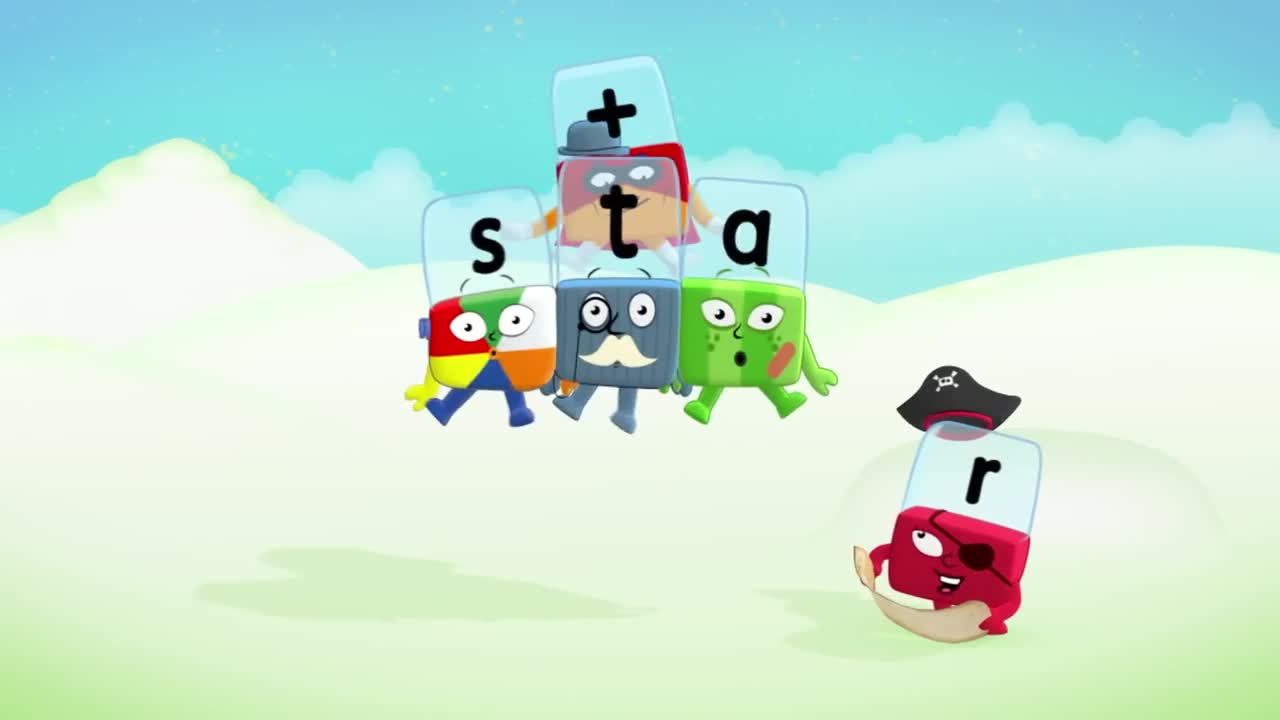
One of the central themes of the narrative is the transformative power of addition. "Plus Man" serves as a catalyst for word formation, demonstrating how simple components, when combined, create entirely new entities. By taking a "star" and a "fish," he creates a "starfish." Similarly, by joining a "sheep" with a "dog," he forms a "sheepdog." This section of the text emphasizes the morphological process of compounding, where distinct concepts are fused to build specific vocabulary. The character "Cowboy" further explores this by defining his role as "a boy who rounds up cows," reinforcing the idea that words are descriptive tools rooted in observable actions.
Phonic Exploration and Letter Identity
Beyond simple compounding, the podcast delves into the specific sounds and identities of letters. Characters like "Pen," "Jen the hen," and "Zen" highlight the importance of consonants and vowels in creating names and identities. The narrative highlights the "capital letter" as a badge of honor, such as when "J" jumps into "Jumping jelly beans" to create "Jen." This segment serves as an educational bridge, showing how "capital P" can turn a simple "pen" into a defined object. The playful interaction with "Z"—described as "zany" and "zingy"—demonstrates how phonetic nuances influence the "feel" of a word.
The Dynamics of Movement and Action
Language is portrayed as a vehicle for movement and problem-solving. When faced with an "unstoppable" force threatening the town, the characters utilize words like "vroom" and "valley" to enact a solution. The text uses onomatopoeia and action-oriented verbs to show how language can change a situation from "unsafe" to a "perfect" place to play. The "roundabout," "roller rink," and "running track" are presented as linguistic constructs that define the environment, proving that vocabulary is essential for organizing reality.
The Nuances of Vowels and the 'Why' Dilemma
A significant portion of the discourse focuses on the versatility of vowels and the unique role of the letter "Y." In a musical interlude, "Why" expresses a sense of alienation, noting, "This group is vowels only," and questioning, "Can't I be more like you?" This reflects the complexity of the letter "Y," which functions as both a consonant (in "Yellow Yoyo or Yacht") and a vowel sound. The narrative encourages "Why" not to "let your dreams pass you by," suggesting that linguistic flexibility is a strength rather than a weakness.
Conclusion: Collaborative Communication
Ultimately, the podcast frames language as a collaborative endeavor. Whether it is a "brown fox" and "lazy dog" or a group "in harmony," the characters consistently rely on one another to form coherent thoughts. The repetition of sounds like "ooh" and "you" highlights how small phonetic building blocks contribute to larger narrative arcs. By the end, the transformation of simple sounds into a "mighty oak tree" serves as a metaphor for how basic linguistic components grow into a complex, living language.
Deep Learning with ListenLeap


