Do you mispronounce these 10 words in English?
Let's find out today, and if you are serious about improving your pronunciation, I have something you will like.
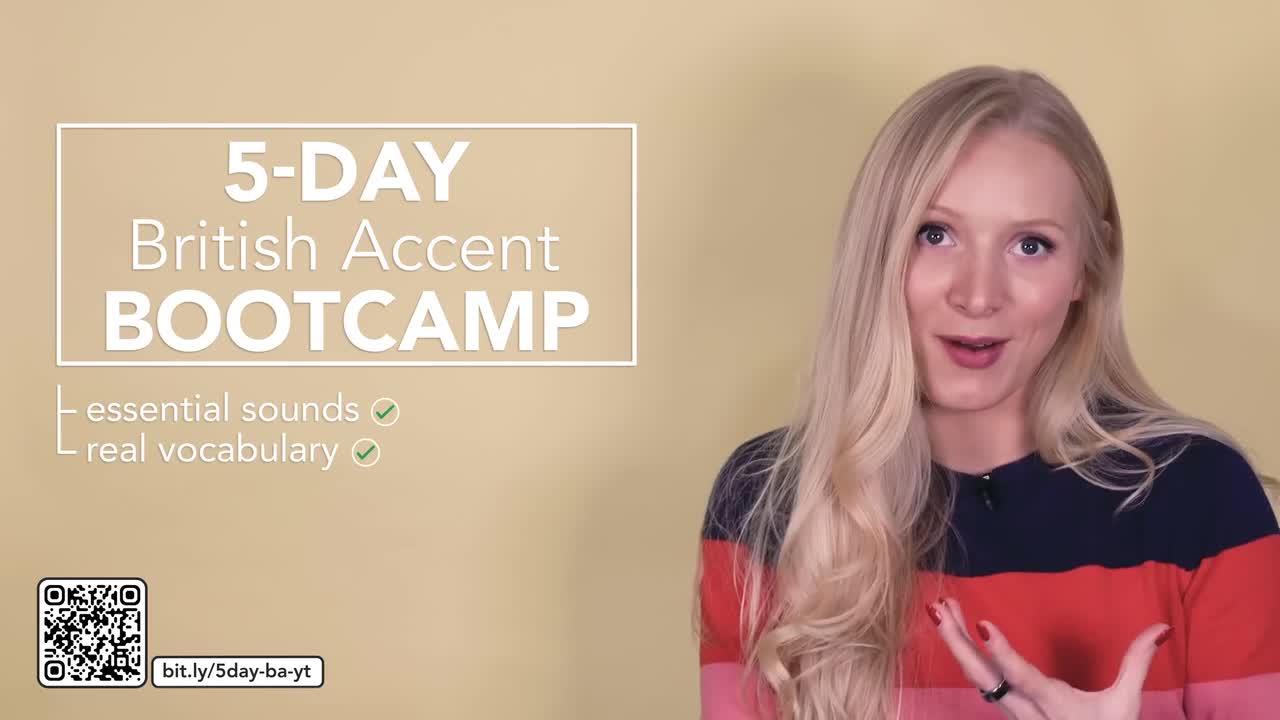
It's my five-day British accent bootcamp.
It's five days of focused lessons that take you through the essential sounds of British English, from key vowel sounds to some that we drop, plus real vocabulary we use every day.
You will learn exactly how to shape your mouth, connect your words smoothly and sound confident when you speak.
You will be amazed by how much you can progress in just five days.
We are running an amazing discount.
To learn more and join, click the link in the description box or scan the QR code there.
Okay, let's get started with the mispronunciations.
Number one.
How do you pronounce this word in blue?
Celebrities have the right to two.
Well, in British English, we can say privacy or privacy.
Privacy is more common.
Privacy is becoming more common.
I tend to use privacy.
My husband uses privacy.
When we have children, we will have to fight maybe a thumb war over which pronunciation to use.
In both versions.
It's important to get the weak sh schwa vowel sound in the middle.
Uh uh uh-see uh-see privacy, privacy.
Now in North America, privacy with the I sound like in hi is more common.
As long as you're using the uh, schwa sound, privacy, privacy, you're fine.
Okay, number two, how do you pronounce this word in blue here?
From trees and houses covered the streets after the storm.
Well, the S at the end is silent.
So this word ends with a long E vowel sound.
And what comes before that?
Well, we have lots of choices here.
In British English, we tend to go with debris, debris with a short eh vowel sound.
We also say debris, debris with an eh vowel sound.
Debris, debris.
Now, in both of these versions, the stress is on the first syllable. debris, debris.
Now, in most North American accents, the stress moves to the second syllable, debris or debris.
Confusing?
Yes, but the good news is that as long as you don't pronounce the S at the end, pretty much any way you pronounce this word is going to be correct.
Okay, number three.
How do you pronounce this word in blue?
You're for financial assistance as you earn too much money.
Okay, this one is ineligible. ineligible, ineligible.
If you are ineligible for something, you are not allowed to have it because of certain rules.
Now, not only do I hear this word mispronounced by native speakers, but I also hear them confuse this with a similar sounding word illegible, illegible.
It might sound similar, but it has a totally different meaning.
Do you know what it means?
Eligible means difficult or impossible to read.
Unreadable, like my dad's handwriting, for example.
So take care not to confuse the two.
Ineligible, illegible.
Number four, how do you pronounce this word in blue here?
Children must be accompanied by an at all times.
This word seems easy, but it causes confusion.
The confusion is due to stress.
So did you place the main stress on the first syllable, like adult, or did you place it on the second adult adult, adult.
It makes me laugh that stress is the main cause of confusion here, because I'd say that being an adult, or an adult, involves a lot of stress.
So both pronunciations are totally fine, though adult is more common in Britain.
Number five, how do you pronounce this word in blue here?
As I opened the oven door, I was hit by a freshly baked bread.
So, I usually pronounce this word with the short monophthong, o, as in October.
O, October.
Woff.
Waft.
Maybe you saw the letter A and went for waft with an A for apple.
This is fine too, it's just much less common.
You can also say waft.
I favour waft.
Okay, let's move on to a picture round for the next five words.
How do you pronounce this structure through which smoke is carried up from a fire and out through the roof?
It is a chimney, a chimney.
Now, some people add a syllable in the middle and say chimney.
I wonder if that's because of Mary Poppins.
I don't do this.
In Mary Poppins, there's a song that goes chim chimney.
I won't sing it for you.
I don't want to put you through that.
There are even some places in the world where people will pronounce it chim-ly or chim-bly.
Norfolk, for example, and apparently Appalachia.
But unless you live in one of the areas where a regional variation is commonly used, it's probably best to stick with the standard pronunciation chimney.
Okay, moving on to number seven.
What do we call these items here, like rings, necklaces and earrings that people wear as a decoration?
This is jewellery.
Jewelry.
Now, some people think we need four syllables here and say jewelry, but we don't.
Just three is perfect.
Jewelry.
And in fact, in many accents, especially in North America, it's reduced to just two syllables.
I do this when I'm speaking quickly.
Jewelry, jewelry.
In North American English, the spelling is simplified too.
Now, this is interesting.
Some speakers also switch the uh and uh sounds and say jewelry instead of jewelry.
It's your choice.
Choose whichever you like best.
I think jewelry, two syllables, nice and simple.
Now, number eight.
How do you pronounce this computer file that contains still or moving images often sent on the internet?
So this word is short for graphic interchange format.
And there is a huge debate as to whether the letters should be pronounced gif or jif.
I don't really see what all the fuss is about to be honest.
I favour gif, but I can see why people say jif.
I wonder what you think is right.
And here are two more similar words I often hear mispronounced.
It's not meme, mimi, or mem.
It's meme, and it's not earl, but URL.
Make sure you get those right too.
Okay, number nine.
How do you pronounce this delicious green plant that's often used in pasta dishes?
Okay, most Brits would call this basil.
Basil.
We've got the short ah vowel sound there, but basil is more common in many North American accents.
Which do you use, basil or basil?
Okay, it's time for our final word of the lesson, number 10.
How do you pronounce the word for a person who is applying for a job?
Well, I say candidate, candidate with a schwa at the end at candidate.
We often use a schwa in unstressed syllables, but interestingly this word can also be pronounced with a strong a vowel sound candidate, candidate.
And approximately 25 of North Americans do not pronounce the first D.
It feels so strange in my British accent to say candidate or candidate, but it does sound better in an American accent candidate.
My American accent needs work.
Okay, my lovely students, that brings us to the end of today's pronunciation lesson.
How many of these words did you already know?
How many do you pronounce correctly?
Let me know in the comments.
And if you want to make sure that your pronunciation is clear and precise, join my five-day British accent bootcamp.
You will master the aspects of British English that make you sound natural, all in just five days, with lifetime access to the content.
The link is in the description box or you can scan that QR code there.
I will see you in the next video.