Discussion keeps the world turning.
This is Roundtable.
College graduation season is upon us, and for many graduates, the gap between classroom learning and job market expectations can feel like a great canyon.
But now, China's universities are testing a new bridge called MicroMajors.
So how do these programs actually work and could they become the new gold standard in employability?
And Motivational Monday is here to turn meh into magic.
Tune in for inspirations that will light a fire under your week.
Coming to you live from Beijing, this is Roundtable.
I'm Hyun Young. For today's program, I'm joined by Steve Hatherley and Yuxuan in the studio.
First on today's show.
What's smaller than a college major, but potentially a game changer for your career?
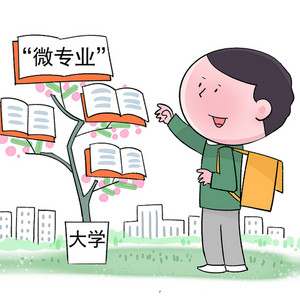
Micro majors or micro programs, and in Chinese they're called weizhuanyi, are sweeping across Chinese universities, offering students specialized practical training that bridges campus and career.
With China aiming to launch 1000 such programs nationwide, are we seeing the start of a new era in higher education?
Let's dive into how these bite -sized credentials are reshaping what it means to be job ready.
So first of all, Yuxuan, please explain what Micro Majors are and in what areas are these courses flourishing?
Well, a Micro Major or a Micro Program is basically a focused set of core courses that's designed outside of the traditional list of national undergraduate graduate majors.
And these emerging micro majors is actually part of the initiative following a notice to promote the employment capabilities of university graduates that's issued by the Ministry of Education in March 2025.
So basically these micro majors, it aims to help the students to just try to zoom in on one or multiple specific areas, whether it's on an academic discipline or a research topic or just a key professional skill that they're interested in too, they can try to spend some time outside of daily class routines and dig in.
You said which areas?
Some I saw that's related to, say, digital economy, the green economy, low -altitude economy, all that's kind of like niche and new technological -related majors that's, attracting the general public nowadays.
So that's a new measure.
And general public, yeah, it's possible for the general public to take these courses too.
It's working professionals and current university students that can take these things according to their interests or according to their career developments.
And I think it's a really cool thing.
We have this in Canada as well, and it's not brand new in Canada.
I saw a report from 2021 21 from universityaffairs .ca but it's basically the same thing they don't call them micro majors they call them micro credentials and they're often online programs they're very focused they can be very short the courses can range from a few weeks to a few months making it kind of a time efficient way for people to to up their skill set they focus on in demand skills in the job market that are directly applicable to the workplace so that people can really know what they're doing when they're getting into the courses and have a clear goal.
And then a lot of the programs they're developed in partnership with employers themselves, and that ensures the relevance to the job market.
That does sound really great, and it does, in theory, fill in that gap of campus and career.
But also just to quickly ask you about the Canadian example, Steve, are universities offering these kind of courses?
Yeah, they are. And then when you complete the course, you'll often receive like a digital badge type thing or a credential and you can display that on your on your.
Yeah, no, exactly. That's exactly where you can put it to showcase that you've completed this course and you've upgraded your skills.
There's some different examples from different universities.
There's one university called Royal Roads that has programs in areas areas like climate adaptation and infrastructure resilience and business administration.
Then there's another university that focuses on digital arts and design skills and 2D and 3D animation and Adobe Creative Suite and computer related things.
Lots of different programs from lots of different schools.
Yeah, what's new for me here is that in the past, maybe in China, You hear news that it's often working professionals, mature students, and then we don't have the luxury of going back to school, but we can pick up all these bite -sized courses, classes online.
And often, you don't really know what kind of facility is offering these kind of sharpen your new skills options.
But now we're seeing, oh, a lot of these proper universities in China are doing this as well.
And they're being offered to students before they graduate.
And now since we know what's going on, more or less, how do these micro majors stack up against traditional majors, minors and other kinds of courses available out there?
And possibly if you could offer a comparison with maybe vocational education as well.
this is a lot to talk about, and let's go through them one by one, not in one big swoop.
I don't think that's necessary.
Well, first things first, this new initiative of developing all these micro -majors is not only for, say, university classes, but also for vocational training as well.
Like you said, He Yang, there are plans to develop about 1 ,000 micro -majors or programs, and plus 1 ,000 vocational training courses that's in partnership with enterprises as well.
And what's the difference between regular, say, classes in university?
It's kind of different in so many ways because micro -majors, they represent a new talent cultivation model that, well, nowadays, many Chinese universities, they've been exploring in recent years and they've been exploring for quite a bit.
For example, they are different from traditional second major because micro majors, they emphasize interdisciplinary learning that offers more flexible course content and adopt more diverse teaching approaches.
And also, to a certain extent, they help address issues such as overly narrow major scopes or outdated curricula and disconnected educational needs between the real world's needs.
Therefore, it's really fostering cross -disciplinary talents in so many ways and helping the students to learn outside of the school theory scope and try to get on some hands -on skills.
Yeah, the micro majors are categorized into three different types.
So they have urgently needed and in short supply.
They have applied skill -oriented and they have interdisciplinary, as you mentioned, and integrated.
So this is encouraging students or the schools to prioritize the development in the first two categories based on actual demand, what's being asked for from the job market.
Vocational training courses, those are categorized into four different types.
They have basic competency enhancement, professional skills training, AI applications and internship and practical training.
So that's just one of the differences you can find between the two.
And also, you know, for minor programs and double degrees that already existed in the current university structures, they emphasize the integrity of a full disciplinary system, which are designed to give you a well -rounded education in a full academic discipline.
But here we're talking about micro majors that are driven by employment needs and also students personal interests.
So their focus are more on the smaller entry points and deeper exploration that's aiming to quickly help you to say grab a skill or enhance the students overall cross disciplinary competitiveness in so many ways.
Right. And also when you say, OK, it's a micro major course, then does that also count towards your credits?
You know, because for university students, if you're still in school, I bet this is what people care about.
And then, well, I don't I don't think they do transfer over to your regular credits, do they?
Actually, I was talking about that this morning with with our with our team members.
And the answer that I got was, no, I don't think so.
Well, it kind of depends on the school.
And here you'll probably need to consult with your course instructor because it's not always guaranteed.
And this is a big problem, potentially, because, you know, for university students who are already busy, some struggling to cope with the current amount of studying that is asked for them.
And then it possibly takes a very forward thinking young mind to also very disciplined to think about, oh, this is actually connected to my employability.
And do I want to take on more potential credits, but definitely more studying so that I can be, you know, one leg up compared to other people in terms of knowing or have studied some of this real life skill work skill kind of thing.
Yeah, I think it helps out students who are in a major where the where the major is very narrowly focused.
Not that that's archaeology.
Yeah, right. So it's not that's not that that's a bad thing.
Archaeology of bronze objects from the sixth century.
Very specific major.
Absolutely. So if you are a student of that, congratulations.
Yes. But taking these extra courses that are again, these are designed for what's happening in the marketplace.
place right what's happening job wise so adding that yeah sure it's extra study and it's extra time in the classroom and things like that or extra time online but you're kind of um widening your umbrella so to speak so that you have more skills um that are applicable to the job market in addition to 13th century bronze whatever it was that you said I mean about 10 years ago back in the time when I was in the university, we already kind of have something like this.
But like Steve said, it's more or less online.
It's also, it takes up like the credits you need to earn in order to graduate and get your diploma.
But it's not that hardcore in a way.
And everything is online.
But nowadays, I'm just happy to see that, you know, students can follow their interest and attend real classes that also counts for the credits.
Right, more or less depends on the Yes, and, you know, consult with your course manager or instructor to know more about this.
And when we look at these new micro majors, you guys mentioned earlier about online teaching.
So I suppose this would be involving flexible teaching, possibly.
And how are these courses set up?
What kind of hallmarks do they exhibit?
of it? There is one very vivid example.
So back in March 2025, that's a few months ago, the University of Science and Technology in Beijing, it officially rolled out its very first batch of micro measures.
That's 13 of such micro measures in total with 480 spots available to students across the campus.
And at the same month, in the same month, the Beijing University of Agriculture also joined this trend of launching two new micro -measures that include the Tree Doctor, that sounds interesting, and Agricultural Intellectual Property.
So these programs, they are giving students more diverse and specialized learning options.
And well, as per the reports from how popular it was back then at the Beijing Forestry University, One student actually shared that getting inside one of these micro -major classes was pretty competitive.
And it wasn't easy to grab a spot, meaning that there are perhaps hundreds and hundreds of students trying to get in.
Yeah, you might think, oh, the extra study, the extra class time.
Maybe nobody wants to sign up for these.
They're different, so they're really, really popular.
Here's another example of how they're different.
The Director of the Academic Affairs Office at the University of Science Technology Beijing, again, one of the big differences is the curriculum design.
So you don't have as many courses.
Micromajors, they're totally independently designed and they consist of maybe six to ten key courses.
You'll get about 12 to 20 credits there.
They're shorter. They're less demanding in their credits.
And that's an attractive thing for the students because it's more short term and it's more – I don't know if focused, more focused is the right way to put it.
But it's like I said before, you know what you're getting into.
You know exactly how long things are going to last. And it's comforting, I think, to know that they're a little bit shorter in duration.
Yes. And you talked about archaeology just now, He Yang, and there's one case where one student who is not majoring in archaeology actually got benefited from taking a micro major that's majoring in archaeology.
Her name is Xia Yuqing, I think.
She's a student majoring in sportswear design at Beijing Institute of Fashion Technology.
And she was among the first students who joined the micromeasure in Inheritance and Innovation of Fashion Culture Heritage.
So it was purely out of curiosity and personal interest at the beginning.
And she actually later on discovered that this micromeasure allowed her to be in the museum and viewing the artifacts, seeing how people dress up themselves thousands and thousands of years ago and learn from actual practical experiences.
And later on, this micro major helped her to get a very good, I think, diploma or like internship opportunity that's archeological related.
So that's how these jobs are actually benefiting students.
And yeah, that's perhaps why they're so popular.
I can see why, because it's just a step up.
Right. When you're in class or in a major with hundreds, if not thousands of other students, and you're all going to be entering into the job market at the same time.
Right. then if you can do these micro major classes and get some extra accreditation, then that's gonna be good for your resume and it could be a foot in the door.
Not only that, but think about the people that you'll meet, right?
You'll have an opportunity to network.
This is like pre -networking before you actually get into the job market, meeting the right people who might be able to recommend some things for you, some companies for you, some jobs for you.
Who knows, right? It's just another thing that you can do to help yourself get a foot ahead of the competition.
Yeah, and what's really pronounced here is for a lot of the traditional majors and classes and how the courses are arranged and designed, it's just too far away from real life.
It is more or less existing in a ivory tower.
And with this kind of new micromajor, as you guys have demonstrated, it's got the job prospects, the employability in mind when they're being designed and just see how they're being rolled out.
And also, aside from students, this is a great opportunity for working professionals, grown adults to take part in as well.
And there's one example I really enjoyed reading about that starting in 2023, some of Suzhou University's micro majors have been made accessible to teachers.
There's this education leadership plus micro major that's offered free of charge.
So basically, no money is asked from these primary and secondary school teachers from central and western regions of China.
Wow, that's, that's nice.
Because, you know, a lot of times these teachers, they are in lack of, say, professional training after they are enrolled to their to their teaching position.
Yeah. And also Suzhou University is located in the eastern part of China and it's considered more of the economically prosperous regions.
So I suppose they can bring in new technology, definitely new knowledge and help these teachers from the central and western parts of China to get familiarized with the latest in the teaching profession.
And I think that's really necessary.
it's great for um it is great for the teachers to be able to kind of add to their resume a little bit but also it's not just things that are related to education i find this one really cool beijing forestry university they have micro majors such as nature education and carbon neutrality and smart environmental protection that sounds like a major in university doesn't it that students would pursue.
Those courses are open to the public.
There's no exams. There's no interviews required.
Anyone who's interested can enroll in those classes.
And in some cases, one class may have as many as 35 external participants, which is really cool.
That's an opportunity for the general public to be, I mean, when do we have an opportunity to educate ourselves on carbon carbon neutrality or smart environmental protection, right?
We don't. And it's totally stress -free.
There's no tests. There's no math.
That's good. If there's no math, that's always a plus for me.
We know what Steve don't want to study.
Yeah. But I also wonder, if it's so easy to get into them and also, quote -unquote, graduate, then I wonder how valuable are these credentials?
I think they're very valuable.
I think they are because, again, it's something extra.
It's an extra thing that you're doing, right?
If you're just looking to pursue an interest of yours for the general public, then that's one thing.
But if you're a university student, think about it.
If you're looking at two resumes, right, and we'll stick with the archaeology majors.
One, you have two archaeology majors.
And one did these extra micro major classes, right?
They went out and took part in these things.
And the other person didn't.
If those two resumes are equal, well, then which person are you likely to hire?
All things considered equal, right?
You're probably going to hire the person who took the initiative to take those extra classes.
I've heard it many times.
This is kind of a way of thinking in Canada that a university degree is proof that you're willing to commit yourself to something for four years.
That's one of the ways of thinking about university.
So if a potential employer looks at that, okay, you graduated and you did these extra classes, that's just going to be one more thing that's impressive, I think.
And on top of just helping to improve the practicality of certain measures or enhancing the skills for those students in general, it also helps to enhance the quality of the population if we can welcome more people to join these classes, you know, for free and without interviews and stuff.
And as we spoke of archaeological studies, my boyfriend is actually just recently graduating from his archaeological bachelor's degree.
And according to him, as far as I can recall, I think, for them, that university that he attended, they do not accept external students yet.
But for them, it's like every summer and winter breaks, usually summer, then winter breaks, there are practical excavation projects for them to be part of that's more or less attached to the school's projects, sometimes not, sometimes entirely external.
journal, but it also helped them to build people's networking while meeting different people.
Some are really professional that's been in the industry for years.
Some are just new beginner students like them, and they start to know each other and welcome more jobs and, you know, lectures or just seminars outside of the school.
So that's where they started to build this whole people networking as someone who is trying to get in a certain field.
That's all where it began for for these new college students and graduates.
So I think in general it's enhancing the, say, the employment and also the future career path for these students.
Yeah, that's a valuable step.
And can micro majors truly help universities keep pace with the fast -evolving industries?
Because this is essentially what we're looking at.
Higher education is not only about, you know, the academic side of things And then now a lot of young people simply cannot wait or they just need more of this training instead of academic education.
They need to know that I'm ready to secure a job.
And that is also what a lot of employers are looking for out there.
They would prefer this person has skills, not just a bunch of knowledge.
Yeah. And I think that society changes so quickly that this is a good idea for universities because it's it's hard for, you know, these these types of programs can be introduced and changed very quickly.
Right. According to what the demand is from the students and from potential employers.
It's not so easy for universities to change entire programs. Right.
Or introduce entire programs. There's a lot more that would go into that.
So the flexible design in these micromajors is one of the major, major, major benefits.
And some of them, if they're really well received, they could be a really nice supplement to your traditional major.
Not that you would only want to take these micromajor classes, but if you're taking them alongside your major classes, it's a win -win, I think.
Yeah, and also micromajors, they also offer enterprises the opportunity to deeply participate or become part of the talent development process within the universities.
Because while the enterprises and companies, they offer like real trainings and kind of like almost like an internship kind of training for those college students.
Without graduation, you can already get a taste of what it's like to be in certain job or industries.
And one example would be at Huangshan University's School of Tourism, the Homestay Wellness and Digital Operation Micromajor.
It focuses heavily on hands -on practices and Yao Li Zhong, the deputy party secretary of the school, he noted that in the courses related to homestay operations, students frequently interact with homestay business owners in person.
So that's one way for businesses to just get hands -on what talents they can aim to recruit in the future as well.
Of course, no new initiative is without its hurdles.
And what about, well, I guess the growing pains that micro majors are facing?
I can think of quality control, affordability maybe, and employer recognition.
Yeah. Some of the universities, they do require additional tuition fees for these micro major classes, and that might be discriminatory against less privileged kids.
So that could be a challenge.
You mentioned the recognition from companies.
If companies don't recognize this, then I don't want to say what's the point, because you're still learning, you're still spending quality time, but you're not going going to get that advantage work -wise if companies aren't looking at this as a plus for you as a potential employee.
That's true. We mentioned how some of the micro -measures can be attached to your LinkedIn account in some ways.
But nowadays, we're still kind of at the exploration phase of micro -measures.
And we really hope universities can focus on refining and building more standardized management of, say, the education and teaching for these micro -measures so that they can be more more recognized in the future and become attachable to your CV perhaps one if I was a student I was just thinking about this as well you know these classes are open some of them are open to the general public if I was a student who didn't get a spot because I don't know if this applies or not but if it was taken by a member of the general public who was just there to do it as a hobby or something I might be put off
by that especially if it's charged yeah I don't know if that applies or not.
I'm just thinking from a student's perspective, if they wanted to get a seat in the class but they couldn't because it was taken by someone who wasn't a student.
Micro -majors reflect a growing realization.
Today's job market doesn't wait for four -year curriculum updates.
These programs offer a more agile way for students and even sometimes working professionals to keep pace with emerging trends and evolving roles, but for their value to to last, universities must move beyond short -term fixes and build lasting frameworks that combine flexibility and possibly academic integrity.